
Chicory Root Salad with Pink Pepper and Lemon Citronette. Low in calories but rich in properties.
There’s something magical about ingredients from the past. Bitter roots (like chicory) are often relegated to our grandparents’ memories, yet they hide incredible potential.
If handled with care, they transform into a crunchy, refined, and incredibly healthy side.
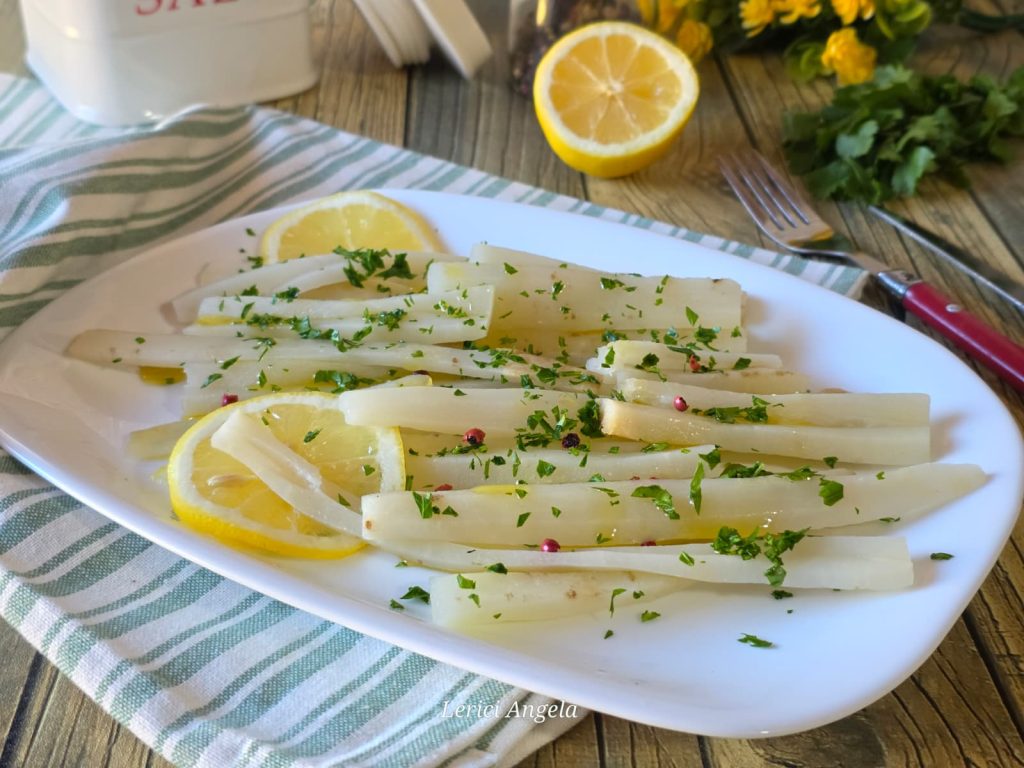
Today I want to offer them in a “naked” version, where their earthy note is brightened by the freshness of lemon and the aromatic push of pink pepper.
A perfect dish for those who love strong flavors and seek an extra boost for digestive well-being.
There was a dish I looked at with suspicion as a child, almost defiantly: bitter roots. My mom often prepared them, with that typical patience of someone who knows they are putting something precious on the table.
‘Eat them, they’re good for your blood!’, she would always say. But I, unwavering, only tasted that bitterness so distant from my childish palate. I would routinely discard them, convinced that certain flavors were only ‘grown-up stuff’.
Today, however, the story has changed. It might be that tastes evolve or that we need to rediscover those roots (in every sense) that connect us to our land and family.
Fact is, now I would eat them all the time.
I’ve learned that bitterness isn’t a flaw, but a decisive character that, when paired with the freshness of lemon and the aromatic touch of pink pepper, becomes pure poetry.
Sometimes it takes us years to understand that our mothers’ advice had a flavor that we would learn to appreciate only later.
This recipe is my way of apologizing for all the roots I discarded in the past.
Today, when I serve these roots, I no longer only sense the bitterness I feared as a child. I feel the scent of home, the freshness of pink pepper, and the satisfaction of having rediscovered a flavor that, after all, is truly good for the heart.
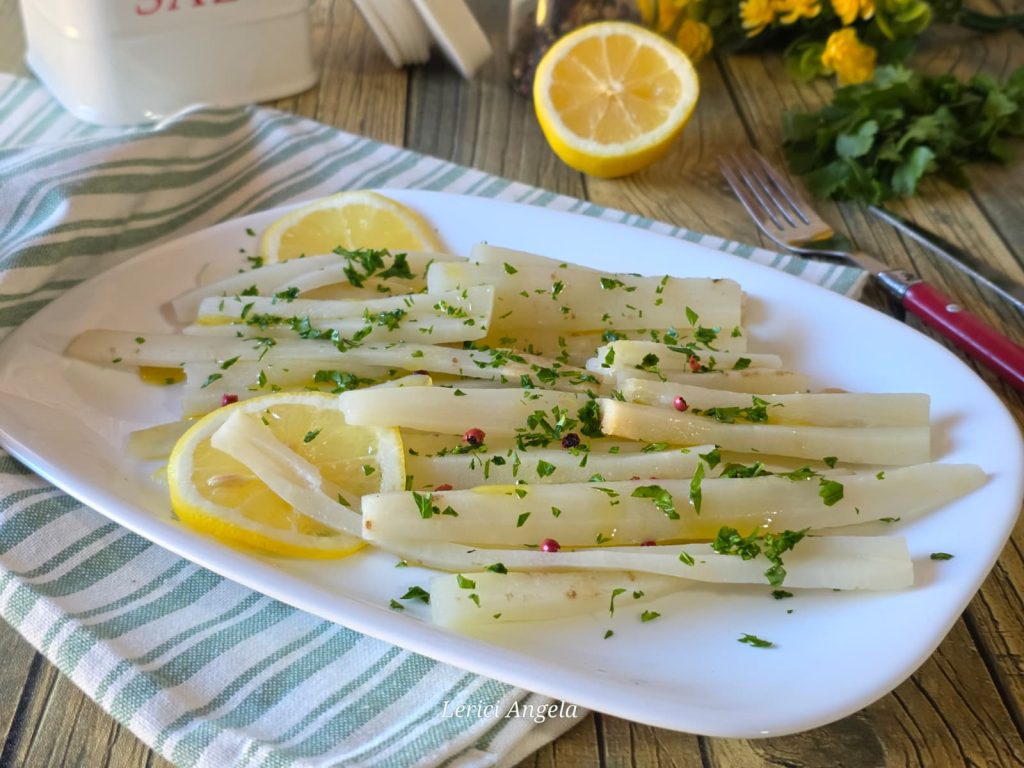
- Difficulty: Very Easy
- Cost: Affordable
- Preparation time: 15 Minutes
- Portions: 4People
- Cooking methods: Boiling
- Cuisine: Italian
- Seasonality: Autumn, Winter, and Spring
- Energy 147.96 (Kcal)
- Carbohydrates 19.55 (g) of which sugars 0.45 (g)
- Proteins 1.72 (g)
- Fat 7.74 (g) of which saturated 1.06 (g)of which unsaturated 0.01 (g)
- Fibers 0.71 (g)
- Sodium 868.53 (mg)
Indicative values for a portion of 100 g processed in an automated way starting from the nutritional information available on the CREA* and FoodData Central** databases. It is not food and / or nutritional advice.
* CREATES Food and Nutrition Research Center: https://www.crea.gov.it/alimenti-e-nutrizione https://www.alimentinutrizione.it ** U.S. Department of Agriculture, Agricultural Research Service. FoodData Central, 2019. https://fdc.nal.usda.gov
Ingredients
Chicory Root Salad with Pink Pepper and Lemon Citronette
- 1.1 lbs bitter roots (commonly known as Chicory Roots)
- 1 lemon (we will use both the juice and some grated zest for aroma)
- to taste pink peppercorns (whole or slightly crushed)
- to taste parsley
- to taste extra virgin olive oil
- salt
- to taste water
- lemon (added to the boiling water helps keep the roots white and less oxidized)
Tools
- Pot
- Colander
- Bowl
Steps
Chicory Root Salad with Pink Pepper and Lemon Citronette
First, wash the roots under fresh running water to remove any soil residues.
Use a peeler (or a knife) and peel them as you would carrots, removing all the skin.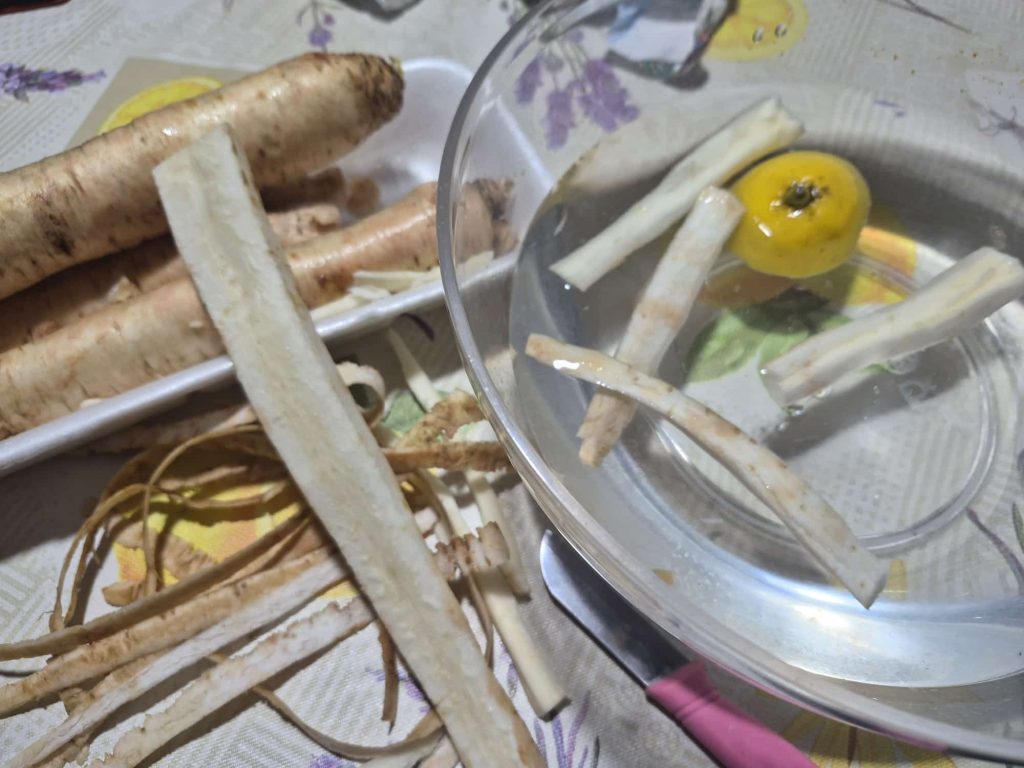
As you peel them, immediately immerse them in a bowl of water and lemon to prevent them from darkening.
Divide the roots into pieces, then cut them in half and then again in half, obtaining sticks from each section.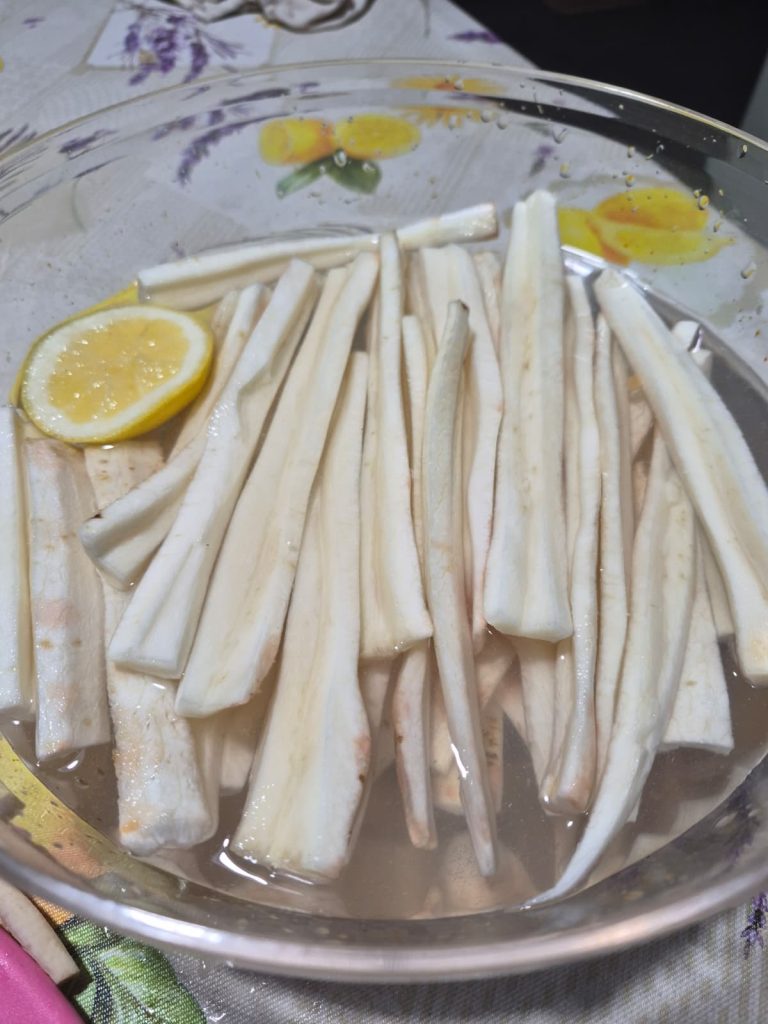
Bitter roots have a fibrous and woody part in the center. For a perfect result, I recommend removing it:
How to do it:Simply cut the “tip” of the internal triangle (the root’s core) from the sticks. This way, you’ll avoid that annoying fibrous sensation under the teeth.
Immerse the roots in boiling salted water with a little lemon juice.
The lemon in cooking not only adds flavor but helps to remove excess bitterness and keep them bright white.
Cook for about 15-20 minutes (adjust based on the size of the pieces). They should be tender but not mushy.As soon as you scoop them with a skimmer, immediately pass the roots under a stream of cold water.
This small gesture instantly stops the cooking, keeping the sticks crunchy and bright white.
Scoop the roots with a skimmer and move on to the dressing:
A drizzle of quality extra virgin olive oil.
Fresh lemon juice.
The pink pepper: Add it now, slightly crushing the berries between your fingers.
A pinch of salt and a sprinkle of fresh chopped parsley.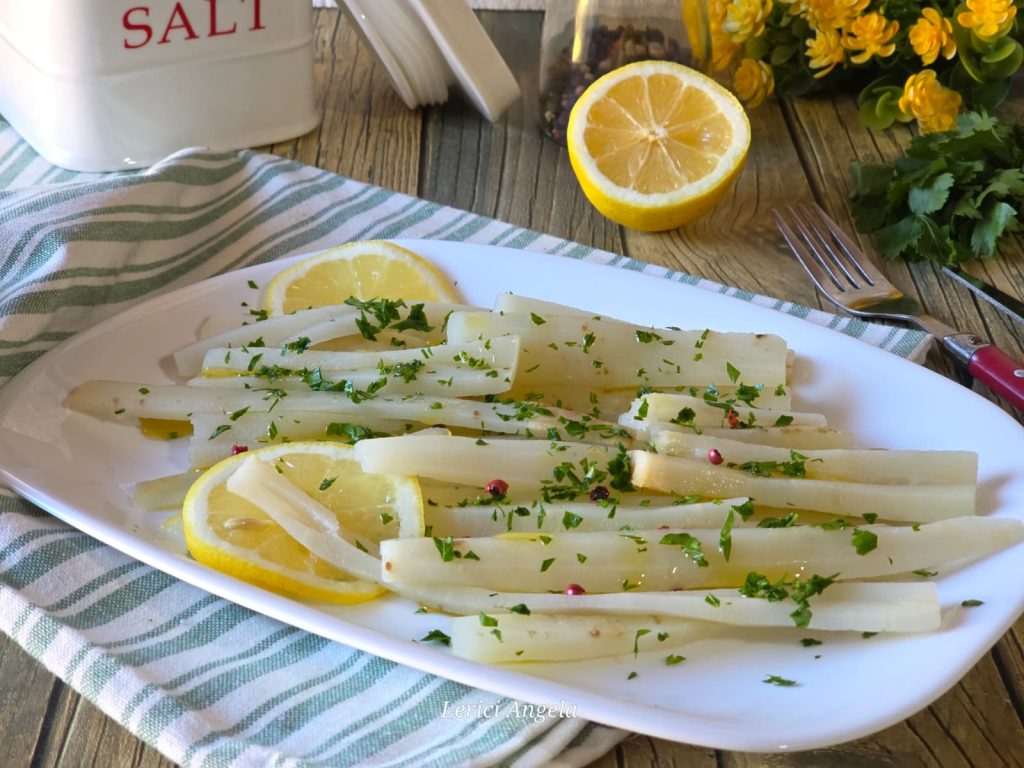
Enjoy your meal.
Tips
After cutting them, leave them in cold water and lemon for at least 30 minutes before boiling. This drains much of the bitterness into the water.
My mom’s secret. If the roots are very large (and therefore more bitter), you can change the water halfway through cooking.
How to choose them at the market
They should be hard and firm. If they bend or seem “rubbery,” they are not fresh.
Better to choose the straighter and smoother ones; they are much easier to peel with the peeler!
Tasty Variations
The crunchy note: Add a handful of toasted walnuts or almond slivers.
The sweet touch: Add some pomegranate seeds (which go beautifully with pink pepper and lemon).
The alternative to pepper: If they don’t like pink pepper, suggest cumin or fennel seeds, which also aid digestion.
Storage
They keep well in the fridge for 2-3 days in an airtight container. In fact, the day after they taste even better because they have absorbed the dressing more thoroughly!
Curiosities
Did you know that the cooking water of bitter roots (if not too salty) was once drunk as a kind of “detox tea”?
Perhaps it’s a bit extreme for modern tastes, but it highlights how precious this vegetable is!
FAQ (Frequently Asked Questions)
Why are they good for you?
They cleanse the blood and liver: Their bitter taste comes from substances that stimulate bile production and help the liver eliminate toxins. This is where the saying “they’re good for the blood” originates.
Friends of the gut (Inulin): They are very rich in inulin, a natural fiber that acts as a prebiotic. It nourishes the good bacteria in the gut and helps regulate digestion.
Low in calories, rich in minerals: They are perfect for those who want to stay light. They contain good amounts of potassium, magnesium, and vitamin C (which we preserve by adding lemon raw!).
Blood sugar control: Thanks to inulin, they help maintain stable blood sugar levels, avoiding spikes.
