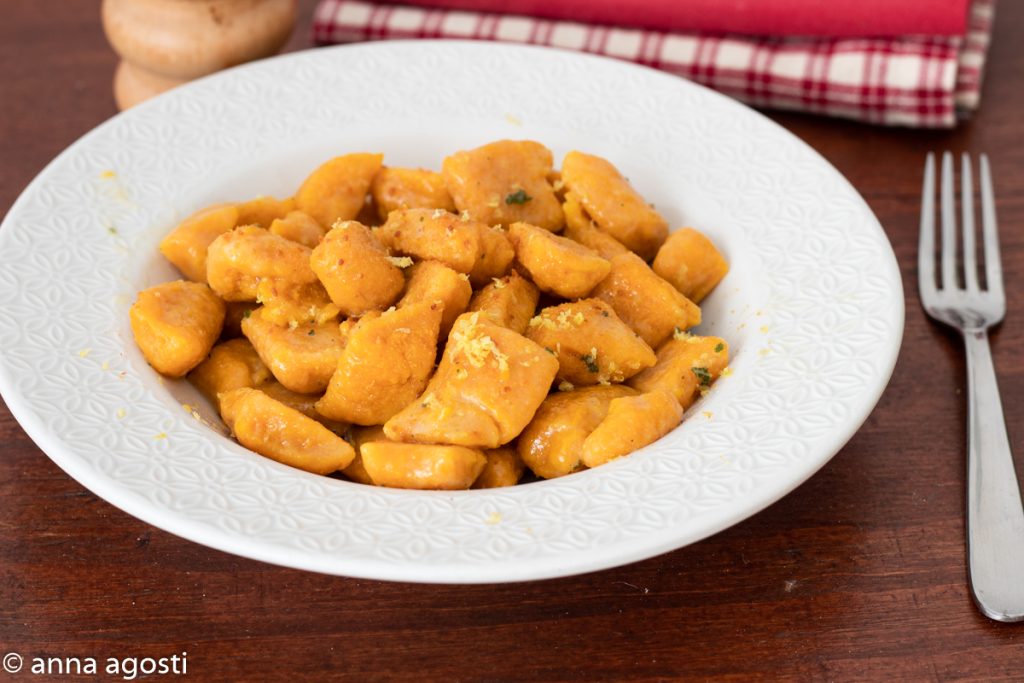
The meeting of land and sea in this dish is simply magical — Pumpkin Gnocchi and Bottarga are a perfectly refined match.
If you are looking for a first course capable of surprising with elegance and contrasting flavors, these pumpkin gnocchi with mullet bottarga will become your new trump card.
This recipe plays on a perfect balance: on one side the enveloping, comforting sweetness of Mantovan pumpkin, and on the other the intense, briny and almost pungent savor of Sardinia’s gold, the bottarga.
Making pumpkin gnocchi at home is a small ritual that gives great satisfaction, but the real magic happens in the dressing. You don’t need a never-ending list of ingredients; here simplicity wins.
A sage-scented butter and a generous grating of bottarga added raw are enough to transform a humble dish into a restaurant-worthy experience.
Whether for a romantic dinner or a Sunday lunch different from the usual, let yourself be won over by this combination of colors and flavors. Put on your aprons: today we bring to the table a dish that smells of sun, earth and sea.
See you soon with the next recipe, Ana Amalia!
- Difficulty: Easy
- Cost: Medium
- Rest time: 1 Hour
- Preparation time: 1 Hour
- Portions: 4 People
- Cooking methods: Microwave, Steaming, Stovetop
- Cuisine: Italian
- Seasonality: Autumn, Autumn, Winter
Ingredients for Pumpkin Gnocchi with Mullet Bottarga
- 3 1/4 cups (about 28 oz) Delica pumpkin (already cleaned)
- 2 cups (about 8.8 oz) 00 flour
- 1 egg
- to taste salt
- to taste nutmeg
- to taste mullet bottarga
- 4 tbsp (about 2.1 oz, 1/4 cup) butter
- to taste sage
- to taste lemon zest
- to taste pepper
Tools
- 1 Tray
- 1 Pot
- 1 Steamer
- 1 Potato Ricer
Steps for Pumpkin Gnocchi with Bottarga
Place the pumpkin cubes in the microwave steamer and cook using the steam function (8-10 minutes at full power). Once tender, press them immediately with a potato ricer or a fork while still hot and let the steam escape well. It should become a nice dry purée.
Or roast it in a conventional oven at 356°F for 25–30 minutes, sliced into thin pieces.
On a work surface, make a well with part of the flour. Put the cooled (or lukewarm) pumpkin purée in the center, the egg, the salt and the nutmeg.
Start incorporating the flour little by little. Knead quickly with your hands: do not overwork the dough, otherwise the gnocchi will become tough.
Stop as soon as the dough no longer sticks to your hands (you may not need all the flour).
Cut the dough into pieces and form long sausages (about one inch wide).
With a knife, cut the sausages into pieces about 3/4 inch long.If you like, you can roll them over the tines of a fork or a gnocchi board to create ridges that will hold the butter better.
Arrange them on a well-floured tray, spaced apart, and meanwhile put a pot of water on the heat for cooking.
In a large pan, melt the butter together with the sage leaves.
Let it sizzle gently over low heat until it becomes slightly golden and fragrant.
Add a ladleful of the cooking water to the butter to create an emulsion (a sort of little cream).Plunge the gnocchi into plenty of boiling salted water.
As soon as they rise to the surface (it will take 1–2 minutes), scoop them out with a slotted spoon directly into the pan with the butter.
Toss gently (or sauté) for one minute over high heat.Turn off the heat. Add the grated lemon zest and a generous handful of mullet bottarga (finely grated or in thin flakes). A final grind of pepper and serve immediately.
A tip for you:
If the dough seems too soft even after adding the flour, don’t keep adding flour endlessly or they’ll only taste like bread! Instead, put the dough in the fridge for 30 minutes: the cold will help the pumpkin and egg firm up.
Chef’s Tips for a Top Result
To prevent the gnocchi from becoming gummy or too soft, keep these small tricks in mind:
Pumpkin is the key: If the pumpkin is too watery, the gnocchi will require too much flour. I recommend roasting it in the oven cut into large slices (do not boil it!) until it is nicely dry.
Flour “as needed”: Add it little by little. The dough should be workable but still slightly sticky. The more flour you add, the firmer the gnocchi will become after cooking.
Cooking water: When you drain the gnocchi, always keep a ladle of cooking water aside. Bottarga tends to dry out the sauce; the starch in the water will help create a creamy emulsion with the butter or oil.
Bottarga at the end: Remember never to cook the bottarga! Add it only at the end, off the heat, to preserve its aroma and texture.
How to Store Pumpkin Gnocchi with Bottarga
If you made too many or want to prepare in advance, here’s how:
In the refrigerator: If they are already cooked and dressed, store them in an airtight container for a maximum of 1 day. Reheat gently in a pan with a splash of water or butter.
Freezing (recommended method): Lay the raw gnocchi on a floured tray, well spaced, and put them in the freezer for about 2 hours. Once firm, transfer them to a freezer bag.
Note: When you want to eat them, cook them directly in boiling water while still frozen.
The dough: I do not recommend storing the raw dough in the refrigerator for too many hours: the pumpkin tends to release water and the dough would become soft.
Other recipes
🖥If you want to see more recipes you can return to HOME
📲If you don’t want to miss any recipes you can follow me on my Facebook Page, just turn on notifications and you’ll see how many new recipes every day.
Pumpkin Gnocchi with Mullet Bottarga FAQ (Questions and Answers)
Can I use powdered bottarga instead of a whole piece to grate?
Yes, you can, but the quality changes slightly. Powdered bottarga is more practical but tends to be less aromatic. If you use it, pay attention to the salt: the powdered form is often saltier. My recommendation is to prefer a whole piece for a more prized texture.
Why do my gnocchi fall apart in the water?
This almost always happens because of the moisture in the pumpkin or because too little flour was used. If you notice the first test gnocco breaks, add a tablespoon of flour to the remaining dough. Another trick is to add an extra egg yolk to the dough to help bind everything together.
Can I replace butter with oil?
Absolutely yes. A good extra virgin olive oil (perhaps a light fruity one) is an excellent alternative. In that case, the pairing with bottarga will be even more faithful to Sardinian tradition.
Which pumpkin is best to use?
Mantovana or Delica are the best. They have firm, floury flesh with little water. Avoid the classic Halloween pumpkin (the round, bright orange one), because it is too fibrous and watery.
If the bottarga tastes too strong, how can I tone it down?
If you fear the flavor will be too intense, you can mellow it with a little grated lemon zest or add some chopped pistachios. The pistachio’s fattiness balances the salty push of the bottarga perfectly.