Salted lemons, also known as preserved lemons or salt-fermented lemons, are an ancient preserve obtained thanks to the natural fermentation of the citrus. A simple yet highly aromatic preparation, perfect if you are wondering how to preserve lemons or are looking for a homemade salted lemons recipe.
Widespread in North African cuisine, particularly in Moroccan preserved lemon recipes, these fermented citrus become softer, less acidic and incredibly aromatic thanks to the action of the salt and their own juice.
Their culinary uses are very versatile: salted lemons can be used to flavor meat, fish, roast chicken, rice, couscous, salads and sautéed vegetables. If you wonder how to use them, simply rinse the peel lightly to remove excess salt and slice it into thin strips before adding it to your dishes.
Preparing salted lemons is an ancient process, similar to that used for other natural fermentations such as olives in brine (in water and salt), fermented red cabbage, or homemade kimchi, but also fermented drinks like kombucha or milk kefir,
not to mention sourdough starter.
All these preparations are born from the same principle: natural fermentation, which allows us to preserve or transform foods in a healthy, natural way.
Once ready, salted lemons can last several months if stored correctly in the refrigerator and always kept submerged in their liquid. Thanks to fermentation, this preserve is not only tasty but also particularly interesting from a nutritional standpoint.
The reason lies in the fermentation itself: during natural (lactic) fermentation, the salt creates an environment where the “good” bacteria naturally present on the lemon peel can develop.
These microorganisms that develop during the fermentation of salt-fermented lemons produce lactic acid and other substances that help maintain the balance of the gut microbiota, hindering the growth of unwanted microbes and helping make some compounds more easily assimilable.
During fermentation these bacteria “work” on the food: they partially break down sugars and fibers, produce useful metabolites (such as organic acids) and make the food more digestible.
For this reason, among the main benefits of salted lemons are improved digestibility and a more intense aroma compared to fresh lemon.
When we consume such fermented foods, we introduce not only new flavors into our cooking, but also compounds that can support our well-being.
Now let’s go to the kitchen and prepare them together, but first I remind you to take a look at my Facebook page and my Instagram profile to stay updated on all new recipes.
Also take a look at these lemon recipes you might be interested in:
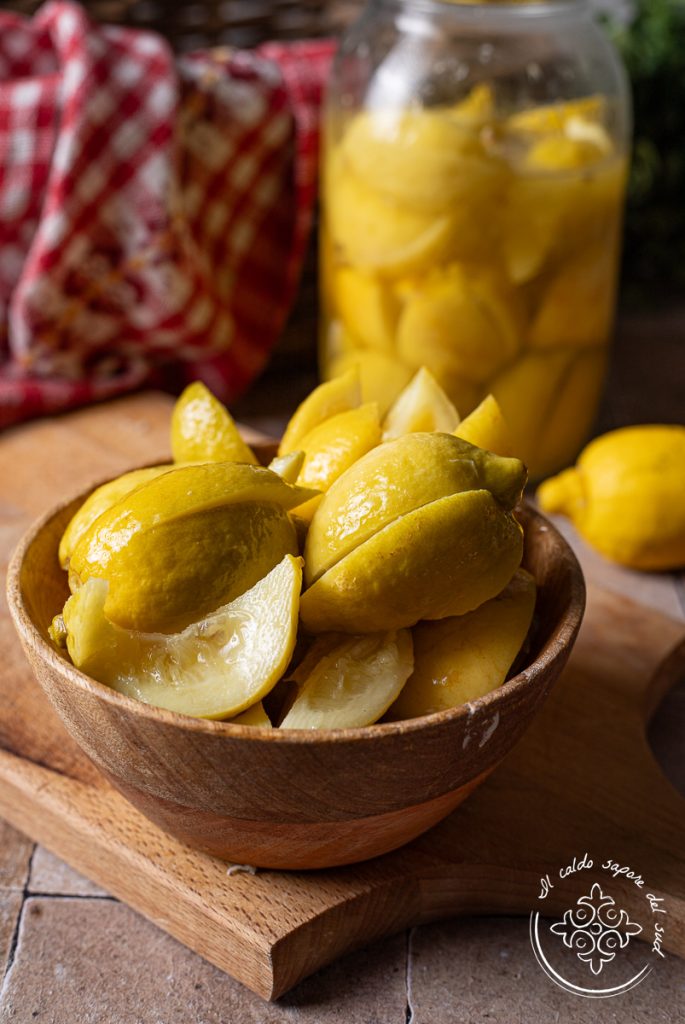
- Difficulty: Very easy
- Cost: Very inexpensive
- Rest time: 21 Days
- Preparation time: 15 Minutes
- Cooking methods: No-cook
- Cuisine: Moroccan
- Seasonality: All seasons
Ingredients to make preserved lemons (salted lemons)
- 10 lemons (organic)
- to taste coarse salt
Tools
- Jars
Steps to make preserved lemons (salted lemons)
To make salted lemons, start by washing the lemons thoroughly under running water, then dry them well with a clean cloth.
Score each lemon with a cross, without cutting it completely, so you obtain four segments still attached at the base.
Open each lemon gently and fill it with plenty of coarse salt, then place it inside a sterilized glass jar, pressing it well to release the juice.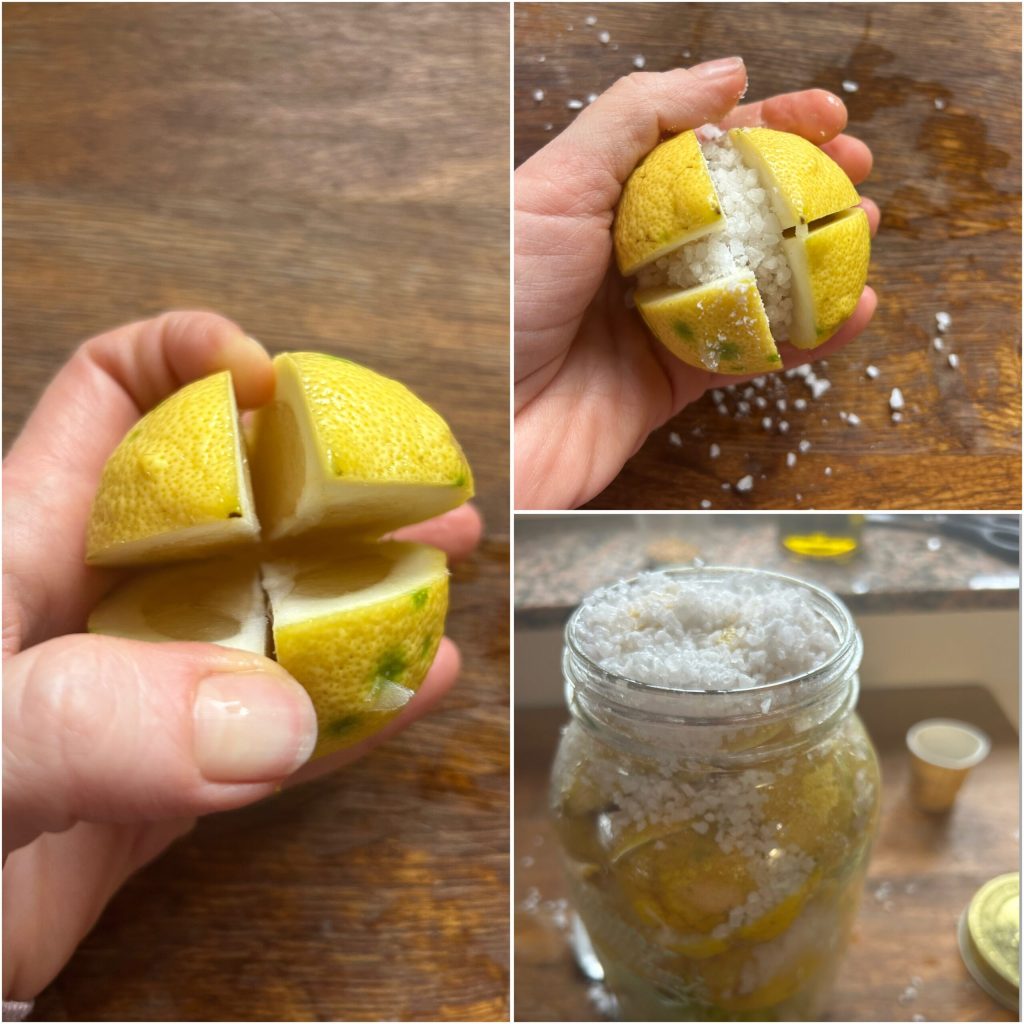
Continue in this way until the jar is full, then add more lemon juice until the lemons are completely covered. Let rest for a few hours; you will see that the lemon juice will have dissolved almost all the salt and the liquid necessary for fermentation will have formed.
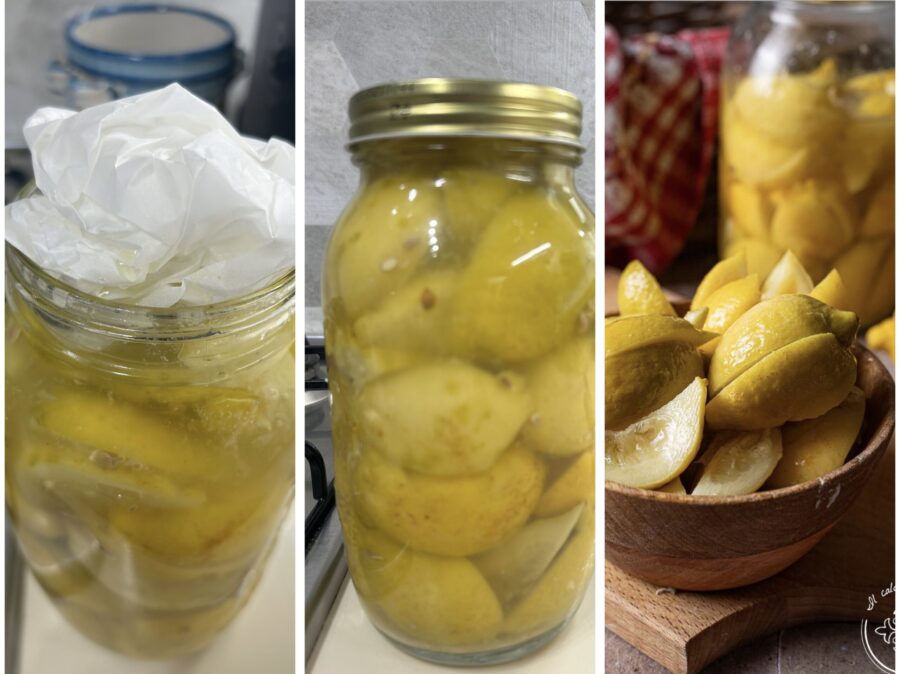
After this time, to keep the lemons always submerged in their liquid — a fundamental condition for correct fermentation — place a slightly crumpled piece of parchment paper on the surface and close the jar.
Let rest at room temperature, in a dim place, for about 3-4 weeks. During this time natural fermentation will occur.
In the first days of fermentation, some liquid may tend to escape from the jar due to the pressure of the gases produced. Place a tray under the jar to collect any spillages.
After this time, transfer the jar to the refrigerator.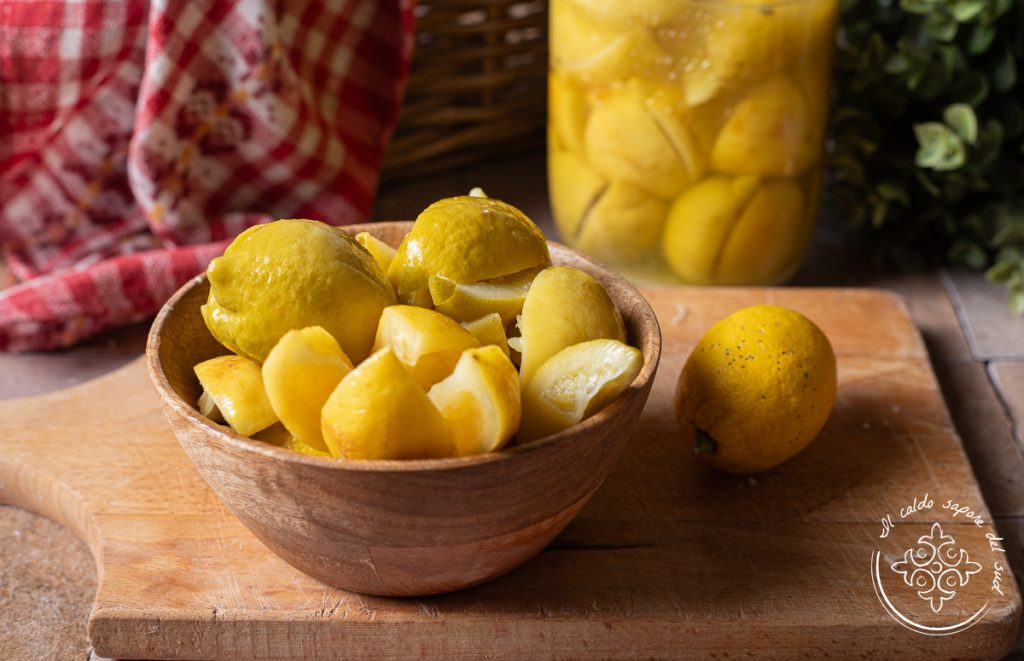
Storage, notes, uses and tips
Once ready, salted lemons keep in the refrigerator for several months, provided they are always kept submerged in their liquid.
If over time any lemons should float, simply press them back down below the brine level to avoid contact with air and ensure proper preservation.
As for using salted lemons, it is recommended to use mainly the peel, which is more aromatic and less acidic than the pulp.
If you are wondering how to use salted lemons, simply rinse the peel lightly under running water to remove excess salt, then cut it into thin strips before adding it to meat, fish, roast chicken, rice, couscous, sautéed vegetables or salads.
Thanks to natural fermentation, salted lemon is more digestible and aromatic than fresh lemon, making this preserve perfect for flavoring dishes even in small quantities.
If you want to stay updated on my other recipes, follow me also on: Pinterest, YouTube, X and TikTok.
From here, you can return to the HOME and discover the new recipes!
FAQ (Questions and Answers)
What is salt-fermented lemon?
Salt-fermented lemon is a preserve obtained through the natural lactic fermentation of lemons, which thanks to the action of salt become softer, less acidic and more aromatic.
What are the benefits of salted lemons?
Thanks to natural fermentation, salted lemon is more digestible than fresh lemon and develops more intense aromas, making this preserve ideal for flavoring dishes even in small quantities.
Can I use the pulp of salted lemons as well?Yes, the pulp can also be used, but it is generally saltier and more intense than the peel. For this reason the peel is preferred.