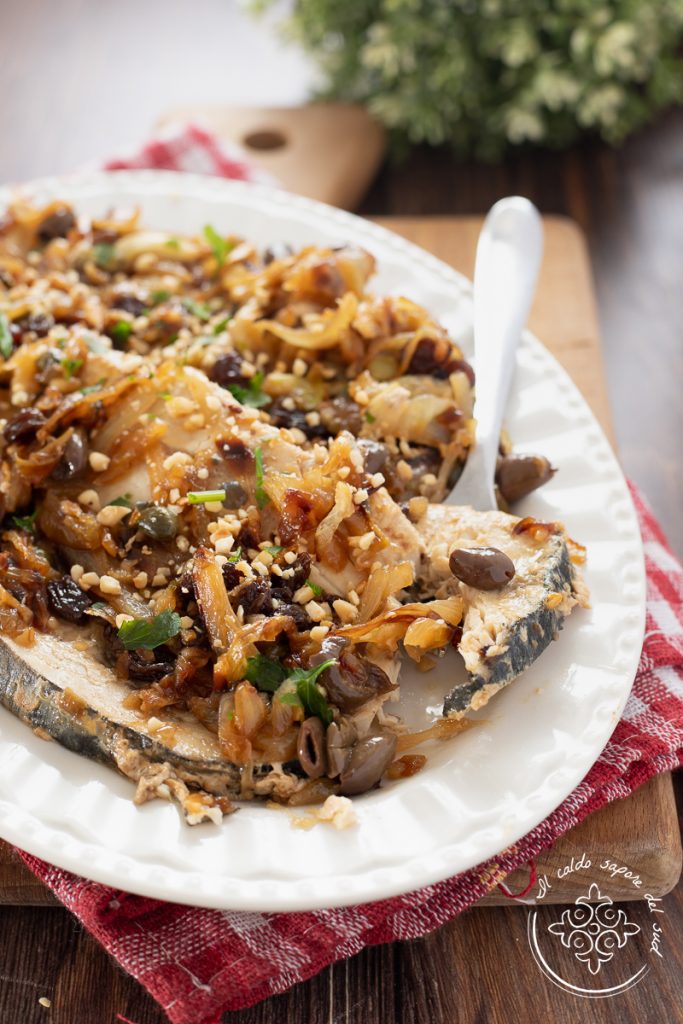
Swordfish in sweet-and-sour Sicilian style, with onions, olives, capers, celery and almonds is one of those recipes that fully belongs to the Sicilian cuisine and its grandmother’s recipes. A dish that tells the story of my island in all its essence: few ingredients, bold flavors and a perfect balance between sweet and tangy.
The fish with a braised onion sauce is a typical Sicilian recipe, prepared for generations along the island’s coasts using various types of humble fish. The Swordfish in sweet-and-sour Sicilian style represents one of the most beloved versions of this preparation, thanks to its rich sauce based on caramelized onions, olives, capers and raisins. A dish that belongs to the traditional fish menus, perfect for Sunday lunches and special occasions. Agrodolce, the protagonist of many traditional Sicilian dishes, from the eggplant caponata to the swordfish caponata, is an ancient technique of Mediterranean cooking, where sweet and sour merge creating a unique harmony of flavors. In this version, the swordfish is first seared and then flavored in a sweet-and-sour sauce made of softened onions, olives, capers, celery and almonds, a combination that recalls the Mediterranean tradition and the ancient influences of Sicilian cuisine.
A mix that recalls other great traditional Sicilian dishes featured on the blog and the fish mains recipes designed for everyday cooking and special occasions.
As often happens with sweet-and-sour recipes, this Sicilian swordfish, which you can also make with thawed swordfish, is even better after a few hours of rest and is perfect served at room temperature, just like many preparations from the Sicilian peasant tradition. But now let’s go to the kitchen: let’s prepare this dish step by step and you will love it. Before that, remember that if you want to stay updated on all my recipes, you can follow my Facebook page (here) and my Instagram profile (here).
Also look at:
- Difficulty: Very easy
- Cost: Inexpensive
- Rest time: 30 Minutes
- Preparation time: 15 Minutes
- Portions: 3
- Cooking methods: Stovetop
- Cuisine: Italian
- Seasonality: All seasons
Ingredients to make Sicilian sweet-and-sour swordfish with onions
- 4 slices swordfish
- 4 white onions (or red, medium)
- to taste salt
- to taste extra virgin olive oil
- 1 tablespoon sugar (level)
- 3 1/3 tbsp apple cider vinegar (or white wine vinegar, slightly diluted)
- 1 oz peeled almonds (chopped or flaked, or pine nuts)
- 1/4 cup raisins
- 1 tbsp capers in oil (or desalted capers or pickled (in vinegar))
Tools
- Pan
Preparation of swordfish in Sicilian sweet-and-sour sauce
For this recipe you can use either fresh or frozen swordfish, but you can also use fresh or frozen tuna and other types of oily fish such as mackerel. In any case you’ll get a great dish.
Thinly slice the onions (or spring onions) and transfer them to a large skillet with a generous drizzle of extra virgin olive oil and a pinch of salt.
Let them soften over low heat, stirring often, until they become soft and translucent. Continue cooking until they are well golden and slightly caramelized; add a little water if necessary.
When the onions are well cooked, deglaze with a little vinegar (wine or apple) and let it evaporate over high heat.
Add the coarsely chopped nuts (pine nuts, almonds or whatever you chose) and stir to flavor.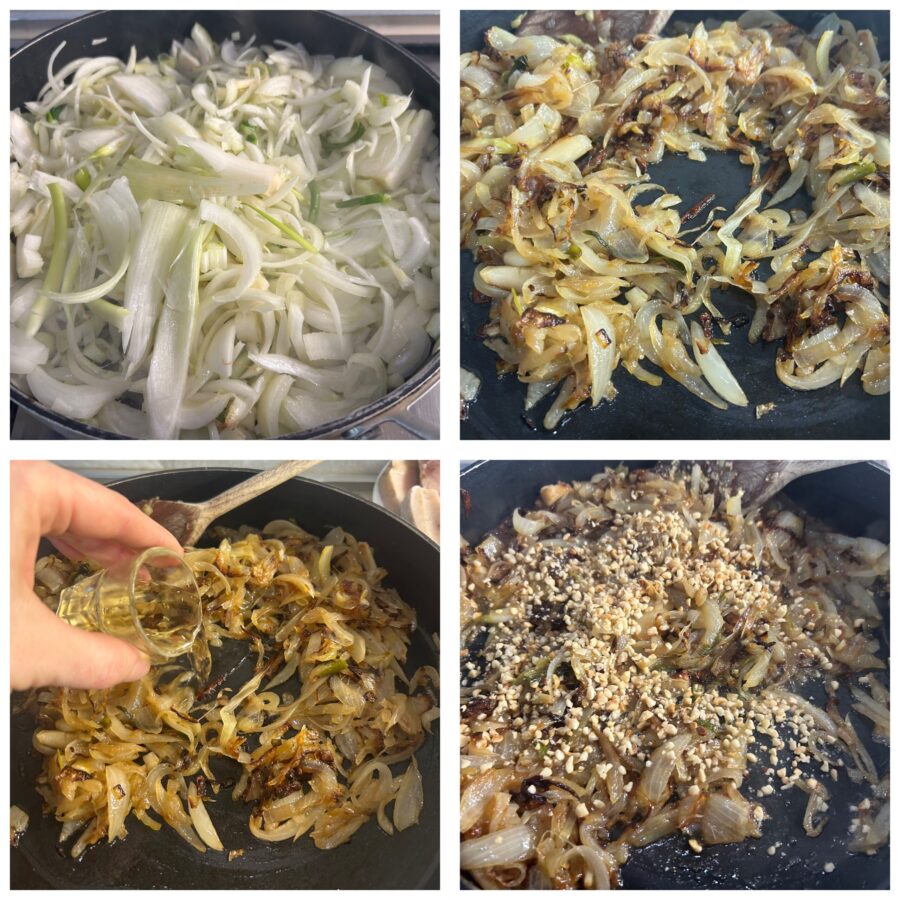
Add olives, capers and raisins, and the sugar to obtain the classic sweet-and-sour balance. Stir and let the flavors develop for a few minutes.
Finish with fresh celery sliced into rounds, which should remain crunchy, and mix well. Turn off the heat and set the sauce aside.
In the same skillet and without cleaning it, place the swordfish slices (or the fish you chose) and cook them over medium heat, turning gently, until they are cooked but still tender.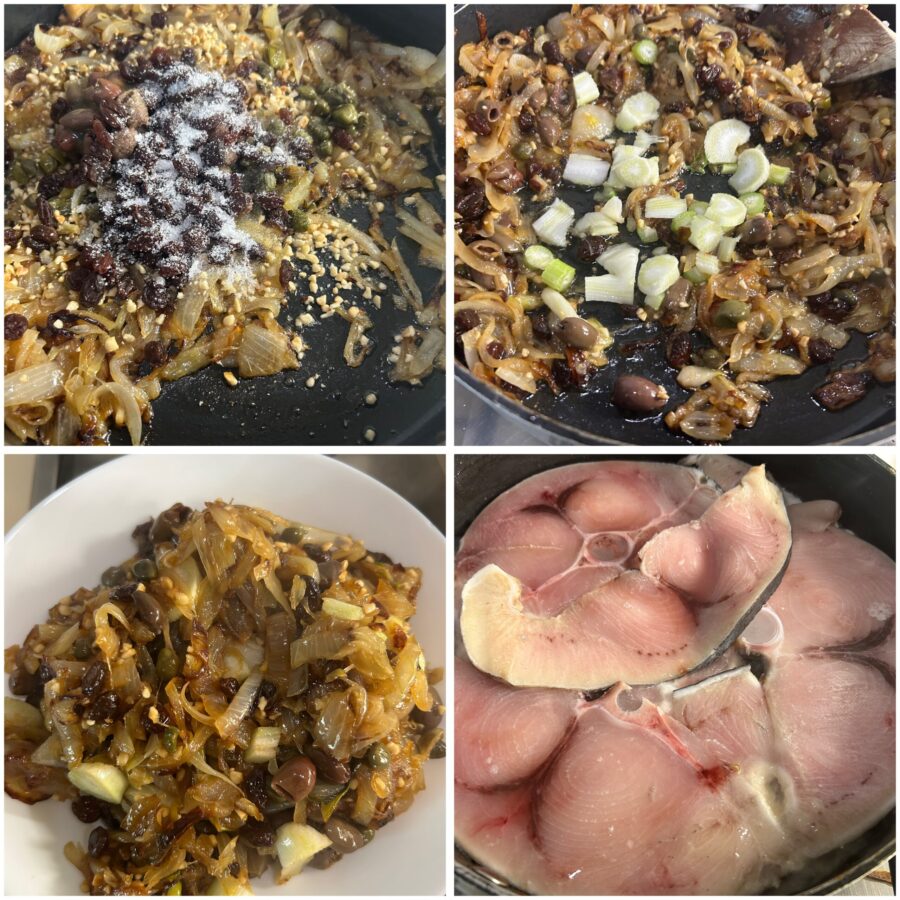
Spread the sweet-and-sour onion sauce over the fish, cover and let it absorb the flavors for a few minutes over high heat.
Turn off the heat, let rest for a few minutes and serve with all the sauce.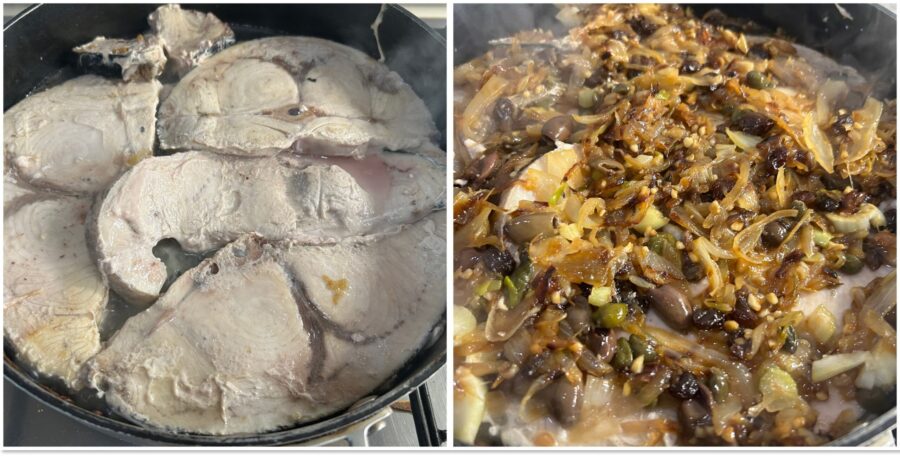
Storage notes and tips
Swordfish in Sicilian sweet-and-sour style keeps perfectly in the refrigerator for 1–2 days in an airtight container. In fact, as often happens with traditional dishes, it is even better the next day because the flavors have time to meld.
Before serving, bring it to room temperature or gently reheat it in a skillet, adding a tablespoon of water or extra virgin olive oil if necessary.
Tips:
Use white or yellow onions: they should cook slowly until soft and caramelized without burning; red onions also work well, but the dish will be slightly darker in color.
The balance of sweet-and-sour is essential: always taste and adjust sugar and vinegar to your liking.
Do not overcook the swordfish: gentle cooking keeps it tender and juicy.
Variations:
You can replace swordfish with bonito (palamita), fresh tuna or mackerel.
For a more aromatic version, add a pinch of cinnamon or a couple of bay leaves while cooking the onions.
If you like a sweeter contrast, you can slightly increase the amount of raisins or dried fruit.
If you want to stay updated on my recipes, follow me on:
pinterest; X, you tube and tiktok.
FAQ (Questions & Answers)
Can I prepare the swordfish sweet-and-sour in advance?Yes, swordfish in Sicilian sweet-and-sour style can be prepared a day in advance. In fact, after a few hours of resting the flavors become even more harmonious and intense. Be sure to store it in the fridge in an airtight container and warm it slightly before serving.
Which type of onions are best?
White or red onions are the most suitable because they become soft and sweet during the long cooking, creating the perfect balance with the sweet-and-sour sauce.
Can I substitute the swordfish?Yes, you can use fresh tuna, bonito (palamita) or mackerel. The important thing is to choose a fish with firm flesh suitable for pan cooking.
Does Sicilian agrodolce use sugar or honey?
In the traditional version sugar is used, but you can replace it with honey or brown sugar, always adjusting the final taste.
How to avoid swordfish becoming dry?
The secret is not to overcook it. A few minutes per side and a brief final pass with the sauce over low heat is enough.Can I use frozen fish?
Of course, provided it is properly thawed slowly in the refrigerator.