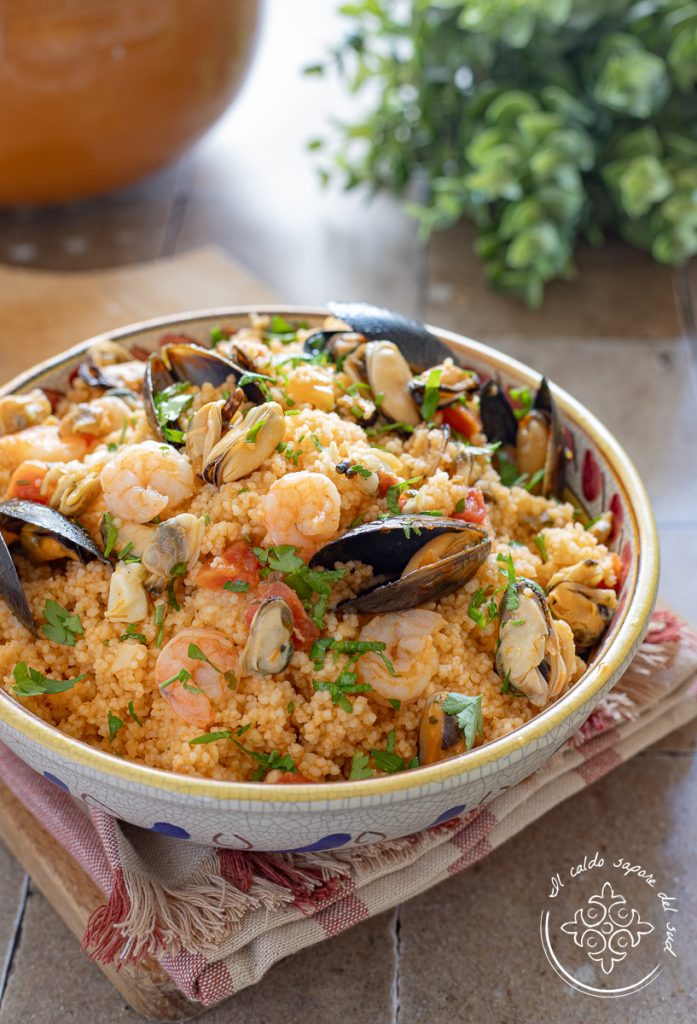
Sicilian fish couscous is one of the most representative dishes of traditional Sicilian cuisine and grandmother’s recipes, particularly tied to the Trapani area, where the celebrated Trapani-style fish couscous recounts centuries of cultural influences and seafood cooking. A fish first course, but also a complete dish that fits perfectly among seafood menu ideas, like pasta with sardines and wild fennel Sicilian-style. The traditional Sicilian fish couscous requires time, patience and respect for tradition: semolina is worked by hand and steamed, while the seafood broth is enriched with garlic, onion, tomato, parsley and light spices, able to enhance the flavor of the catch without masking it. The result is an intense, aromatic dish deeply tied to the territory. In today’s preparation, however, I will use pre-cooked couscous, which will be rehydrated with a flavorful fish broth made with soup fish, shellfish and Mediterranean aromatics such as garlic, onion, tomato and parsley. It is the broth, the heart of the recipe, that faithfully recalls the traditional Trapani version, giving the dish an intense and enveloping taste.
This recipe, which may make purists slightly raise an eyebrow, represents a meeting between tradition and practicality, designed to showcase the catch and the flavors of the Mediterranean, making Sicilian-style seafood couscous accessible to everyone without betraying its Trapani soul.
Let’s go to the kitchen and prepare it together. But first, if you want to stay updated on all my recipes, you can follow my Facebook page (here) and my Instagram profile (here).
Also check out:
- Difficulty: Medium
- Cost: Expensive
- Preparation time: 2 Hours 30 Minutes
- Portions: 5
- Cooking methods: Stovetop
- Cuisine: Italian
- Seasonality: All seasons
Ingredients to make Trapani-style couscous
- 1.3 lb mussels
- 0.7 lb clams
- 1.1 lb squid
- 0.7 lb shrimp (peeled (about 1.3 lb whole))
- 1.3 lb mixed fish (for soup)
- 1 red gurnard (or another fish of about 1.1–1.3 lb that can be filleted — cod works as well)
- 6 large prawns
- 6 scampi (langoustines)
- 1 white onion (small)
- 2 cloves garlic
- to taste parsley
- to taste salt
- to taste extra virgin olive oil
- 3/4 cup almond flour
- 2 cups cherry tomatoes
- 3/4 cup tomato purée (passata)
- 1 packet saffron
- 1 3/4 cups uncooked couscous
Tools to make Sicilian seafood couscous
- Pots
- Knife
- Fine-mesh strainer
- Bowl
Steps to make Sicilian seafood couscous
To make an excellent Trapani-style couscous, go to your trusted fishmonger: it’s essential that the seafood you use is extremely fresh. If some items such as large prawns or scampi are frozen, ask for the best quality available!
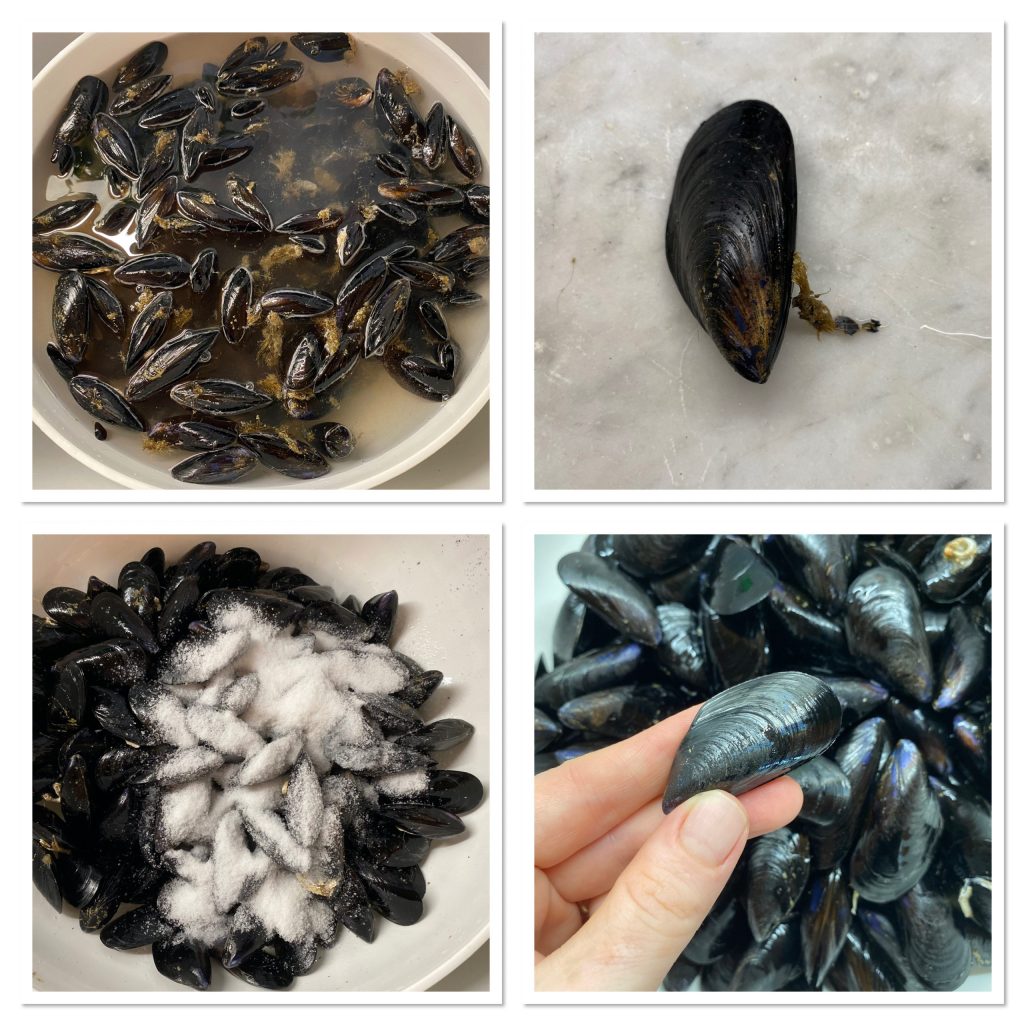
Once you’ve bought what you need, put the mussels and clams in two bowls of salted water and let them rest for at least two hours: they will release the sand. After that time, rinse the clams under running water and clean the mussels thoroughly with a steel wool pad to remove barnacles and dirt; then remove the beard (that tuft of filaments that keeps them attached to each other and to the surface they grew on) with a sharp pull.
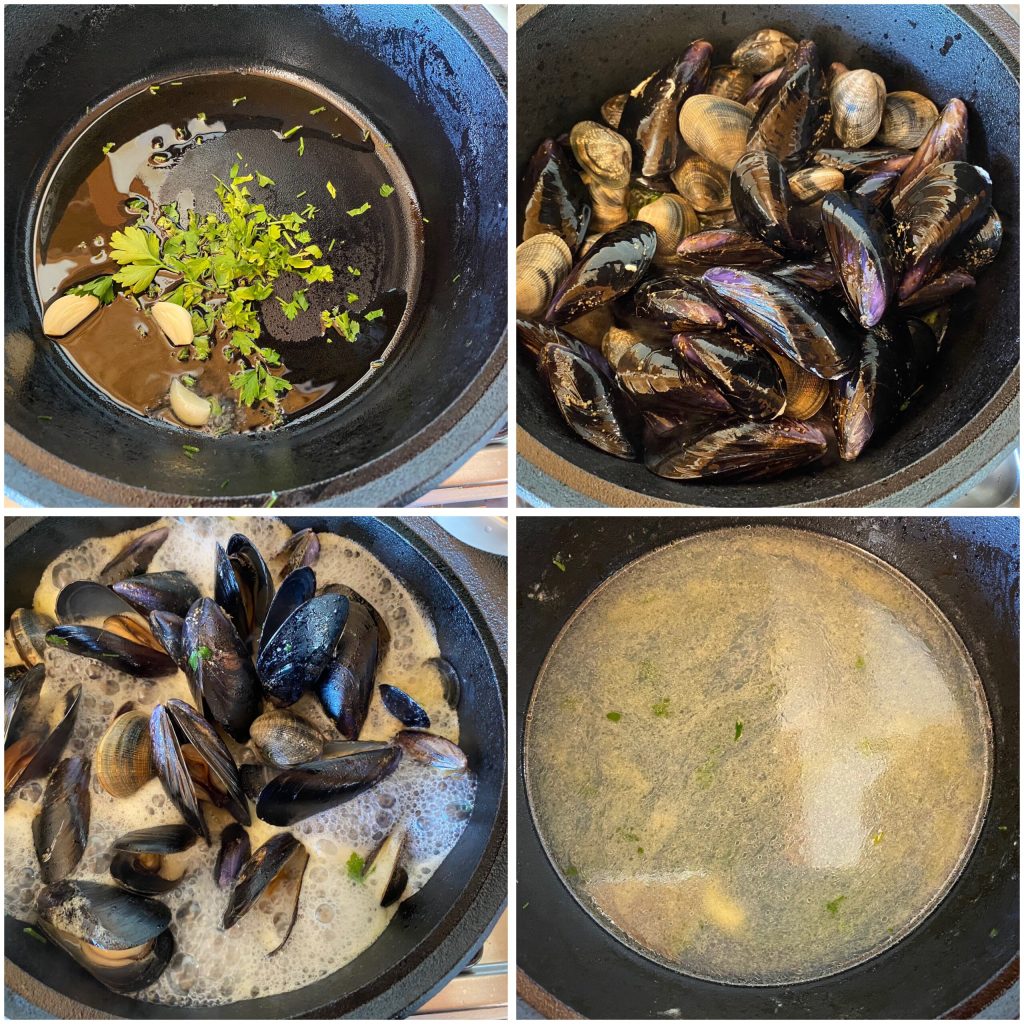
Sauté a clove of garlic with some parsley in a good splash of olive oil, being careful not to burn the garlic. Add the clams and mussels, pour in the wine and deglaze with a little white wine. Lower the heat, cover and let the mussels open slowly, shaking the pot a couple of times to mix them.
When they open, which will take about 6–7 minutes, turn off the heat.
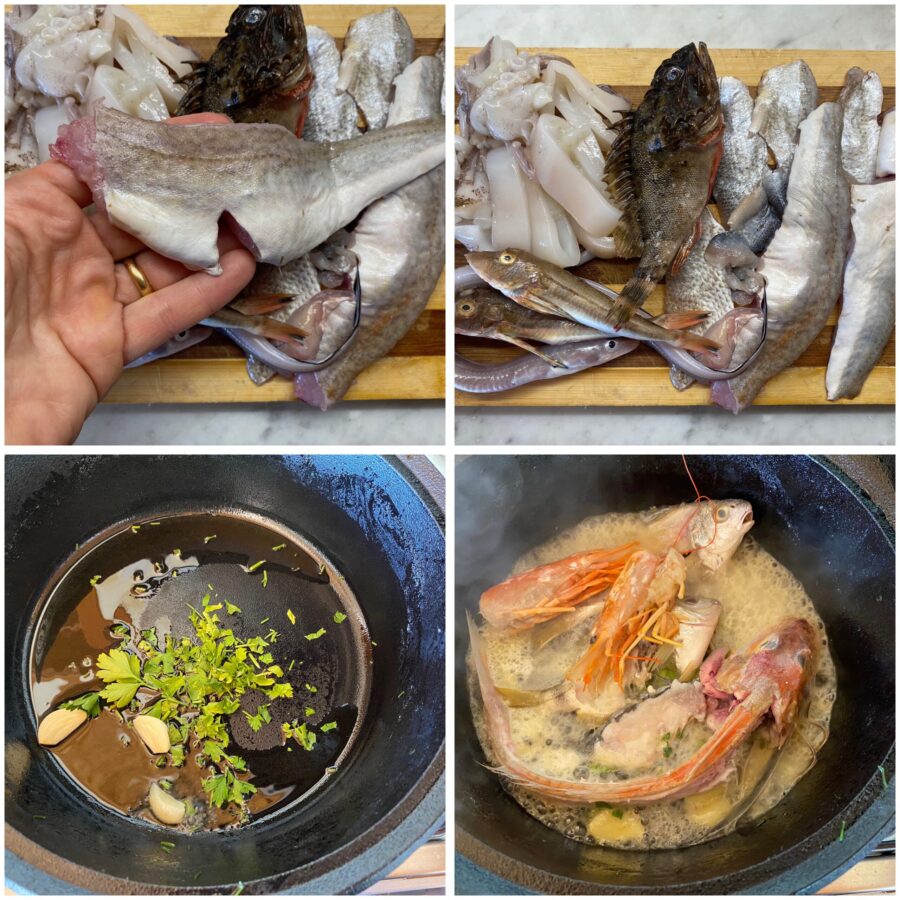
Transfer the shellfish to a container, then using a fine-mesh strainer, filter the cooking liquid and set it aside. Now prepare a reduced fish broth using all the “waste parts” of the fish. Start by filleting the red gurnard, already gutted, keeping the carcass. Do the same with any soup fish that can be filleted; otherwise, simply gut it, rinse it and use it as is.
Remove the heads from the large prawns and set them aside. Collect the garlic, parsley and a drizzle of oil in a heavy-bottomed pot — preferably cast iron or earthenware — and lightly brown. Add the carcasses and prawn heads, deglaze with white wine and add the reserved shellfish cooking liquid along with a full glass of water and a pinch of salt. Simmer for thirty minutes over low heat, then turn off and let rest a few minutes before straining everything, pressing the fish and prawn heads well to extract all the juices.
Rinse the pot you just used or choose another, and gently toast the almond flour until it takes on a little color. Move the toasted almond flour to a container, slice an onion and sauté it with a pinch of parsley, then add the tomatoes and season lightly with salt.
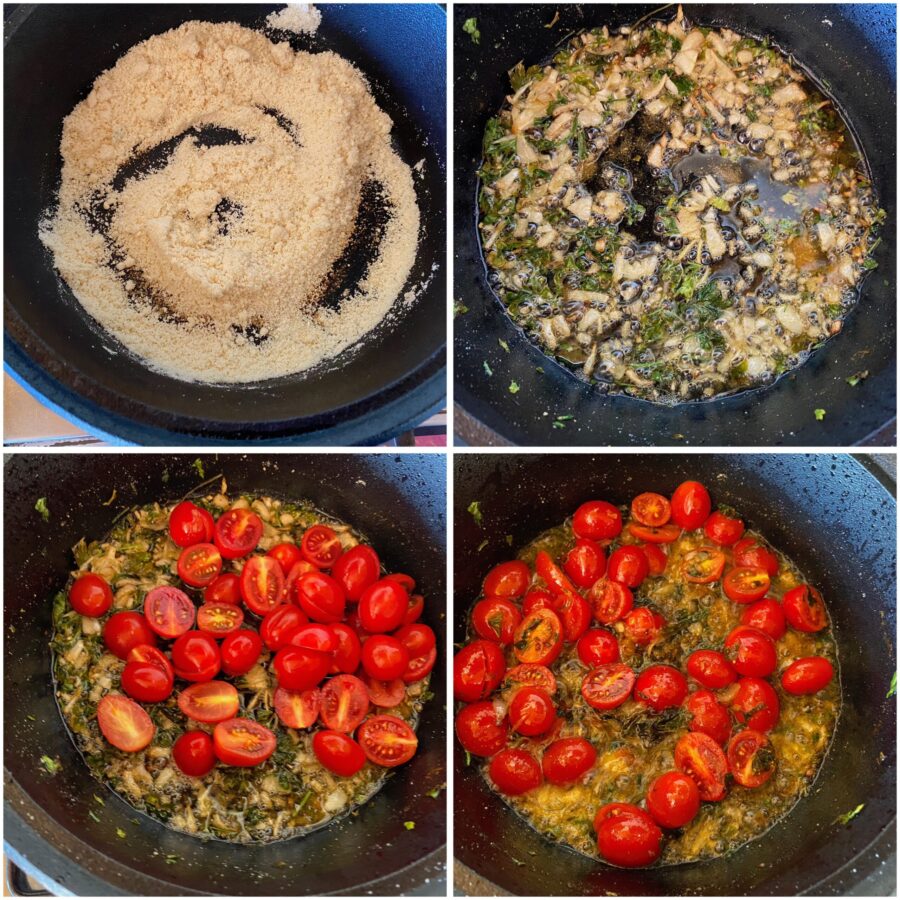
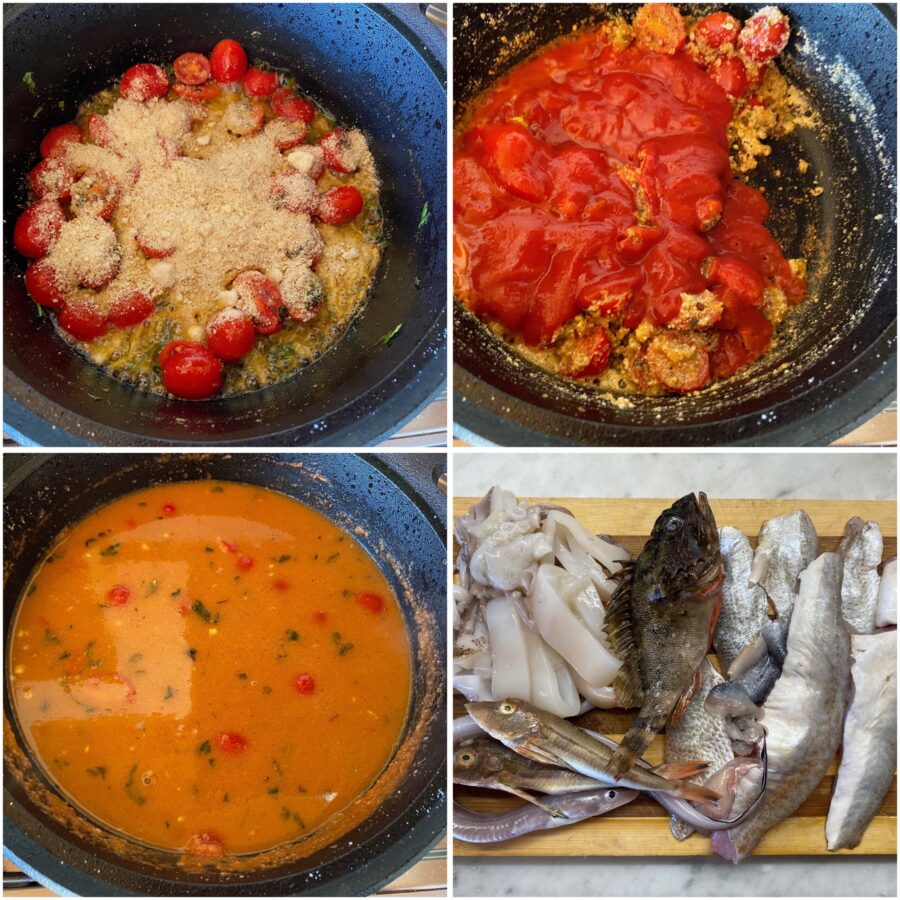
Add the toasted almond flour, the tomato purée and the saffron, stir and pour in all the reserved fish broth plus two full glasses of water. Bring to a boil and adjust the salt.
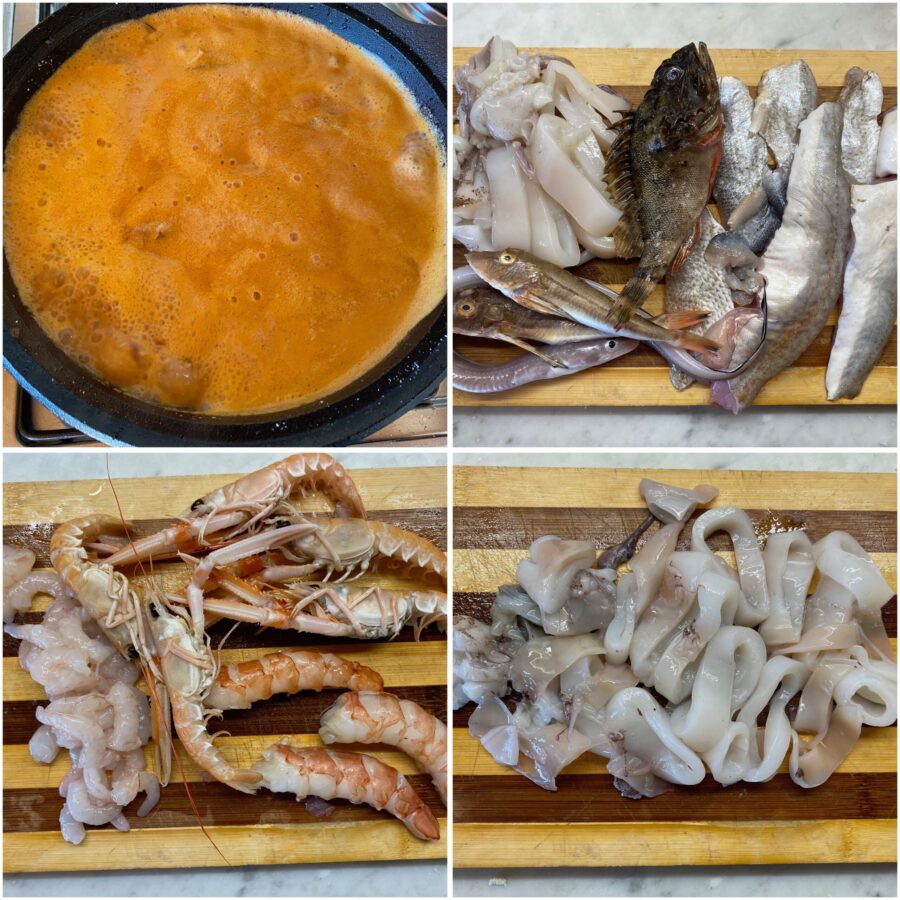
Add the filleted fish and cleaned soup fish to the boiling broth, wait about 5 minutes and then add the squid.
The squid must be cleaned, removing the central backbone, guts, beak and skin, then cut into rings. Wait for everything to return to a boil and finish with the peeled small shrimp, the peeled large prawns, scampi, and the shelled mussels and clams. Turn off the heat and let rest for thirty minutes; the residual heat in the pot will allow gentle, slow and even cooking by inertia.
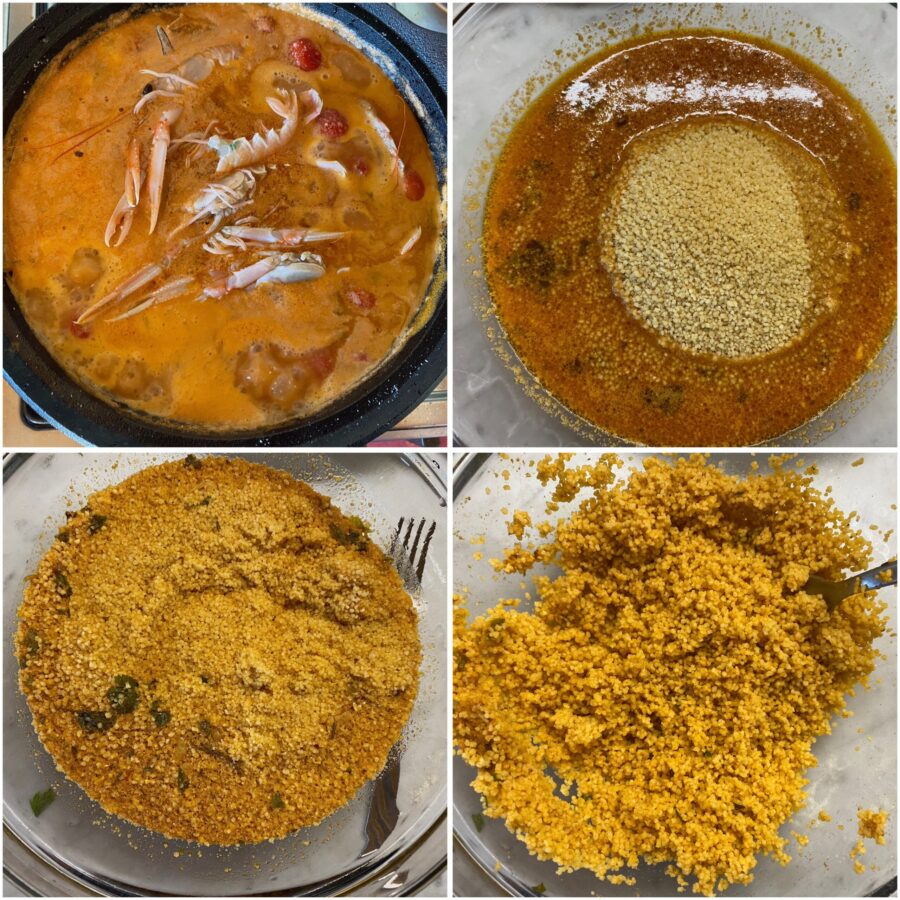
Now it’s time to rehydrate the couscous. For this step follow the instructions on the box, with the only exception that you’ll use fish broth instead of water (usually you add equal parts broth to couscous granules): place the granules in a bowl, pour the boiling broth over them and cover; wait ten minutes. As soon as the couscous has swollen, fluff it with a fork to separate the grains, add some of the fish and seafood and plate. Serve the couscous at the table accompanied by the cooked fish, collected in a baking dish or bowl on the side, from which anyone can help themselves.
Storage notes and tips
You can prepare the fish and its broth a few hours in advance and reheat before using. Prepared couscous and the broth keep in the refrigerator in an airtight container for up to 24 hours.
You can adjust the sugar according to your taste. If you want to stay updated on my recipes, follow me on:
Pinterest, YouTube, Twitter and TikTok.