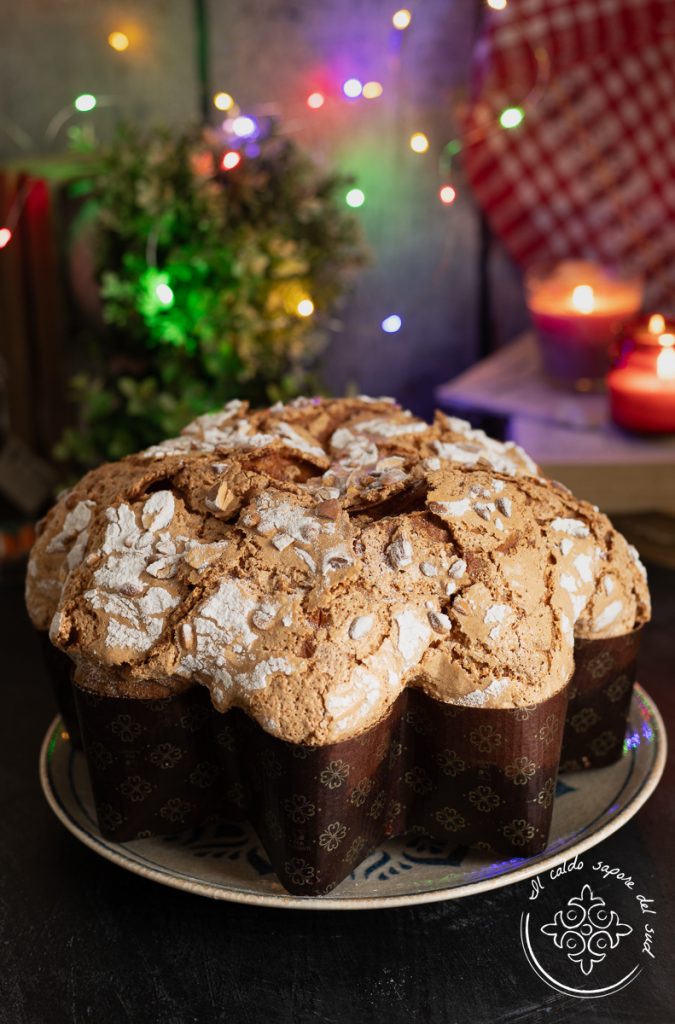
Original Nadalin recipe with sourdough starter: one of the Sweets to make at Christmas, the Great holiday leavened bread halfway between the Pandoro and the Panettone.
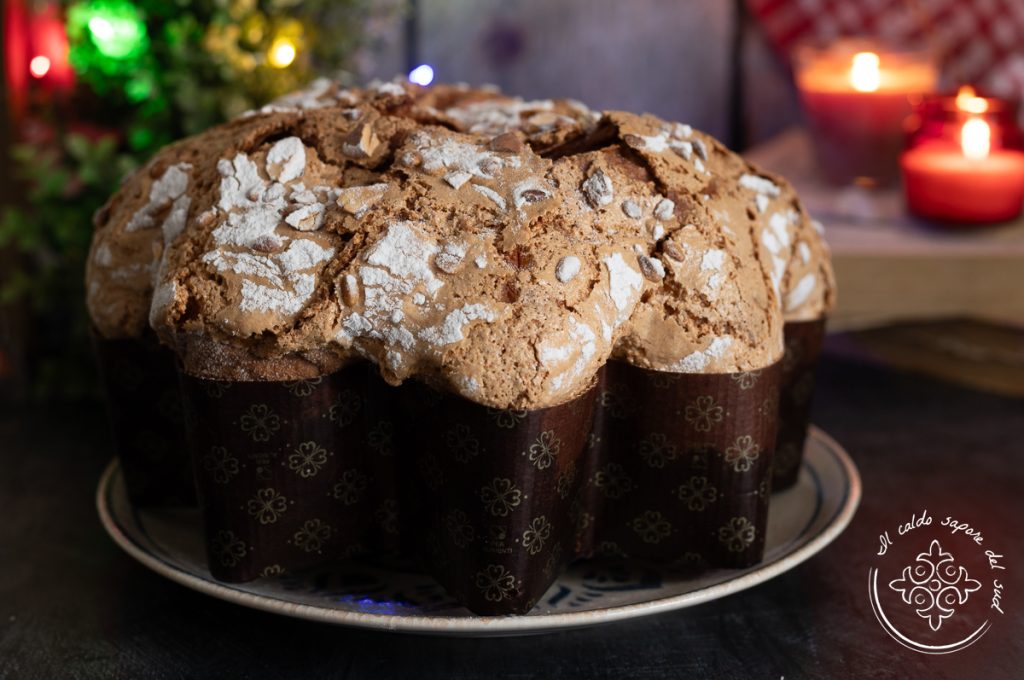
I took this recipe from master Massari’s book “Cresci”; I had to interpret it a little, but in the end the result was excellent, just as with the low Genoese pandolce and the high Genoese pandolce, both, like other recipes, taken from the same text. Nadalin is a delightful cake, a perfect compromise between panettone and pandoro and to be honest I prefer it to both: a sweet of Veronese origin and tradition, as the master explains, it is served during the Christmas holiday menu and is meant to recall the star that led the Magi to the stable. The light lemon aroma, enriched by a crunchy glaze topped with pine nuts, gives you a cake that will pamper you and make you fall in love.
To begin a large leavened bread you essentially need time, an active sourdough starter and a very strong flour with W 360 P/L 55. Time is needed to follow a leavening schedule that won’t wait for you: when you have to start the second dough you must be at home, and the same when you have to put it in the oven. Going beyond the leavening will mean wasting time and effort.
Your sourdough starter should be vigorous and well matured, so refresh it often in the days before preparation and, at the moment you use it, it should have been refreshed at least three consecutive times, once every three hours. So if you decide to mix in the evening, you can do the first refresh at 12:00, the second at 15:00, the third at 18:00 and then mix at 21:00. I recommend making the first dough in the evening so that it will be ready the next morning and you can bake the panettone by the following evening.
As for flour, you should use a very strong flour, with very high W and P/L values; it is rarely found in local stores, but you can find good technical flours for large leavened breads online at very reasonable prices.
Regarding the finished weight, I calculated to obtain about 1.2 kg of dough, because during baking the dough will lose about 10% of its weight which we must compensate for; moreover, during handling—especially the first times—you might lose some dough, so it’s better to prepare a little extra.
As for the shelf life, Massari gives no exact indication; I believe it keeps fairly well for at least ten days if wrapped in a food bag. Let’s head to the kitchen, but before discovering the recipe I’d like to remind you that if you want to stay updated on all my recipes you can follow my Facebook page (here) and my Instagram profile (here).
Check out these Christmas sweets:
- Difficulty: Very difficult
- Cost: Expensive
- Preparation time: 1 Day
- Portions: about 2.2 lb (1 kg) of finished product
- Cooking methods: Oven
- Cuisine: Italian
- Seasonality: Christmas, New Year's Eve
Ingredients to make Nadalin
- 2 3/4 cups 00 flour (W350 P/L 55)
- 1/2 cup water
- 1/3 cup sugar
- 2.5 oz sourdough starter (Well matured and vigorous)
- 5 tbsp butter (Good quality)
- 2 egg yolks egg yolk
- 2 tbsp malt
- 2.5 oz flour (W350 P/L 55)
- 5 oz butter
- whole eggs eggs (whole)
- 2/3 cup sugar
- 1 tbsp honey
- 1 tbsp cocoa butter
- 1 tsp salt
- lemon zest (organic)
- 1 tsp vanilla extract (Or the seeds of one vanilla bean)
- 3/4 + 2 tbsp cup sugar
- 1/3 cup almonds (with skin)
- 2 tsp bitter almonds (armelline)
- 1 tbsp fine cornmeal (polenta flour)
- 1 tbsp cornstarch (maizena)
- egg whites egg whites
- as needed pine nuts
- as needed almonds
- as needed powdered sugar
Tools
- Planetaria
- Forni
- Stampo star-shaped
Preparation
Dissolve the water and sugar at about 72°F and make a syrup.
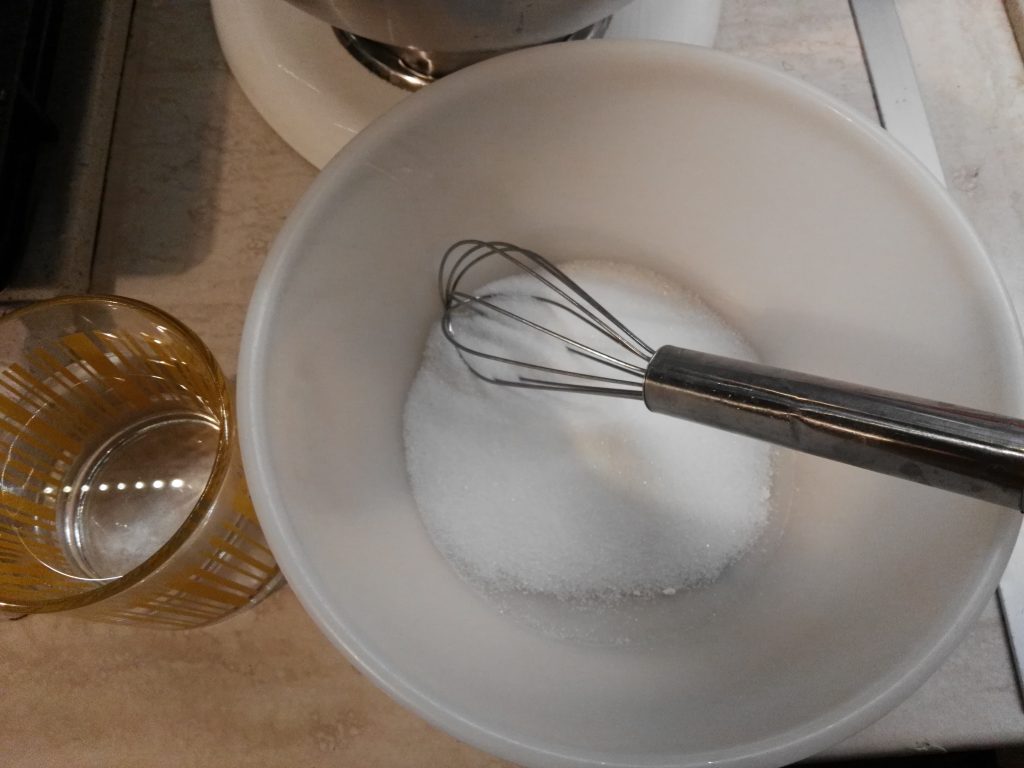
Gather in the stand mixer bowl the syrup, the flour, the malt and the sourdough starter.
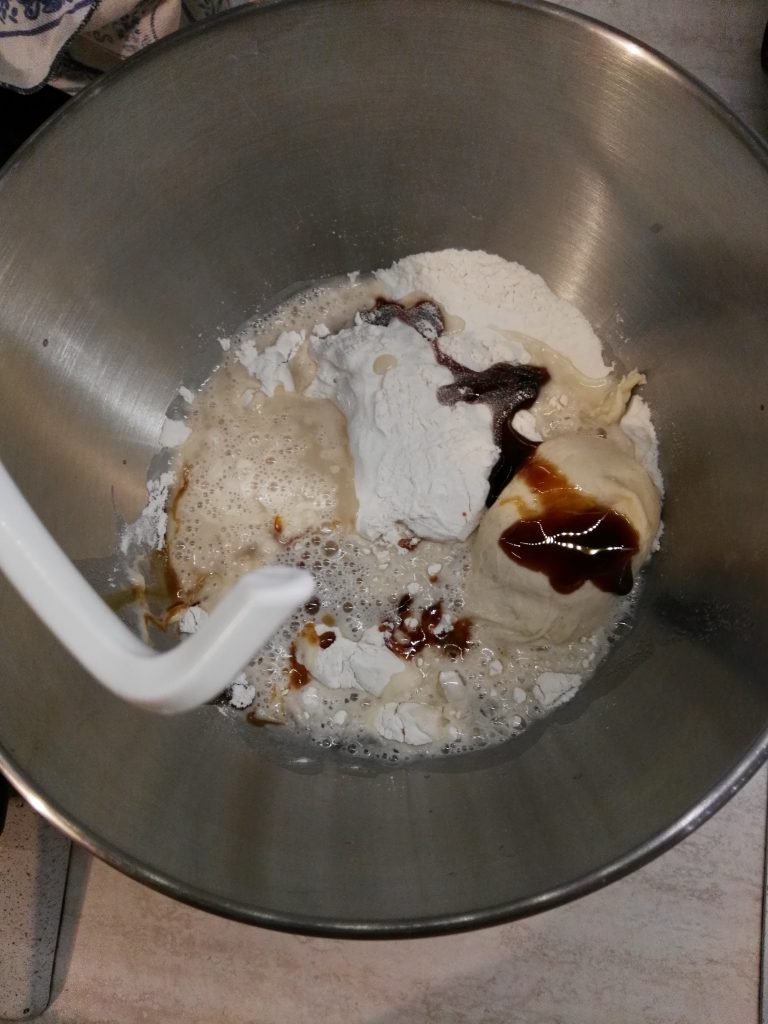
When everything starts to come together, add the butter and the eggs.
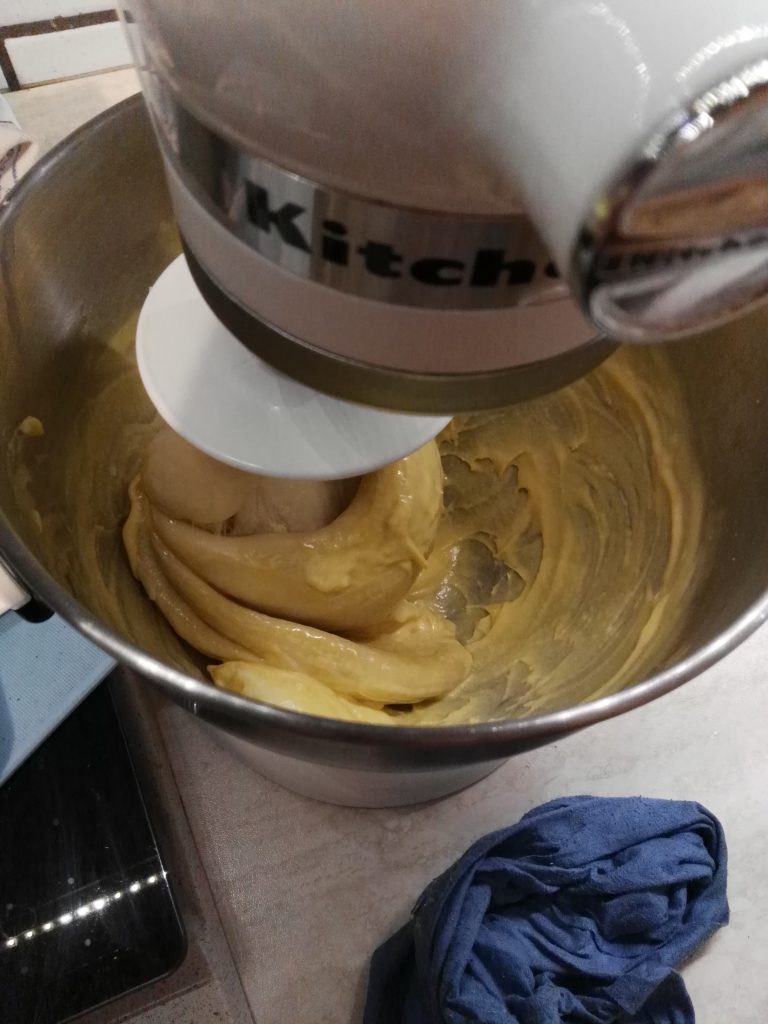
Knead until you obtain a smooth, homogeneous dough that stays attached to the hook, leaving the mixer bowl clean. The whole process should not take more than 25 minutes.
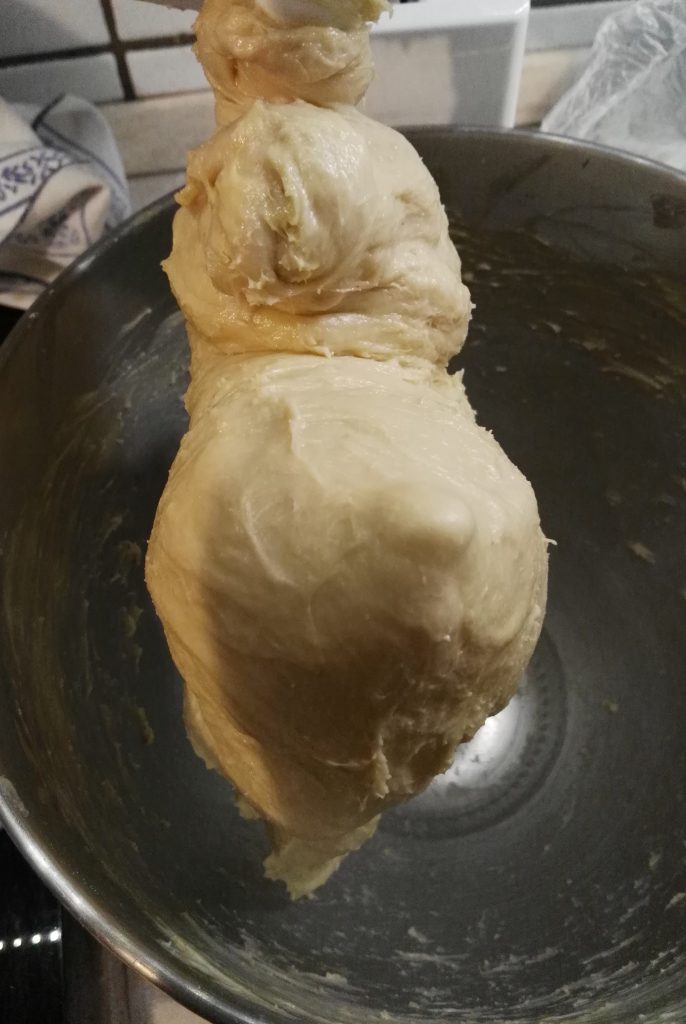
Turn the dough out onto a clean work surface (unst floured), set aside a small walnut-sized piece and, using a scraper, shape the dough into a smooth ball. (This photo and the next refer to a different dough, but the process is the same).
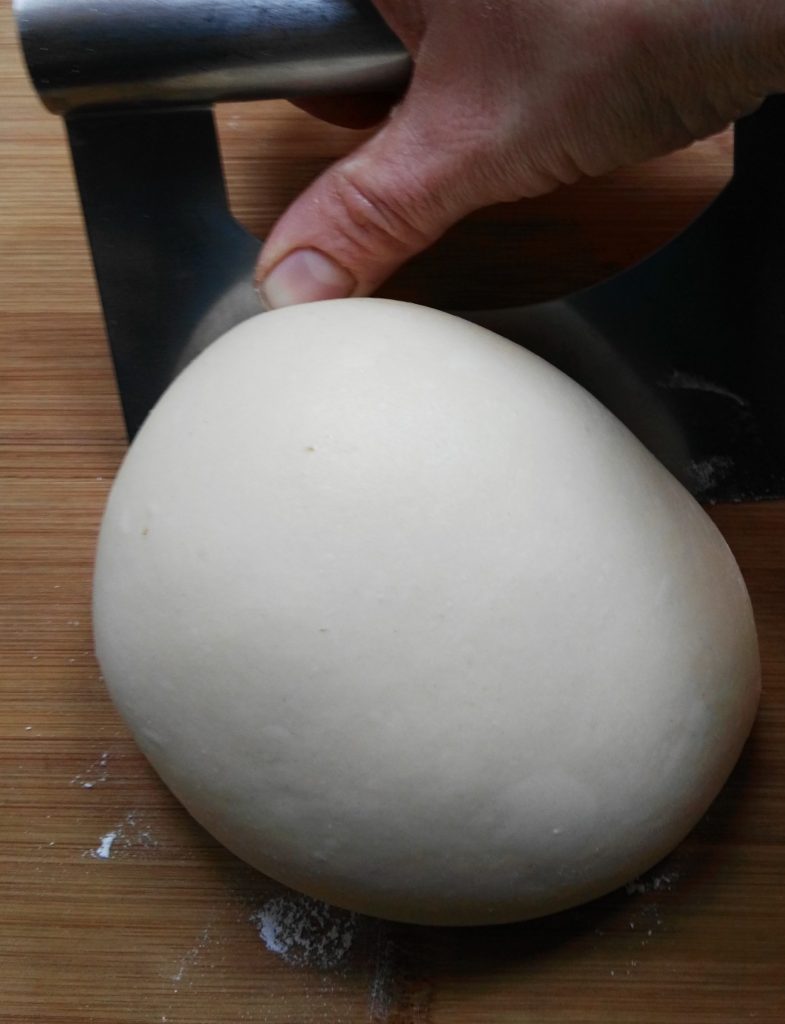
Also shape the small piece into a ball and place it in a glass; it will be used to monitor the progress of the leavening. Put the main mass to rest in a bowl, together with the small piece, inside a proofing chamber at about 79°F/82°F for at least ten or twelve hours, until it has tripled in size. Of course, if you don’t have a proofing oven you can put the dough in your oven with the oven light on to obtain a temperature around 79°F.
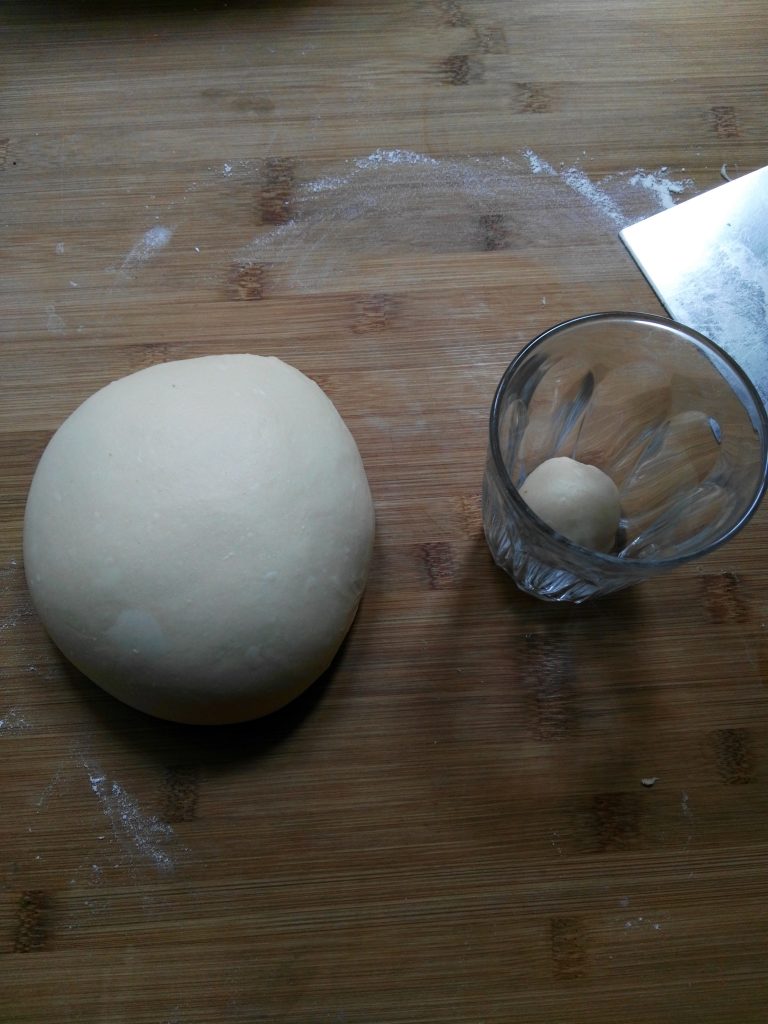
If you closed the dough the night before, as recommended, the next morning—if everything went well—you will find the mass tripled; but since this is not an exact science, if there are delays, wait and do not proceed. Insufficient leavening will delay subsequent rises by a time equal to three times the time missing from the previous stage.
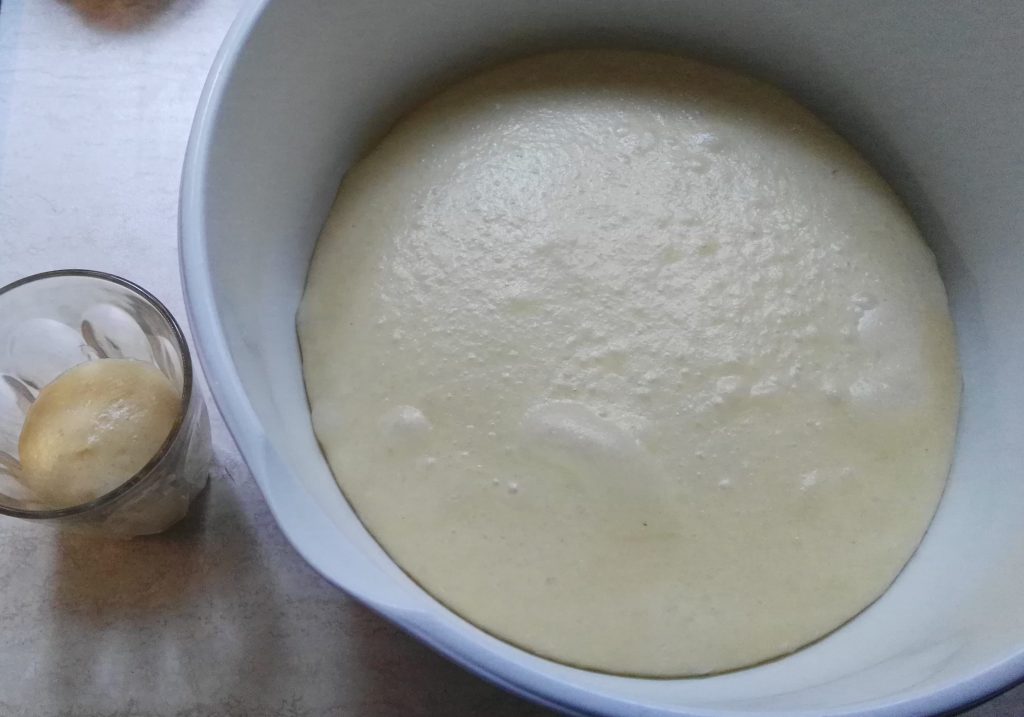
Deflate the dough, chill it in the refrigerator for about ten minutes (or cool the hook and bowl). It’s better to start the next additions from a dough that is not too warm. Take all the first dough, add the flour and the aromatics—vanillin and grated lemon zest—let it come together (at first add the flour using your hands to avoid flour everywhere), for at least ten to fifteen minutes.
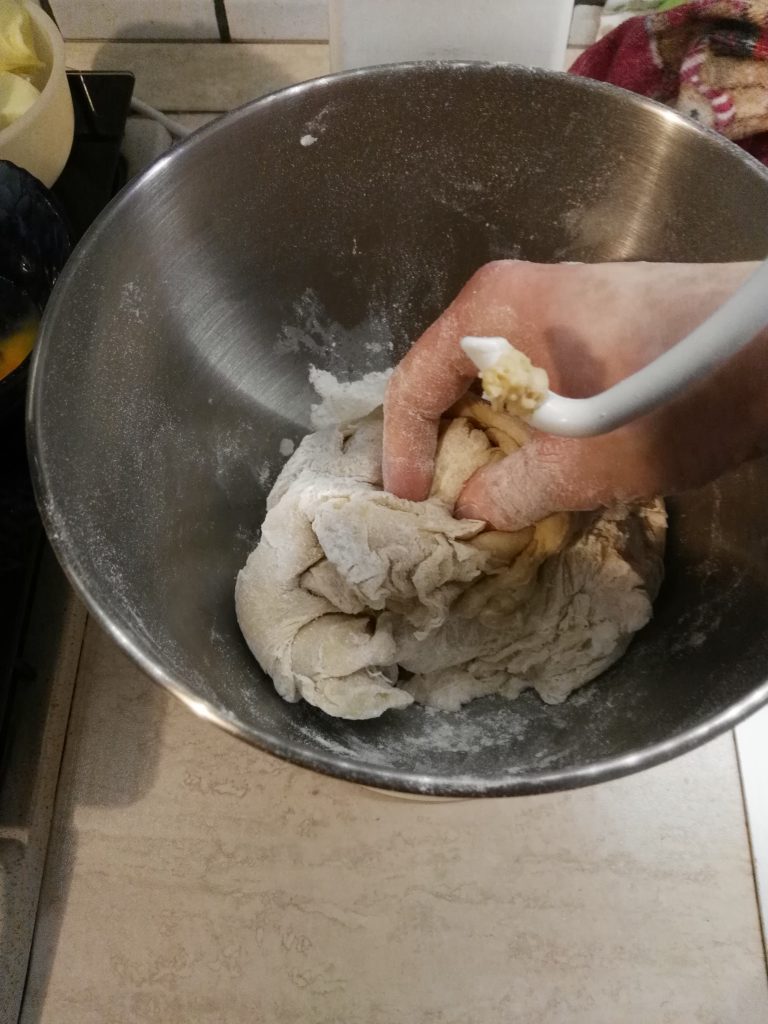
Worked for at least 15 minutes, the dough must become dry; then add part of the sugar, the honey and the salt and let the dough dry out, that is, become smooth, silky and elastic.
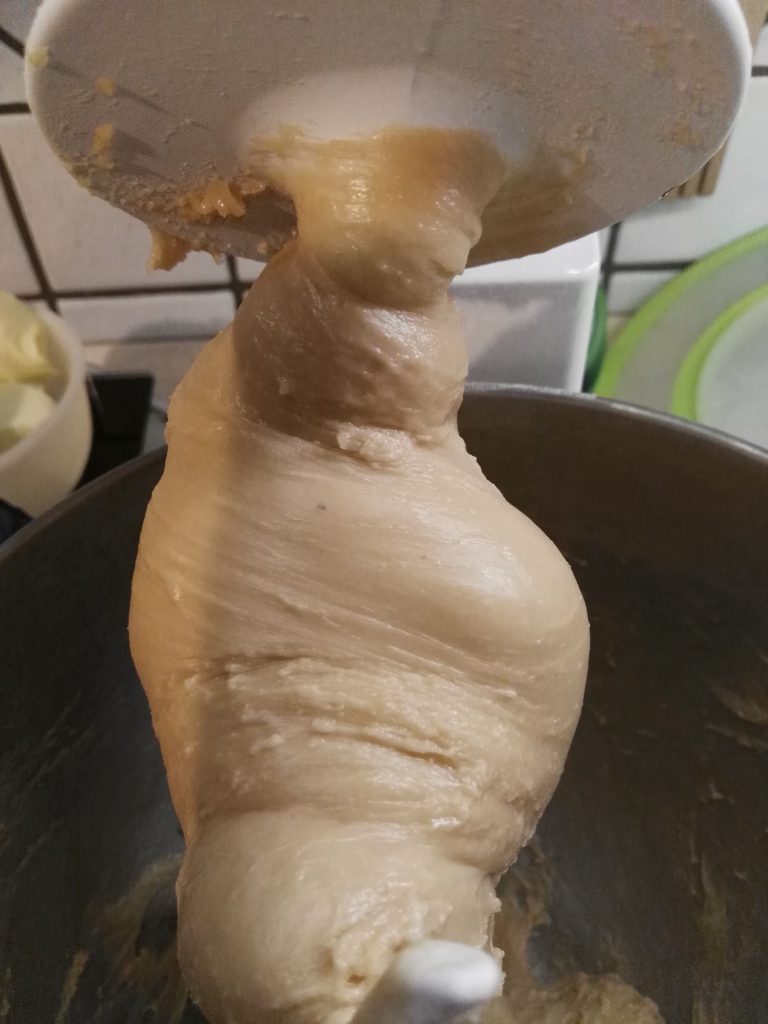
Incorporate the eggs, let them be absorbed and then add the butter emulsified with the remaining sugar and the grated cocoa butter.
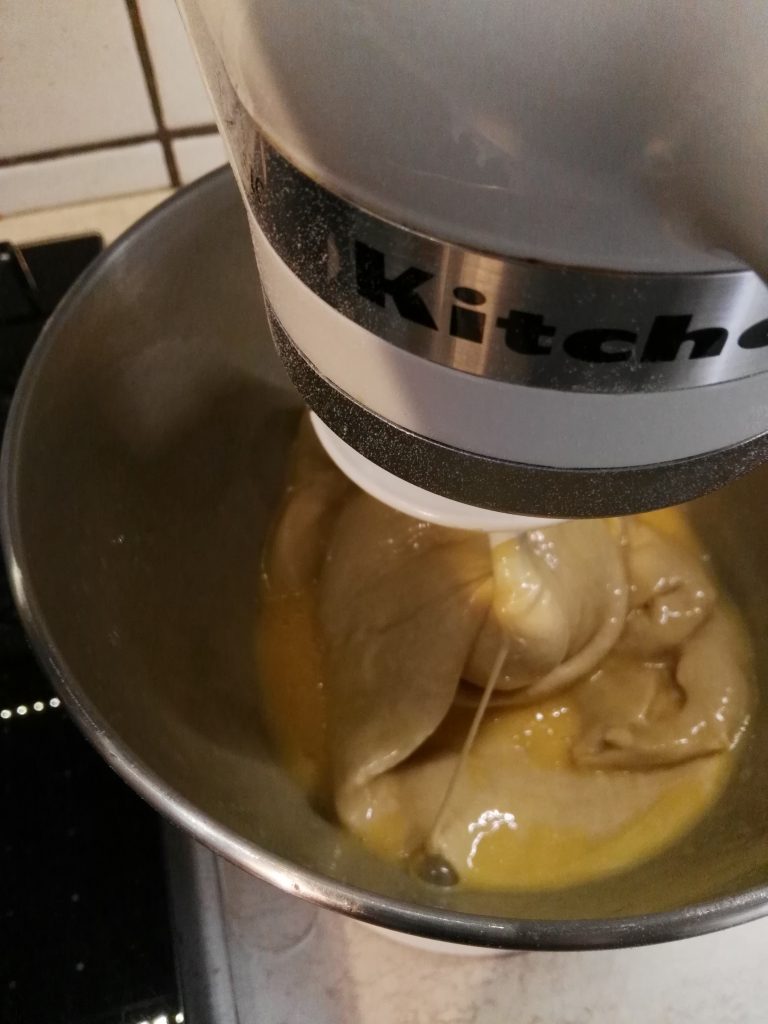
Knead everything very well until well incorporated.
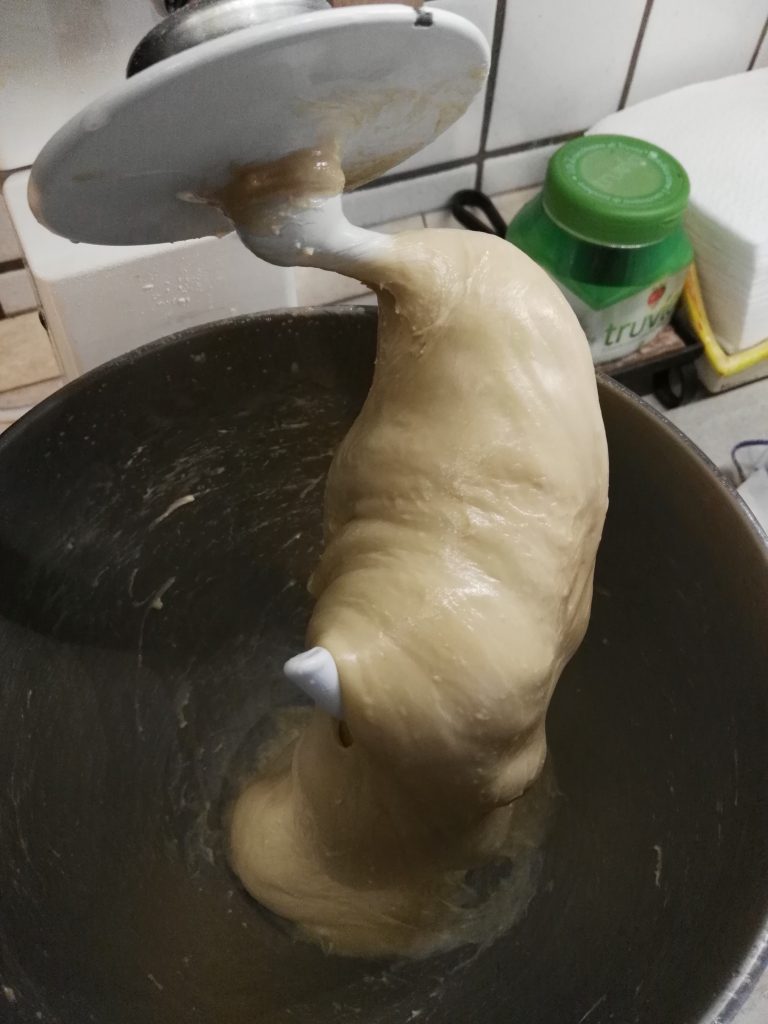
Turn it out onto a work surface; the dough will be perfect when it forms a thin membrane (the “windowpane” test)—you can stretch a piece and it will extend like a sheet without tearing.
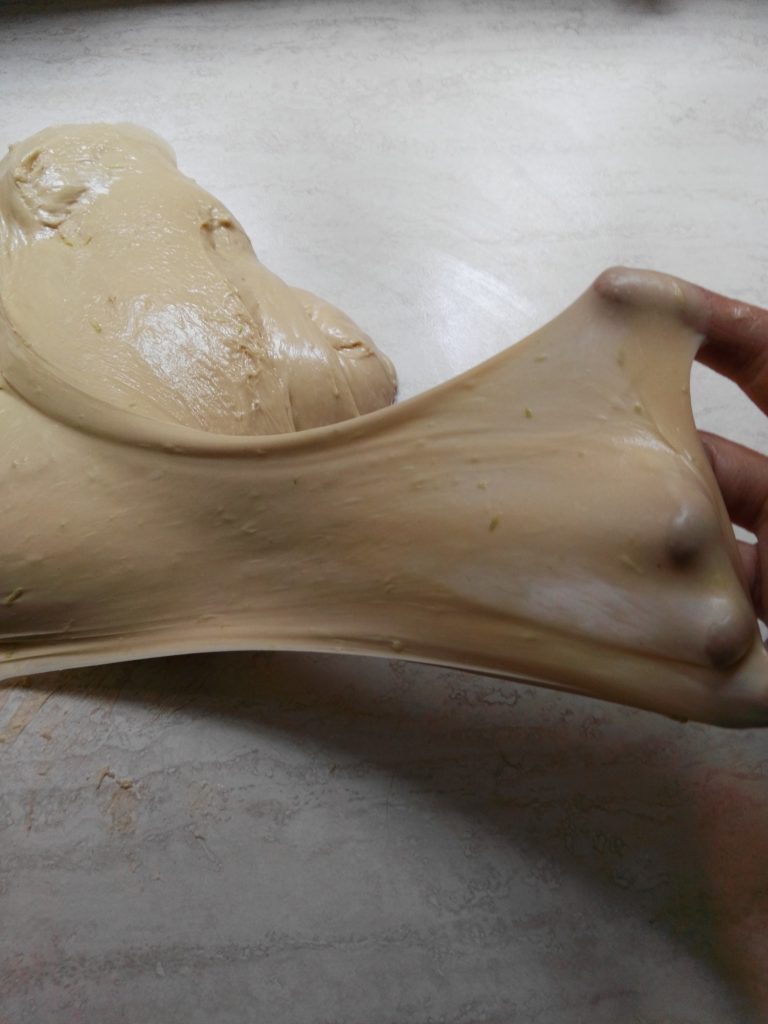
Let the dough rest at room temperature for one hour to “point” (slightly dry out); this will give it strength.
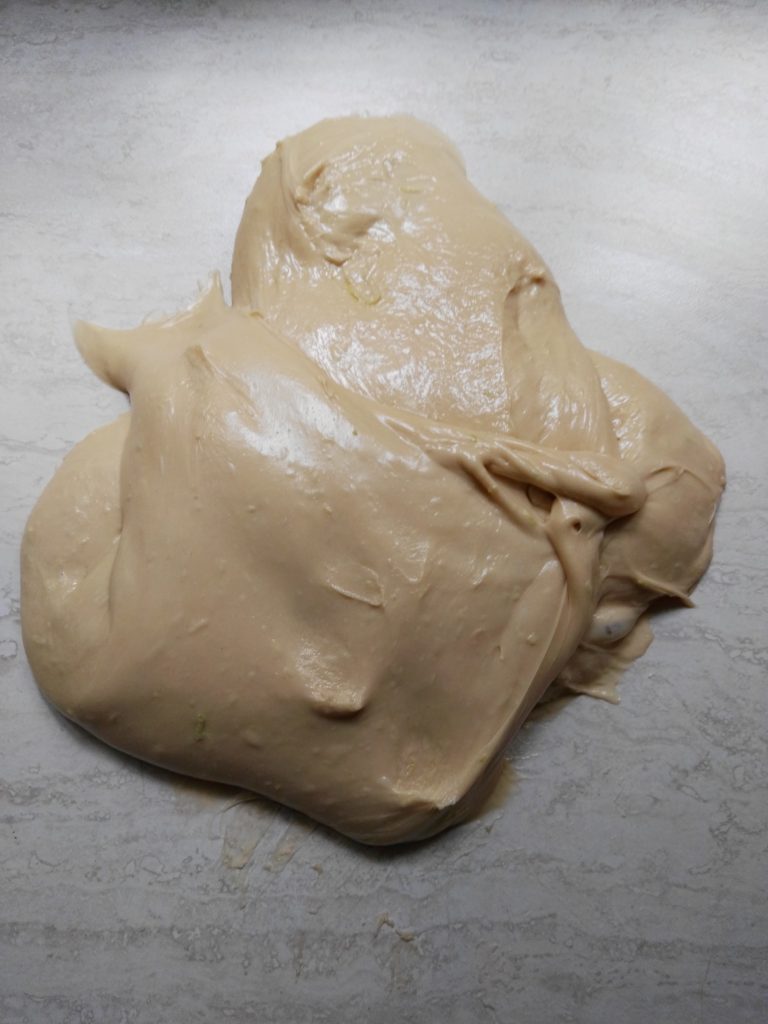
Weigh the dough, shape it into a ball, place it in the appropriate mold and set it to rise in the oven or proofing chamber for the necessary time.
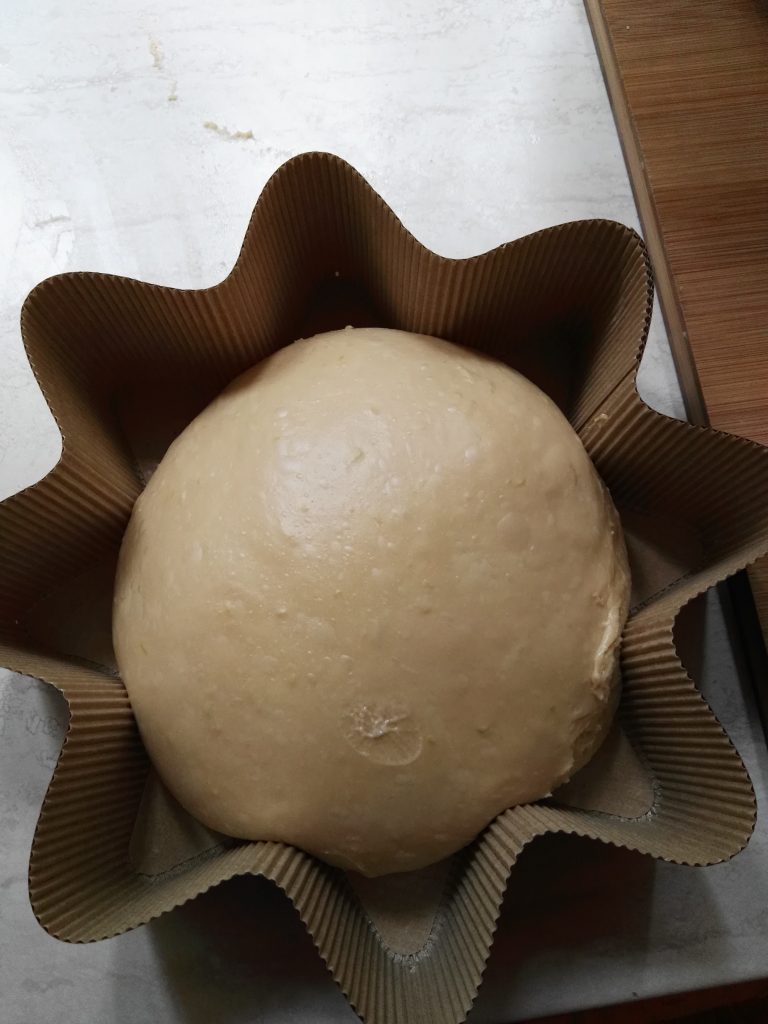
After 6-8 hours at 79°F/82°F the dough should be risen; when the panettone reaches about 1 cm from the rim (or slightly less) you can bake it. Preheat the oven to 338°F.
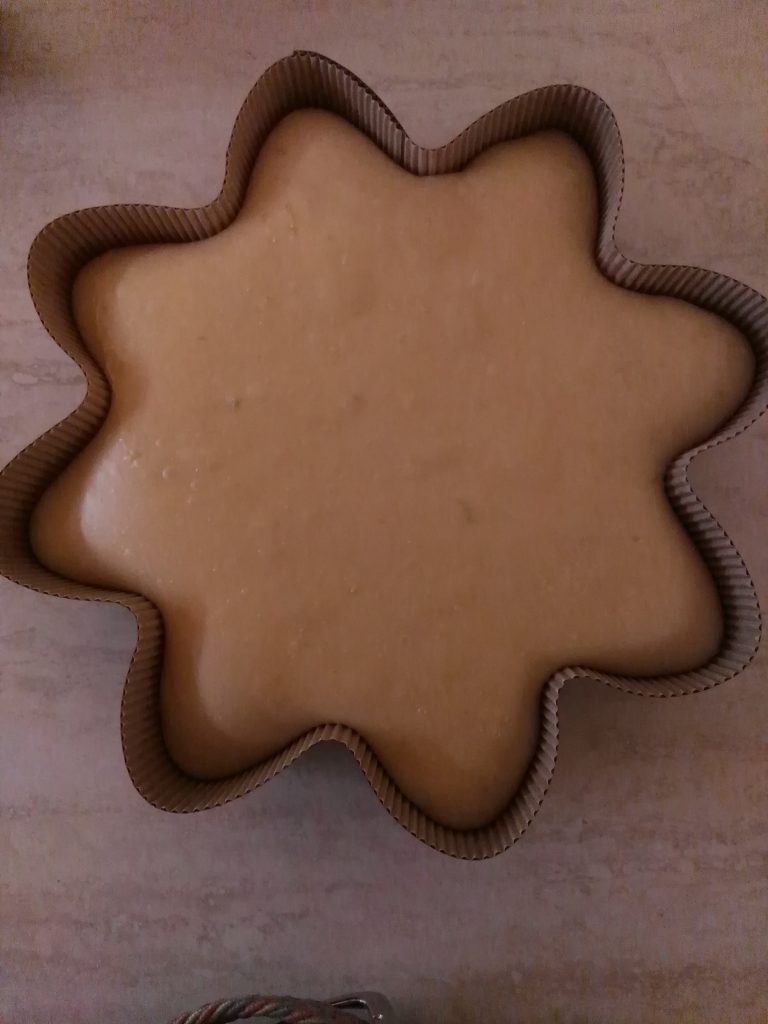
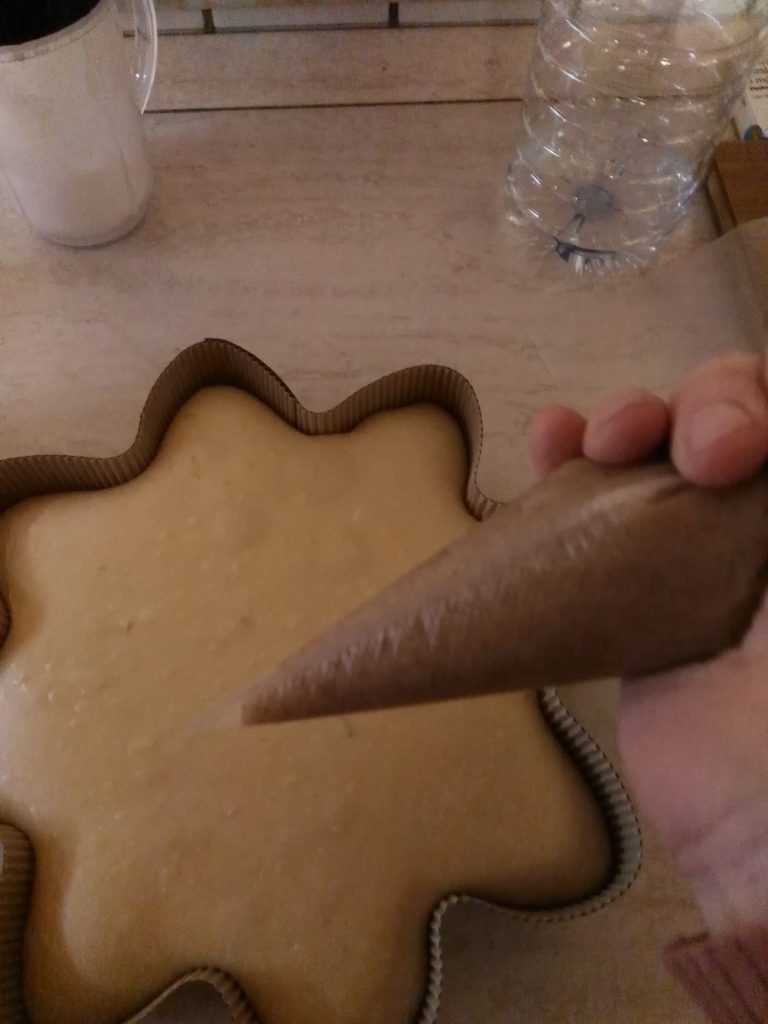
To glaze, put the icing into a piping bag fitted with a narrow tip, pipe it over the panettone, then add roughly chopped almonds, pine nuts and powdered sugar.
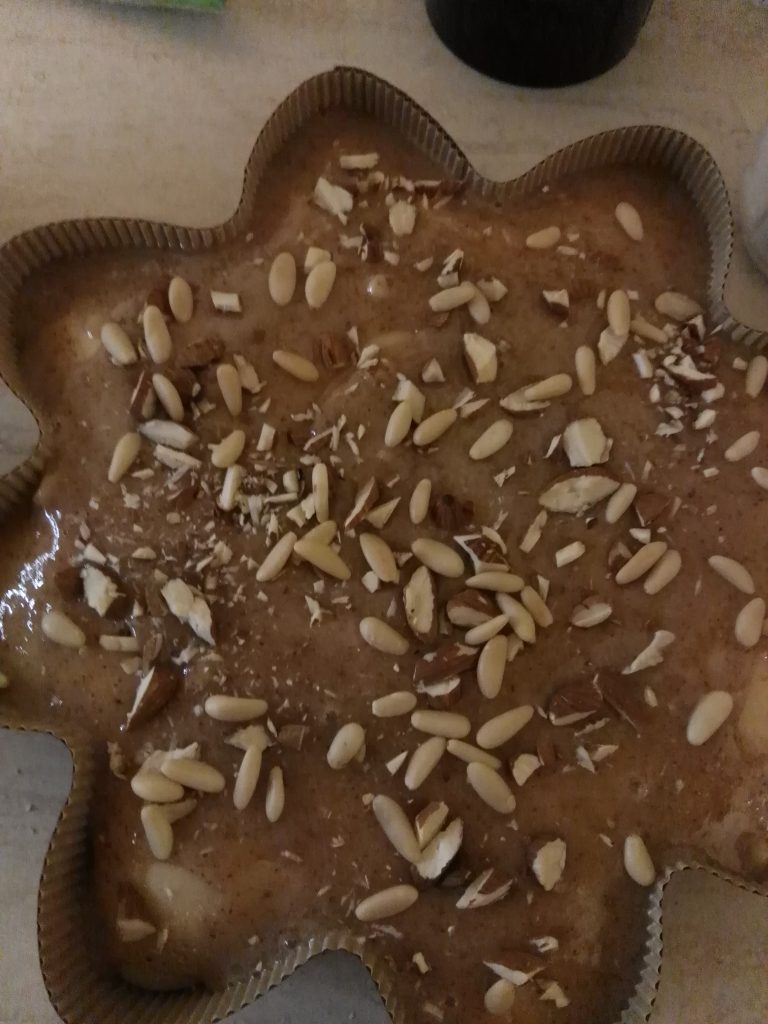
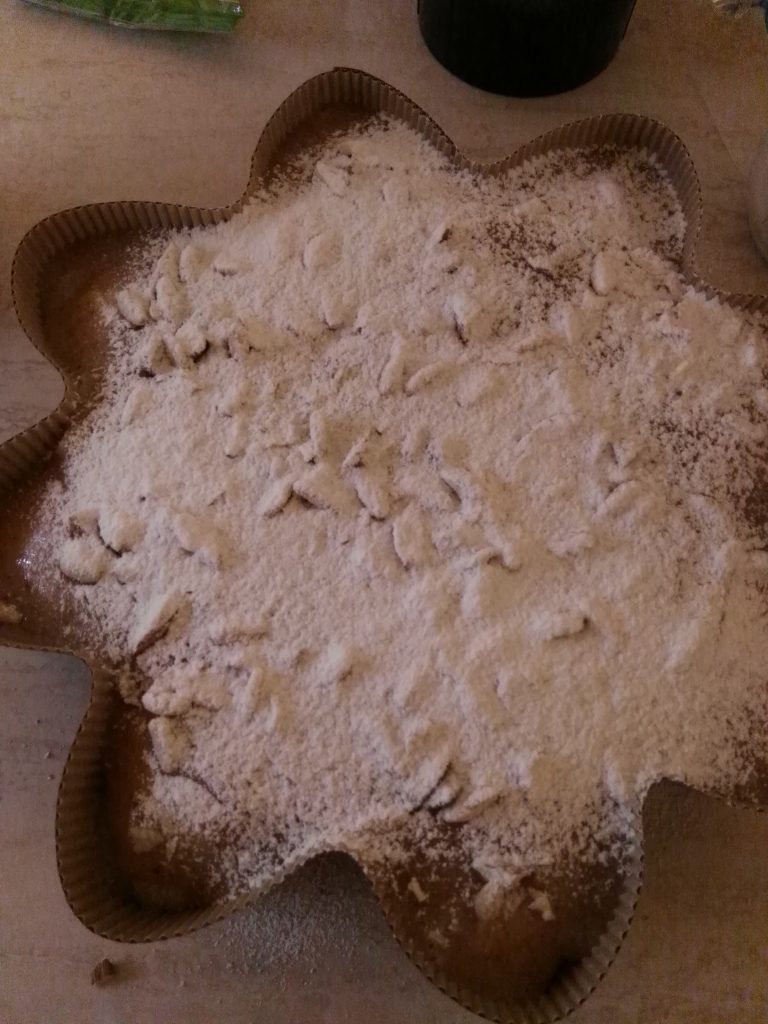
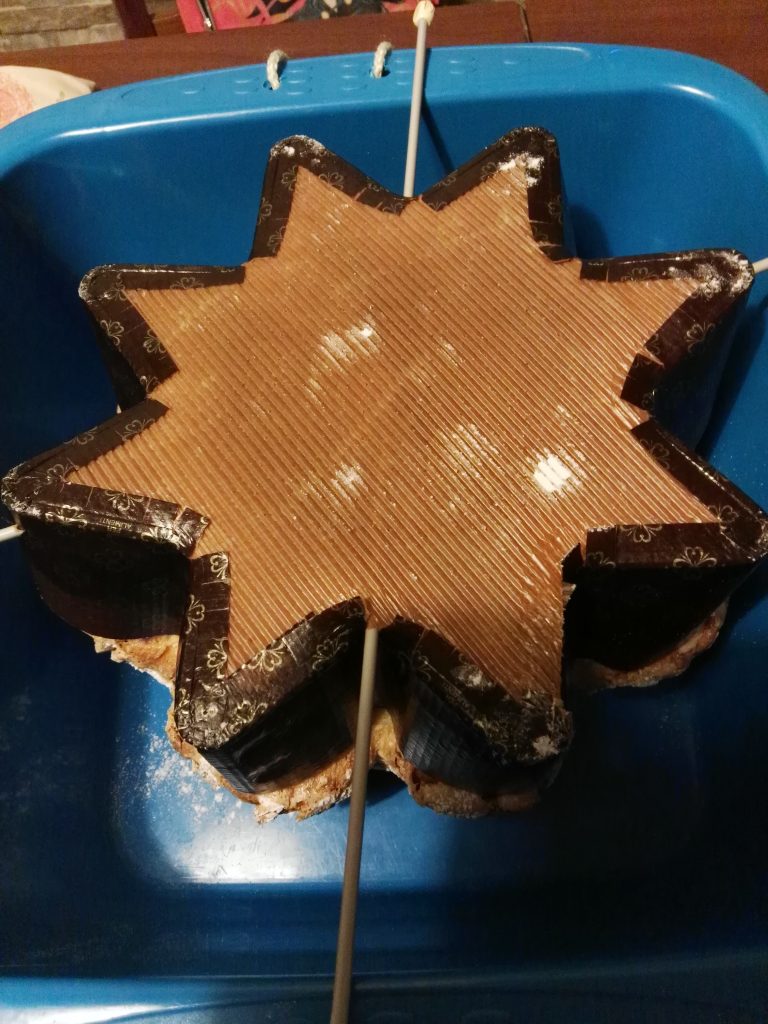
Put it in the oven on the second-to-last rack. The 1 kg pieces will be baked after 60 minutes at 320°F. In any case, the reference is the internal temperature, which must not exceed 205°F; obtain a probe thermometer to check the temperature. As soon as they are out of the oven, pierce them with rods (even knitting needles) and immediately invert them, leaving them upside down for two hours. (This step is not mentioned in the book; I preferred to do it).
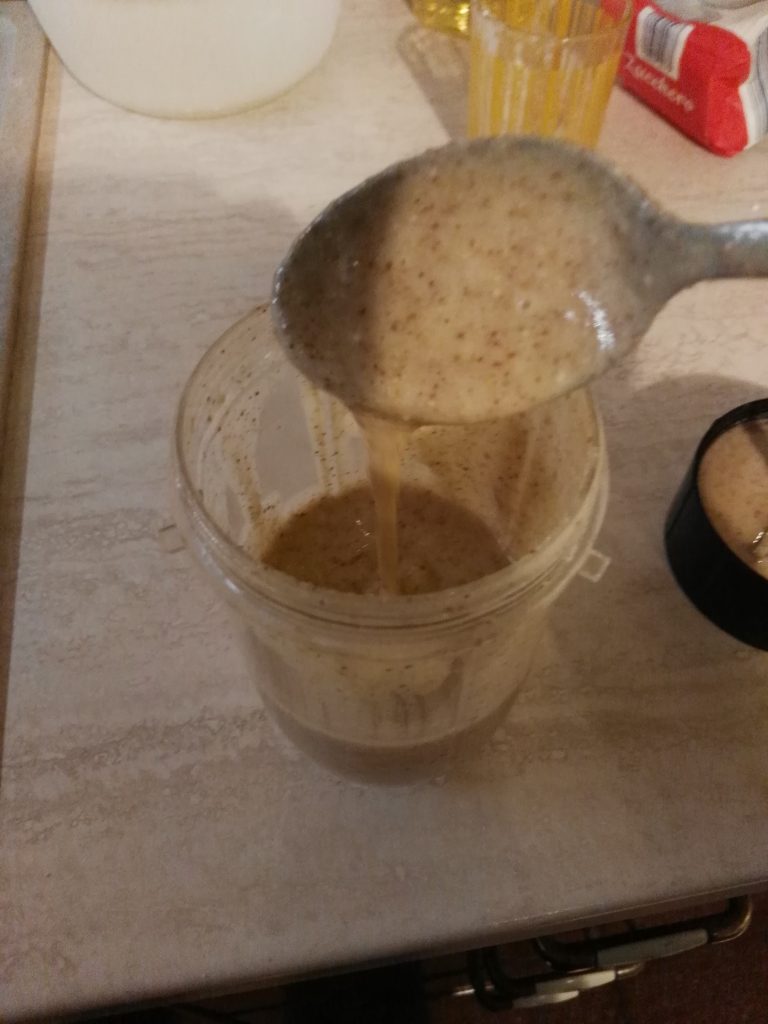
I recommend preparing the glaze when you close the first dough: blend together all the ingredients that compose it until you obtain a uniform mixture, then refrigerate for a few hours. If the glaze seems too dense, add a few more teaspoons of egg white. If it seems soft, it will slightly firm up after chilling. A glaze that is too dry will tend to detach, while if it is too wet it will become soggy after a few days.
Serve the cake dusted with powdered sugar.
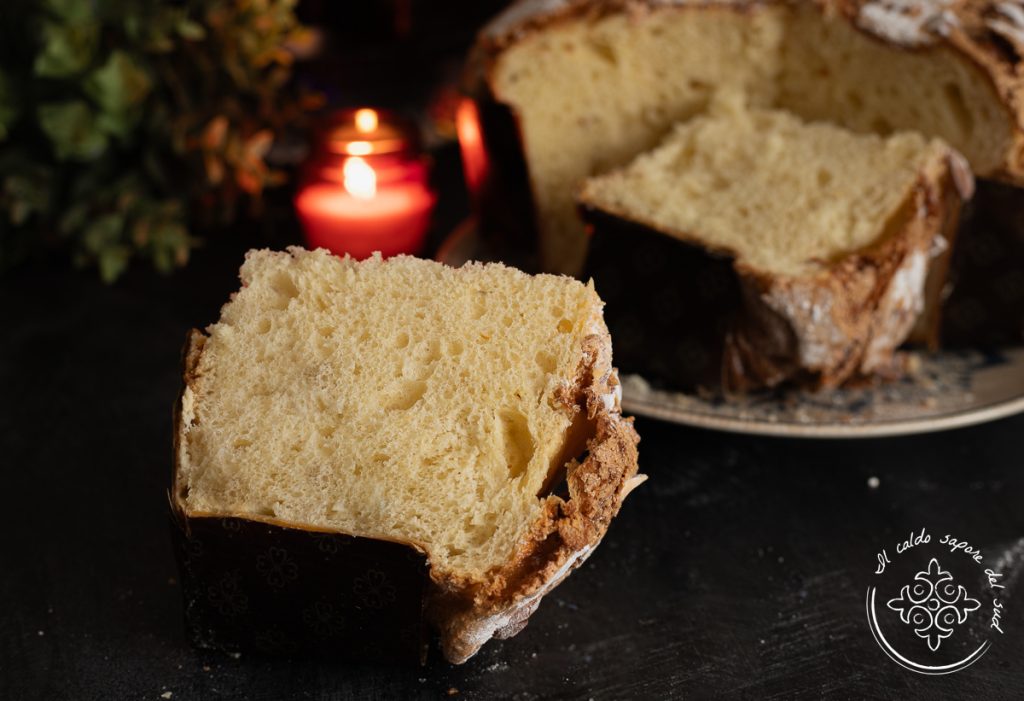
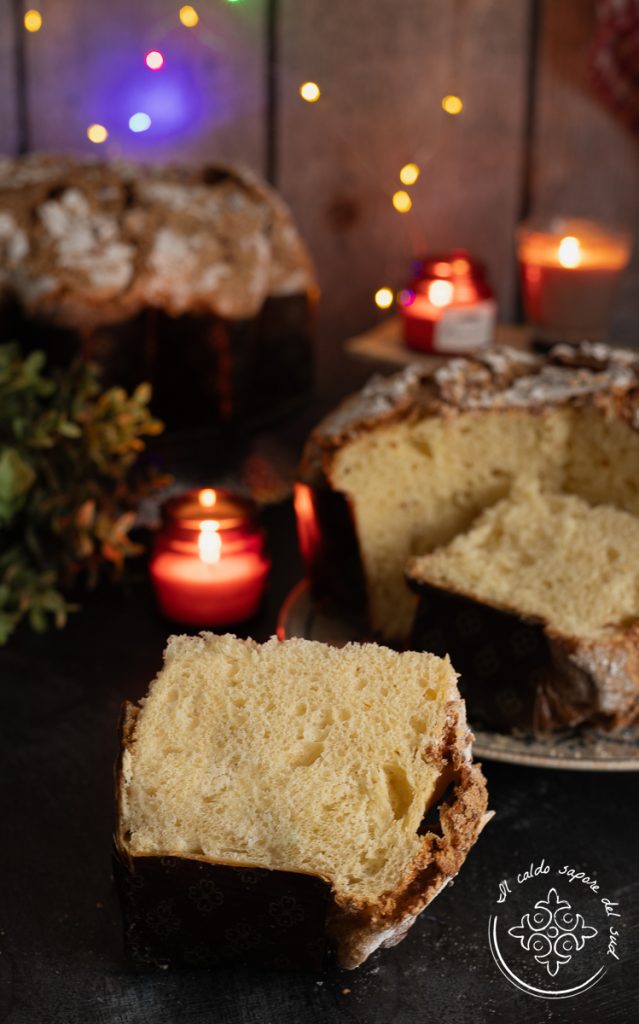
This is the slice.
Storage and notes
Bag the Nadalin 12 hours after they have been baked and consume within about ten days. Nadalin does not contain candied fruit and tends to dry out earlier than panettone.
If you want to stay updated on my recipes, follow me also on:
pinterest; twitter, you tube and tiktok.
From here, you can return to the HOME and discover new recipes!