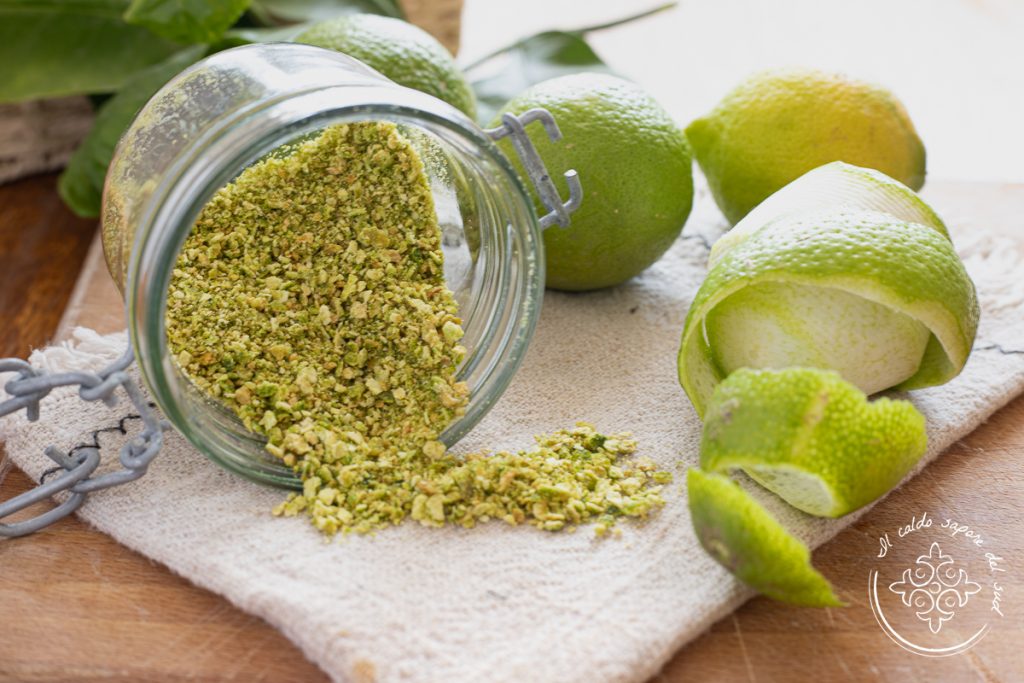
Dried lemon powder is a simple, natural spice that brings the scent of the South and the memory of ancient gestures into the kitchen. It’s one of those know-hows that are never lost: you don’t learn them from books but by watching in the kitchen. It’s the fragrance that lingers on the hands, in drawers, in glass jars stored high and away from light as it used to be: a very fragrant natural spice born from a kitchen of zero waste and reuse.
In Sicily — and in many Southern homes — nothing of the lemon was wasted, much like what was done with breadcrumbs, made from stale homemade bread. After using the juice, the peel was cut into strips, slowly dried and then stored for months.
At my house dried lemon peel was prepared without haste: untreated lemons, picked at the right time, peeled respectfully, avoiding the white pith. Then the waiting: air, time, silence.
Finally that intense, true scent that smells of sun and home cooking.
This is a simple, natural, zero-waste preparation, completely vegan, vegetarian and Mediterranean condiment that smells of memory and ancient gestures. One of those small things that tell who we are. Dried lemon powder is used like a spice: a very small amount is enough to perfume dishes and add freshness. You can use it to:
– Flavor sweets such as cookies, cakes, ring cakes and tartlets;
– On cooked or raw vegetables, especially chicory, spinach, zucchini and fennel;
– On fish baked, grilled or steamed and meat;
– With legumes like chickpeas, beans and lentils;
– In extra virgin olive oil to make flavored oil;
– In salads, as an alternative to lemon juice;
– In bread and focaccia dough, added to the mix.
If you enjoy this kind of recipe, you can also follow me on Facebook and Instagram so you don’t miss my Sicilian tales.
#ilcaldosaporedelsud
Also check out:
- Difficulty: Very easy
- Rest time: 6 Days
- Preparation time: 10 Hours
- Cooking methods: No-cook
- Cuisine: Italian
- Seasonality: All seasons
Ingredients to Make Dried Lemon Powder
- to taste lemon zest (untreated)
Tools
- Blender
Steps to Make Dried Lemon Powder
Wash the lemons thoroughly and dry them carefully.
Peel the lemons, removing only the zest and taking care not to include too much of the white pith, which is bitter.
Place the peels on a plate or a rack without overlapping them or, if possible, hang them.
Let them air-dry in a dry, well-ventilated place for several days, turning them occasionally.
When the peels are completely dry and rigid, transfer them to a mixer or coffee grinder.
Blend until you obtain a very fragrant powder.
Dried lemon powder is used like a spice: a very small amount is enough to perfume dishes and add freshness.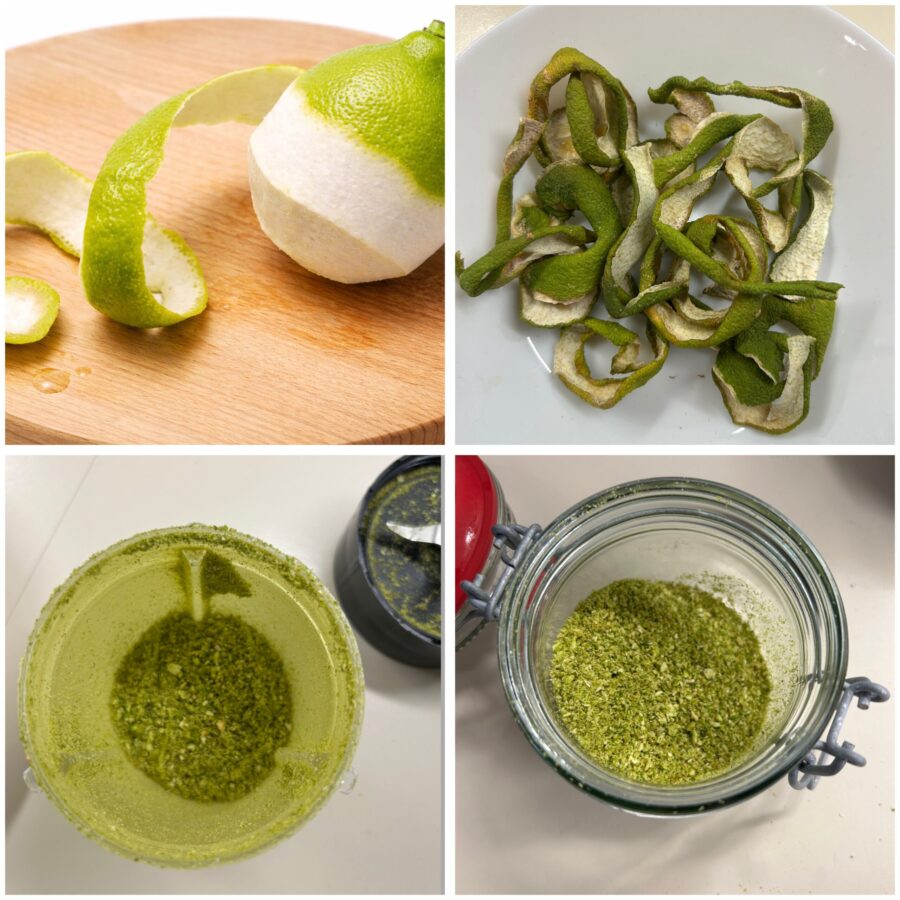
Always use it at the end of cooking or raw so you don’t lose the fragrance.
Add it little by little: dried lemon powder is very concentrated.
Storage Notes and Tips
Store well-dried lemon powder in an airtight glass jar, away from light and moisture, for several months.
You can also dry lemon peel in the microwave, but do so very carefully because there’s a high risk of burning it. In this case, arrange the peels on a microwave-safe plate without overlapping them. Run the microwave at low power in 20–30 second intervals.
Check each time and turn the peels.
Continue until they are dry and rigid, never dark. Naturally, for a more delicate and natural fragrance, air-drying remains the best method. In a food dehydrator, a few hours are usually enough and the result will be quite good.
The microwave is useful only when you need to hurry, but use it with great care.
If you want to stay updated on my recipes, follow me also on:
Pinterest; X, YouTube and TikTok.
Pinterest; X, YouTube and TikTok.
FAQ (Questions and Answers)
Can lemon peel be dried in the microwave?
Yes, you can dry lemon peel in the microwave, but very carefully. Use a low power setting and proceed in short intervals, checking frequently because the peel can burn easily.
How long does dried lemon powder last?
If stored in an airtight glass jar away from light and humidity, dried lemon powder can keep its aroma for up to a year.
Which lemons should be used for dried lemon powder?
Use only untreated lemons, preferably organic, because the peel is used whole.