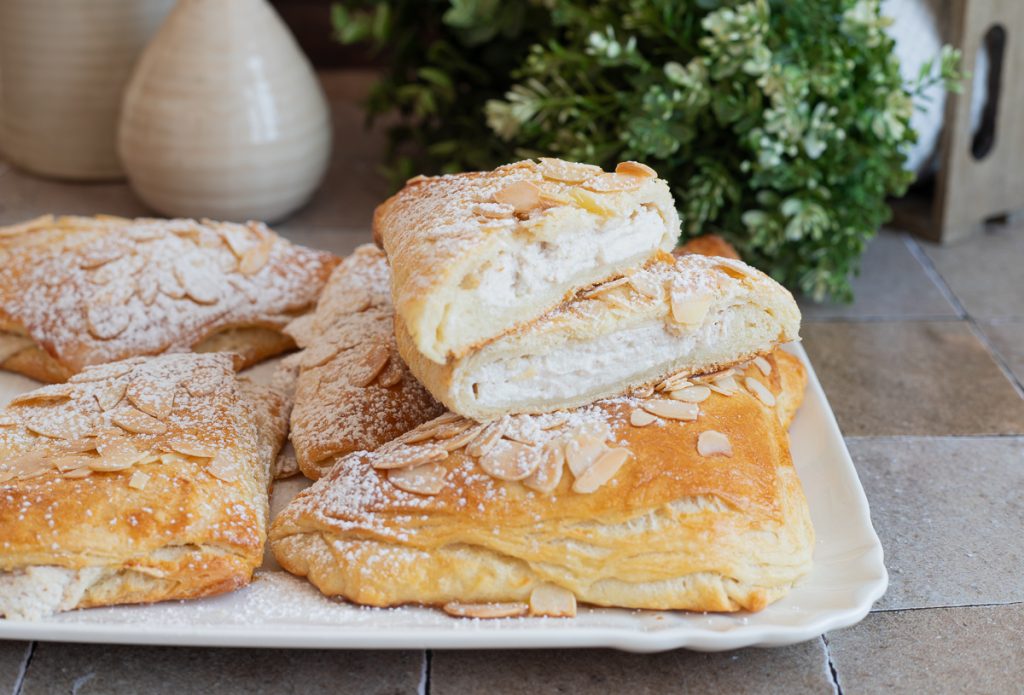
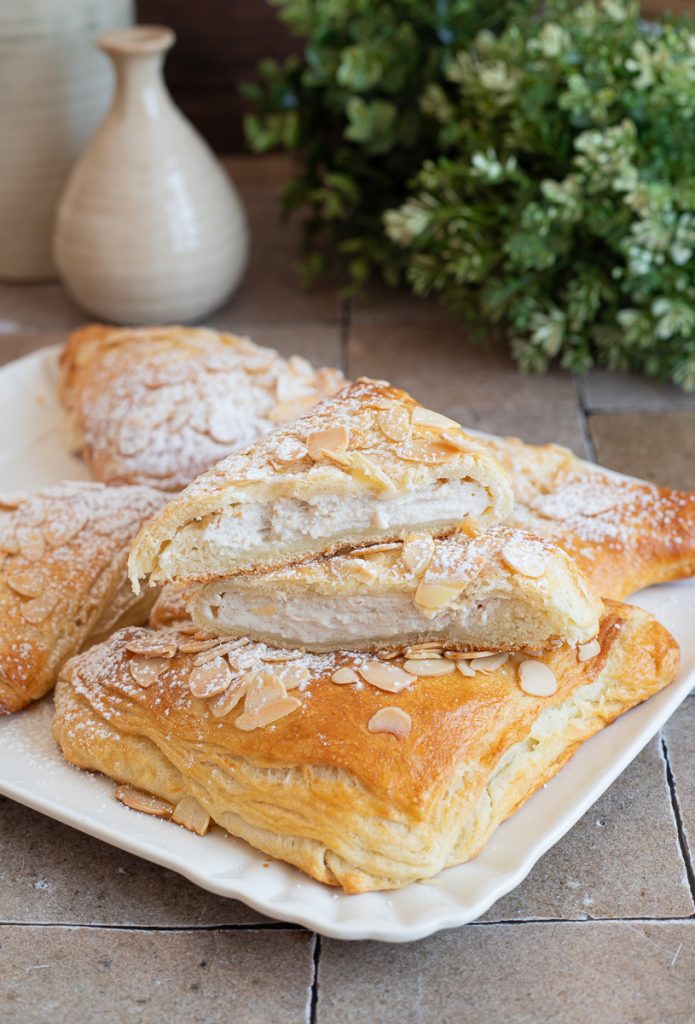
Baked ricotta raviola like the ones from the café, made with homemade leavened puff pastry. The recipe for the famous pastries filled with sweet ricotta cream, as good as those from the café, but in a baked version. A variation of the classic fried Catanese Raviole and one of the most-loved Sicilian ricotta desserts, as well as part of Sicilian cuisine and grandma’s recipes that you really must try.
Today, with a bit of patience, we’ll make the mezza sfoglia (half puff pastry) together — the same base used for cipolline, but a bit sweeter — and then use it for our baked raviole as good as the café ones. If you don’t have time, try the quick version with ready-made puff pastry here, a super-fast and still very tempting dessert.
Come into the kitchen with me: you can make these delicious Sicilian sweets for an afternoon snack with friends or a decadent Sicilian breakfast to enjoy with the whole family.
Before we start cooking, remember that if you want to stay updated on all my recipes you can follow my Facebook page and my Instagram profile.
Take a look:
- Difficulty: Very easy
- Cost: Inexpensive
- Rest time: 8 Hours
- Preparation time: 2 Hours
- Portions: about 16
- Cooking methods: Oven
- Cuisine: Italian
- Seasonality: All seasons
Ingredients to make baked Catanese raviole
- 600 g farina 00 (about 5 cups all-purpose flour)
- 60 g burro (for the base — about 4 tbsp (1/4 cup))
- 340 latte (about 11.5 fl oz (≈1 1/2 cups))
- 15 g sale (about 2 1/2 tsp)
- 60 g zucchero (about 1/3 cup (≈5 tbsp))
- 3.5 g lievito di birra secco (about 1 tsp (or 12 g fresh yeast))
- 200 burro (for laminating — about 7 oz (≈7/8 cup))
- q.b. farina 00 (for dusting the work surface, as needed)
- 1 kg ricotta (well drained — about 2.2 lb (≈4 cups))
- 100 g zucchero (about 1/2 cup)
- q.b. cannella in polvere (ground cinnamon, to taste)
- 1 cucchiaino essenza di vaniglia (1 teaspoon vanilla extract)
- q.b. uovo (egg, beaten (for brushing), as needed)
- q.b. latte (milk (for brushing), as needed)
- q.b. mandorle in scaglie (sliced almonds, as needed)
- q.b. zucchero a velo (powdered sugar, as needed)
Tools
- Oven
- Rolling pin
- Bowl
- Work surface
- Baking tray
- Brushes
Preparation of ricotta raviole with mezza sfoglia
For this recipe we’ll follow the step-by-step preparation of the mezza sfoglia (half puff pastry), the same used for cipolline, but we’ll add a little more sugar to the dough.
Start preparing the pastry base: in a bowl put the flour, part of the milk, the yeast and the sugar.
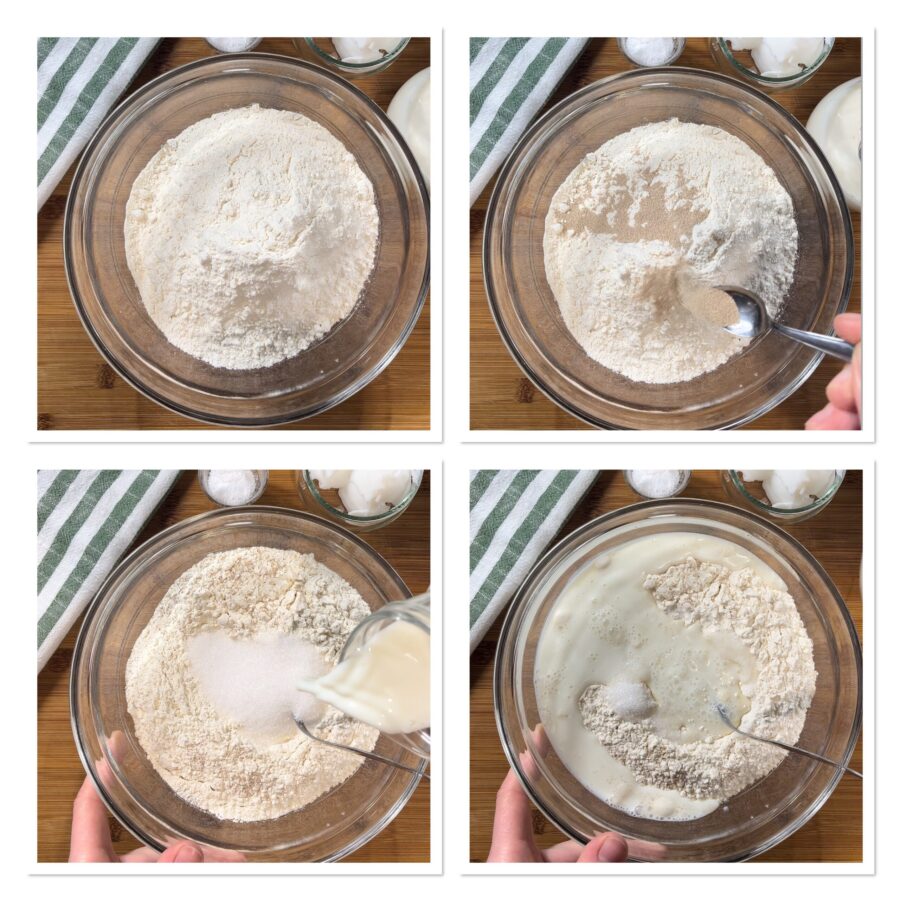
Roughly mix, then add the rest of the milk, the lard (or shortening) and the salt. Knead quickly, cover with a cloth and set aside to rest for 15 minutes.
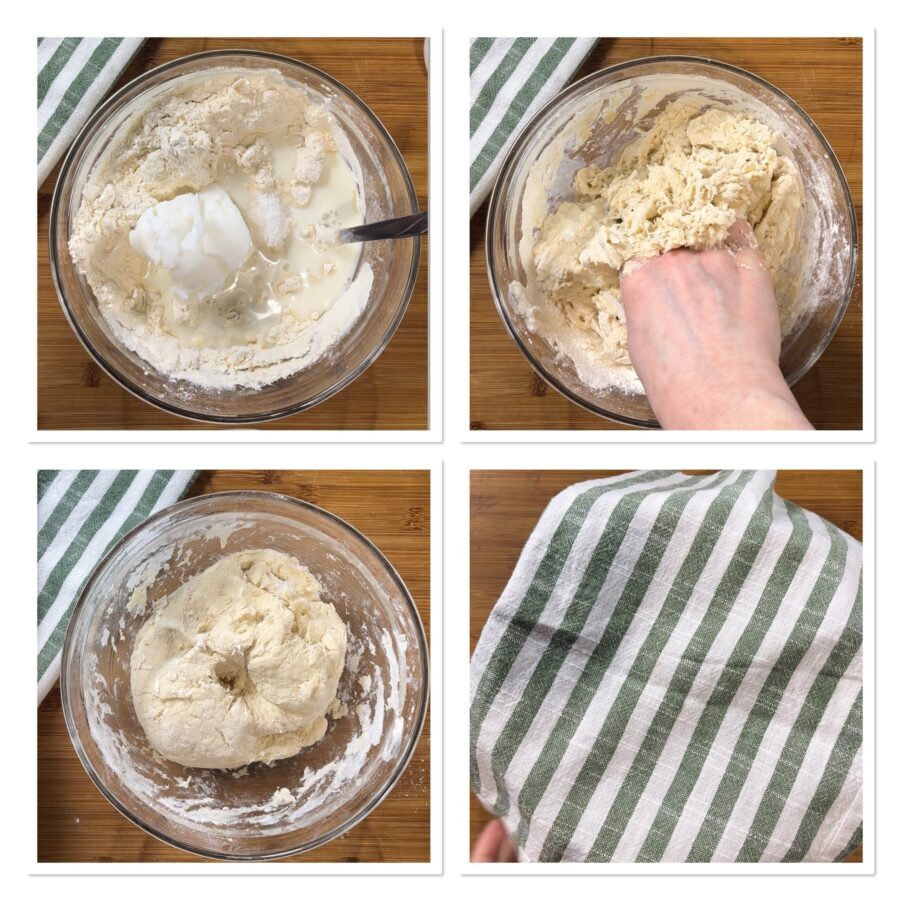
After resting, turn the dough out onto the work surface and knead it very well without adding flour until smooth, homogeneous and elastic. It may seem sticky at first, so use a dough scraper, but avoid adding flour.
Place in the oven with the light on for at least 30–40 minutes to start the fermentation. A full doubling is not necessary — just an initial rise.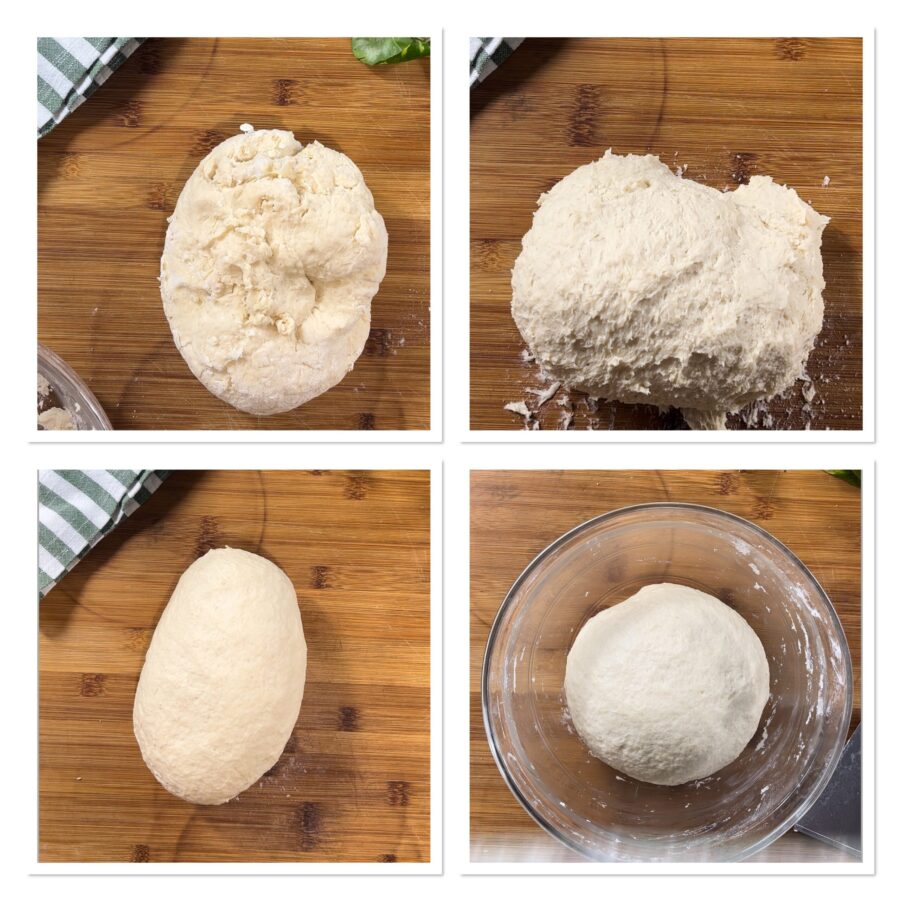
After resting, turn the dough out onto the work surface and knead it very well without adding flour until smooth, homogeneous and elastic. It may seem sticky at first, so use a dough scraper, but avoid adding flour.
Place in the oven with the light on for at least 30–40 minutes to start the fermentation. A full doubling is not necessary — just an initial rise.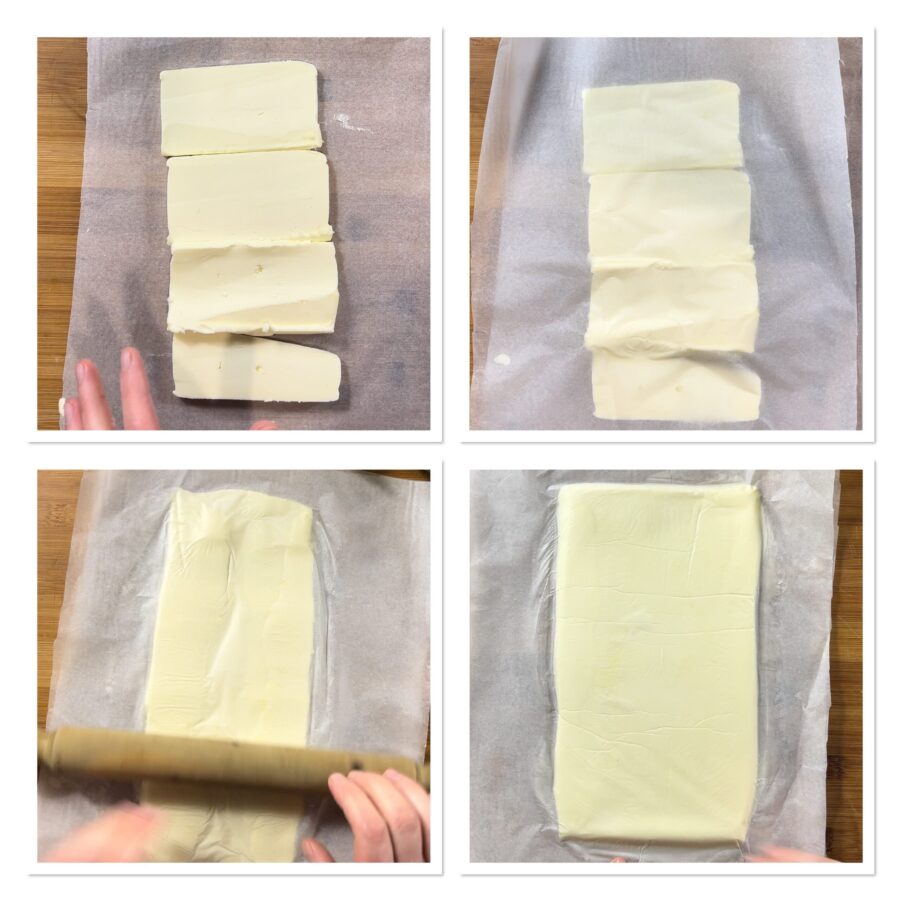
While the dough rests in a warm place, prepare the butter (or margarine) block that you will enclose in the dough to create the laminations. Place the butter, sliced on its long side, between two large sheets of parchment paper. Roll the butter with a rolling pin until it forms a rectangular sheet about 5 mm thick (about 1/5 in), roughly 35 cm high (about 13 3/4 in) and 20 cm wide (about 7 7/8 in) with clean edges. Chill until firm.
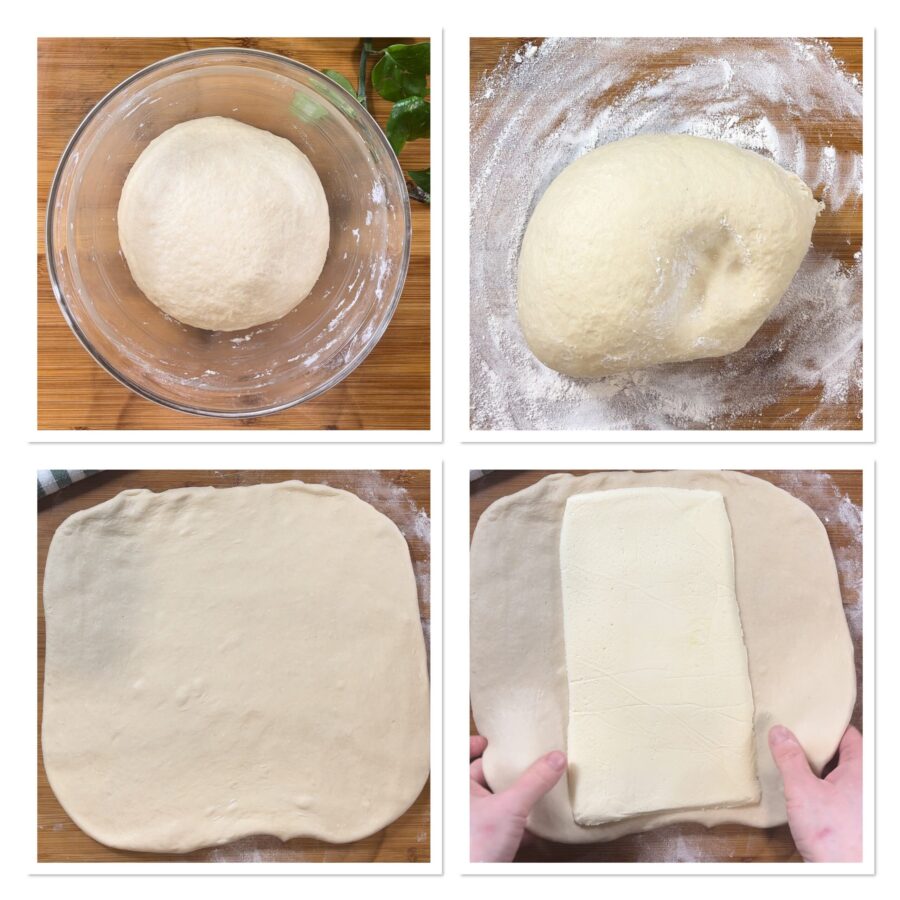
After resting, take the dough and roll it into a rectangle about 35 cm long (about 13 3/4 in) and 40 cm wide (about 15 3/4 in), large enough to wrap the chilled butter sheet prepared earlier. Place the butter block perfectly centered on the dough and fold the dough edges over it, ensuring the butter is fully enclosed and in contact with the dough on all sides.
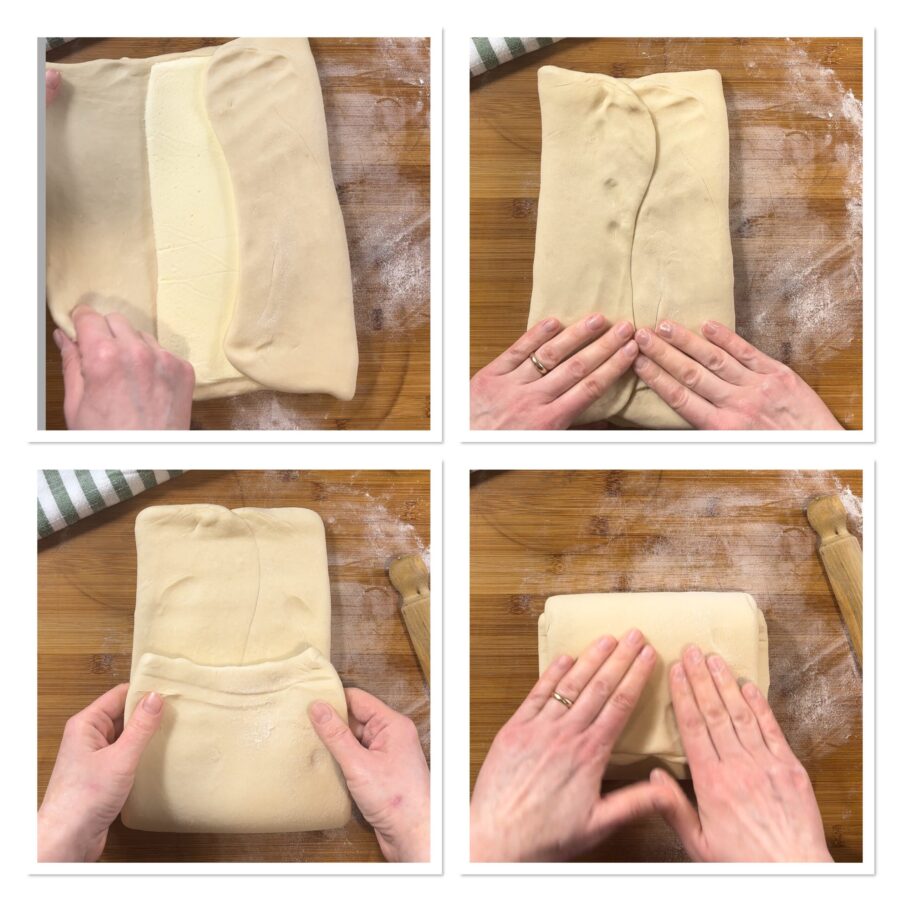
Make a letter fold (bring the short top side toward the center and overlap with the short bottom side). You have enclosed the butter; now begin the folding sequence for laminating, the three-folds. Roll gently into a narrow, long rectangle (about 20 x 40 cm — about 7 7/8 x 15 3/4 in). Repeat the letter fold: bring the short top side toward the center and overlap the short bottom side.
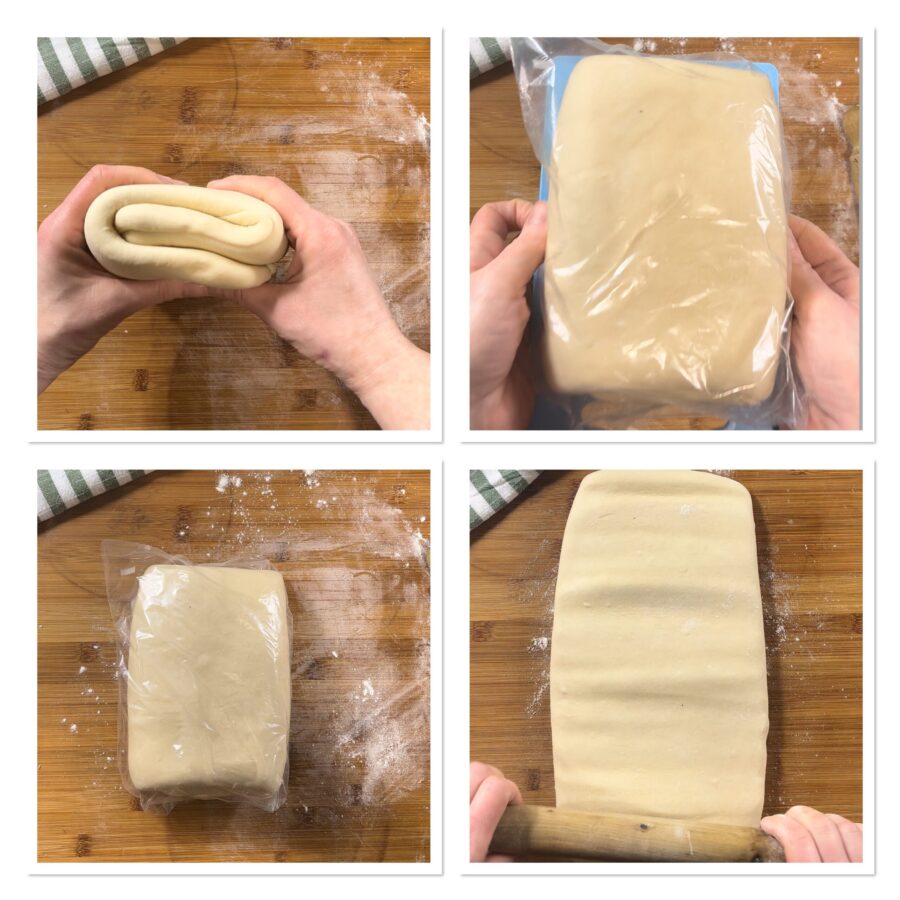
These are three-folds or letter folds. Wrap the floured block in a food bag and chill for 30 minutes. Repeat the folds and chill for another 30 minutes.
After that, perform the final three-fold and place in the coldest part of the fridge for about 6 hours.
Always keep the block lightly floured during rests. When folding, if necessary, dust the work surface with a little flour to prevent tears that would spoil the lamination.
Always work gently, flattening and pressing the dough lightly before rolling it out.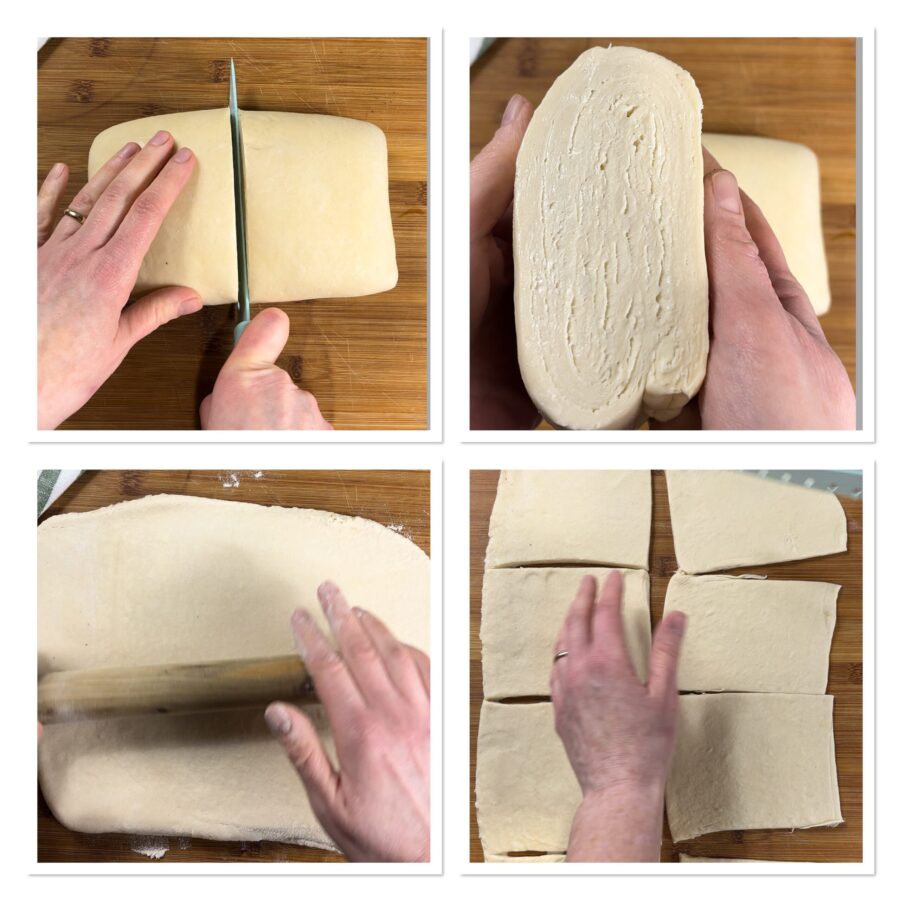
After the final rest, divide the dough into two equal parts. Roll out the first part to form a sheet just over 1/2 mm thick (about 0.02 in) and cut 8 rectangles with the long side of about 12 cm (about 4 3/4 in). Seal the edges without letting the filling overflow, cover with plastic wrap and let rise in a warm place for 1 hour.
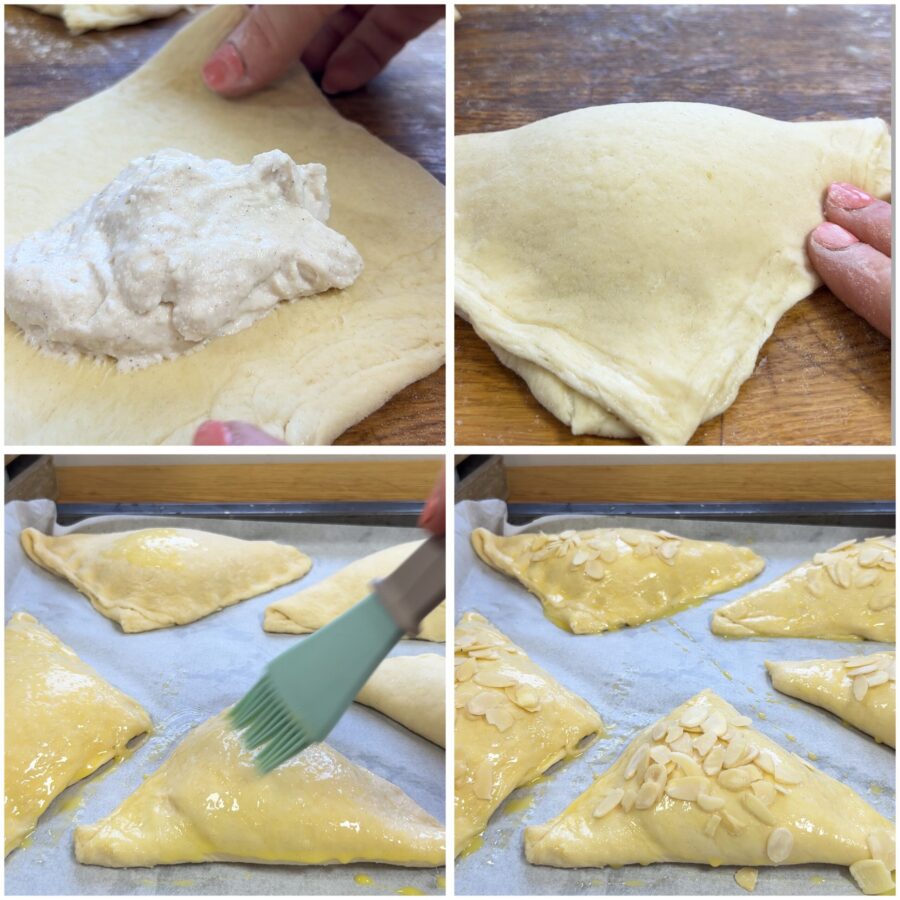
Brush the surface with the milk-and-egg mixture,
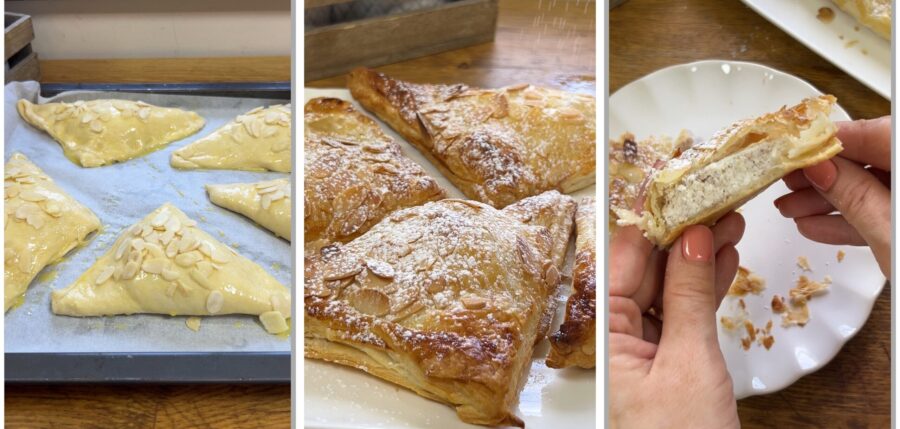
sprinkle with sliced almonds and bake in a conventional oven for about 20 minutes at 356°F, or until golden to your liking.
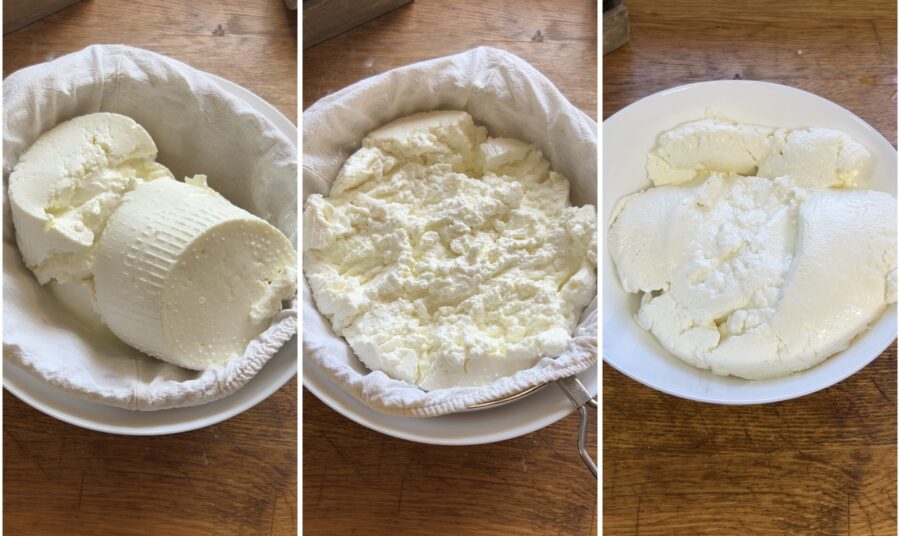
Collect the dry, well-drained ricotta in a bowl. If it is not dry enough, line a sieve with a cloth, place the ricotta in it and let it drain overnight in the fridge, covered with plastic wrap.
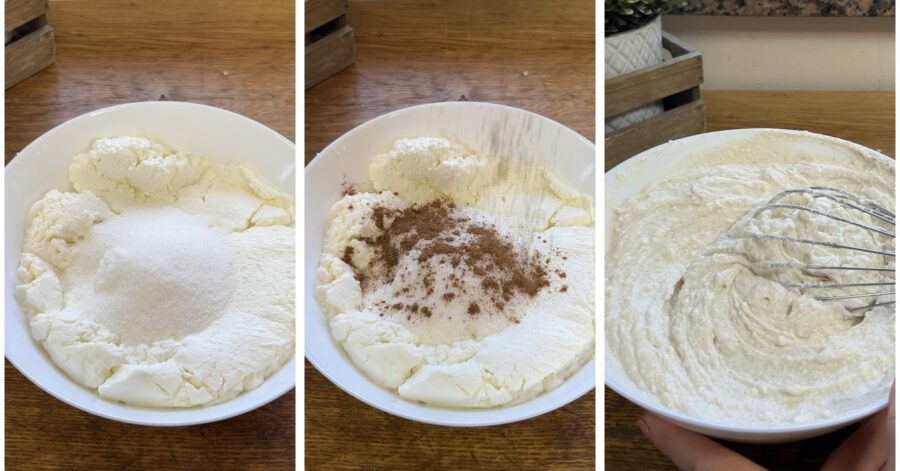
Once ready, add the sugar, cinnamon, vanilla powder and vanilla extract and mix. The ricotta cream is ready to use. Store it in the fridge for up to 2 days in an airtight container.
Storage notes and tips
You can add grated lemon or orange zest (organic) and chocolate chips to the ricotta.
Store baked raviole that have not been eaten on a tray at room temperature, covered with a cloth, and consume within the following day.
If you want to stay updated on my recipes, follow me also on:
Pinterest; Twitter, YouTube and TikTok.
From here you can return to the HOME and discover new recipes!