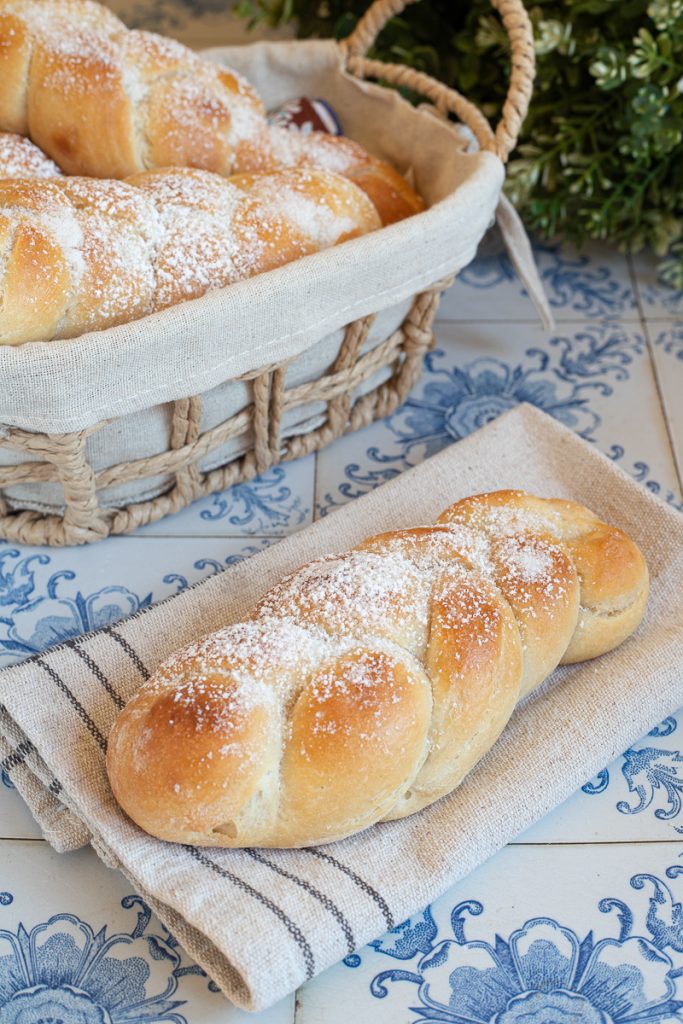
Egg- and butter-free brioches, very soft. These are the typical baker’s brioches, without eggs, butter or lard, but made with olive oil. They have the typical flavor of the classic Sicilian sugar-topped brioches, the kind that make you lick your fingers and are perfect for breakfast and snacks for both adults and children, but they have an ingredient that makes them especially soft: yogurt. My children love them, and as soon as they smell their delicate aroma they can’t wait to eat them. The method is a little simpler than that for brioche col tuppo, but these are also excellent served with a good ice cream or granita. Today we’ll prepare them together, making delicious braided brioche loaves, very soft and delicate, and you can knead them by hand or with a stand mixer! Now follow me in the kitchen and you’ll see how simple and delicious they are — before going to the kitchen, remember that if you want to stay updated on all my recipes you can follow my Facebook page (here) and my Instagram profile (here).
Also take a look at:
- Difficulty: Easy
- Cost: Very affordable
- Preparation time: 3 Hours
- Portions: 7 large braids
- Cooking methods: Oven
- Cuisine: Italian
- Seasonality: All seasons
Ingredients to make egg- and butter-free brioches
- 5 cups All-purpose flour (type 0)
- 1 1/2 cups Milk
- 4 tbsp Extra virgin olive oil (about 4 tbsp (≈2.1 oz))
- 1 1/2 tbsp Honey
- 3 1/2 tbsp Plain yogurt (thick or Greek yogurt)
- 1 1/3 tsp Salt (Use 6 g if using spreadable cheese)
- 2/3 cup Granulated sugar
- Half packet Dry active yeast (or 12 g fresh)
- 1 tsp Vanilla extract (I used vanilla sugar)
- as needed Milk
- as needed Sugar (granulated)
- as needed Powdered sugar
Tools
- Stand mixer
- Baking sheet
- Oven
Preparation of egg- and butter-free brioches
Put the flour in a bowl, add the lukewarm milk and the yeast, stir to dissolve it, then add the rest of the ingredients.
Work the dough in the bowl, then without adding extra flour move to the work surface and begin to knead a dough that will be sticky from the start.
If you’re not confident with manual kneading, you can use a bread machine or a stand mixer and add another 20–30 g of yogurt for a softer dough, just as I did. Knead for about 15–20 minutes, adding the salt and the honey only when the dough begins to come together.
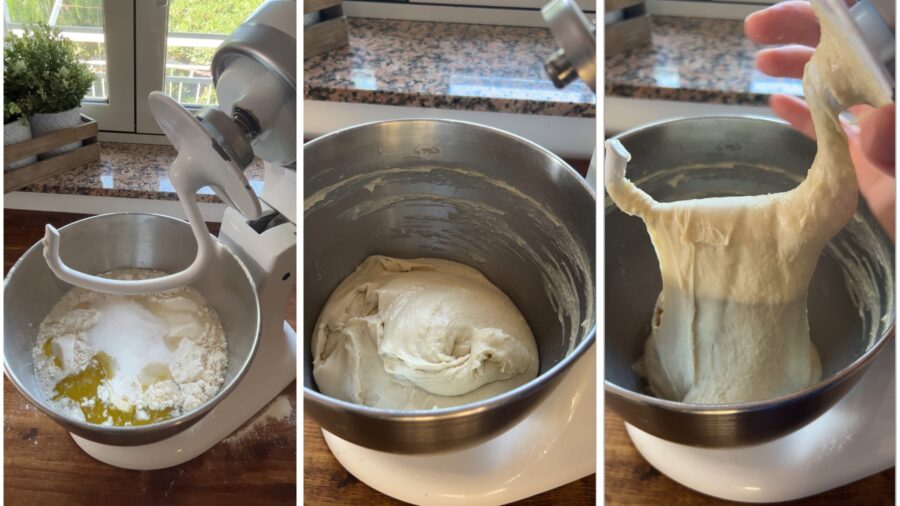
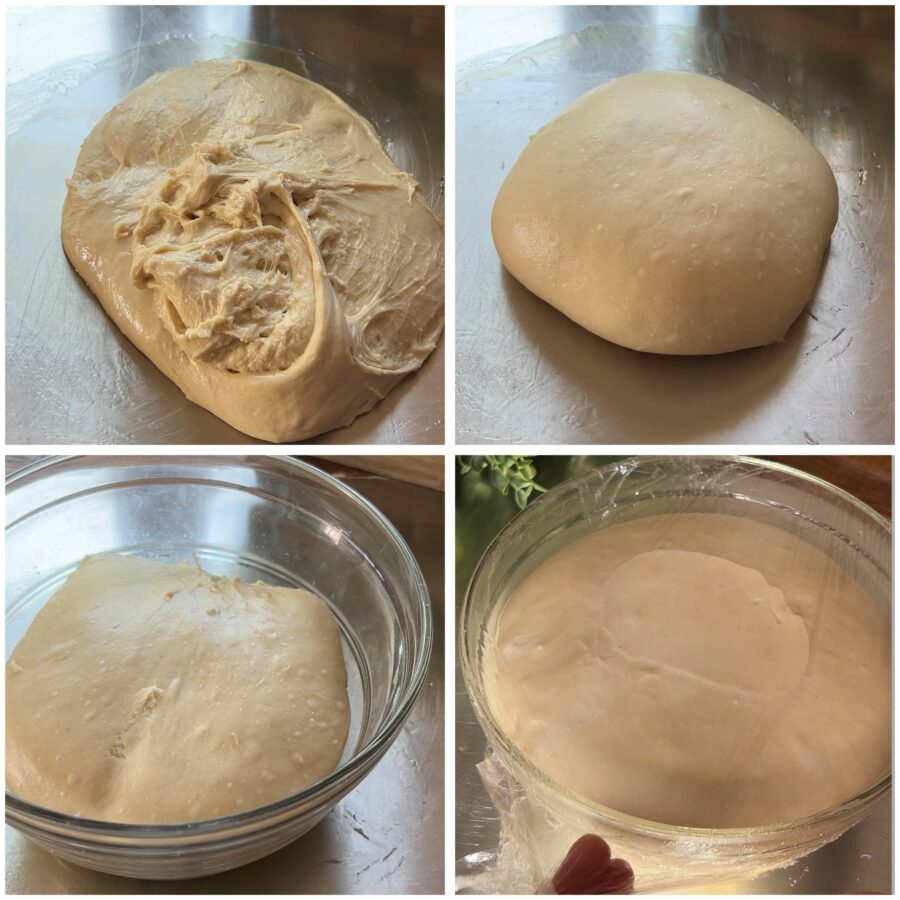
Don’t worry if the dough struggles to come together in the first few minutes. Keep kneading and don’t give up — little by little it will gain consistency and elasticity: form a ball and place it in a bowl, put it in the oven with the light on to rise until doubled, covered with plastic wrap: it will take about 90 minutes.
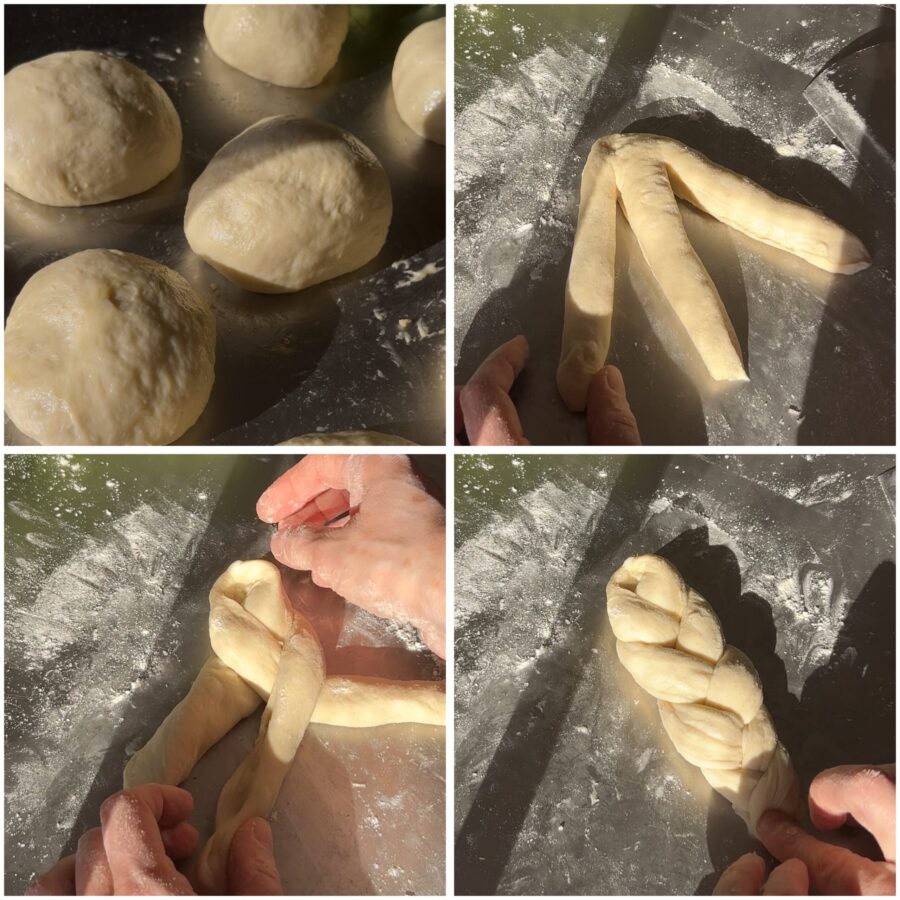
Once doubled, move the dough to the work surface, try not to deflate it too much and divide it into 7–8 balls of more or less equal size.
From each ball cut 3 strands.
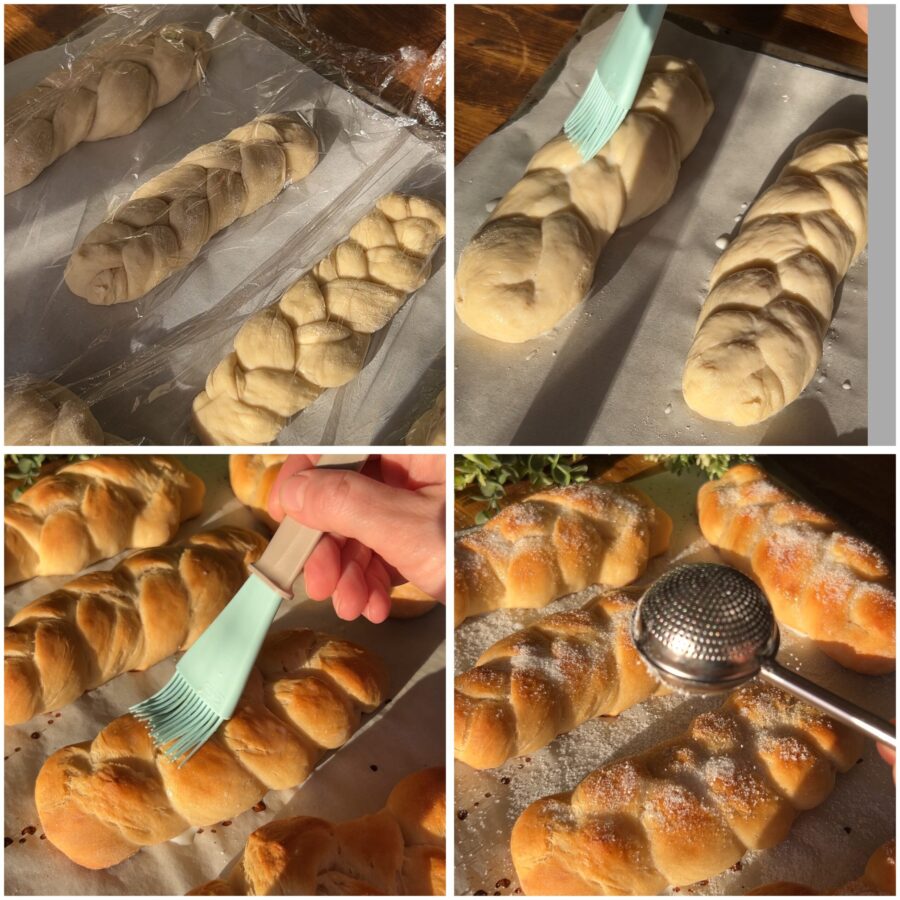
Braid them in the classic way using a little flour to help, place them on a baking sheet lined with parchment paper and let them rise again for 30–40 minutes in the oven with the light on.
Remember I told you not to deflate the dough? This, in addition to making it easier to work with, will shorten the second rising time, so be careful.
Once risen, brush them with milk and bake in a conventional oven at 356°F for 15–20 minutes.
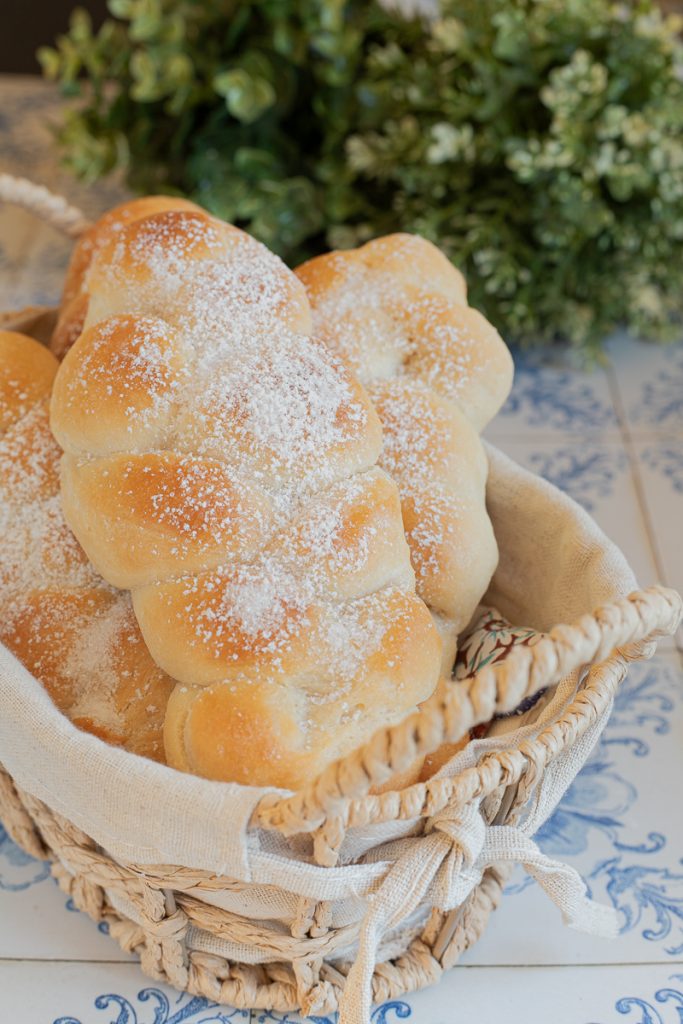
Remove from the oven and, while still very hot, brush again with milk and sprinkle with granulated sugar and powdered sugar; the warmth of the brioches will evaporate the moisture and the sugar will stick.
Let cool slightly and serve — they are delicious hot!
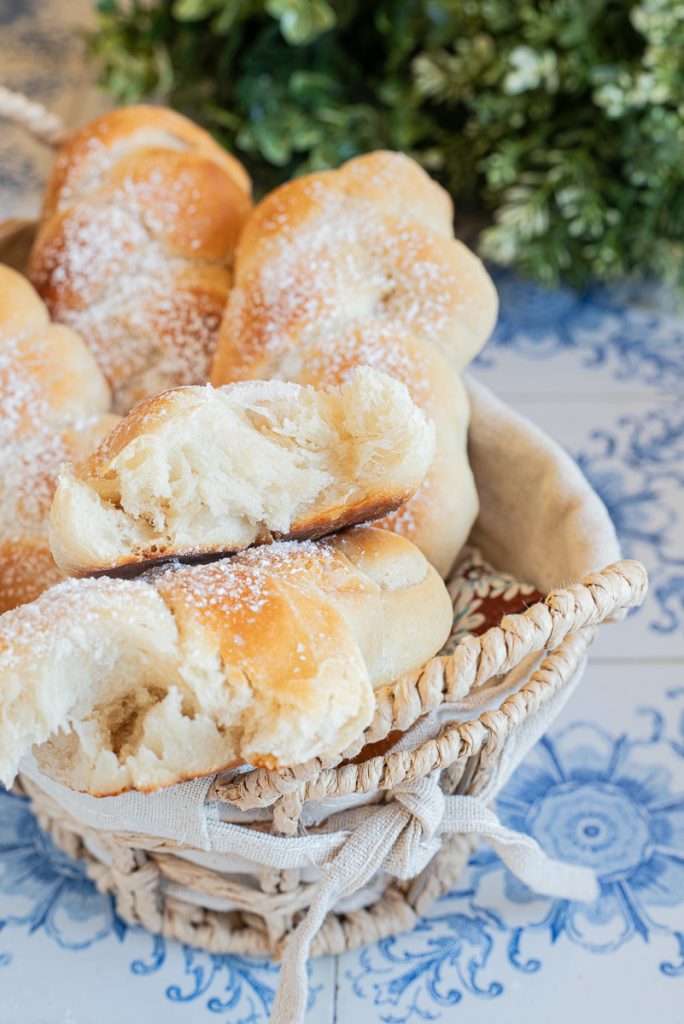
Insufficient rising will make the braids tough and chewy, so it’s better to wait until they’re ready before baking.
Notes and comments
Store the brioches as you would bread, for example in a food bag, and consume within 24 hours. If you want to freeze them, don’t sprinkle them with sugar; let them cool and place them in the freezer. Sprinkle with powdered sugar when thawed and warmed.
From here you can return to the HOME and discover new recipes!
If you want to stay updated on my recipes, follow me on: