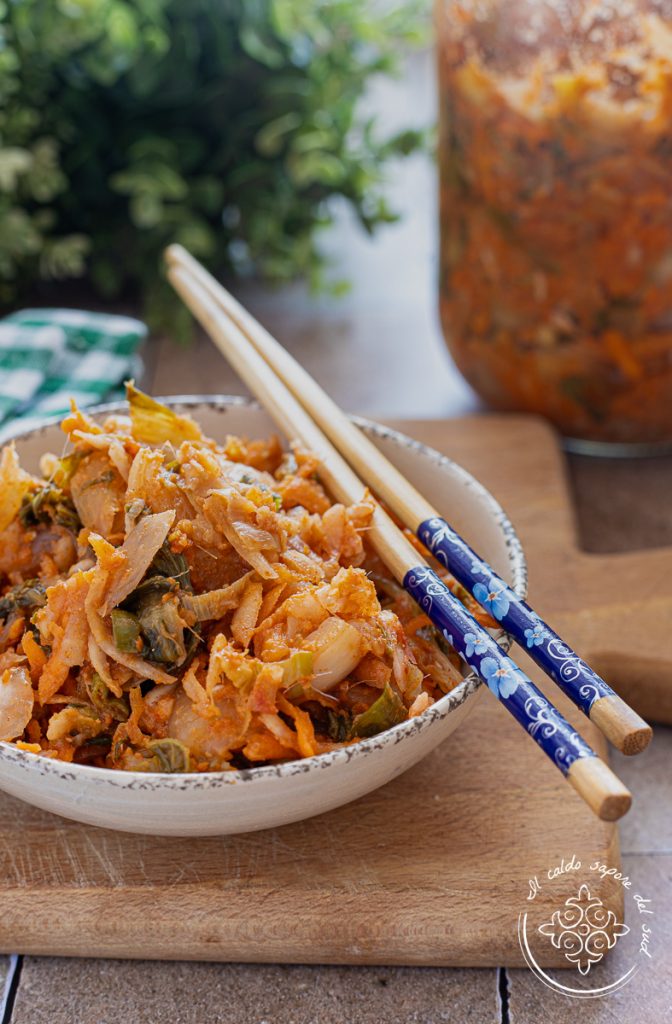
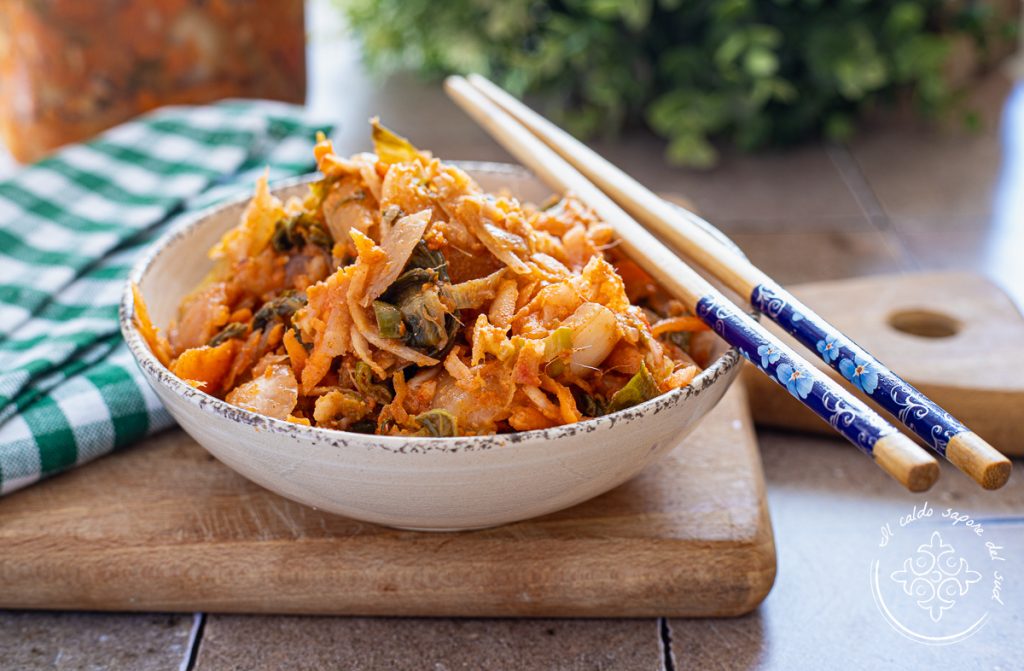
Fermented pak choi kimchi. If you’ve never heard of Kimchi, it’s not just a recipe but an act that belongs to an ancient cuisine, made of waiting, transformations and silences that originate in the magic of fermentation and its beneficial effects.
The same magic we find in our fermented red cabbage, which changes color and aroma day by day, in the homemade preserved lemons, in homemade kefir, born from a living encounter between milk and cultures, and sourdough starter, which grows slowly, breathing together with our kitchen. Different preparations, certainly, but united by the same principle: time that transforms and improves.
Kimchi is today considered a true superfood, because fermentation naturally makes it rich in probiotics, precious allies of intestinal well-being, and also makes vegetables more digestible while enriching them with flavor and vitality. A living food that nourishes not only the body but also the memory of gestures. Kimchi belongs to this family of living foods, just as in Asian tradition we find sushi rice, sushi, bao, rice dumplings, Chinese steamed dumplings and the fragrant moon cakes, which on the blog tell a journey made of hands, flours, steam and patience.
Distant recipes only in appearance, because in reality they all speak the same language: that of kitchens that respect gestures, times and transformations.
In this version we prepare a pak choi kimchi, more delicate than classic napa cabbage, but equally fragrant, crunchy and alive. A recipe that dialogues with our other ferments and with our Asian dishes, creating an invisible thread that unites East and home.
Because when cooking is done with respect, it has no borders, only stories to tell!
After the first fermentation, move the kimchi to the refrigerator.
As days pass the flavor will become increasingly intense and harmonious.
Let’s go to the kitchen, but first a reminder: if you want to stay updated on all my recipes, you can follow my Facebook page (here) and my Instagram profile (here).
Also check out these Asian recipes:
- Rest time: 2 Days
- Cooking methods: No-cook
- Cuisine: Korean
- Seasonality: All seasons
Ingredients to make Homemade Kimchi
- 4 lb pak choi
- 2 tbsp fine salt
- 14 oz daikon (or radishes or celeriac)
- 6 oz fresh scallions
- 7 oz carrots
- 3-4 cloves garlic (Chinese garlic (or 3–4 regular garlic cloves))
- 1 tsp chili pepper
- 3 tbsp rice flour (or finely blended rice)
- 1 cup water
- 3 tbsp brown sugar (or regular sugar)
- 1 medium white onion
- 2.5 oz fresh ginger
- 2 cloves garlic
Tools
- Bowls
- Jars airtight
- Blender
Preparation of homemade Korean kimchi
Thoroughly wash the pak choi under running water, remove the tougher base and separate the leaves.
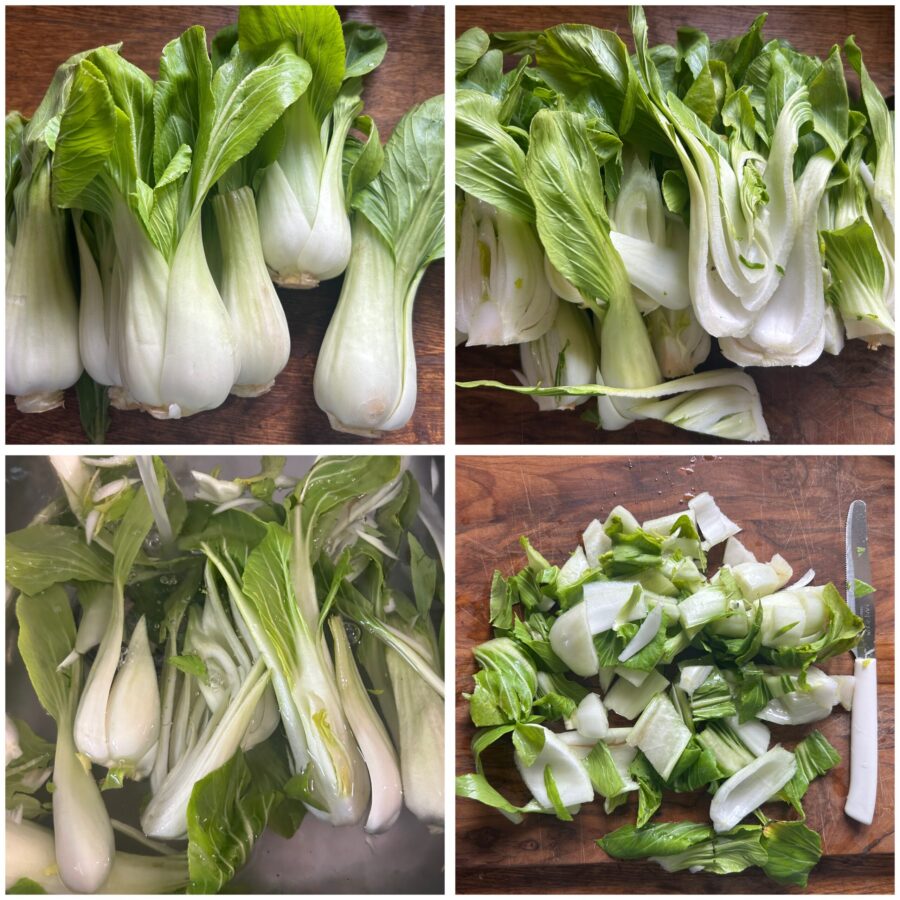
Cut the pak choi into pieces that are not too small so they remain meaty and crunchy after fermentation. Transfer the pak choi to a large bowl, add the salt and gently massage the leaves. Let rest until they release their water.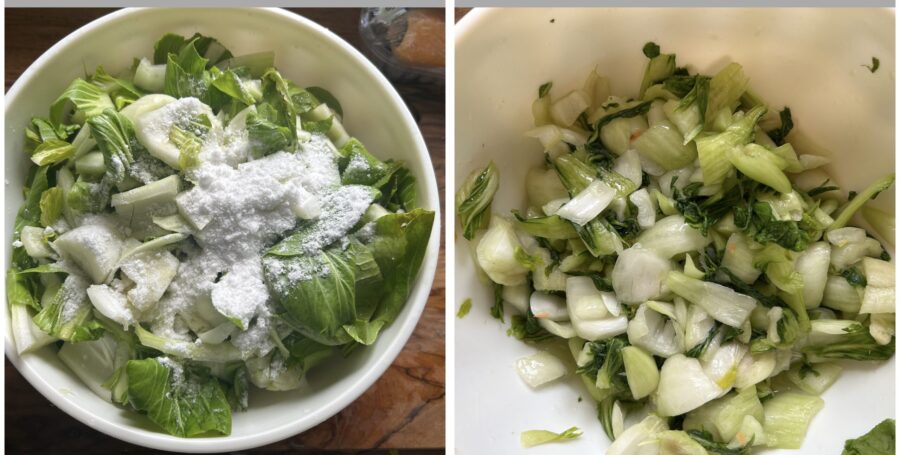
Then rinse under cold water and squeeze well to remove excess liquid.
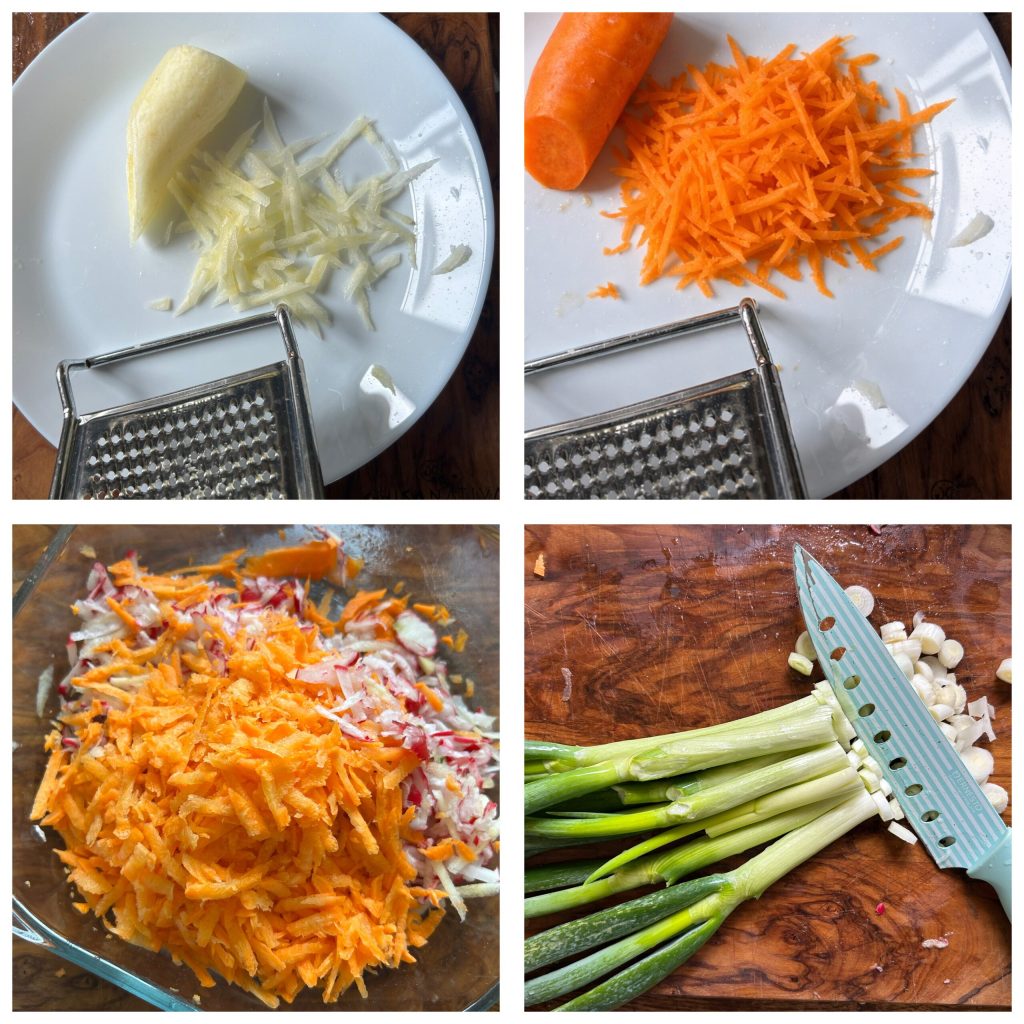
Grate the daikon (or your alternative) and the carrots.
Finely slice the scallions and the Chinese garlic and set everything aside.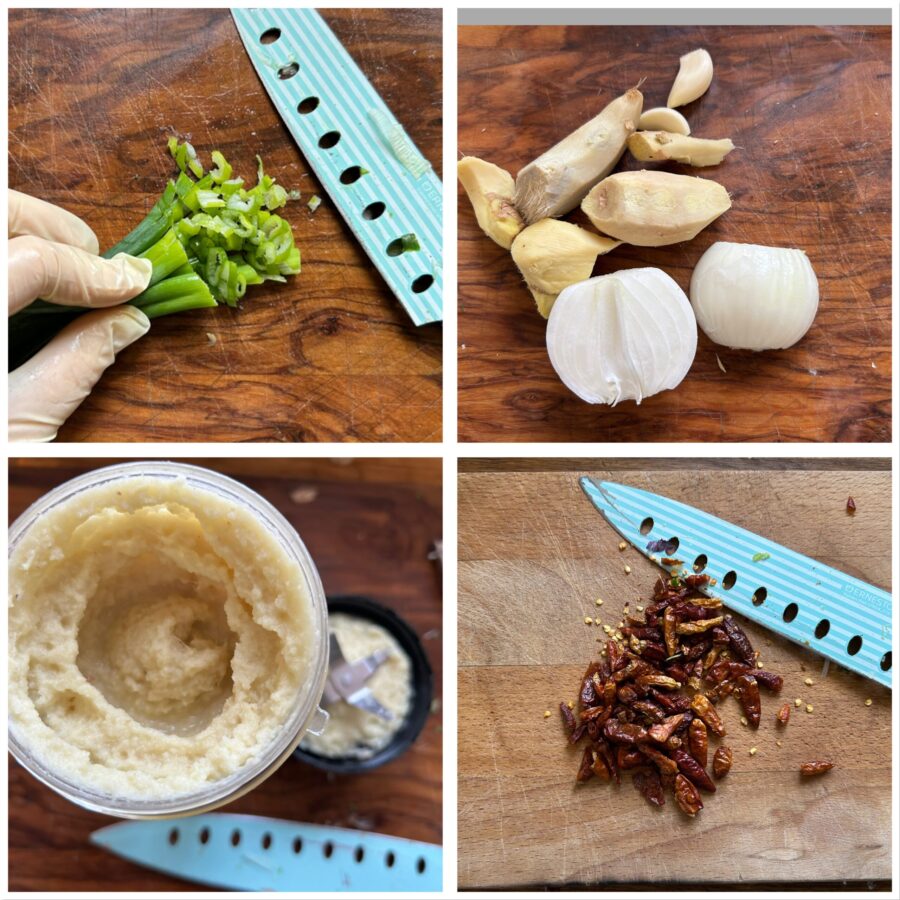
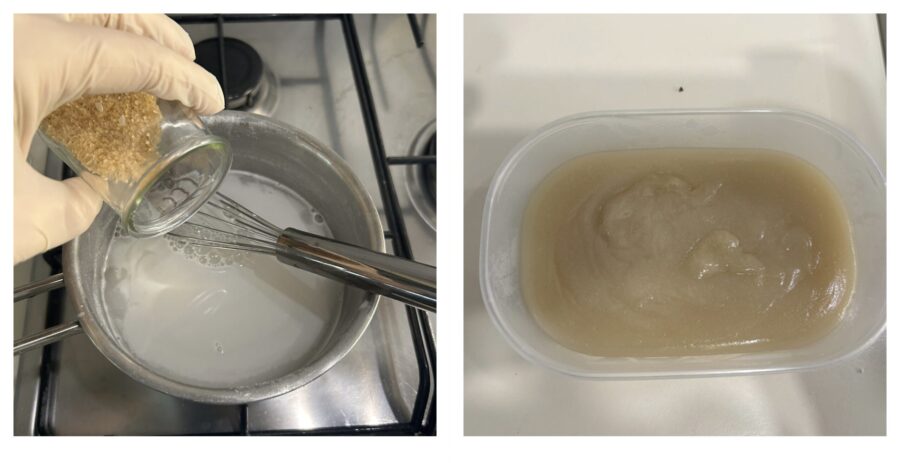
In the mixer, blend the peeled onion, garlic and ginger until you obtain a smooth, fragrant paste. Chop the chili or use powdered chili.Add the sugar and, in a small saucepan, combine with the rice flour (I used a homemade whole grain rice flour). Place over heat and let thicken, stirring continuously. Let the rice paste cool; thanks to the sugars it contains, it will help sustain the fermentation.
Combine all the ingredients and preparations in a large bowl and
mix with your hands (better with gloves) until everything is well distributed.
Transfer the kimchi into clean glass jars, pressing down firmly to remove air. To keep the vegetables submerged in their liquid, make a weight with crumpled plastic wrap or parchment paper.
Close the jars and let ferment at room temperature for 24–48 hours or even 36 hours if it’s cold or you prefer a stronger flavor. I suggest placing the jars on kitchen paper, as fermentation will make a little liquid escape for a couple of days.
After the first fermentation, move the kimchi to the refrigerator.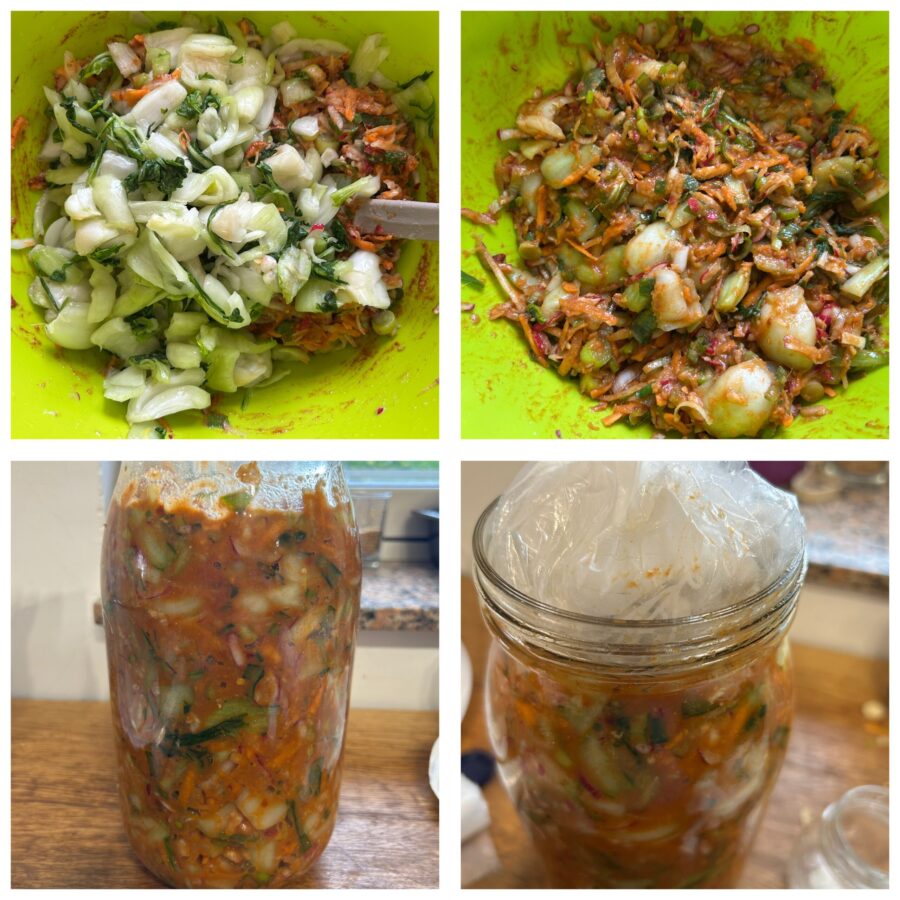
As days go by the flavor will become increasingly intense and harmonious and perfect to accompany your ethnic dishes and beyond.
Storage notes and tips
Homemade kimchi should be stored in the refrigerator, well sealed in a glass jar, where it will continue its slow fermentation. As days pass the flavor will become deeper, more complex and intense: this is a natural and desirable transformation.
Consume the kimchi within 2–3 weeks to best appreciate its aroma, crunch and vitality. Always use clean utensils to take it from the jar so as not to alter the fermentation.
If you prefer a milder taste, you can eat it after 24 hours; if you like stronger flavors, let it mature a few more days in the refrigerator.
Kimchi is a versatile side dish: it pairs well with rice, eggs, fish, meat, legumes and vegetables, always bringing balance, freshness and character to the plate.
If you want to stay updated on my recipes, follow me also on:
Pinterest; Twitter, YouTube and TikTok.
FAQ (Questions and Answers)
Is homemade kimchi spicy?It depends on the amount of chili used. You can easily adjust the level of spiciness to taste.
How long should kimchi ferment?Kimchi can ferment from 24 hours to several days. The more time passes, the more intense and sour the flavor becomes.
Is kimchi a healthy food?Yes, kimchi is a natural ferment rich in probiotics, fiber and vitamins, beneficial for intestinal health and for a balanced diet.
Is it suitable for a flexitarian diet?Yes, this version is perfect for a flexitarian diet because it is plant-based and highlights simple, natural ingredients.
Can it be considered a Mediterranean dish?Although it originates in Asia, kimchi shares with Mediterranean cuisine a respect for time, fermentation and the valorization of vegetables.
What can I serve it with?It’s ideal as a side dish, but also to enrich rice, noodles, sandwiches, salads or dishes based on eggs and legumes.
What can I substitute for pak choi?
If you can’t find pak choi, you can make kimchi with:
Savoy cabbage (the most similar in texture)
Green or red cabbage
Swiss chard
The important thing is to choose compact leafy vegetables, capable of withstanding salting and fermentation without falling apart. Each vegetable will give the kimchi a different character, but the spirit will remain the same: that of a living food that changes and tells a story.What can I substitute for daikon?
If you can’t find daikon, you can substitute with:
White turnip
Radish
Celeriac
Carrot (for a sweeter version)
Fennel
Daikon mainly provides crunch and freshness: choose vegetables with a mild flavor and firm texture. Each substitution will slightly change the kimchi’s aromatic profile, but fermentation will still harmonize the flavors.