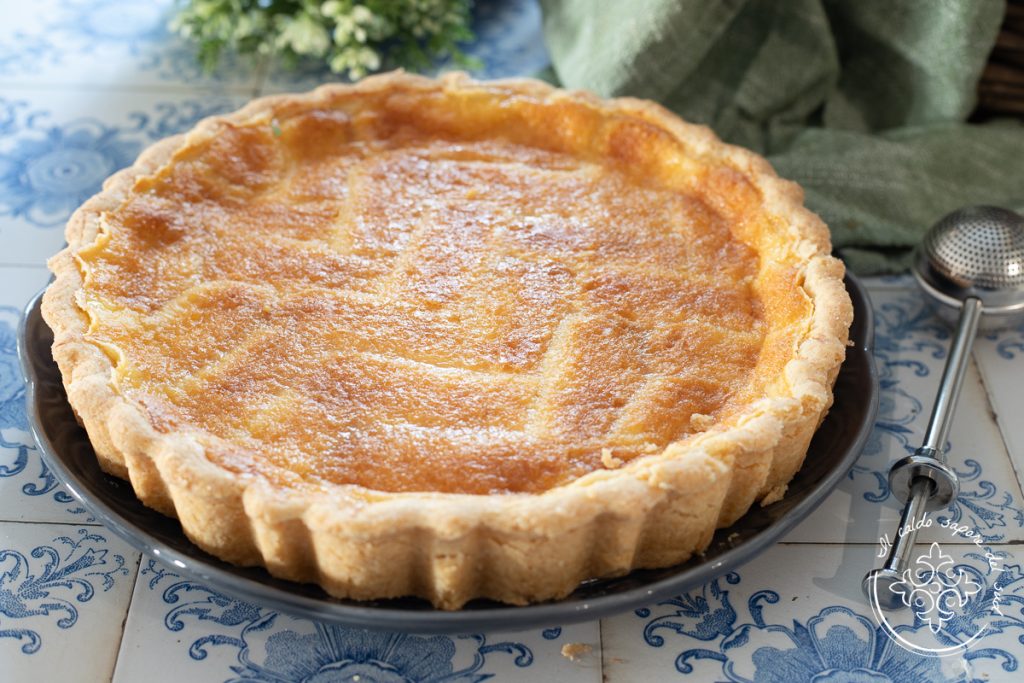
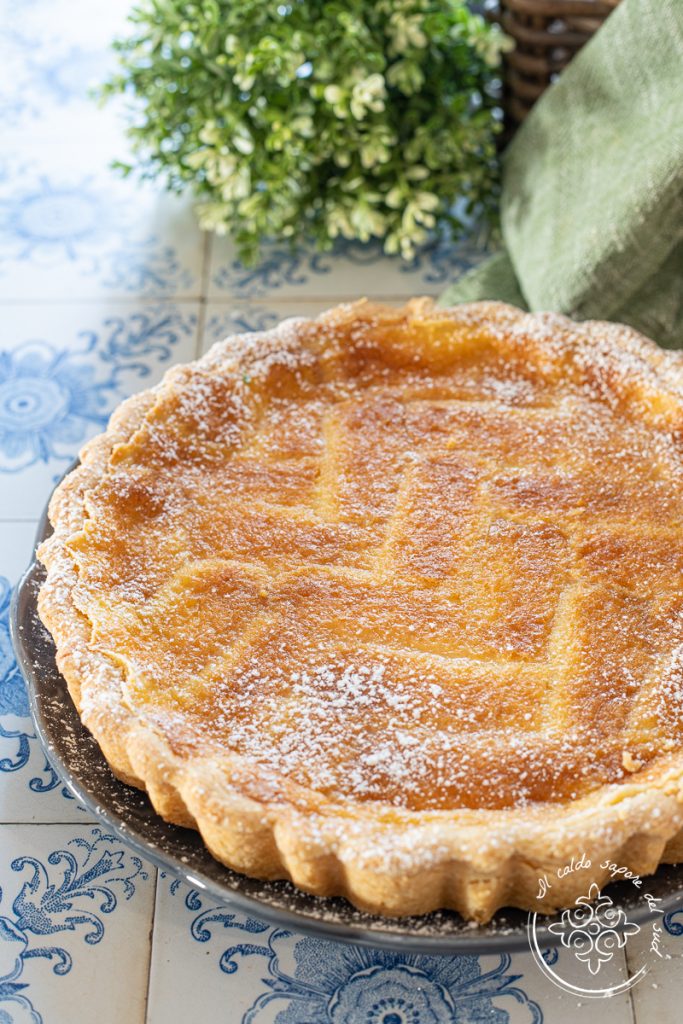
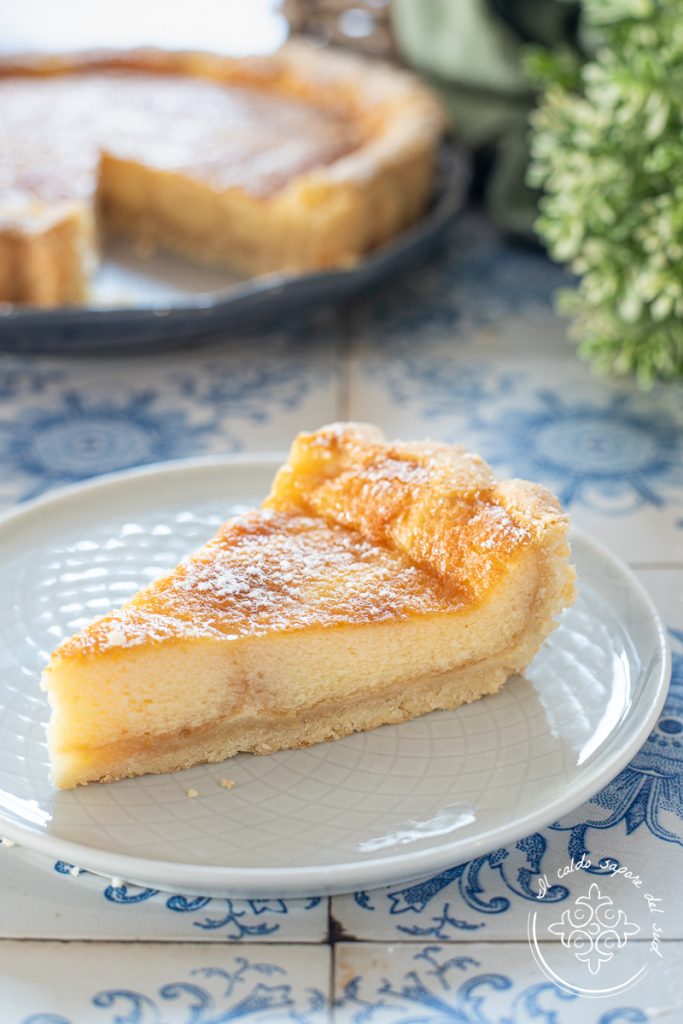
Beneventana tart or Portuguese cake, grandma’s recipe of a cake that thinks it’s a tart, and a tart that thinks it’s a cake! Today we’ll prepare together the original Beneventana tart, a special dessert with a shortcrust pastry base that doesn’t break and a creamy filling made with ladyfingers, milk and eggs. The recipe for the Beneventana cake, as the name suggests, originates in Campania and more precisely in Benevento, and comes from a simple yet ingenious idea: fill the shortcrust shell of a tart with ladyfingers soaked in a mixture of milk and eggs to obtain, after baking, a filling with a delicate, slightly pudding-like texture! It is perhaps this filling, reminiscent of the famous “Portuguese milk” dessert, that gives our tart its second name of Portuguese tart. What really makes this dessert unique, besides the somewhat different filling compared to the usual pastry cream, is the characteristic “fishbone” pattern that the ladyfingers create on the surface. Let’s go to the kitchen and prepare this delicious dessert with a double texture together: crisp on the outside and pleasantly creamy and moist inside. An ideal dessert at any time of day, from breakfast to snack time or afternoon tea, and also a delightful end to a meal! Before getting your hands on the dough, as always, I remind you that if you want to stay updated on all my recipes you can follow my Facebook page (here) and my Instagram profile (here).
Also check out these Campanian desserts:
- Difficulty: Easy
- Cost: Inexpensive
- Preparation time: 30 Minutes
- Portions: 12
- Cooking methods: Stovetop
- Cuisine: Italian
Ingredients to make the Beneventana tart
- 2 cups 00 flour (all-purpose)
- 2/3 cup butter (soft)
- 1 egg yolk
- 1.8 oz powdered sugar (confectioners')
- 1 teaspoon vanilla extract
- 14 savoiardi (ladyfingers) (about)
- 2 cups milk
- 3 eggs
- 1.7 fl oz Strega liqueur
- 2/3 cup granulated sugar
- to taste lemon zest (organic)
How to prepare the Beneventana tart
For this recipe you should use the Campanian liqueur “Strega”. Unfortunately I had run out and didn’t remember: I still advise you not to replace it, as I did (I had to resort to limoncello). Strega gives, besides its characteristic color, a very distinct aroma.
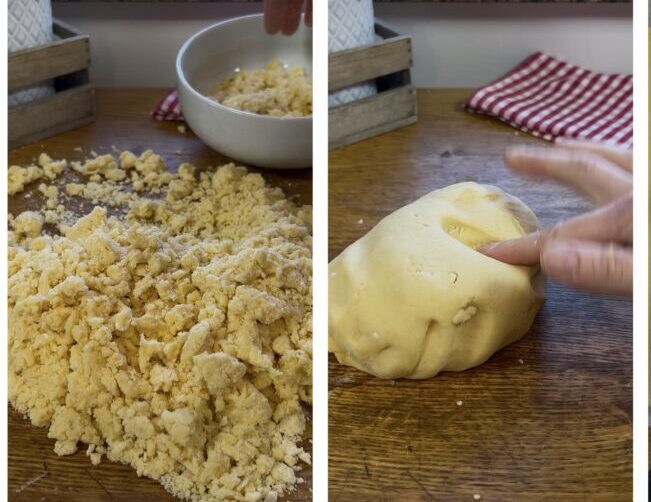
With this method for making the shortcrust pastry you will obtain an elastic dough that is easy to roll out. In a bowl work together the soft butter (so leave it out of the fridge for at least 15-20 minutes) and the sugar for a few minutes, add the yolk and mix.
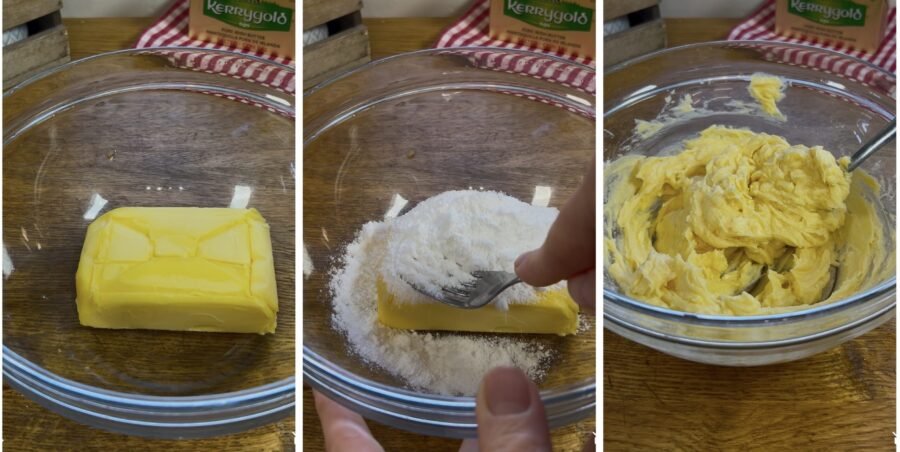
Add the flour and lemon zest and mix in the bowl, then work on a floured surface until you get an elastic, homogeneous dough. Be quick to avoid warming up the dough. You can perform the same steps using the paddle attachment of a stand mixer (the photos of these first steps are taken from the Apple and Walnut Crumble Tart)
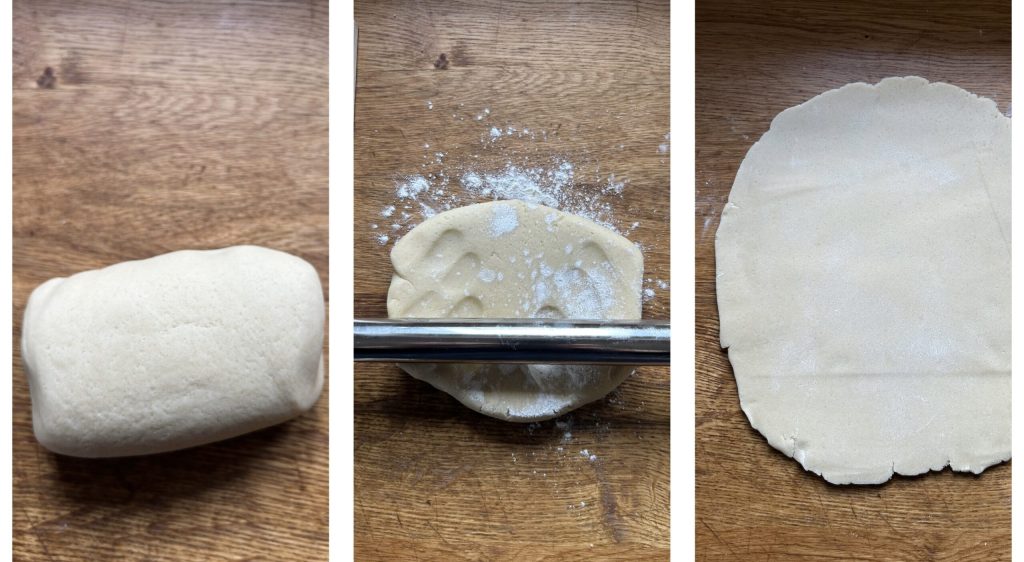
Once the pastry is ready, lightly flour the work surface and roll it out to a thickness of about 3/16 in (1/2 cm).
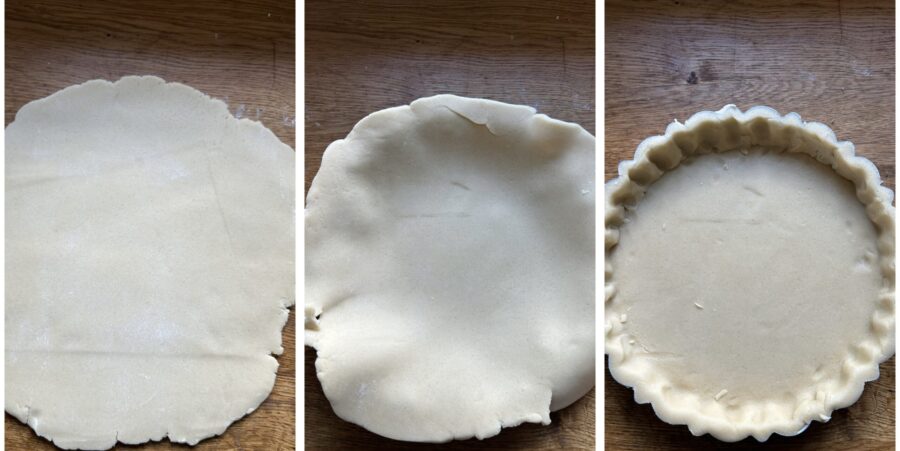
Transfer the dough to a tart pan about 9.5–9.8 in (24–25 cm) in diameter (with a removable bottom) and line it evenly.
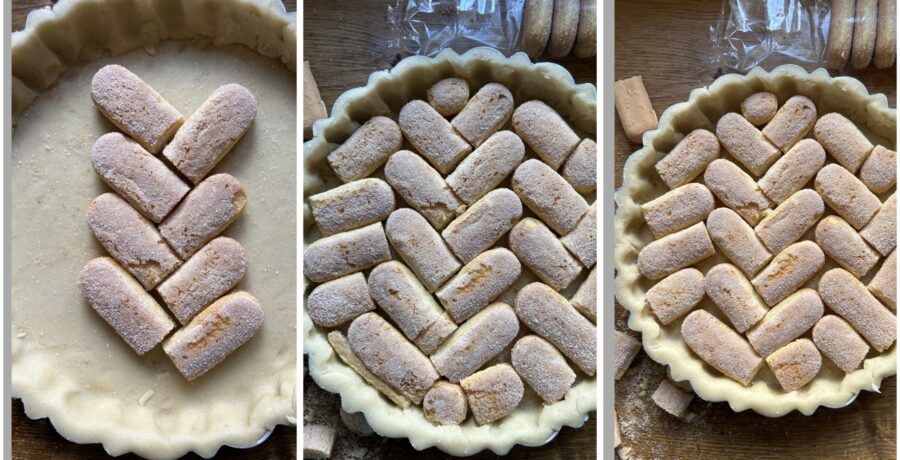
Arrange the ladyfingers inside the tart giving them the characteristic fishbone shape, with the sugared side facing up. In a larger baking pan you could have placed them whole, as the original recipe suggests, but for a smaller pan like this one (about 9.8 in/25 cm) you will need to cut them.
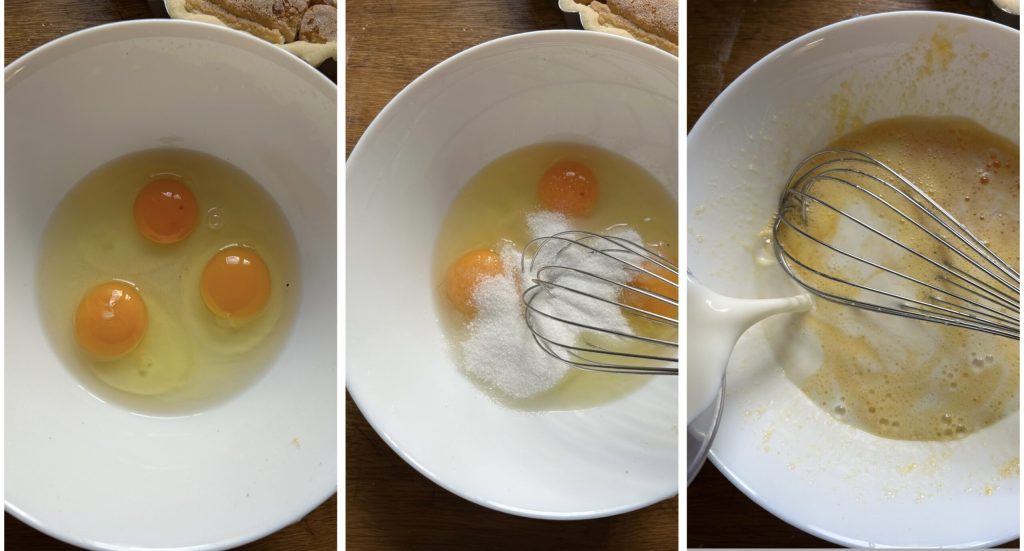
Beat the eggs with the sugar, add the milk and whisk until you obtain a homogeneous mixture.
Pour in the liqueur (Strega would be ideal, but I used limoncello) and finish with a grating of lemon zest. Mix everything well and pour it over the tart.
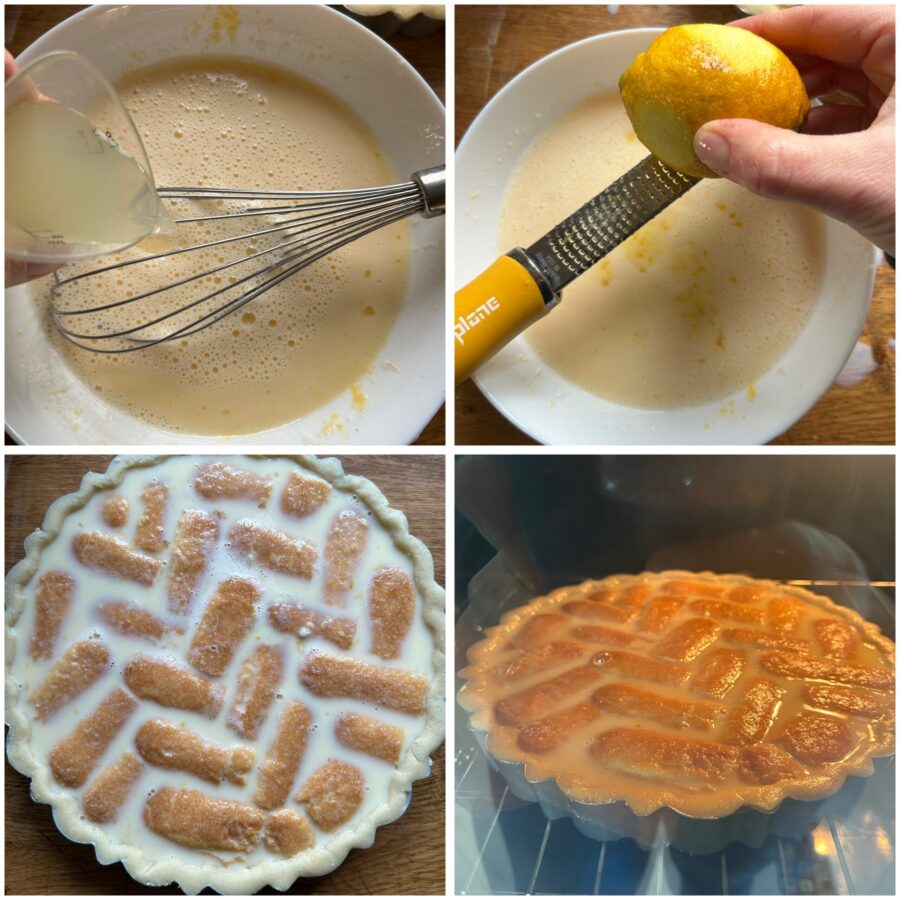
Don’t worry if the mixture seems liquid when you pour it over the biscuits: it is not a pastry cream but a “beaten milk-and-egg mixture” that will thicken during baking thanks to the ladyfingers.
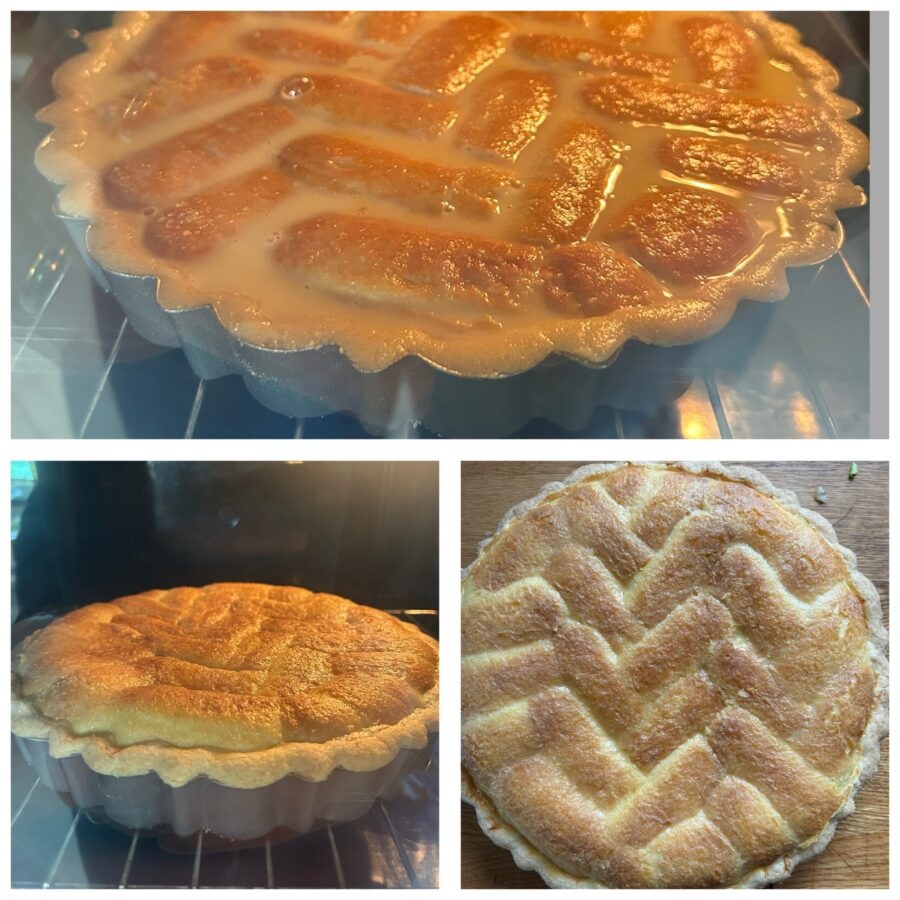
Bake the tart in a preheated oven at 338°F (170°C) for 45 minutes; it will be done when it appears evenly puffed (as in the photo, then it will deflate). Remove from the oven, let cool, dust with powdered sugar and serve.
Storage and tips
You can store the Beneventana tart for 2-3 days in a cool, dry place under a cake dome.
If you want to stay updated on my recipes, follow me also on:
Pinterest; Twitter;YouTube;TikTok.
From here, you can go back to the HOME and discover new recipes!