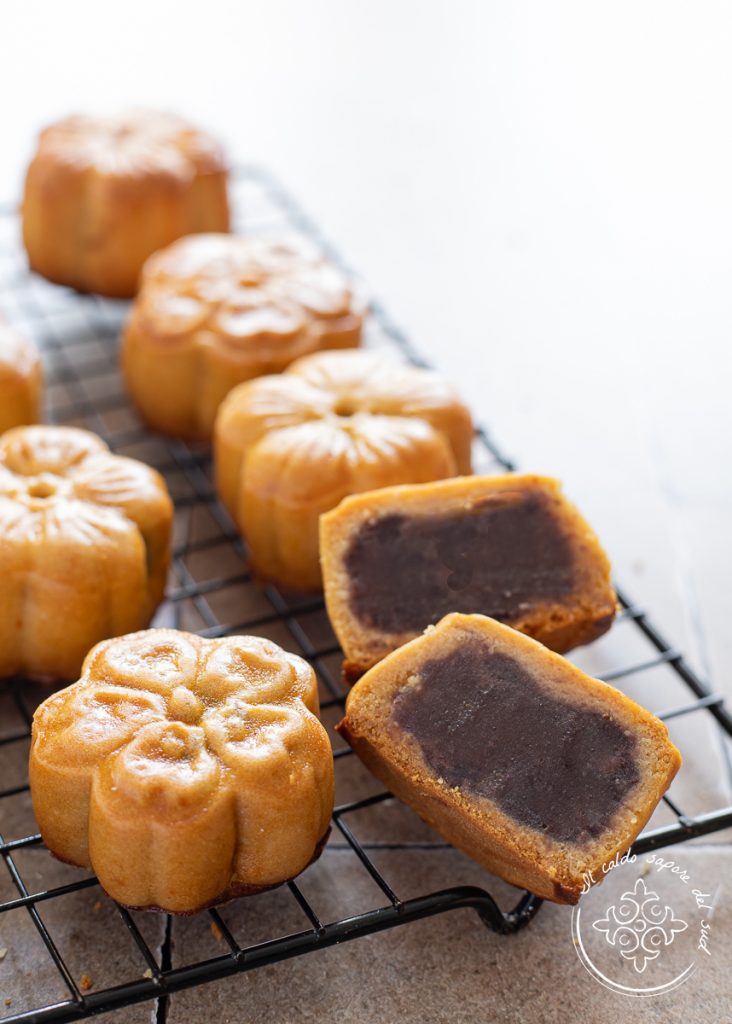
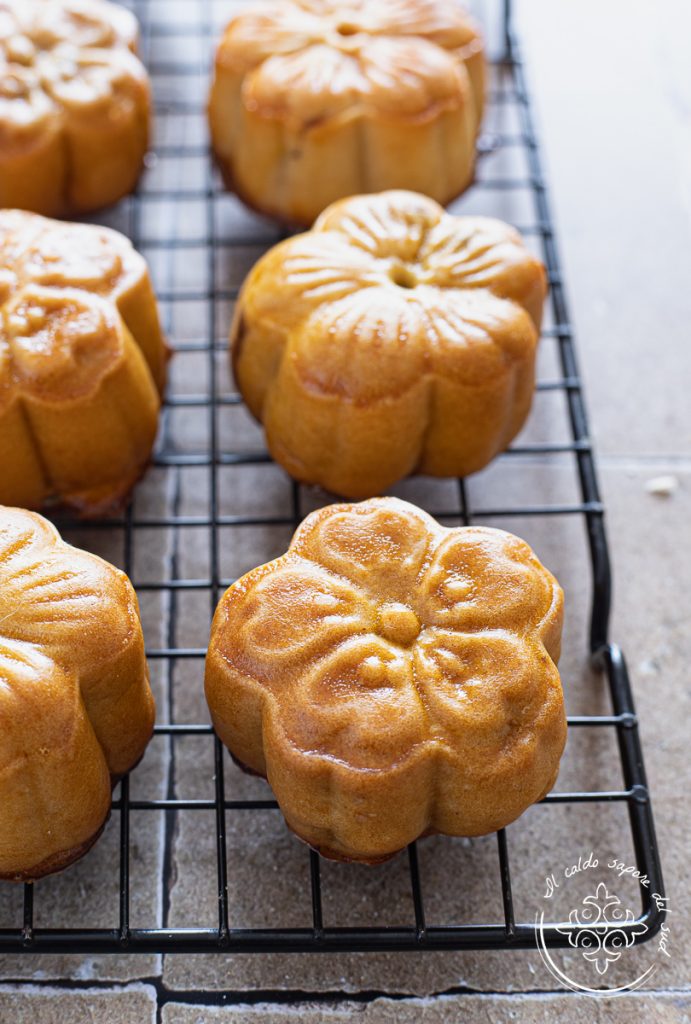
Mooncakes or lunar cakes. The mooncake is a Chinese pastry traditionally eaten during the Mid-Autumn Festival and on other major celebrations of the calendar, such as the Lunar New Year, which this year falls on Wednesday, January 29, 2025. Some time ago, if you remember, I explained how to make anko, the famous red bean jam, the same jam we used to fill red bean mochi (Japanese) or dorayaki with red beans, and I also hinted that we would need it for other preparations. Here is one: mooncakes filled with bean jam. I’ll be honest: I bought the mold out of curiosity several months ago but I didn’t use it right away, and it’s actually not the original style that should have auspicious Chinese characters engraved. But we won’t worry about that — the taste doesn’t change! 😉
I must say I researched a lot before attempting mooncakes because there are countless ways to make and fill them. I chose one of the simplest versions that are more accessible to those of us not from an East Asian culinary background, also because I’m not yet ready to use ingredients such as salted egg yolks or sweet cured yolks, the main components of Cantonese mooncakes, the most traditional and well-known. Know that in Chinese or broader East Asian culture, eating a whole mooncake alone is considered somewhat impolite; each cake is usually sliced into portions and shared, since mooncakes also have religious and folkloric significance and symbolize conviviality, family reunions, and happiness. Needless to say, I ate two or three all by myself — they’re amazing! Let’s go to the kitchen now: I’ll explain step by step how to make mooncakes. You’ll see some ingredients you might not know — don’t worry, I’ll explain at the start of the recipe how to substitute them or make them at home. Roll up your sleeves, and if you want to stay updated on my recipes, you can follow my Facebook page (here) and my Instagram profile (here).
Also see these typical Asian recipes:
- Difficulty: Medium
- Cost: Low-cost
- Rest time: 1 Hour
- Preparation time: 1 Hour
- Portions: 40
- Cooking methods: Stovetop
- Cuisine: International
- Seasonality: Autumn, Winter
Ingredients to make mooncakes
- 2 1/2 cups Red azuki bean jam (anko) (red bean paste – see linked recipe for preparation)
- 3 2/3 cups all-purpose flour ((type 0 flour equivalent))
- 6 1/2 tbsp honey
- 6 2/3 tbsp inverted sugar / golden syrup (can be substituted with maple syrup)
- 1/2 cup peanut oil
- 2 tbsp lye water (kansui – see below for how to make it at home)
- 1/4 tsp baking powder (leavening powder without flavorings)
- 1/4 tsp salt (a pinch)
- 1 egg yolk
- 3 tbsp water
Tools
- Bowl
- Molds for mooncakes
- Oven
- Baking trays
- Brush
Steps to make mooncakes
How to make lye water for mooncakes.
If you noticed among the ingredients, to make mooncakes you will need lye water, an alkaline liquid that gives mooncakes their characteristic color and original flavor. You can buy lye water at ethnic shops or online, or make it at home starting from common baking soda. First you must transform baking soda into KANSUI, a strongly alkaline substance (sodium carbonate, and sometimes potassium carbonate) used in East Asian cooking to adjust acidity in some foods such as ramen or mooncakes. Turning baking soda (sodium bicarbonate) into sodium carbonate is simple: spread the baking soda on a baking tray and bake it at 392°F (200°C) for 30 minutes, turning it occasionally so it ‘cooks’ evenly. At high temperatures baking soda decomposes, releasing water vapor and carbon dioxide and leaving soda ash (sodium carbonate). (BE CAREFUL WHEN HANDLING IT — IT IS A BASIC/ALKALINE SUBSTANCE AND IS BEST WORKED WITH GLOVES). By diluting 1:4 — one part sodium carbonate (kansui) with four parts water — you obtain lye water, and you’ll only need a little for our cakes, so don’t worry. In any case the alkali will be neutralized during baking.
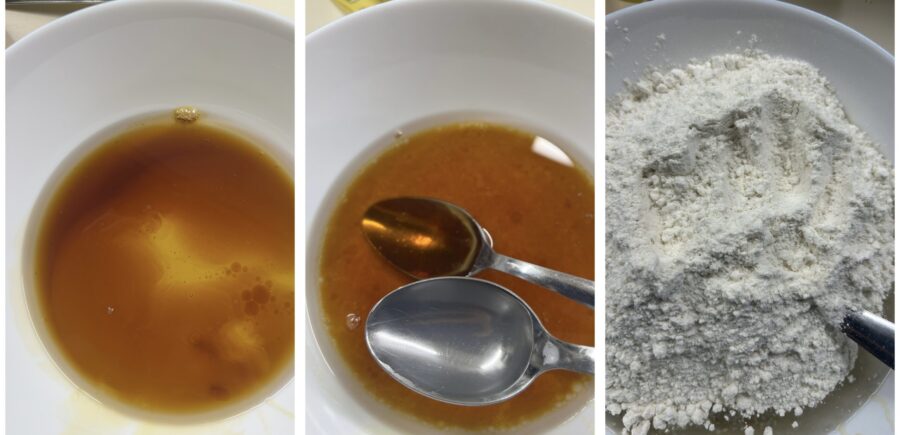
Combine the honey, inverted sugar (also called golden syrup — it contains some molasses and can be substituted with maple syrup), the lye water (made from 1 part sodium carbonate – kansui – to 4 parts water), and peanut oil in a bowl; mix and then add the flour, salt, and baking powder.
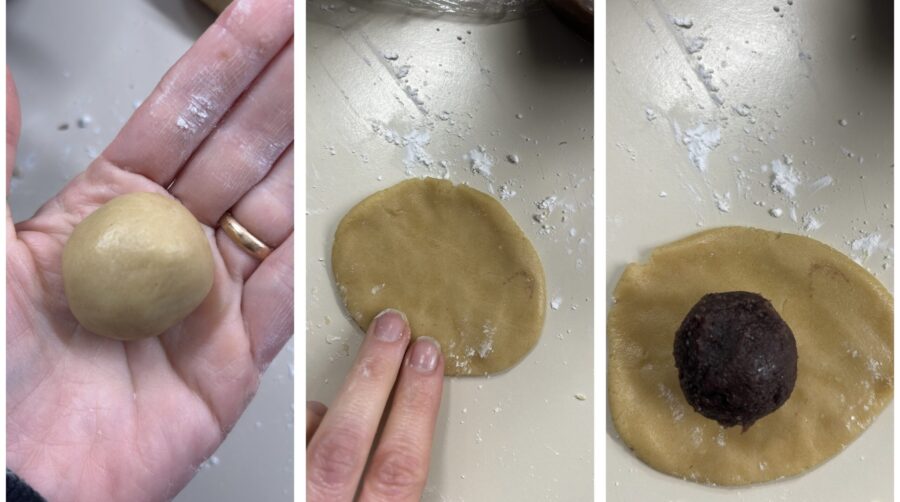
Work the dough with a spatula and, once it holds together, wrap it in plastic wrap and let it rest in the refrigerator for 1 hour. The dough will be soft but workable, quite different from classic shortcrust pastry. After resting, divide the dough into balls of about 35–40 g each (adjust based on the size of your molds).
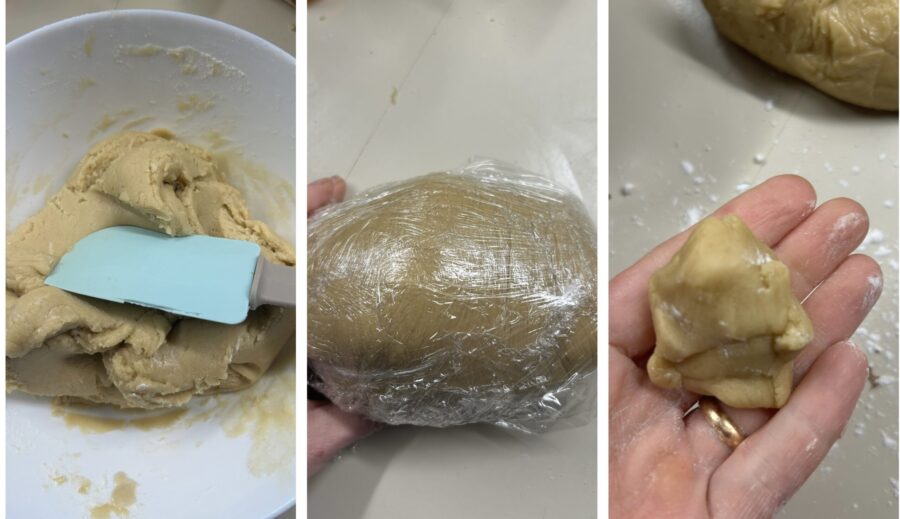
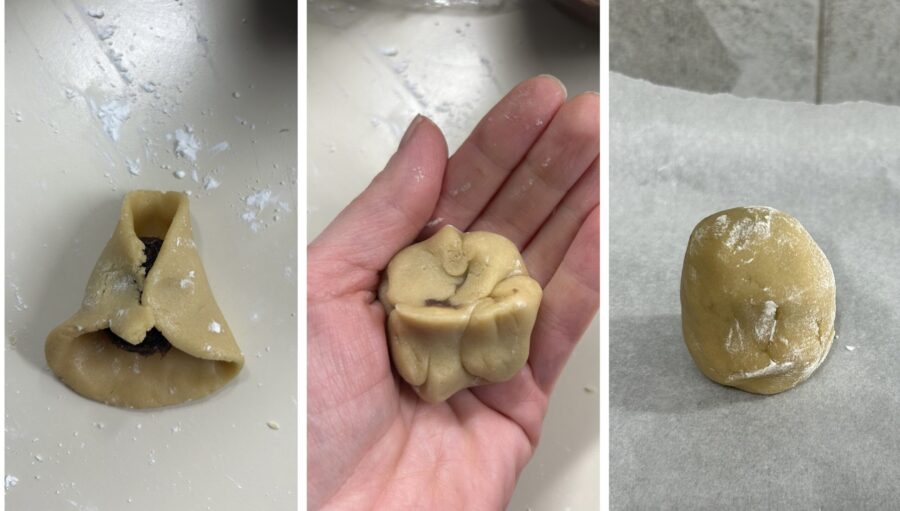
Using a little cornstarch to help, flatten each dough ball into a disk, place a cold portion of red bean paste (it should be chilled and rested at least 24 hours in the fridge — see the linked recipe), and wrap the paste evenly with the dough.
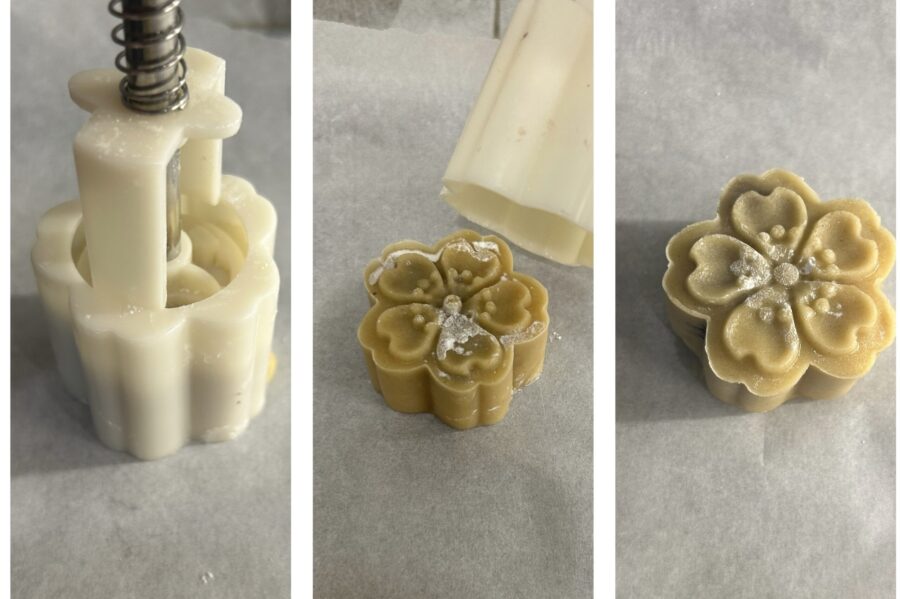
Dust each mooncake lightly with starch
and press them with the mold to imprint the design.
Continue until all mooncakes are formed and place them in a conventional oven at 338°F (170°C) for 10 minutes so the surface design dries. Remove them from the oven, let them cool slightly, and brush them with beaten egg mixed with 3 tablespoons of milk. Do not brush them while still hot, as it will ruin the design. Bake again for another 10–15 minutes or until they turn an amber, glossy color.
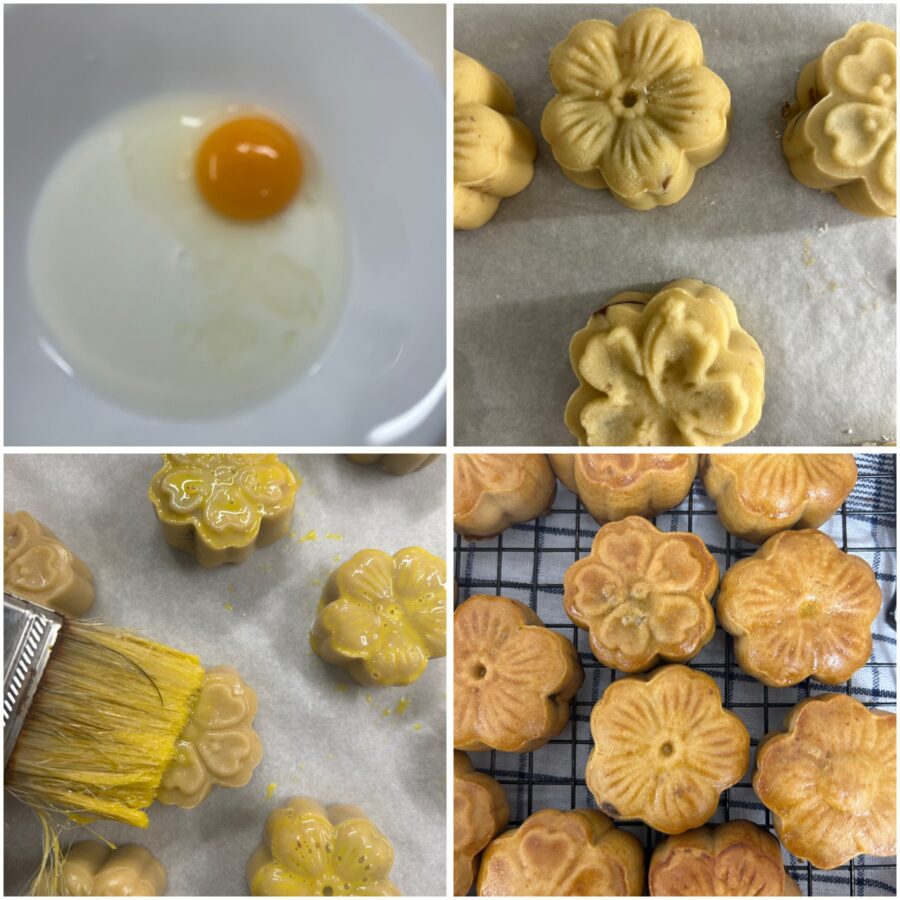
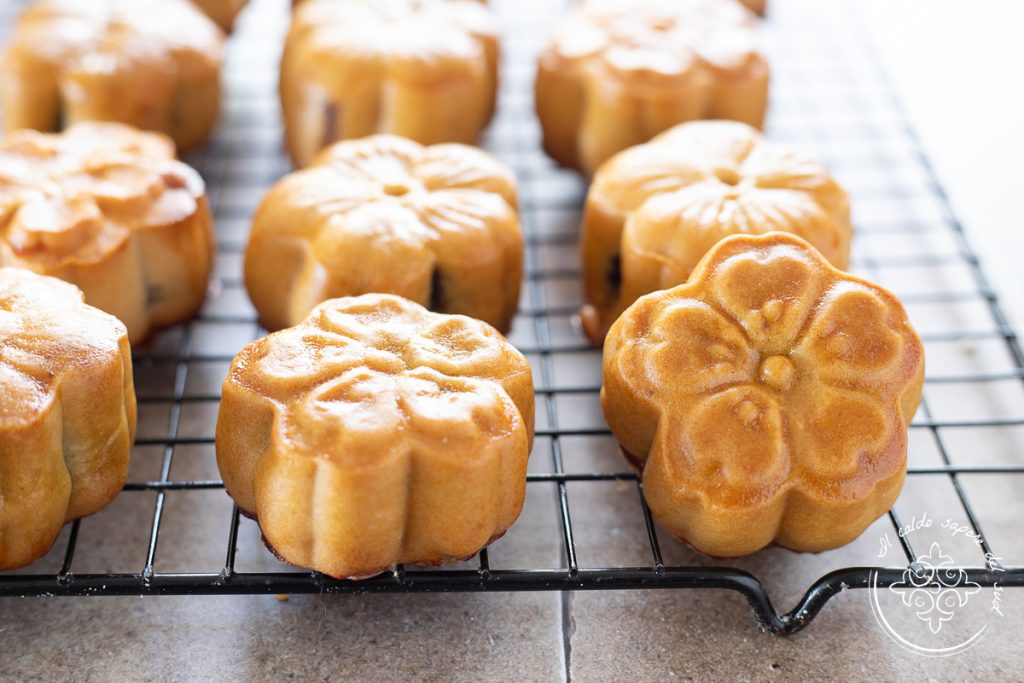
After baking, let them cool completely on a rack and if you can, wait a little longer before tasting the mooncakes. These pastries should be stored in an airtight container and left to rest for 2–3 days before eating. During this resting period, the outer layer loses its initial hard, gummy texture and becomes soft and melting, uniting with the filling.
Storage and notes
After the 2–3 day resting period, enjoy your mooncakes or store them in the refrigerator for up to 2 weeks.
If you want to stay updated on my recipes, follow me on:
Pinterest, YouTube, Twitter and TikTok.
Lye water has a slightly odd smell; don’t worry — it’s normal and the scent becomes pleasant once incorporated into the pastries.