
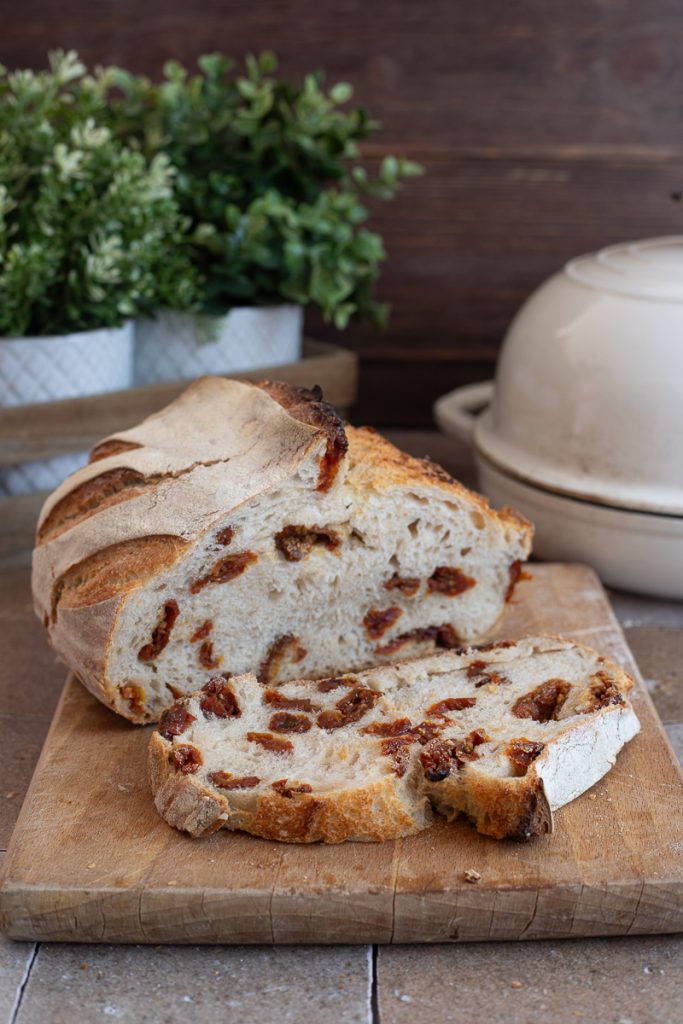
Semolina bread with sun-dried tomatoes and sourdough starter, one of the many homemade bread recipes I like to make often, both to serve as a tasty appetizer and as an accompaniment to all kinds of main dishes. The bread with sun-dried tomatoes is part of Sicilian cuisine with its many grandmother’s recipes and is truly delicious.
Both the black olive bread and the bread with sun-dried tomatoes are an unforgettable memory from my childhood. At my paternal grandmother’s house they were always present, especially the black olive bread from a well-known Sicilian brand; my maternal grandmother, when she made homemade semolina bread, used to make her last two loaves one with olives and one with my beloved sun-dried tomatoes, which I’m still crazy about!
Today we’ll bake a simple bread made with semolina flour, water, sourdough starter and sun-dried tomatoes, which, becoming tempting pockets in the dough, will make the bread exceptional!!
Ready? Let’s go to the kitchen then, don’t waste time, but before rolling up our sleeves I remind you that if you want to stay updated on my recipes you can follow my Facebook page (here) and my Instagram profile (here).
Also take a look:
- Difficulty: Medium
- Cost: Very inexpensive
- Preparation time: 8 Hours
- Portions: about 2.9 lb of bread
- Cooking methods: Oven
- Cuisine: Italian
Ingredients to make bread with sun-dried tomatoes
- 3 5/8 cups re-milled durum wheat semolina (Re-milled)
- 2 1/8 cups Water
- 5.3 oz Sourdough starter (Refreshed and mature)
- 2 1/2 tsp Salt
- 1 tsp Honey (Or malt)
- 7 oz Sun-dried tomatoes
Tools
- Bowl
- Ovens
- Cast iron pots
- Proofing basket
How to make bread with sun-dried tomatoes
To make the bread, always start from a strong, mature starter; then refresh it at 1:1 (100 starter, 100 flour and 50 water).
Once refreshed, wait for the sourdough starter to double in the next 3 hours at about 79-82°F.
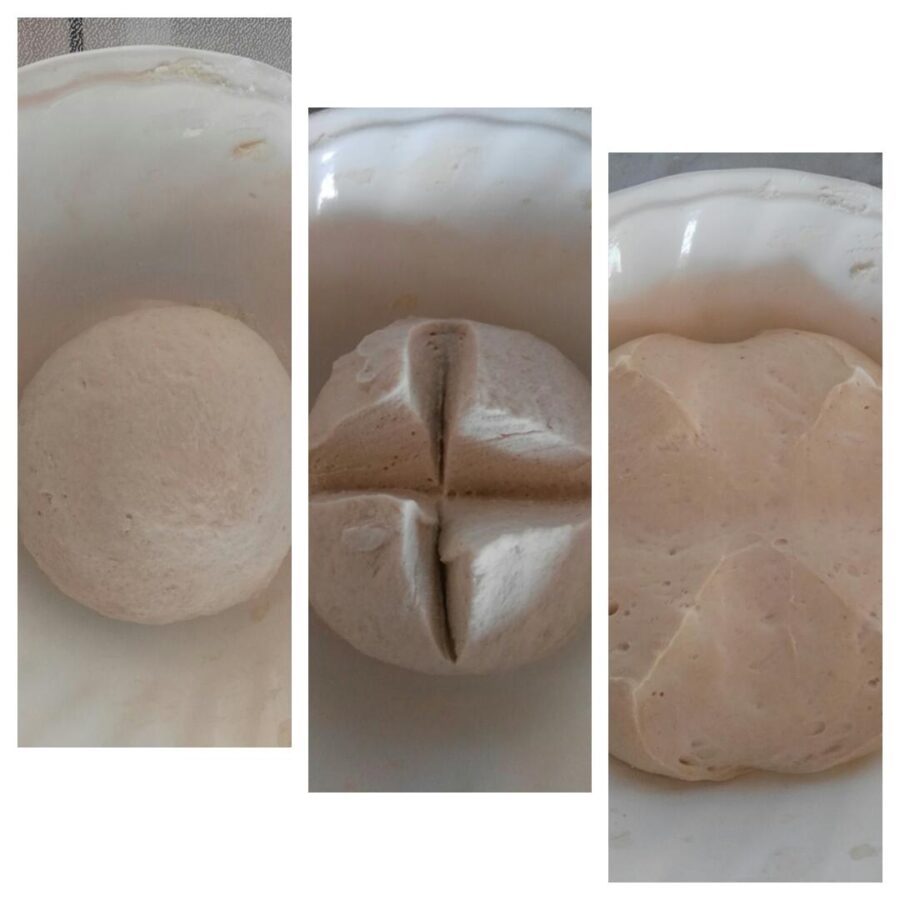
One hour after refreshing, put the flour into autolyse (this helps the gluten network form): wet it with about 45% of the water, mix coarsely and let rest.
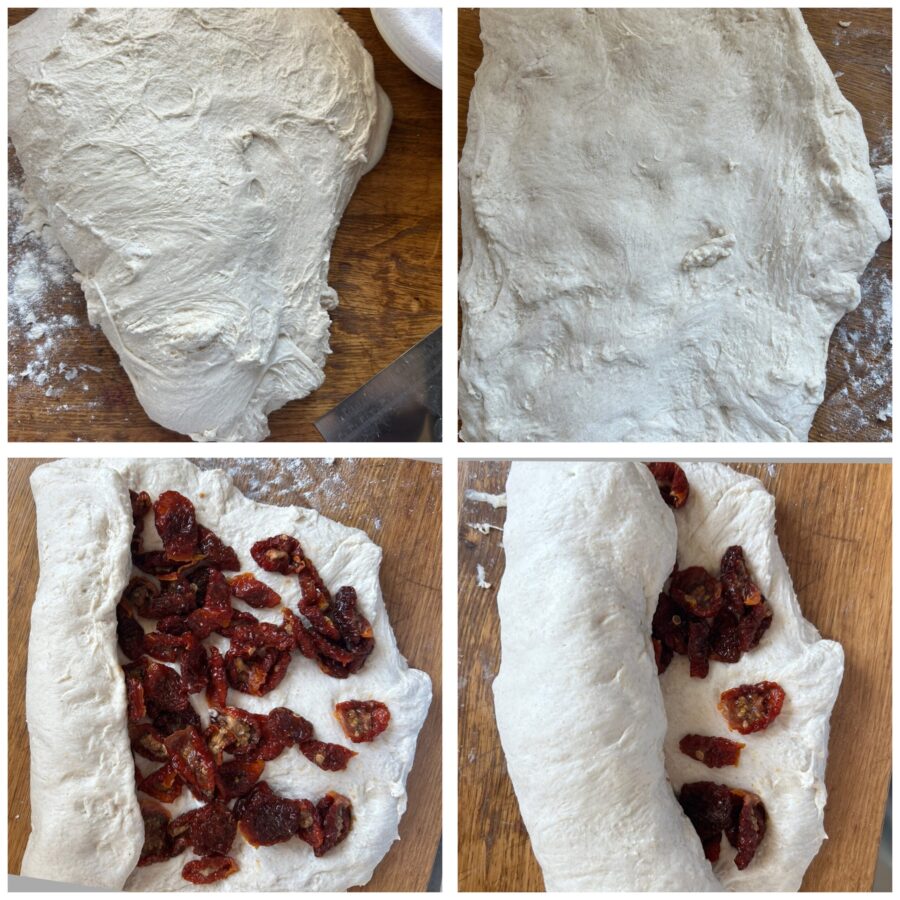
As soon as your sourdough starter is mature, proceed to mix everything. Add the rest of the water to the flour in autolyse, the salt, one teaspoon of honey or malt, the torn starter and knead for 15-20 minutes. You can use a stand mixer to achieve a well-developed dough. Let rest in a warm place for 1 hour. Then turn the dough out onto a floured work surface and stretch it into a rectangle.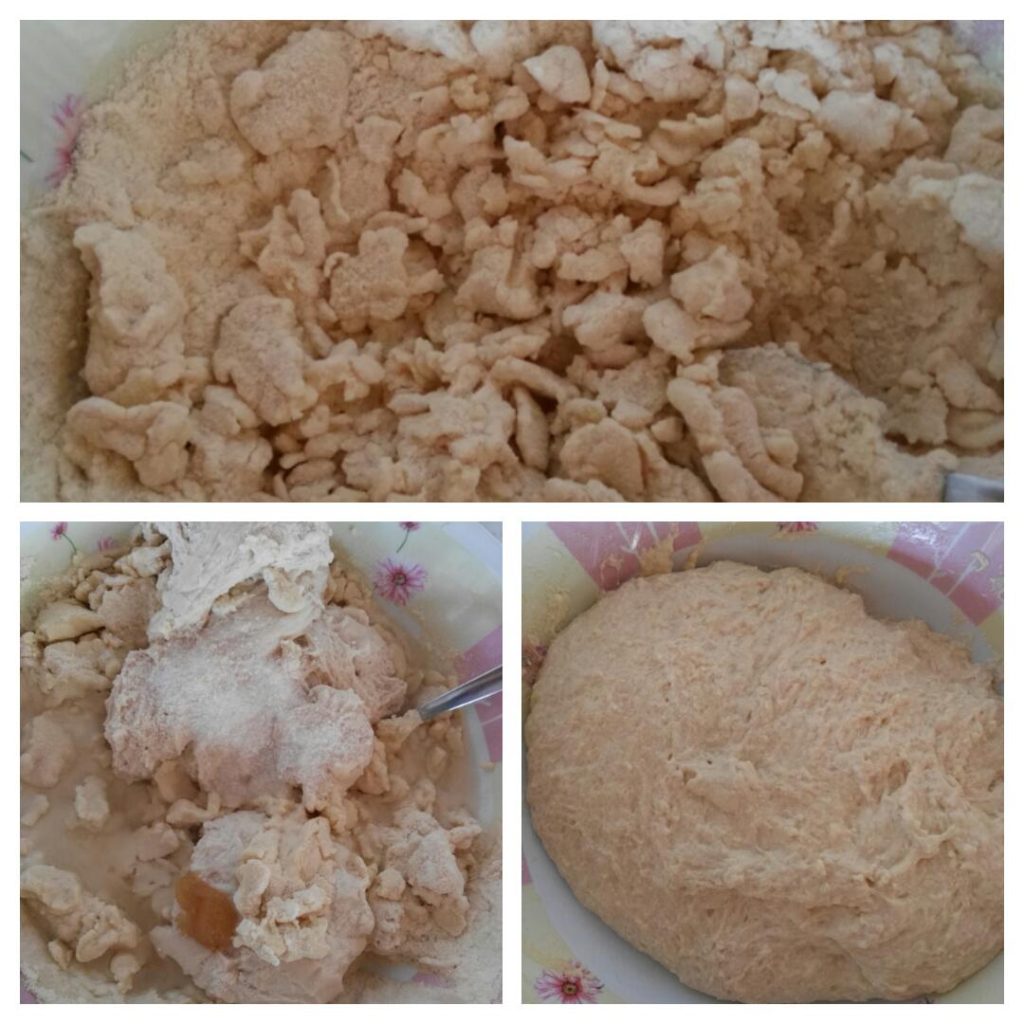
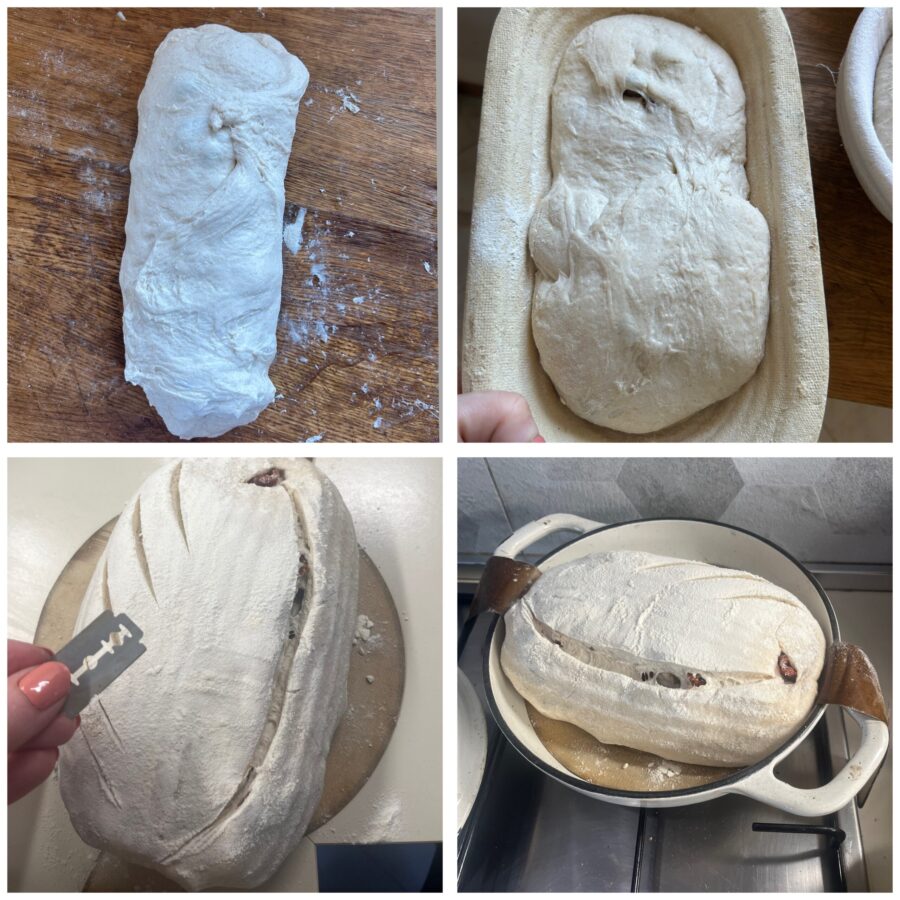
Distribute the sun-dried tomatoes (previously soaked for 10 minutes in warm water, then squeezed and chopped) over the dough and roll it up to form a cylinder. Flour well both the dough cylinder and the proofing basket, place the dough into the basket with the seam facing up and leave in a warm place for another 4 hours, then move to the refrigerator for 6-8 hours (overnight). After this time, if the bread is well risen, proceed immediately to baking, otherwise let it finish proofing at room temperature. Preheat the oven to 428°F or to its highest achievable temperature and simultaneously heat the cast-iron pot by placing it inside the oven. Turn the first loaf onto a sheet of parchment paper, score it with a blade so it won’t burst open randomly during baking, and place it into the already hot pot.
Cover with the lid and bake gently for 45 minutes, then uncover and let brown until done to your preference. Remove from the oven and let cool slightly before enjoying.
Our delicious bread is ready. In winter, simply keep it wrapped in a cotton cloth and it will stay fine for two or three days; in summer it will unfortunately dry out sooner. I don’t recommend storing it in plastic bags, as it would deteriorate — better to portion and freeze it to use as needed.
NOTES AND TIPS
Regarding proofing times, know that these are approximate. The maturation of a dough with sourdough starter cannot be an exact science; growth is influenced by many factors, especially ambient temperature. In summer fermentation will be faster, but you risk overproofing and souring the dough; in winter times can be very long without a proofer set to 82°F — we can work around this by keeping the dough in the oven with the light on, where you reach about 79°F, which is a good temperature.
If you don’t have sourdough starter, mix 3.5 oz (about 3/4 cup) flour with 2.1 oz (about 1/4 cup) water and 5 g fresh baker’s yeast (about 1 1/2 tsp). Let it rise in the fridge overnight and then proceed as above, using this mixture in place of the sourdough starter. Proofing times will be faster and you should plan accordingly.
You can replace pot baking with traditional baking in a preheated oven; you’ll get a less crunchy crust but still excellent bread. In that case I recommend placing a small pan with some water in the oven to create steam, which will give the bread a crisp crust.
If you want to stay updated on my recipes, follow me also on:
pinterest; twitter, you tube and tiktok.
From here, you can return to the HOME and discover new recipes!
