Homemade fermented red cabbage: the perfect detox food after the holidays. Fermented red cabbage is an ancient and natural preparation based on lactic fermentation of vegetables, the same principle found in living foods like kefir, kombucha, homemade kimchi, preserved lemons and sourdough starter. Different techniques, but united by the same philosophy: time, beneficial microorganisms and a few simple ingredients transform food, making it more digestible, flavorful and rich in benefits.
Fermented red cabbage is a natural preparation ideal for post-holiday detox, when we feel the need to lighten our diet and restore balance to the body.
Consuming it helps reactivate the gut, promote easier digestion and counteract the bloating typical after periods of overeating. It is a naturally cleansing food, low in calories but high in fiber, vitamins and antioxidants, perfect to accompany simple, balanced meals. As with kefir and kombucha, fermented red cabbage does not require vinegar or preservatives: salt supports the growth of natural lactic bacteria, responsible for the slightly tangy aroma and long shelf life. A bit like sourdough, this fermentation only needs attention, patience and respect for times to avoid unnecessary mistakes.
On my blog I love these living preparations, which tell of an authentic and mindful kitchen. Fermented red cabbage is perfect as a side dish, to enrich salads, sandwiches, meat dishes or fish and simple dishes, but also as a small daily wellness gesture, just like a glass of kefir or a slice of naturally leavened bread. A economical, vegetarian and vegan recipe, seasonal and sustainable, ideal for those who want to rediscover the value of home fermentations and bring to the table a healthy, natural and tasty food. Let’s go to the kitchen and make it together, but first a reminder: if you want to stay updated on all my recipes, you can follow my Facebook page (here) and my Instagram profile (here). Go to the preparation!
Take a look:
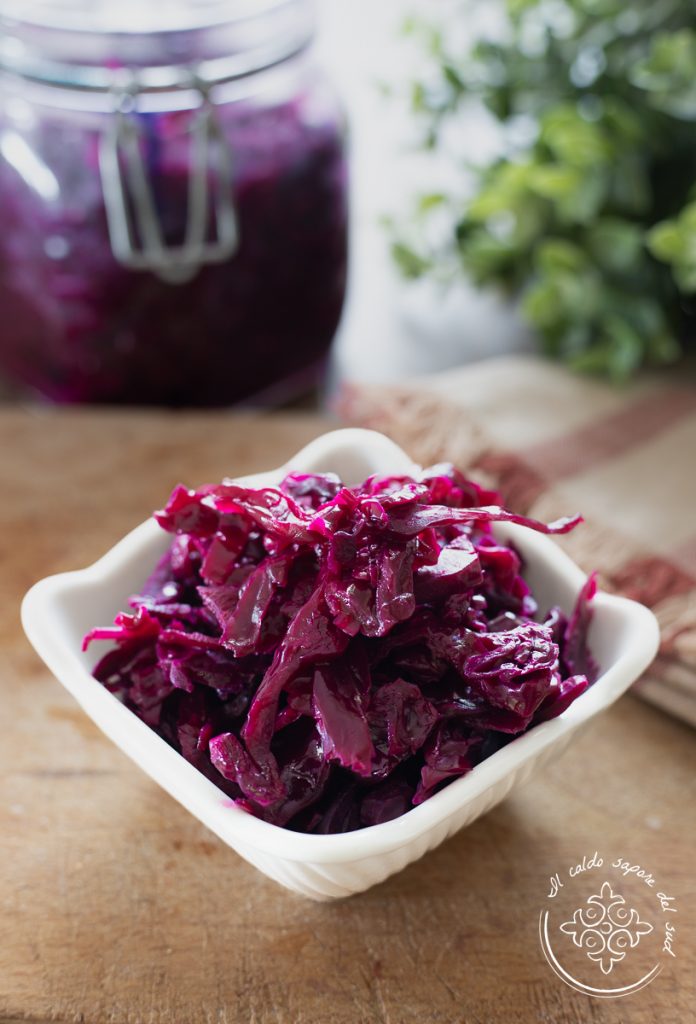
- Difficulty: Very easy
- Cost: Very economical
- Preparation time: 20 Minutes
- Cuisine: Italian
Ingredients to make fermented red cabbage
- 1 kg red cabbage
- 30 g salt (about 1 3/4 tbsp (30 g). Minimum 2.5% (use 2.5%–3% salt relative to total weight))
- to taste spices (if you like: fennel seeds, whole peppercorns, juniper berries…)
Tools
- Bowl
- Jars clean
- Mandoline
Homemade fermented red cabbage
The preparation of fermented red cabbage is simple and follows the principles of natural lactic fermentation, the same found in living foods like kefir, kombucha and sourdough. All you need is cabbage, salt and time to obtain a healthy, digestible and flavorful food, without vinegar or preservatives.
To make fermented red cabbage, start by removing the outer damaged leaves. Wash it, dry it and place it on a cutting board.
Cut the cabbage in half, remove the core and slice it very thinly with a knife or a mandoline.
Gather the sliced cabbage in a large bowl, preferably glass or stainless steel.
Add the sea salt and, if you like, the spices. Salt is fundamental: it activates lactic fermentation and protects the cabbage from unwanted fermentations.
With clean hands, mix the cabbage vigorously for 5–10 minutes until it begins to release abundant natural liquid and becomes softer.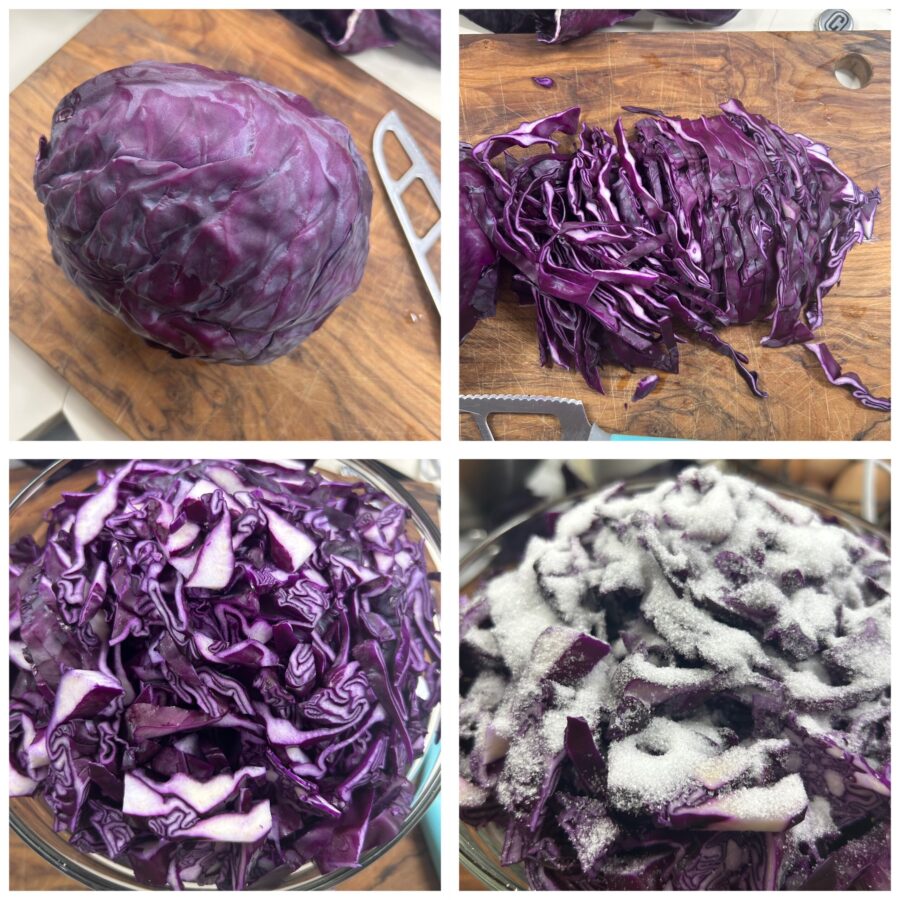
Transfer the cabbage into sterilized glass jars, pressing it down well with a tamper or a wooden spoon to remove air. The cabbage must be completely covered by its liquid.
Leave about 2 cm (about 3/4 in) of headspace from the rim. If necessary, add a little brine (water + salt at 2.5%) to fully cover the cabbage.
Cover the surface with a piece of parchment paper or a small weight to keep the cabbage submerged. Close the jar without tightening it too much and let it ferment at room temperature for 10 days, away from heat sources.
During fermentation the red cabbage will gradually change color, becoming more intense and bright: don’t worry, this is a natural process indicating that lactic fermentation is taking place correctly.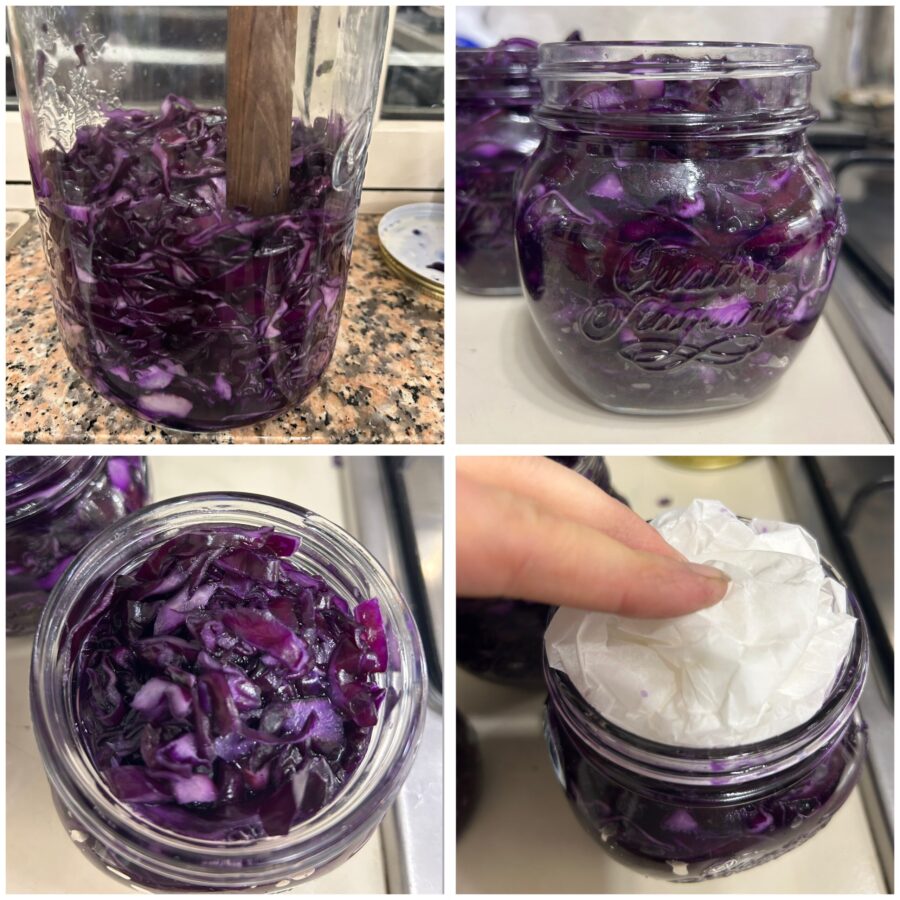
After the time has passed you can open the jars and taste your red cabbage. Attention: during fermentation purple liquid may overflow from the jars, so always place them over absorbent paper and in areas that won’t stain.
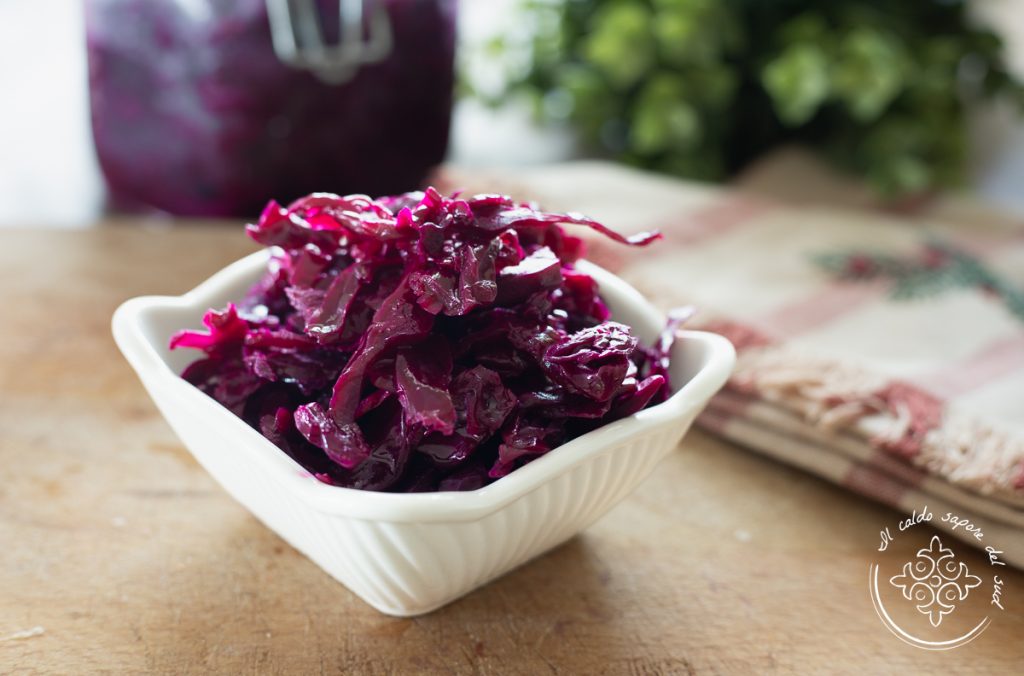
Storage, notes and tips
The cabbage must always remain immersed in the liquid; if a light surface film forms, remove it. The smell should be pleasantly tangy, never unpleasant.
From here, you can return to the HOME and discover new recipes!
If you want to stay updated on my recipes, follow me on:
pinterest, you tube, twitter and tiktok
FAQ (Questions & Answers)
How to use fermented red cabbageYou can use fermented red cabbage as a natural side dish, in raw salads and in sandwiches, but also with meat or fish dishes or in bowls and vegetarian dishes.
What mistakes should be avoided when preparing fermented red cabbage?
Mistakes to avoid in fermenting red cabbage
-Using too little salt:
Salt is essential: use 2–3% of the cabbage weight.
–Not massaging the cabbage enough:
It must release its natural liquid before being jarred.
–Leaving the cabbage uncovered:
The cabbage must always remain submerged in the liquid.
–Sealing the jar airtight:
Fermentation produces gas: close without tightening.
–Using dirty jars or utensils:
Thorough cleanliness to avoid incorrect fermentations.
– Fermenting at the wrong temperature:
Ideal between 64°F and 72°F.
-Confusing the tangy smell with rot:
Acidity is normal, as in kefir and kombucha.
–Being in a hurry;
Fermentation needs time.What are the benefits of fermented red cabbage?
–Red cabbage is rich in natural probiotics:
Lactic fermentation promotes “good” bacteria, as happens with kefir and kombucha
– It is digestible:
Fermentation makes the cabbage lighter and easier to assimilate.
-Supports the gut:
Contributes to the balance of intestinal flora, just like sourdough in natural breads.
– It is a natural source of vitamins:
It preserves vitamins and antioxidants, particularly vitamin C.
–Contains no vinegar or preservatives;
It is preserved thanks to salt and natural microorganisms.
– Provides few calories but lots of flavor:
Ideal for a healthy and balanced diet.What is lactic fermentation and how does it work?
Lactic fermentation is a natural process in which good bacteria transform the sugars of the cabbage into lactic acid.
It makes the cabbage more digestible, slightly tangy and naturally preservable, without vinegar.
It is the same principle that governs the production of kefir, kombucha and sourdough.