How do you make pomegranate juice? Do you have pomegranates at home and want to extract their juice? Today I explain step by step how we prepare it; you will obtain a delicious and not at all bitter juice, amazingly tasty and certainly one of the most delightful fruit juices there is, just like the Homemade multivitamin juice or the Homemade ACE juice! But let’s start at the beginning: the term “melograno” properly refers to the tree, while the fruit is called “melagrana”, so if your pomegranate tree has produced many pomegranates or you have been given a lot and want to extract the fresh juice, let’s go to the kitchen and I’ll tell you how to do it so you can enjoy the many benefits of drinking it. Pomegranate juice, in fact, protects arteries and the heart thanks to the antioxidant power of the fresh fruit; furthermore, pomegranates have anti-cancer, anti-cholesterol, anti-diarrheal, antibacterial and antidepressant properties, help strengthen bones and detoxify the liver. One more thing: avoid using a citrus juicer to save time, because due to the yellow membranes inside the fruit you will get a bitter juice with a very “herbal” and metallic taste! Below I will also explain how to peel a pomegranate. If you want to stay updated on my recipes, you can follow my Facebook page and my Instagram profile — and since pomegranate is an autumn fruit, here you’ll find Many recipes for delicious autumn desserts and here Quick autumn recipes.
Also see:

- Difficulty: Very easy
- Cost: Very inexpensive
- Preparation time: 30 Minutes
- Cooking methods: No-cook
- Cuisine: Italian
- Seasonality: Autumn, Autumn, Winter
Ingredients to make pomegranate juice
- to taste pomegranates
- to taste lemon juice
Tools
- Food mill
- Bowls
- Cheesecloths
Preparation
As I mentioned above, avoid extracting pomegranate juice with extractors or citrus presses, and proceed as I explain below, using a bit of patience. I also discourage using a blender, because the seeds have an “herbal” taste.
Rinse the pomegranates thoroughly under cold running water, cut around the top (the crown) and remove the cap. You will see that the arils are arranged in segments within the fruit, separated by a membrane: you’ll have a hexagon or pentagon pattern, so make incisions on the peel at the corners and all the way down.
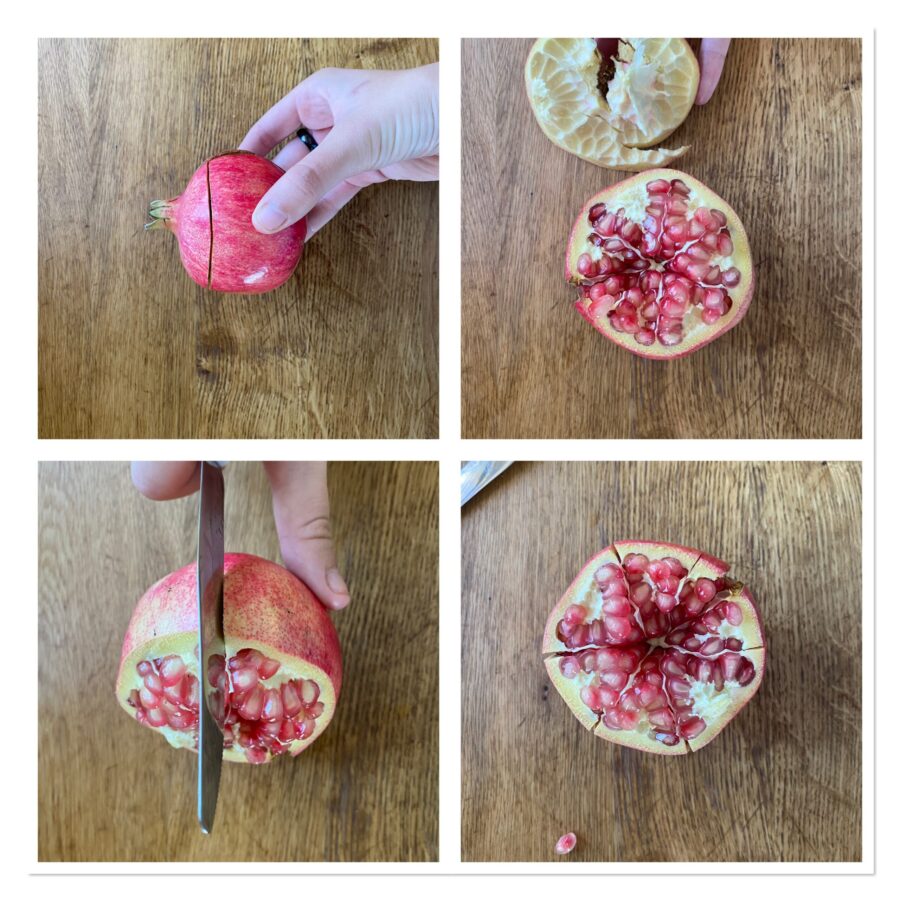
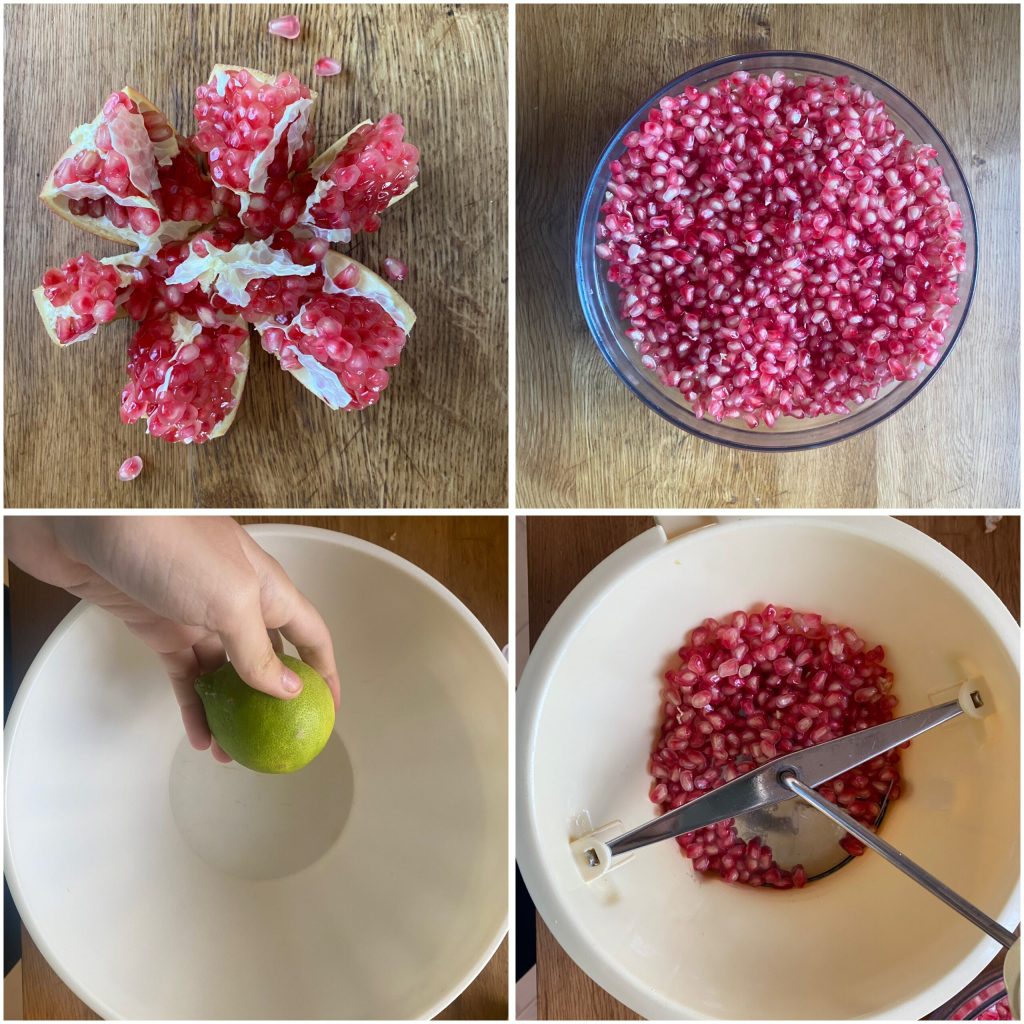
Then open the pomegranate into sections. Now you can easily remove the arils. Squeeze a lemon and collect its juice in a bowl, then pass the arils through the food mill to extract the juice.
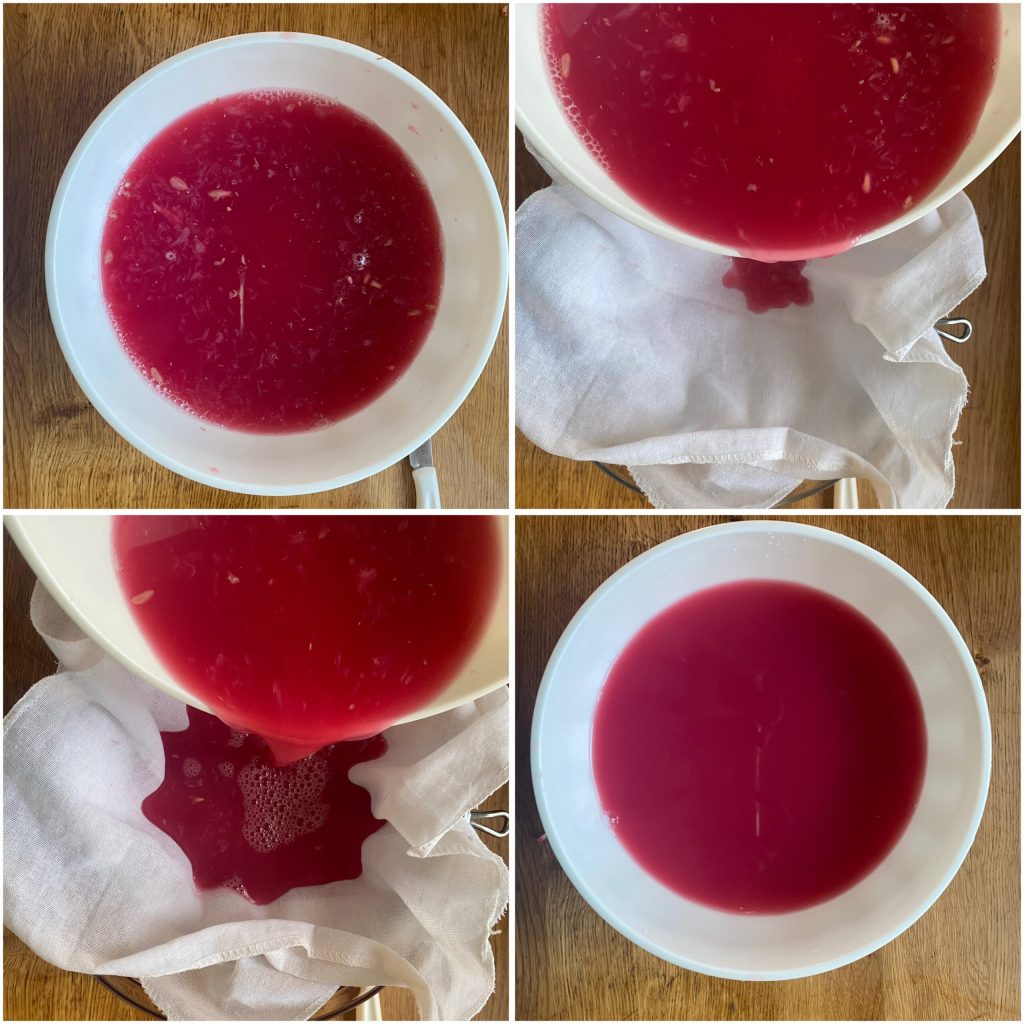
Despite these precautions, the pomegranate juice will be rich in impurities — all edible, of course, but they can slightly spoil the taste. Pass the juice two or three times through cheesecloth or clean white cotton cloths, rinsed thoroughly so they do not smell of detergent.
The juice is ready: consume it immediately or store it in the refrigerator for up to 2 days. You will notice additional sediment forming at the bottom of the bottle during storage; you can still drink it or decant the juice into another container to remove it. Usually the pomegranate is very sweet, so there is no need to add sugar (which is better avoided).

Storage notes and tips
Like all fruit juices, despite the addition of lemon juice and the natural acidity of pomegranate, the product will begin to oxidize and lose its beneficial properties over the hours (while still remaining perfectly drinkable), such as the degradation of vitamin C. I therefore recommend drinking it as soon as possible.