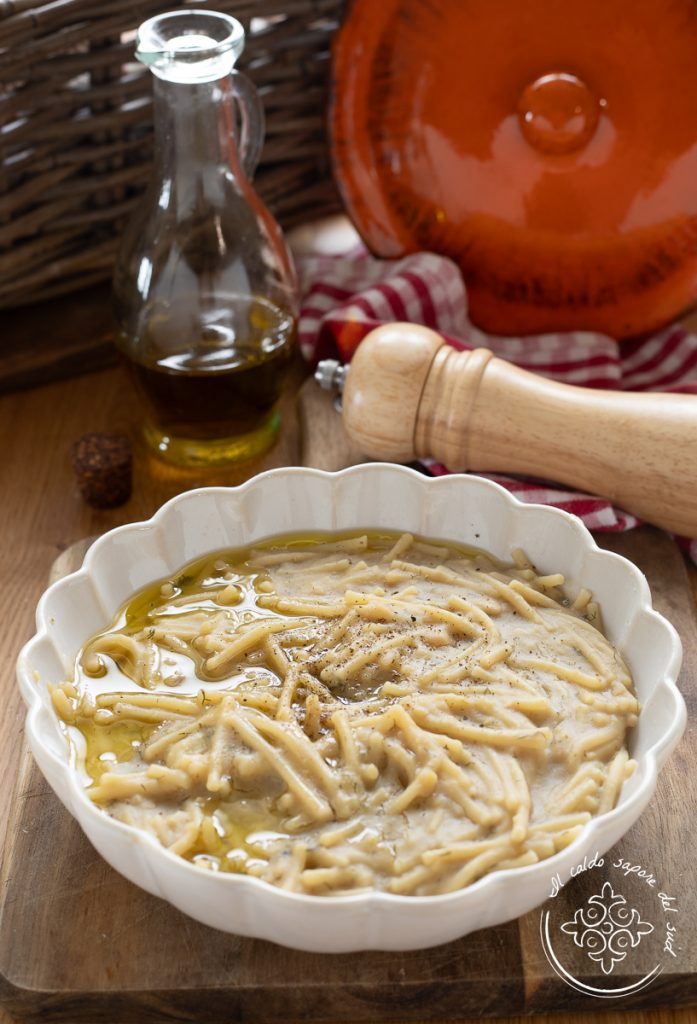
Pasta with macco of dried fava beans, Sicilian-style, grandmother’s recipe for the dish typical of the feast of Saint Joseph, good all year round and especially in the coldest months. Today we’ll prepare together a traditional Sicilian dish, macco made with dried fava beans. We have already cooked the macco with fresh fava beans and the pasta with fresh fava macco, which can only be made when the fava beans are in season. But what do you do when these delicious legumes are only available dried? Simple: you make the soup of macco with dried fava beans and then the pasta. Have you ever cooked this dish? Let’s go to the kitchen, I’ll tell you how to make the original recipe of pasta with macco of fava beans and wild fennel with chestnuts, but before we start cooking, remember that if you want to stay updated on all my recipes you can follow my Facebook page (here) and my Instagram profile (here).
Also take a look:
- Difficulty: Very easy
- Cost: Very inexpensive
- Rest time: 5 Minutes
- Preparation time: 10 Minutes
- Portions: 5
- Cooking methods: Stovetop
- Cuisine: Italian
Ingredients to make pasta with macco of dried fava beans
- 1 1/4 cups dried fava beans
- 1/2 white onion (large)
- 1 tomato (small, ripe)
- 3 oz dried chestnuts
- to taste salt
- to taste extra-virgin olive oil
- to taste black pepper
- 14 oz pasta
- as needed water
Tools
- Pentola
- Stove
Steps to make pasta with macco of dried fava beans
Cooking macco in a terracotta pot over very low heat is very long; it may take up to 3 hours. At the end of cooking you’ll adjust the consistency according to the creaminess you want. In a cast-iron pot the times will be a little shorter.
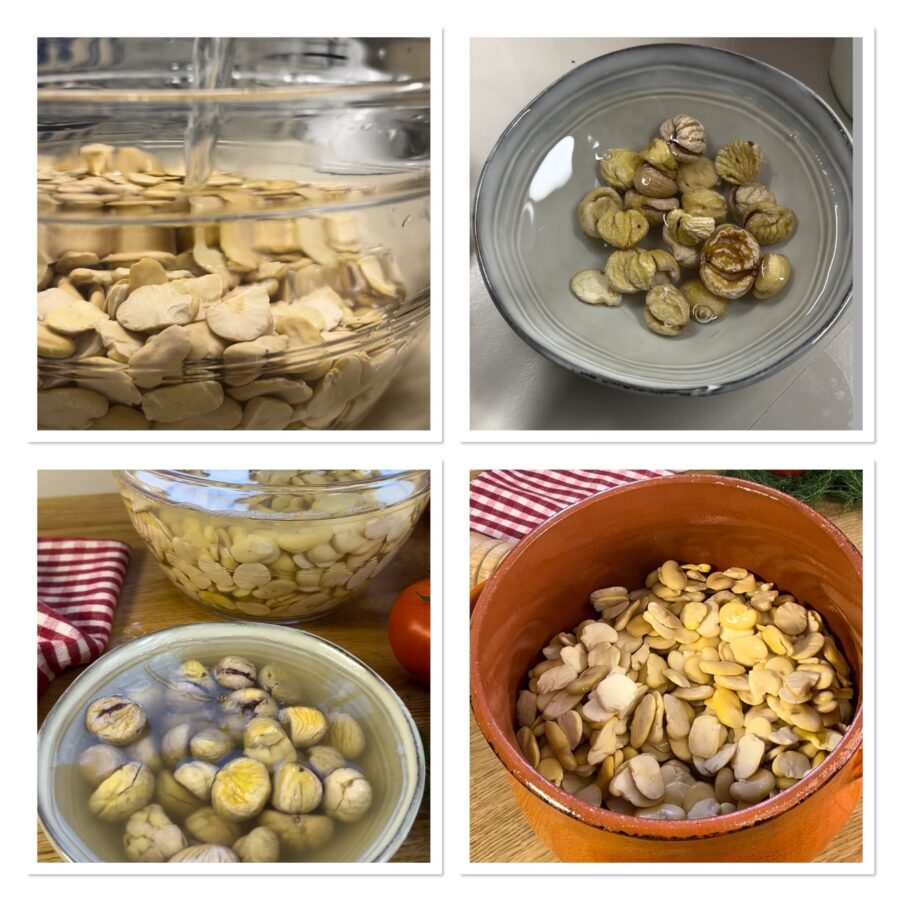
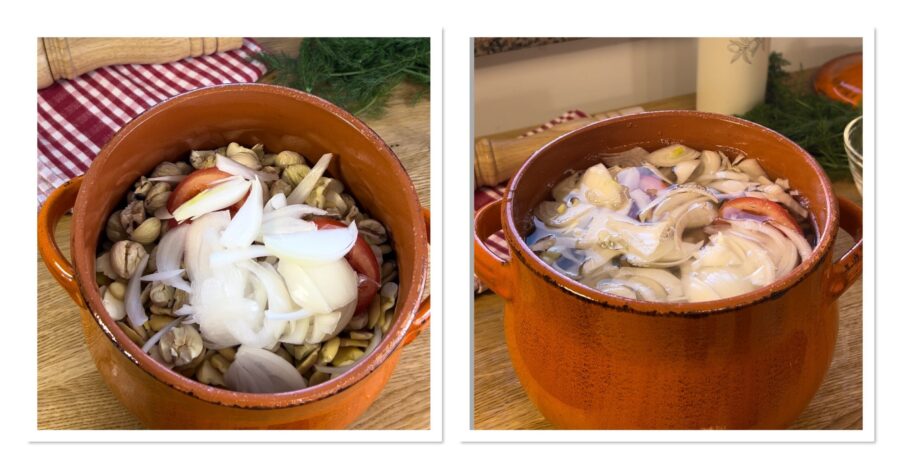
Rinse the dried fava beans several times, then put them in a large bowl, cover with cold water and let them rehydrate for at least 12 hours. Do the same with the chestnuts and let them rehydrate for the same time. The next morning the fava beans will have roughly doubled in volume, as will the chestnuts. Drain both and remove any leftover skin from the chestnuts stuck in the folds. Put everything into a terracotta or cast-iron pot, or into a heavy-bottomed saucepan.
Place the pot on the stove over moderate heat and wait for a light foam to form, which you should skim off with a fine sieve (if you use a terracotta pot remember to use a heat diffuser to avoid cracking). When it comes to a boil, cover loosely with the lid, reduce the heat to the minimum and continue cooking for 1 hour. After this time adjust the salt and continue cooking, stirring occasionally (in a terracotta pot you won’t need to stir often), until the fava beans have completely broken down and formed a tasty cream. Add the cooked and well-drained wild fennel and blend it in.
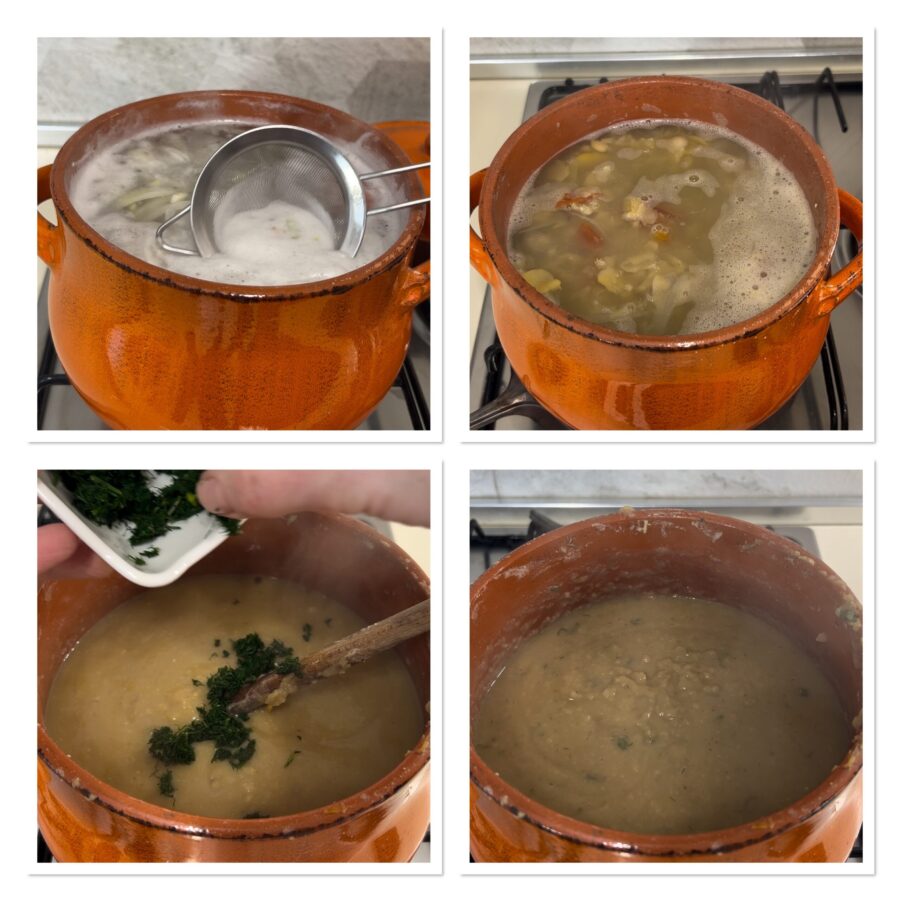
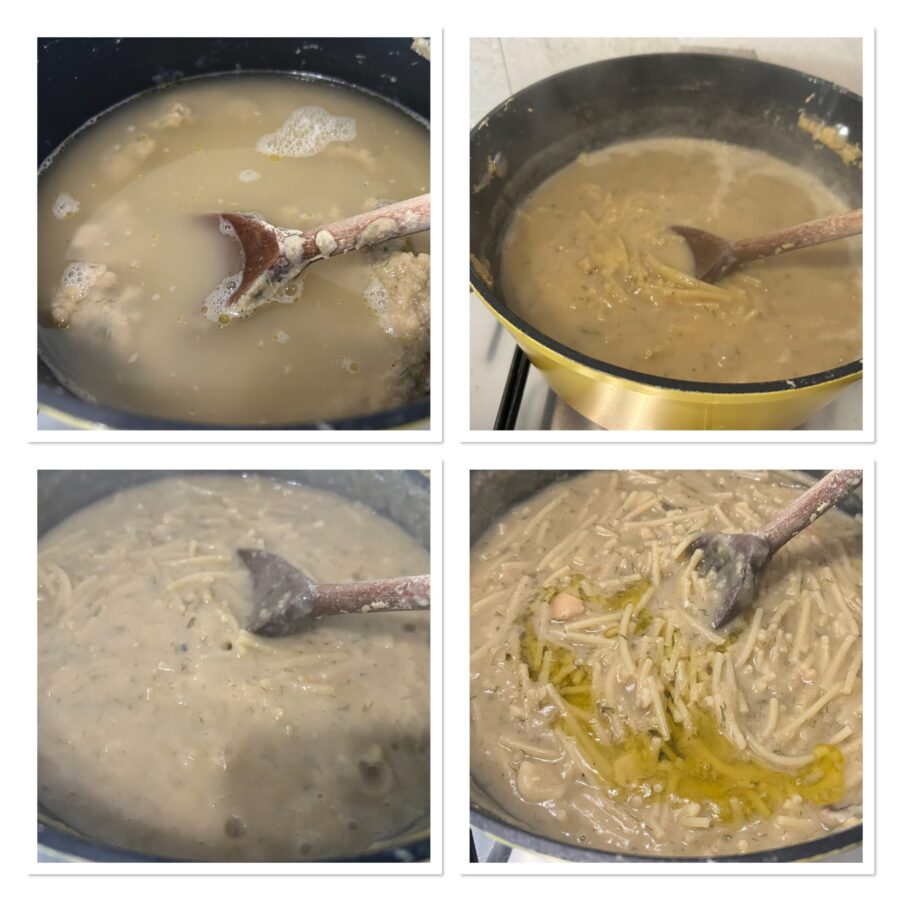
Continue cooking for a few more minutes. The macco is already delicious as is, but if you want to make the pasta you should weigh out about 28 oz (about 3 1/3 cups) of macco and add about 28 oz (about 3 1/3 cups) more water.
Pasta with macco is a thick soup; if needed, add more water during cooking little by little. Bring to a boil and add broken spaghetti.
Cook, stirring often, especially towards the end, because the pasta tends to stick to the bottom and burn easily. When the pasta is still al dente, turn off the heat.
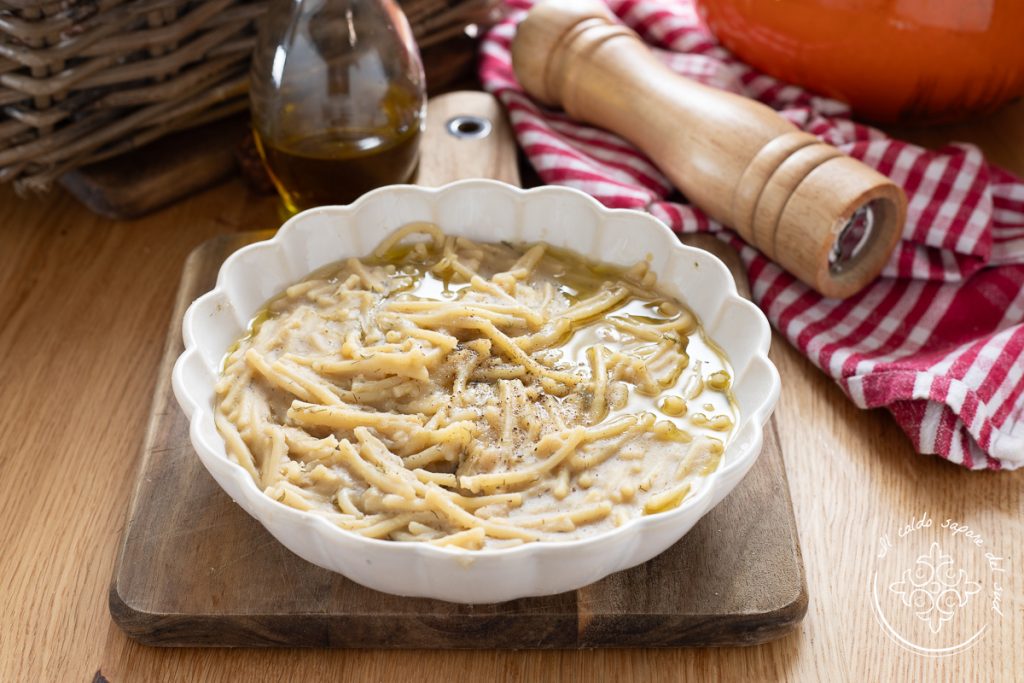
Drizzle with a couple of turns of extra-virgin olive oil, mix and serve. Wait 5 minutes, then enjoy with a sprinkle of black pepper.
Pasta with macco of fava beans tends to become firmer and more compact as it cools, but it is still delicious when warm. Leftovers can be kept in the refrigerator for up to two days; you can cut it into thick slices or cubes and fry them in hot oil.
From here, you can return to the HOME and discover new recipes!