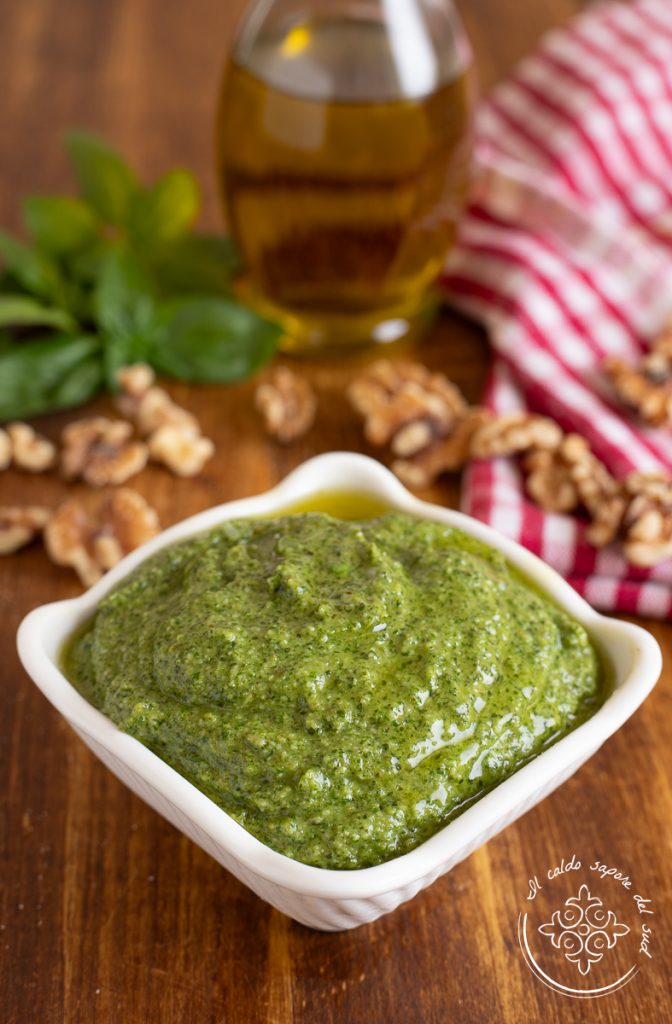
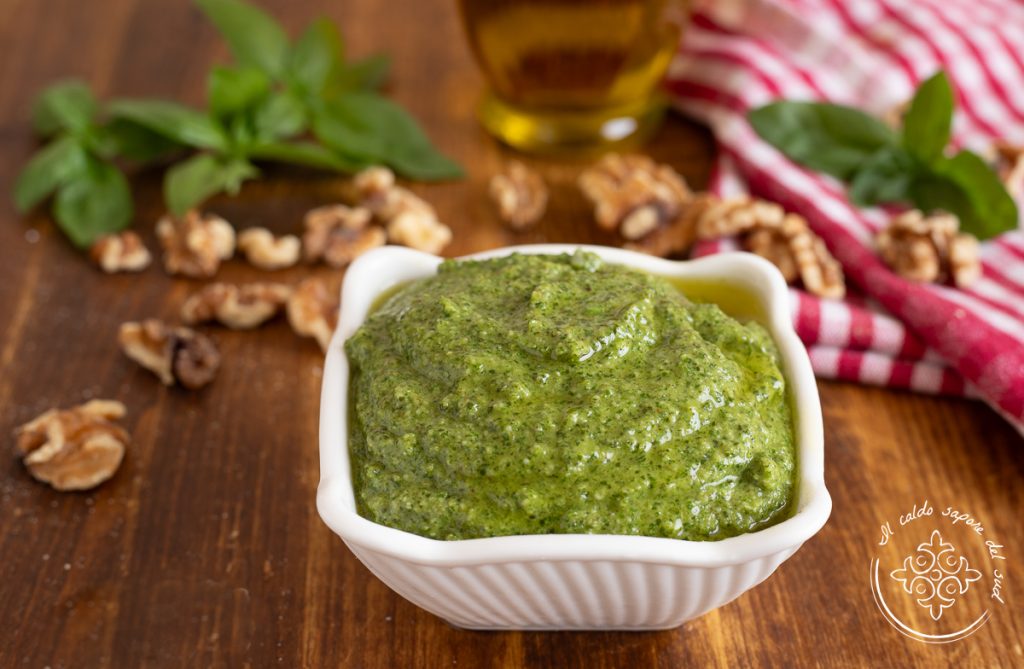
Basil and walnut pesto, an economical solution for a homemade pesto without pine nuts and one of the many homemade pesto recipes you absolutely must try, as good as Basil and lemon pesto or Pistachio and basil pesto. This year I finally managed to grow a whole plantation of basil and so pasta with pesto has become one of the family’s must-haves. You should know that at my house no one appreciates the taste of packaged pesto, but when it’s homemade pesto everyone answers “present”! And do you know what the main problem was with making homemade pesto? Simple: pine nuts are really expensive! Precisely for this reason, after yet another package of pine nuts, I thought of replacing them with another kind of nuts and in this case with the walnuts I already had at home! The result? A delicious, creamy and delicate pesto, with which I dressed some delicious busiate! But are you also looking for the answer to the question: “how to replace pine nuts in pesto“? Then follow me in the kitchen, because I’ll give you a truly great lunch idea and we’ll discover how to make basil pesto without pine nuts, using walnuts! Before running to the kitchen, I remind you that if you want to stay updated on new recipes you can follow my page Facebook and my profile Instagram and that here you’ll also find many other recipes for delicious pestos!
Also check out:
- Difficulty: Very easy
- Cost: Economical
- Preparation time: 5 Minutes
- Portions: 6-8 servings
- Cuisine: Italian
- Seasonality: Spring, Summer
Ingredients to make basil and walnut pesto
- 50 leaves basil
- 1.4 oz Parmigiano (Parmesan)
- 1.4 oz Pecorino
- 1/2 cup extra virgin olive oil
- 3/4 cup walnuts
- 1 pinch garlic powder (or half a fresh clove)
- to taste salt
Tools
- Blender
Steps to make basil and walnut pesto
Place the blender jar in the freezer for 20–30 minutes so it’s very cold when you use it. Then add the walnuts, the oil and the cheeses. Blend until you obtain a smooth cream, then add the basil and blend again for 30–40 seconds. If you manage not to heat the mixture too much, you’ll get a nice bright green pesto.
Store in the fridge until ready to use.
This pesto can be used to dress pasta, bruschetta and much more. I recommend consuming it as soon as possible and freezing any leftovers, which you can thaw in the fridge before use.
Pesto tends to oxidize after a few hours and to change flavor a bit, especially if kept outside the fridge, so follow the precautions I indicated and the result will be impeccable.
Storage and notes
Freeze any leftover pesto as soon as possible after portioning it and let it thaw for a few minutes before draining the pasta.
It can be stored in the freezer for up to one year, but in well-sealed airtight containers that prevent it from absorbing or releasing odors.
It can be stored in the freezer for up to one year, but in well-sealed airtight containers that prevent it from absorbing or releasing odors.