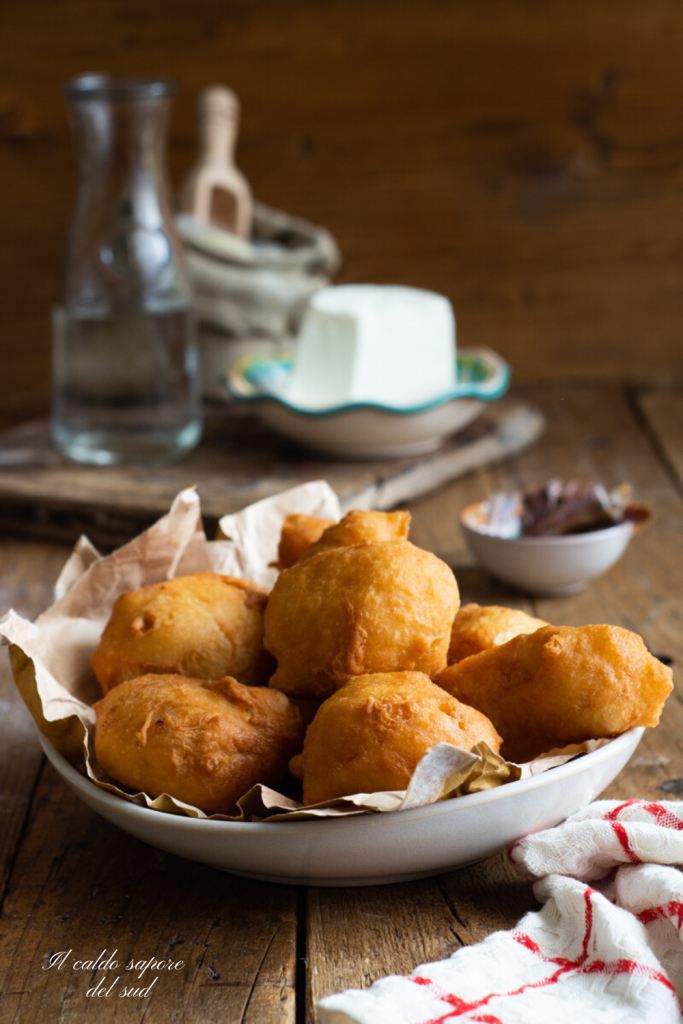
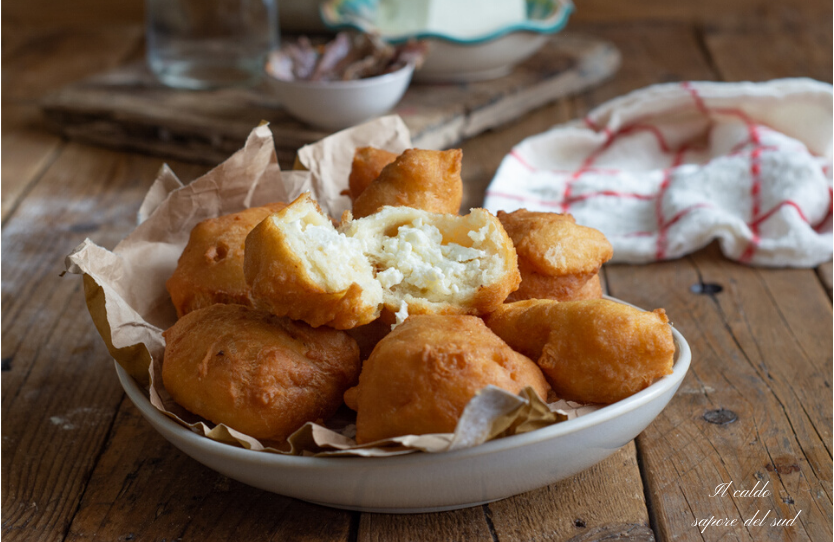
Original Catanese crispelle with anchovies and ricotta, not to be confused with the rice crispelle with honey or St. Joseph’s crispelle. These are the equally famous simple Catanese crispelle, filled with ricotta or anchovies and made with a very soft leavened dough.
Crispelle, crispeddi, craspeddi — call them whatever you like, but if you’re on this page you certainly know this treat and know exactly which delicious Catanese street food I’m referring to!
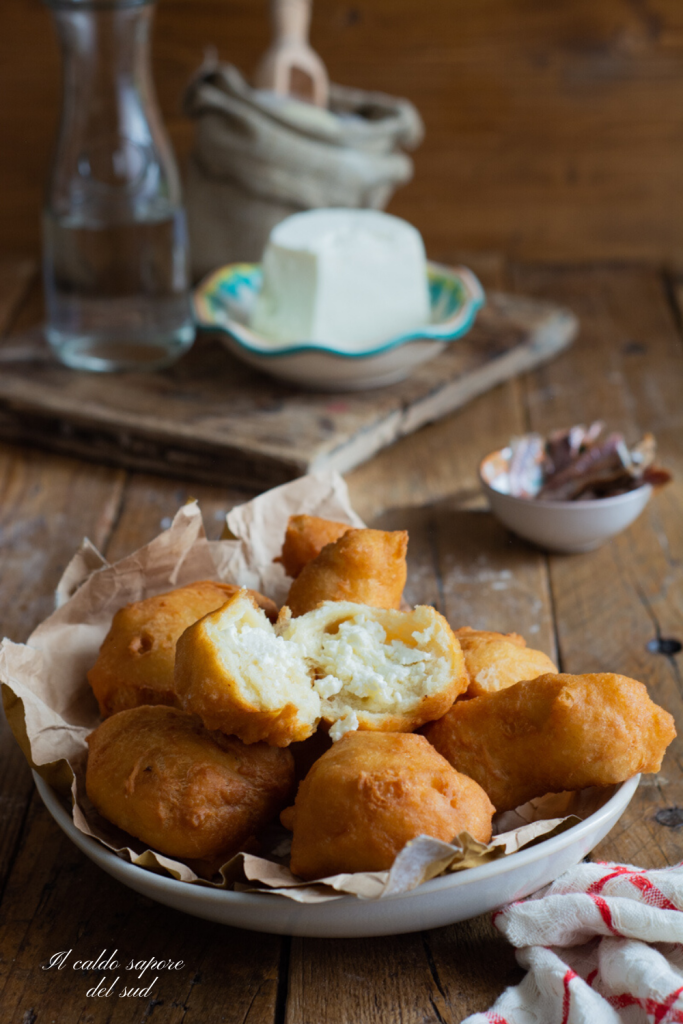
The “crispeddi cc’anciovi e a ricotta” are bite-sized delights made of leavened fried dough stuffed with either anchovies or ricotta. Whether you prefer one filling over the other, both versions are amazing and you will surely indulge.
The Sicilian crispelle, or better said the Catanese ones, with their golden, crispy exterior and rich, soft filling, are part of the colorful Catanese street food scene. Walking through the center, especially during festivals and particularly during the celebrations of Saint Agatha (the city’s patron saint), they are proudly displayed at the various colorful, illuminated stalls where the “craspiddari” fry them in crackling cauldrons in huge quantities. Ricotta crispelle are always round, while anchovy crispelle are elongated and you can’t mistake one for the other. But how do you make Catanese crispelle with anchovies and ricotta? The recipe is actually quite simple, but the trick lies in the handling and the preparation of the batter, which must be filled with the chosen filling before being plunged into hot oil.
Today I want to show you how to make Catanese crispelle with ricotta and anchovies, and after a little practice you’ll be able to make them perfectly: I assure you that after a few attempts you’ll be making them without problems.
(If you want to see the live where I prepare the crispelle, click HERE).
If you want to stay updated on my recipes, you can follow my Facebook page and my Instagram profile.
Do you like Catanese recipes? Also check out:
– Original Catanese cipolline recipe;
– Cuddura e aceddu ccu l’ova – Catanese sweet Easter bread;
– Catanese rice crispelle for St. Joseph – original recipe;
– Scacciata di tuma – typical Catanese recipe.
- Difficulty: Easy
- Cost: Affordable
- Rest time: 2 Hours
- Preparation time: 10 Minutes
- Portions: about 25 pieces
- Cooking methods: Frying
- Cuisine: Italian
- Energy 992.68 (Kcal)
- Carbohydrates 55.18 (g) of which sugars 1.66 (g)
- Proteins 12.46 (g)
- Fat 83.20 (g) of which saturated 15.44 (g)of which unsaturated 61.76 (g)
- Fibers 1.15 (g)
- Sodium 403.60 (mg)
Indicative values for a portion of 100 g processed in an automated way starting from the nutritional information available on the CREA* and FoodData Central** databases. It is not food and / or nutritional advice.
* CREATES Food and Nutrition Research Center: https://www.crea.gov.it/alimenti-e-nutrizione https://www.alimentinutrizione.it ** U.S. Department of Agriculture, Agricultural Research Service. FoodData Central, 2019. https://fdc.nal.usda.gov
Ingredients to make anchovy and ricotta crispelle
- 1 1/2 cups + 1 tbsp (about 8.8 oz / 250 g) cups durum semolina (re-milled) (re-milled durum wheat)
- 2 cups (about 8.8 oz / 250 g) cups type 0 flour (similar to all-purpose)
- 1 2/3 cups (about 13.5 fl oz / 400 ml) cups water (you might need about 50 ml / g more)
- 1 3/4 tsp (about 0.35 oz / 10 g) tsp salt
- 2 tbsp (about 1 oz / 30 g) tbsp extra virgin olive oil (for the dough)
- Half sachet active dry yeast (or 12 g fresh yeast (about 0.42 oz))
- 1 1/4 cups (about 10.6 oz / 300 g) cups sheep's ricotta (dry and well drained)
- as needed anchovy (salt-packed fillets)
- as needed peanut or sunflower oil (for frying)
Tools
- Bowl
- Deep pan for frying
- Stove
- Slotted spoon
How to make Catanese crispelle with anchovies and ricotta
In a large bowl combine the flour, yeast, and salt (place the salt in a corner away from the yeast), add the olive oil and pour in the lukewarm water.
Work the mixture by hand to combine everything. You won’t get a firm dough but a very loose batter. Set it aside for ten minutes in a warm place, for example in the oven with the light on.
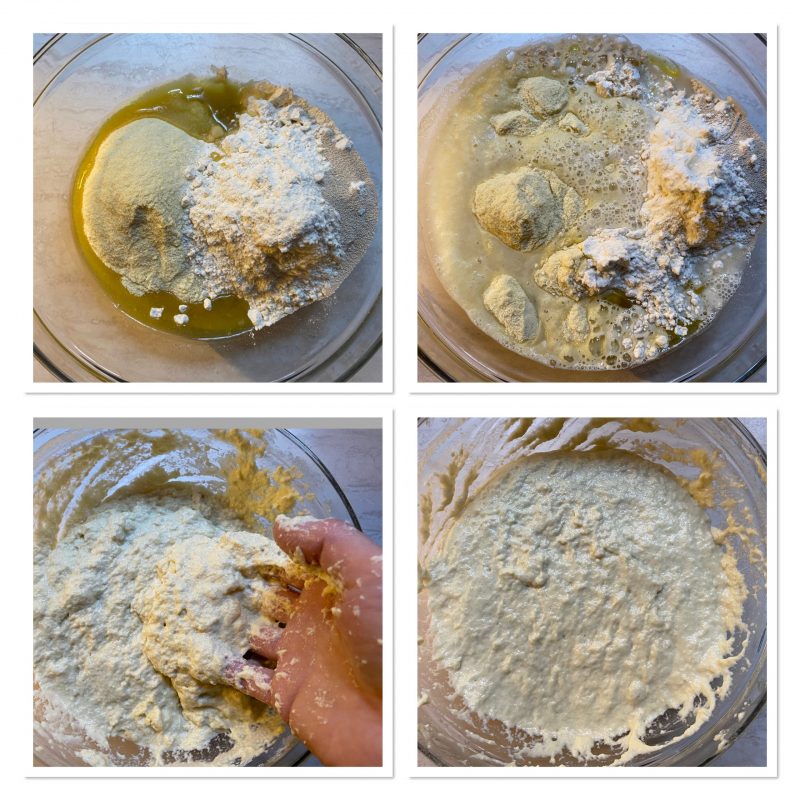
Take the mixture and stretch it with your hand, working it until you obtain a fluid but cohesive and elastic mass. If needed, add a few more grams/ml of water.
If you have a stand mixer, you can knead until the dough becomes elastic, homogeneous and fairly well developed, though still quite loose.
Place everything in a warm spot to rise until doubled in size, about 2 hours.
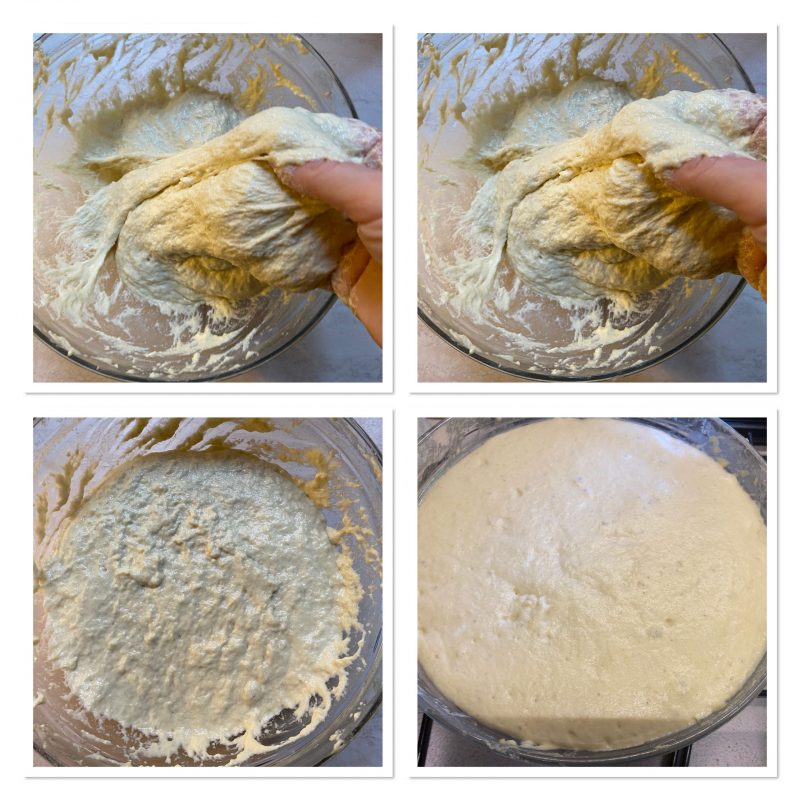
Once the dough has risen, deflate it and proceed to shape the crispelle.
Heat a pot filled with oil; you need deep oil for frying.
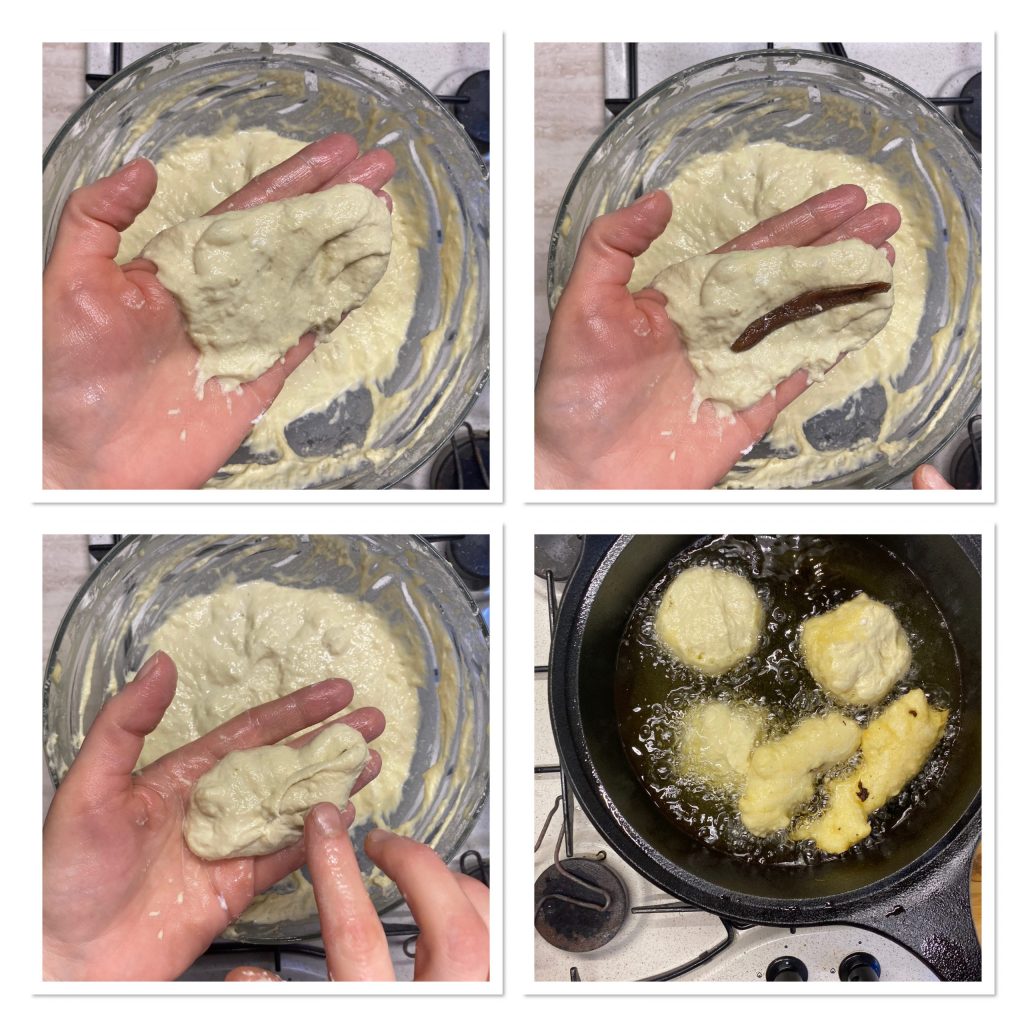
Keep a bowl of water or a container of seed oil nearby. Wet or oil your hands (using oil makes the operation easier) and take a piece of dough of about 60 g: hold it with your right hand and detach it from the rest with your left.
Slightly spread the dough on your palm, place in the center a spoonful of ricotta (about a heaping tablespoon) and close by bringing the edges toward the center.
Plunge into the hot oil.
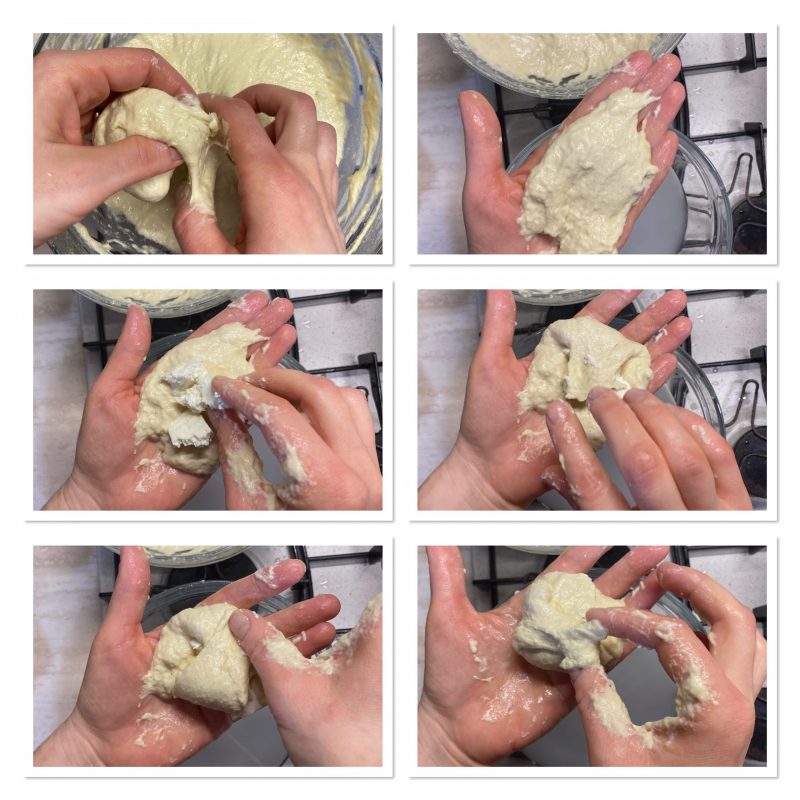
For the anchovy version follow the same steps, using a single anchovy fillet as the filling.
Let them brown and adjust the heat so the dough cooks through correctly: if the oil is too hot the crispelle will brown outside while remaining raw inside.
Raise or lower the flame as needed until you obtain perfect cooking. For a simpler technique you can fry them twice: in the first fry the fritter will set and should be removed to paper towel, and in a second fry it will take on color.
As you fry, drain the fritters and place them on absorbent paper.
Arrange the ready crispelle on a plate and serve them hot.
Crispelle are best enjoyed hot and ideally should be made to order. If you must prepare them a couple of hours ahead (no more), reheat them in the oven at 248°F for about 15 minutes, but know they won’t be as good as when freshly fried.
If you liked this recipe, also check out:
– Sicilian fried calzoni from Catanese rosticceria;
– Bombette with ham and mozzarella – Sicilian rosticceria;
Important:
To make ricotta crispelle use ricotta that is well drained and dry, ideally made a day or two earlier. When shaping, fold the dough edges toward the center and ensure the filling is completely covered to avoid oil splatters.
For anchovy crispelle, buy anchovies that are already desalted and preserved in oil — they are more convenient and have a great flavor.
Keep an eye on the oil temperature and lower or raise the heat as needed. If the crispelle color too quickly, they will remain raw inside, so reduce the heat.
Conversely, if the oil is too cold, the fritters will absorb too much oil, so be careful.
Prepare only the amount you plan to consume on the same day. If you have leftovers, you can refrigerate and reheat them the next day, but they will be less good than freshly made ones.
From here you can return to the HOME and discover new recipes!