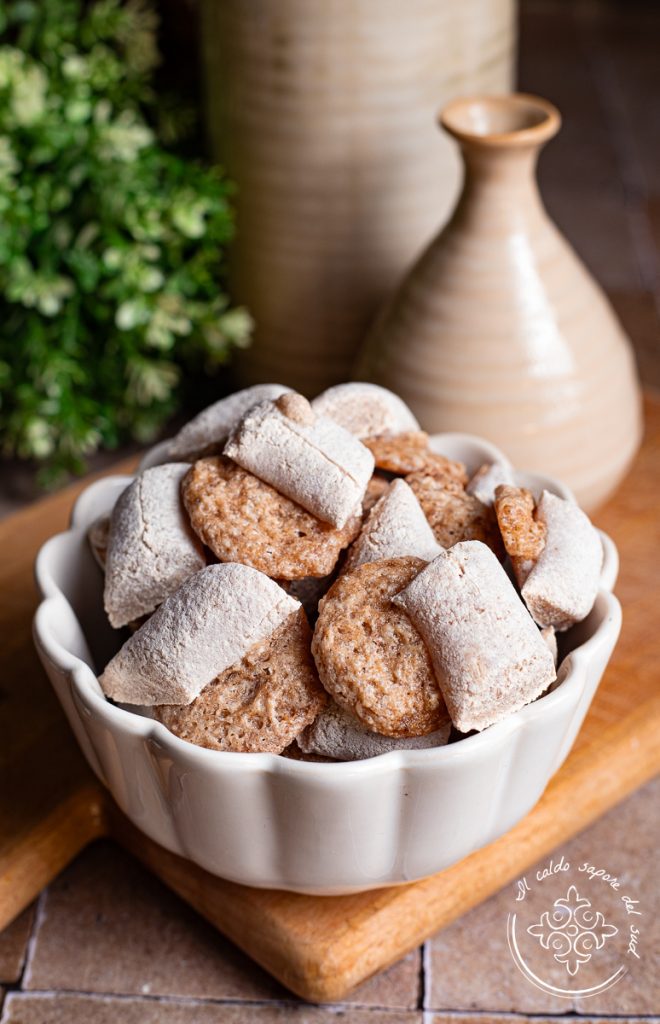
Sicilian Ossa di Morto or “oss’e mottu”, also known as the cookie “moscardini“, the original recipe. The Sicilian “ossa di morto” are cookies with a dual texture that, together with “rame di Napoli“, “nzuddi“, bersaglieri, Biscotti regina, Cotognata, Mostarda, are part of the large assortment of Dolci dei morti and the tradition of November 1st. Linked to All Saints’ Day and the day of remembrance for the deceased, they are available throughout autumn in every bar, pastry shop, bakery and grocery store in Sicily and make a pleasant, spiced snack to enjoy alone or with company.
These sweets once had many different shapes, mostly resembling bones. They are part of every Sicilian’s memories: their white shell and the fragrant, crunchy caramel captured the imagination of us children, who would nibble the hard caramel to leave the white shell intact, curious about the mystery of its origin…
Today, with so many sweets all around us, the size of our little treats has reduced, but not their flavor or evocative function. Let’s go into the kitchen and discover together how Sicilian ossa di morto are made and their particular preparation. Before that, if you want to stay updated on all my recipes, you can follow my Facebook page (here) and my Instagram profile (here).
Also take a look:
- Cost: Very inexpensive
- Preparation time: 1 Day
- Portions: 60 Pieces
- Cooking methods: Oven
- Cuisine: Italian
- Seasonality: Autumn
Ingredients
- 2 1/2 cups Type 0 flour
- 1 1/2 cups Granulated sugar
- 1 tsp Ground cinnamon
- 4 Whole cloves, ground (Reduced to powder)
- 3.4 oz Water (about 3.4 fl oz)
Tools
- Baking sheet
- Oven
- Pot
- Bowl
- Work surface
Preparation
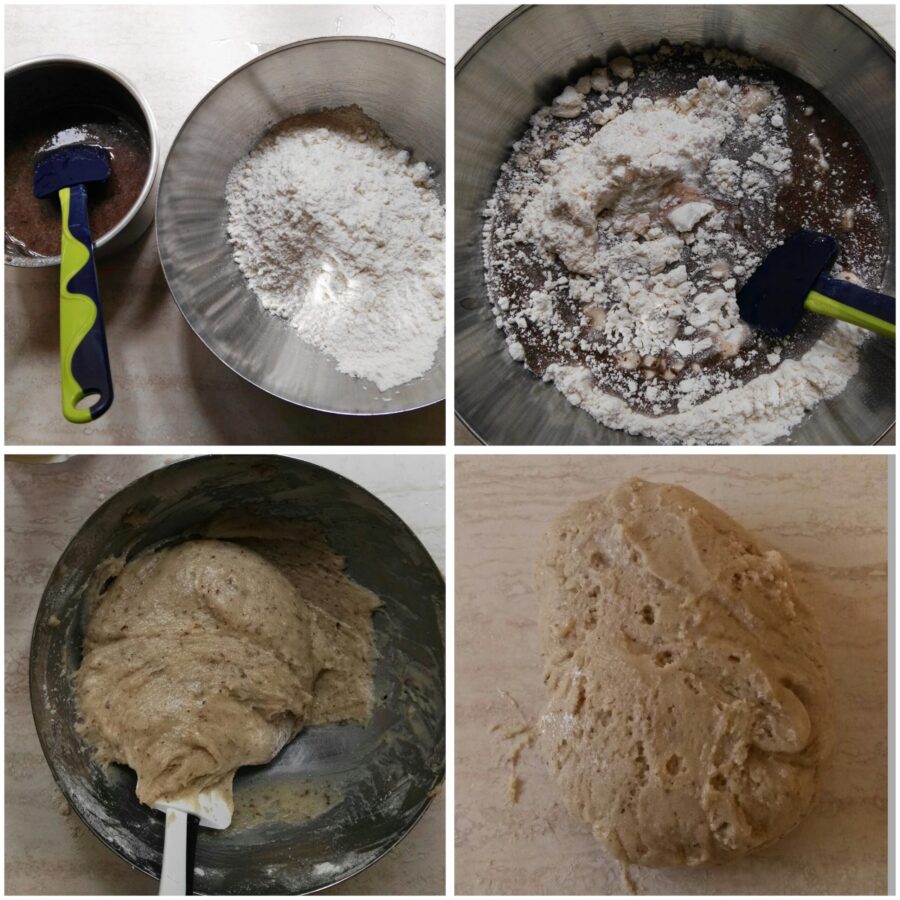
Weigh the ingredients and set aside 50 g of sugar (about 1/4 cup) and 50 g of flour (about 7/16 cup). Bring the water to a boil, turn off the heat and add the 250 g of sugar (about 1 1/4 cups) and the spices. Stir and dissolve the sugar as much as possible. Pour the syrup into 250 g of flour (about 2 1/8 cups). Knead for a long time; don’t worry if the dough is sticky—this is the time to incorporate nearly all the flour and sugar. Work everything together until you obtain the consistency shown in the photo, but don’t add more flour. Use a spatula to handle the dough and help it cool.
Dust your work surface with the remaining flour, divide the dough into four parts and shape into logs about 1.5 cm in diameter (about 5/8 inch). Cut them into cylinders roughly 3 cm long (about 1 3/16 inches). Brush the bottom of each piece with a little water and place them on a baking sheet lined with parchment paper.
Now you can choose one of two methods:
– dry them in the oven for about 6 hours at 122°F (preferably fan-forced).
– let them dry in a dry, ventilated place for about 1–2 days (sometimes even 3), following the traditional method. After drying they should appear white on the outside and very soft inside. Bake at 320°F for 15 minutes: you’ll see the caramel flow from the cookie and brown. At that point turn off the oven and let everything dry as the oven cools; then remove the cookies and enjoy at room temperature.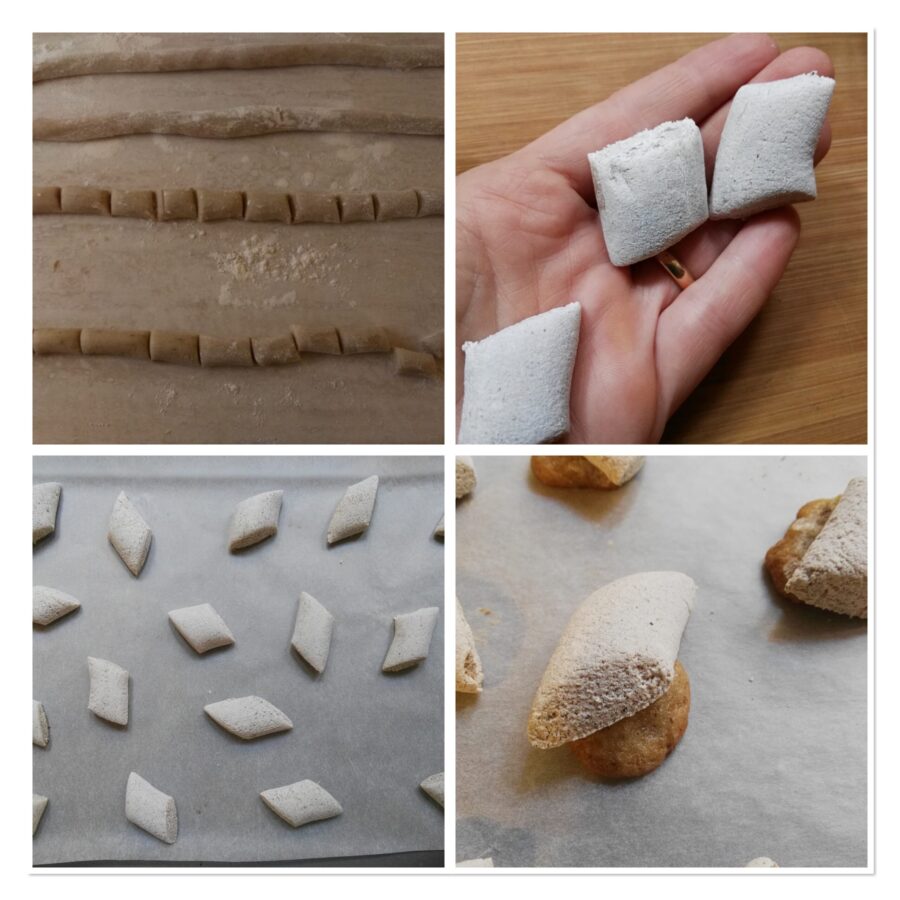
Essential Notes and Storage
Remember that after drying, the interior of the shell must remain soft. My first attempts with this pastry failed because of the wrong drying method. Leaving the cookies inside the house in a non-ventilated place prevented the outer crust from forming quickly, giving the cookie time to dry out inside as well; this stopped the caramel from flowing. The secret is precisely the sharp contrast between the textures inside and out: the very soft core melts when baked and finds an escape route through the bottom of the cookie, which had stayed slightly moist since it rested on the baking sheet or tray. For better results, if the bottom appears dry, lightly moisten it with a fingertip—but be careful not to wet the top crust.
If you’re in a hurry, place the dough cylinders on a baking sheet and dry them in the oven for six hours at 122°F.
Store the ossa di morto thoroughly dried and baked in a tin container; they will keep for a long time.
If you want to stay updated on my recipes, follow me on:
Pinterest, YouTube, Twitter and TikTok.
From here you can return to the HOME and discover new recipes