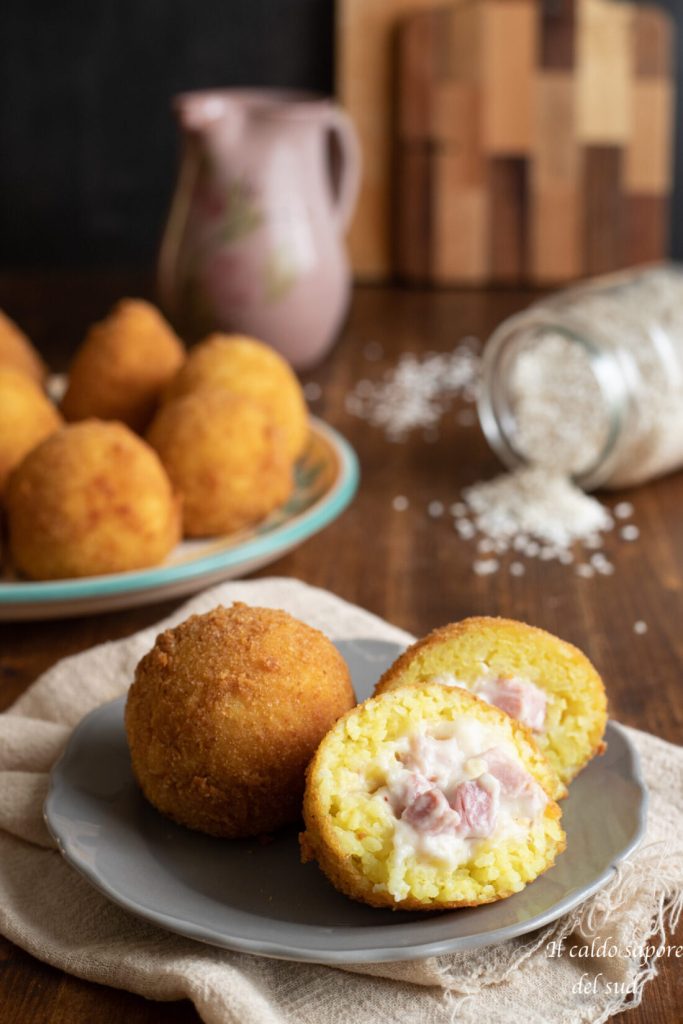
Recipe for the “abburro” arancina, queen of Palermo street food together with the “accarne” arancina:
In Palermo the feast of Saint Lucy is synonymous with arancina, and note well: arancina and not arancino! Because in dear Palermo, the arancina is female and even though I’m from Catania and for me the arancino is male, if I eat it in Palermo it becomes arancina: beautiful, round, golden and perfect as only a good Sicilian orange can be. There are many versions of arancini/e: there is the Catanese ragù (pointed), there is the pistachio one, there is the Palermo round “a carne” (that is with ragù and lots of peas), there’s the “a burro” arancina (which should be oval), which we will make today but round, and many other variants. One thing is certain though: wherever in the region you taste this rice timbale, breaded, fried and fragrant, whose origins go back to the Arab domination, whatever the filling, the taste, colors and aromas of Sicily will be enclosed right there!
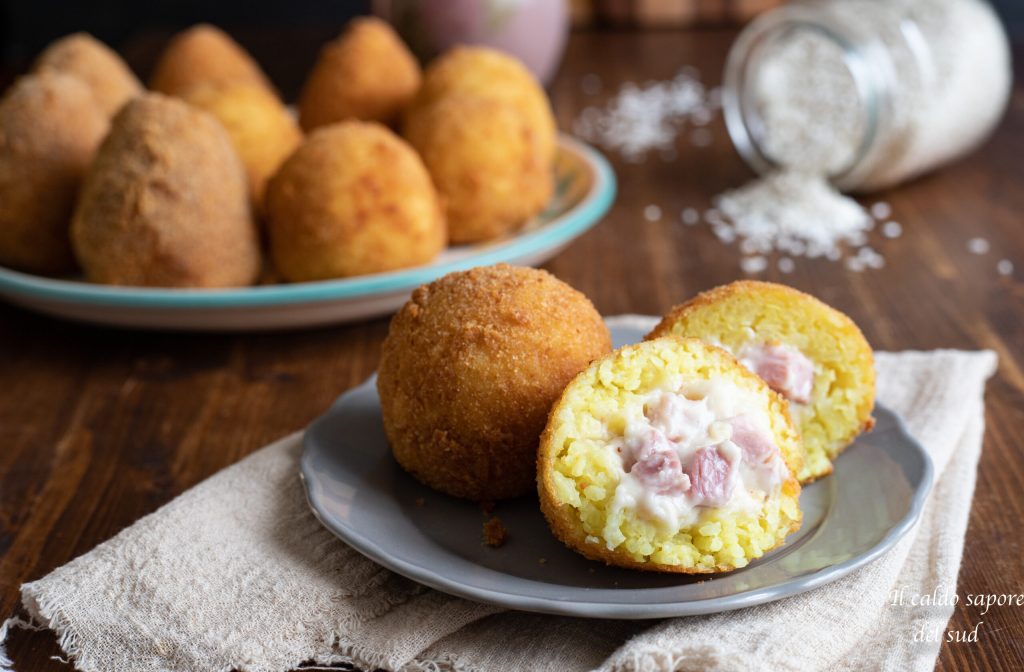
But why is it called “Arancina al burro”? Actually the question is legitimate: the arancina al burro we know is filled with béchamel, cheese and cooked ham (and sometimes peas), but originally this rice ball perfumed with saffron was filled with just a small piece of butter, which made it soft and moist. Over time the filling has been enriched and has become what we now eat. And if by “arancina a burro” one means the one stuffed with béchamel, ham and cheese, there are other versions that in addition to béchamel include speck, pistachio, salmon and many other different ingredients…
But enough talk, the preparation is long and we can only rush to the kitchen to discover how to make a spectacular arancina al burro!
And to follow all my recipes, also check my Facebook page (here) and my Instagram profile (here).
- Difficulty: Very easy
- Cost: Very inexpensive
- Rest time: 6 Hours
- Preparation time: 1 Hour
- Portions: about 22
- Cooking methods: Frying
- Cuisine: Italian
Ingredients
- 3 3/4 cups Carnaroli rice
- 9 cups vegetable broth
- 3 1/2 tbsp butter
- 3/4 cup grated cheese (grated, such as Grana or Parmesan)
- 2 sachets saffron
- to taste salt (only if the broth is not already salted)
- 3 tbsp butter
- 1/4 cup all-purpose flour
- 1 2/3 cups milk
- to taste salt
- to taste nutmeg
- 1/2 cup grated cheese (grated, such as Grana or Parmesan)
- 2 cups béchamel
- 9 oz cooked ham (diced)
- 9 oz provola (mild, diced)
- 1 2/3 cups all-purpose flour
- 1 7/8 cups water
- 1 egg
- 2 cups breadcrumbs
- high-oleic sunflower oil (oil for frying)
- as needed all-purpose flour (for dusting the arancine)
Tools
- Pots
- 2 Baking dishes
- 1 Skimmer
- Trays
- Bowls
Steps
At least six hours before starting the arancine preparation, cook the rice.
Prepare a good vegetable broth, bring it to a boil and add the rice; if the broth is not already salted, adjust the salt.
(Making vegetable broth is simple: gather 3 liters of water in a pot, add carrots, celery, onions, peas, zucchini or whatever vegetables you have, salt and simmer slowly for 1 hour)
Cook until the rice is done, but still al dente, and has absorbed all the liquid.
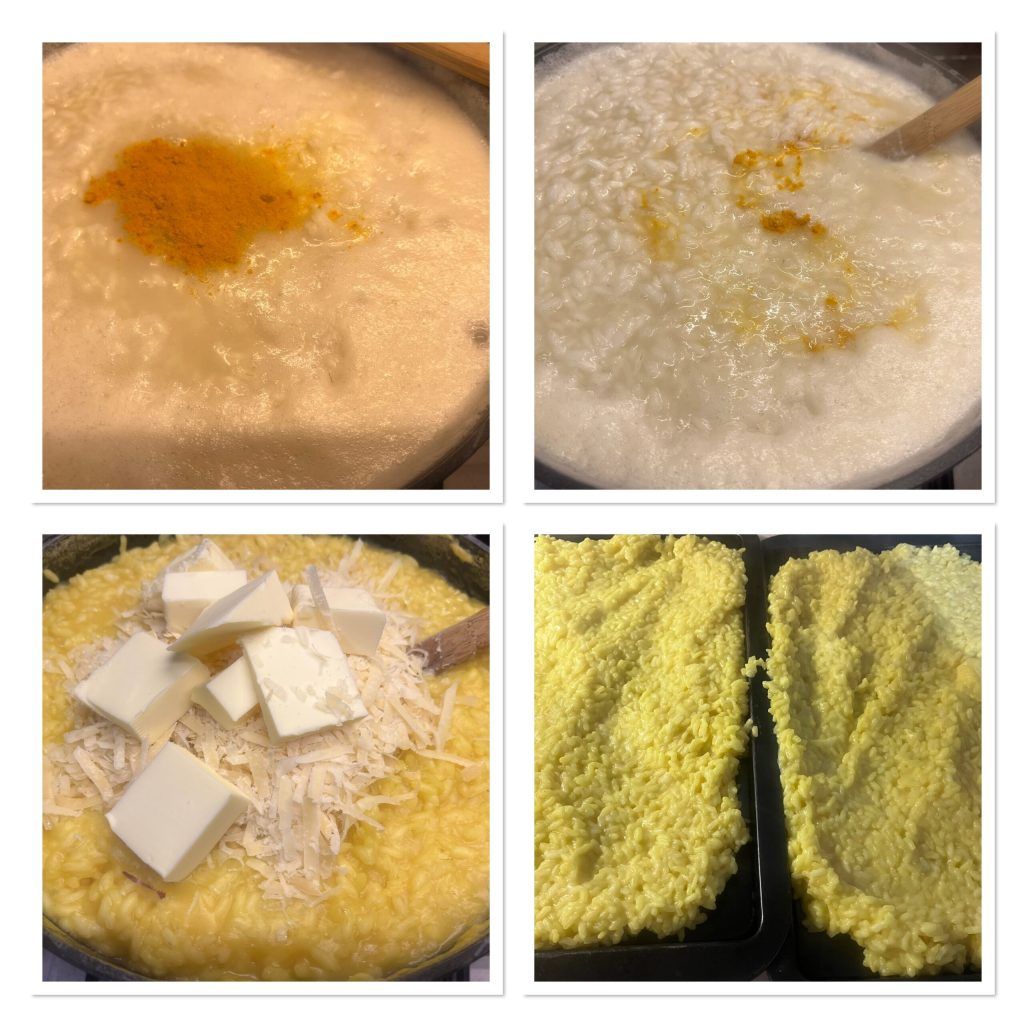
If there is excess broth in the pot, scoop and remove it, turn off the heat, add the saffron, the butter and the Parmesan, stir and spread the rice on two large shallow baking dishes or trays.
Let the rice rest for at least 6 hours; during this time it will dry and cool and will be ready to use. This step is essential to have arancine that hold together well and do not break during cooking.
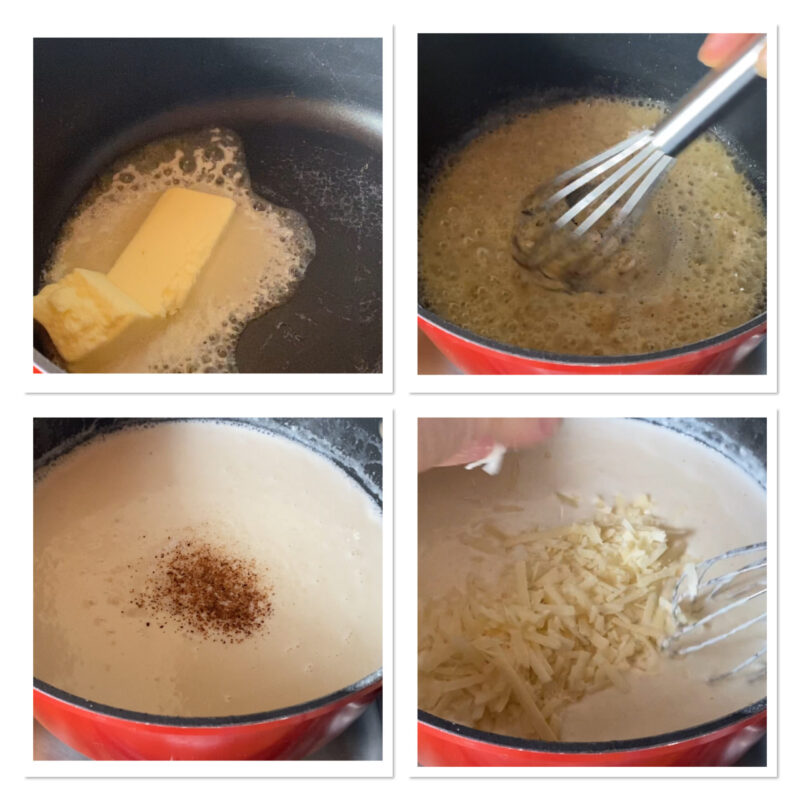
While the rice cools, prepare a thick béchamel.
Melt the butter over low heat, add the flour and raise the heat slightly so it sizzles a bit, stirring constantly.
Pour the milk little by little using a whisk, taking care to avoid lumps.
You should obtain a fairly thick béchamel, but if it seems rather thin, don’t worry: it should thicken a bit as it cools.
Remove from the heat, adjust salt, add nutmeg, a handful of grated cheese and stir. Let it cool completely.
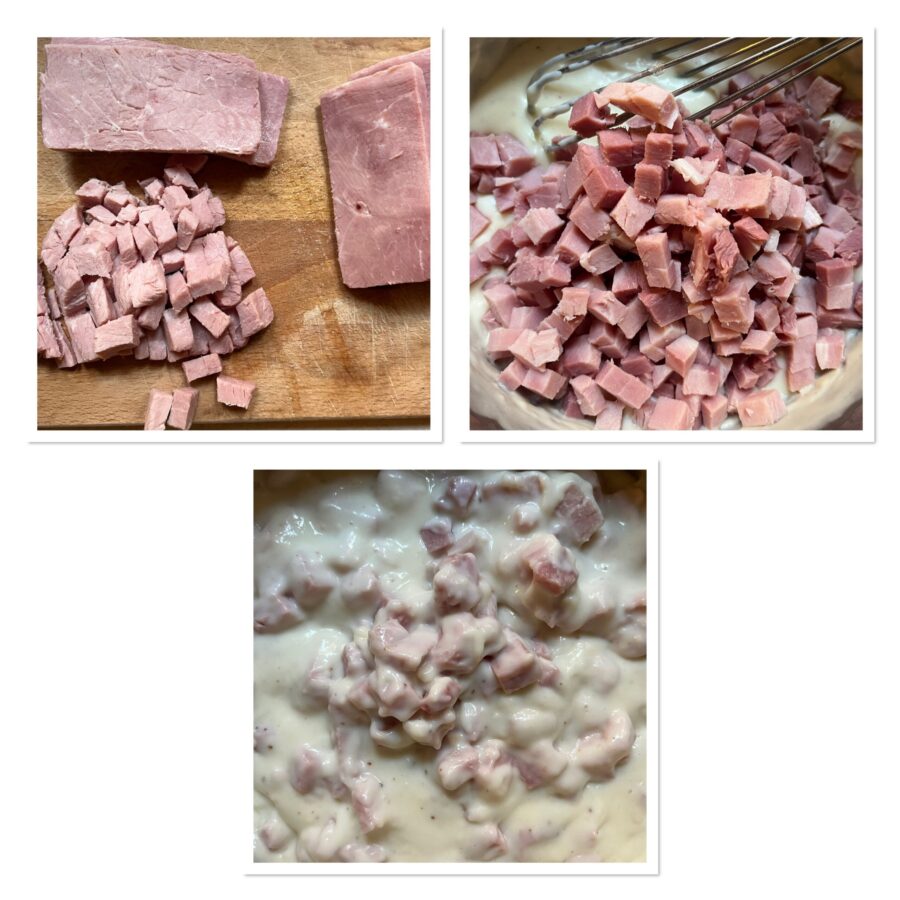
Buy some cooked ham in pieces and dice it, then mix it into the cold béchamel. Also cut the cheese into cubes.
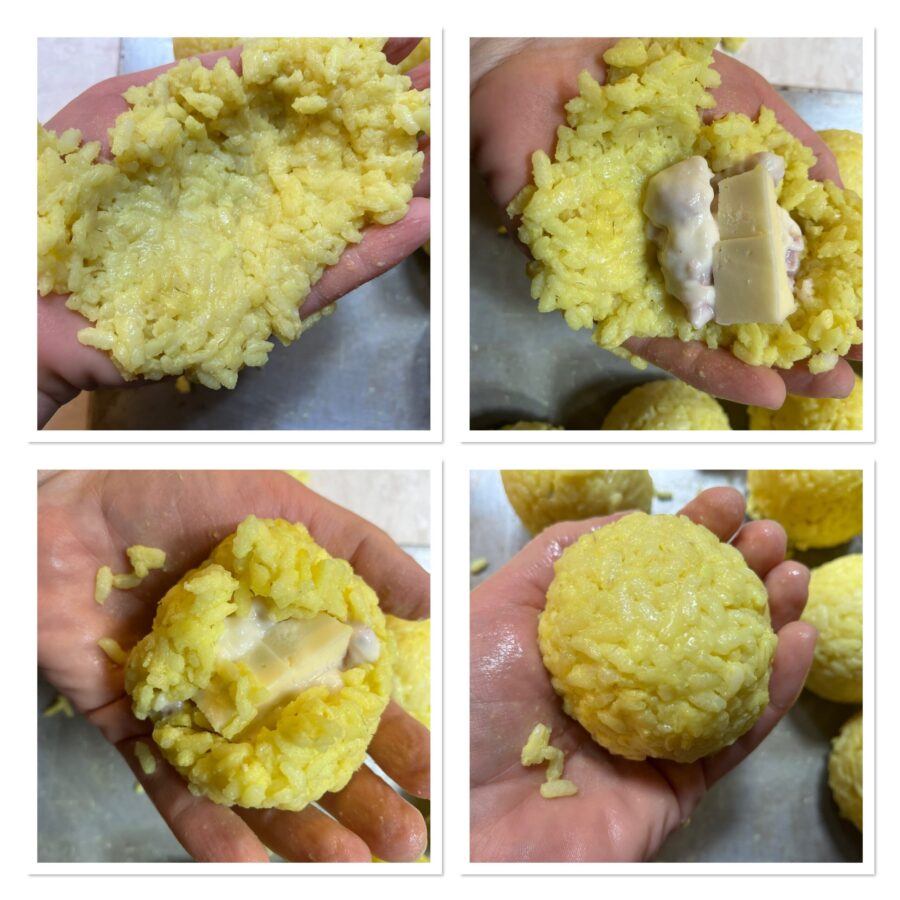
We can assemble the arancine: cover the palm of your hand with a layer of rice less than 1/2 inch thick, fold your hand to form a cavity, place the béchamel with ham in the cavity and some cheese cubes.
Shape the arancina into a rice ball with the filling in the center and continue until you’ve used all the mixture.
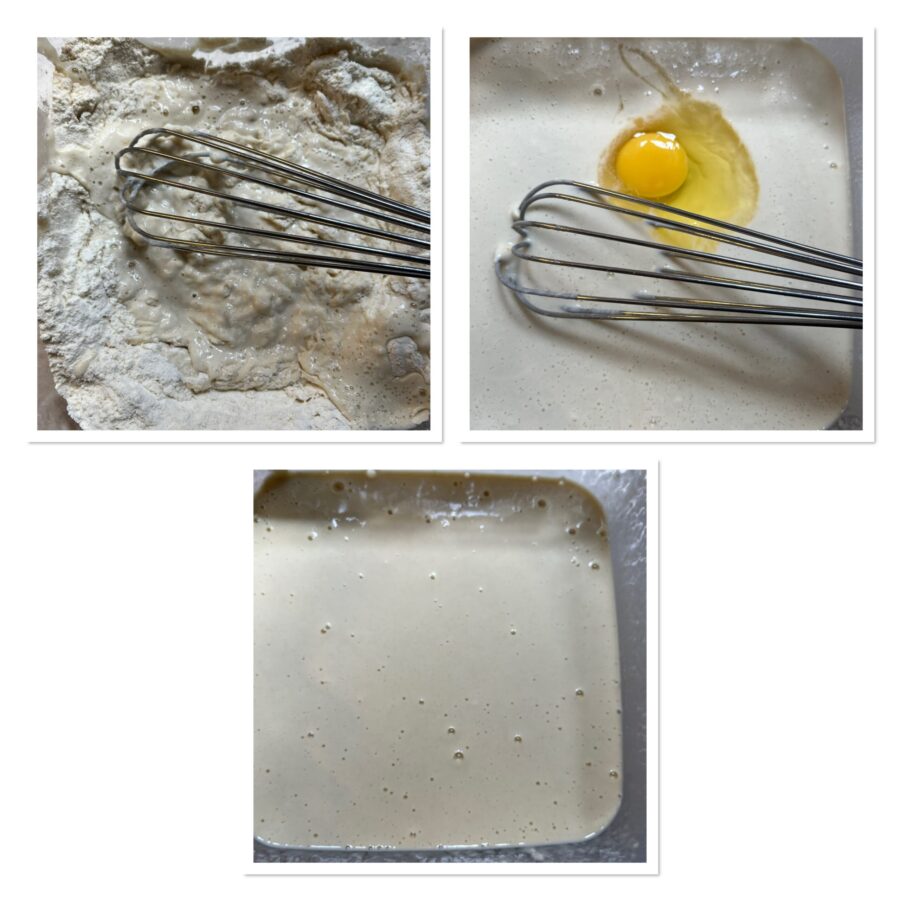
Prepare the batter by mixing the flour with a little water, and once lumps are dissolved add one egg, the remaining water and whisk to combine.
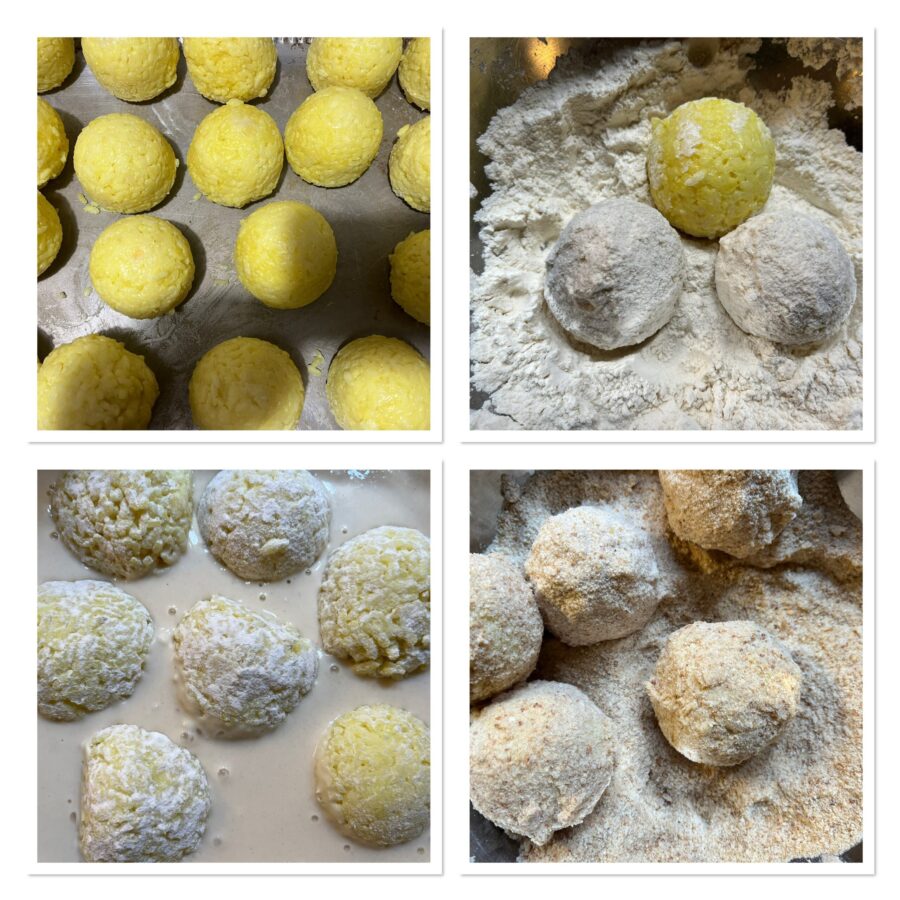
When all the arancine are formed, coat them in flour, then dip them in the batter which will act as an adhesive for the breadcrumbs. Dip each arancina in the batter, drain it and roll it in the breadcrumbs, making sure they adhere well.
Avoid letting batter drip onto the breadcrumbs as much as possible; that would ruin them and create unsightly clumps.
Finish preparing all the arancine al burro, then let them rest in the refrigerator for a couple of hours before frying.
Heat the oil. To judge the temperature, dip a toothpick or the handle of a wooden spoon: if it fries, you can start cooking the arancine.
Fry a few at a time in plenty of oil; let them brown slightly and remove them. Let cool for about ten minutes and then immerse them again in the hot oil until the breadcrumb coating is nicely golden and crunchy.
Remove with a skimmer and place on absorbent paper.
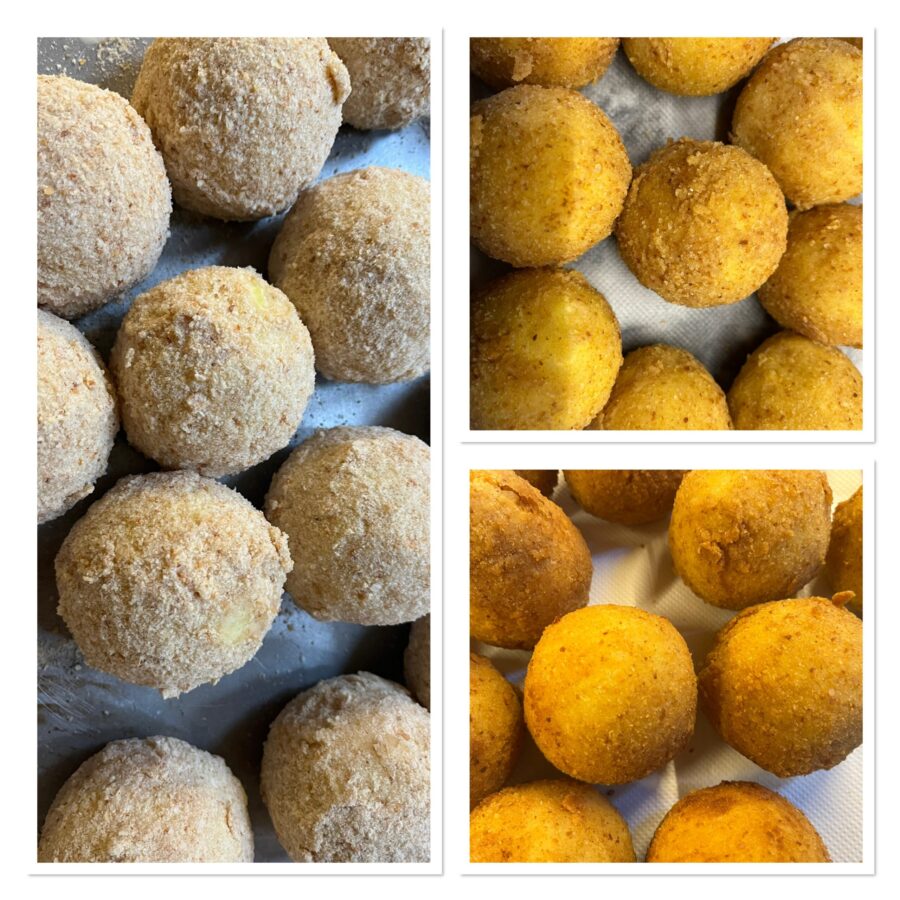
The arancine are ready. I recommend preparing only as many as you plan to eat the same day; leftovers should be stored in the fridge and consumed by the next day, although they will lose crunch and crispness.
Some freeze assembled and breaded arancine to defrost and fry later. I do not recommend this: the rice would be ruined and become too soft.
If you liked this recipe, take a look at:
–Arancini with Bronte pistachio, ham and cheese;
–Arancini alla Norma with fried eggplant and salted ricotta;
–Sicilian arancini with pistachio ragù;
-–Arancini al burro with peas;
-–Catanese cipolline (hot table sandwiches);
-–Little pizzas with Sicilian rosticceria pastry;
-–Cartocciate with ham and mozzarella (Sicilian rosticceria);
If you want to stay updated on my recipes, follow me also on:
pinterest; twitter, you tube and tiktok.
From here, you can return to the HOME and discover new recipes!