How to cook dried chickpeas, grandma’s tricks and secrets. Chickpeas are a very versatile legume widely used in cooking, perfect for making soups, salads, appetizers , vegan frittatas, and many other tasty and tempting recipes. The chickpea is an herbaceous plant of the Fabaceae family; the seeds of this plant are the chickpeas, legumes widely used in Mediterranean culinary culture. It was one of the first domesticated crops and comes from wild forms of the same plant, whose earliest species likely originated in Turkey (cicerchia). Many of us love chickpeas for their flavor and texture; they were once an important source of nourishment for poorer people and farmers because they are rich in vitamins and, above all, plant-based proteins. Our grandmothers had the patience to soak chickpeas and cook them slowly, but how many times have we given up at the very idea because of the long preparation times? It happens to many of us, doesn’t it? And perhaps for lack of time or exhaustion we resorted to canned beans, which are certainly good, but never like home-cooked ones. That’s really a shame, because once soaked chickpeas allow us to prepare simple and tasty dishes, from the more rustic to the more refined. So how do you cook chickpeas? Let’s go to the kitchen: I’ll explain the tricks and secrets to prepare a delicious plate of chickpeas as good as those our grandmothers used to make, and I’ll also explain how to cook them so they are suitable for all the recipes you want to make with cooked chickpeas! Before that, I remind you that if you want to stay updated on all my recipes you can follow my Facebook page (here) and my Instagram profile (here) and if you like legumes you can also check out How to cook beans and how to make Sicilian-style dried fava bean purée (Macco).
Also take a look at these chickpea recipes:
- Difficulty: Very easy
- Preparation time: 12 Hours
- Cooking time: 3 Hours
- Portions: 5 Servings
- Cuisine: Italian
Ingredients for cooking dried chickpeas
- 2 1/2 cups (about 1.1 lb / 17.6 oz) dried chickpeas
- 8 1/2 cups (about 2.1 qt) Water
- to taste Salt
- to taste Extra virgin olive oil
- to taste Black pepper
Preparation
Preparing a good dish of chickpeas requires dedication and patience. Dried chickpeas need a soak of 12 to 24 hours, not more, so if you plan to make them, organize ahead. Rinse the chickpeas, place them in a glass bowl, add twice their volume in water and let them rehydrate. After soaking the legumes will have roughly tripled in volume. Drain them and rub them together with a spoonful of salt; this step helps the chickpeas cook through and prevents them from remaining hard.
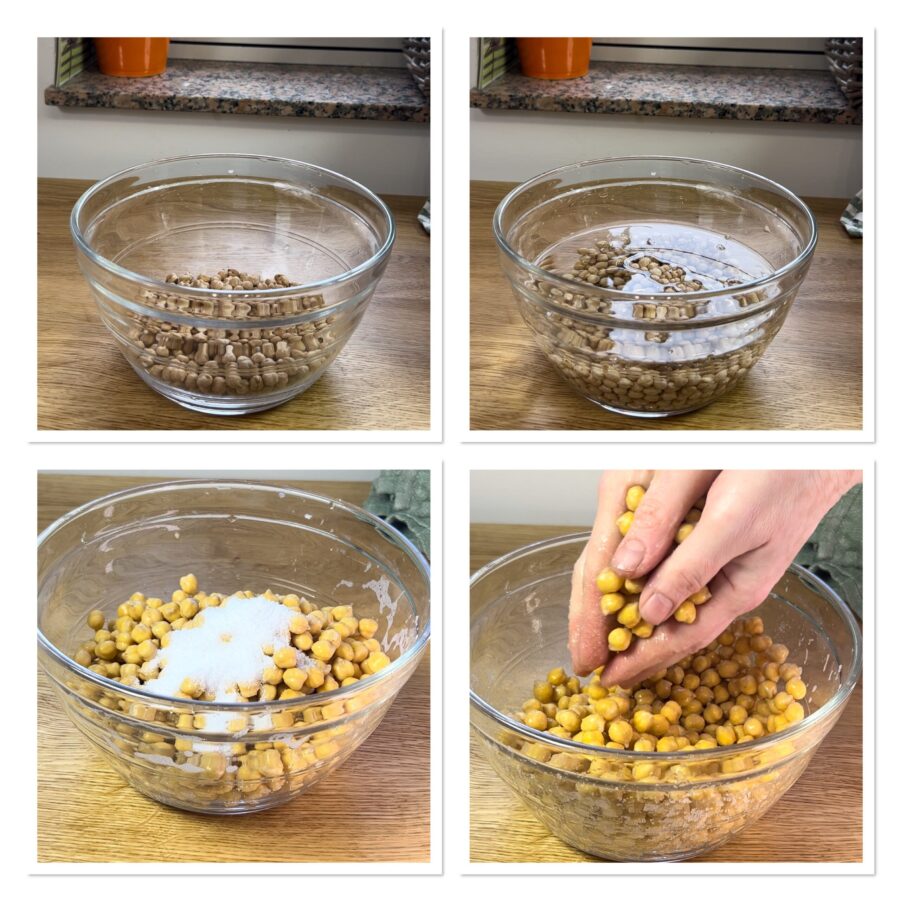
Rinse them very, very well under running water and remove all traces of salt — a very important step, because residual salt would spoil their flavor and texture.
Many people like to add a teaspoon of baking soda to the soaking water; this also makes the chickpeas tender, but you may notice a slight baking-soda taste.
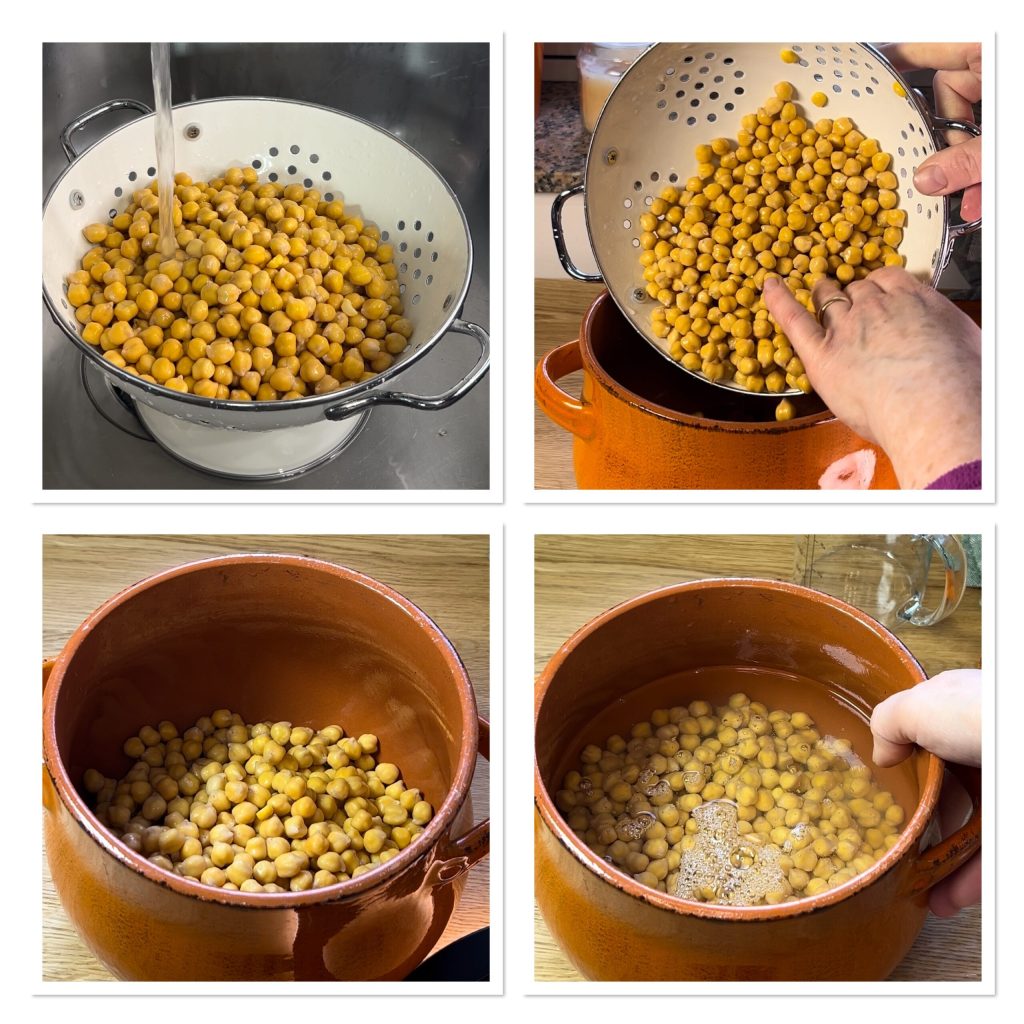
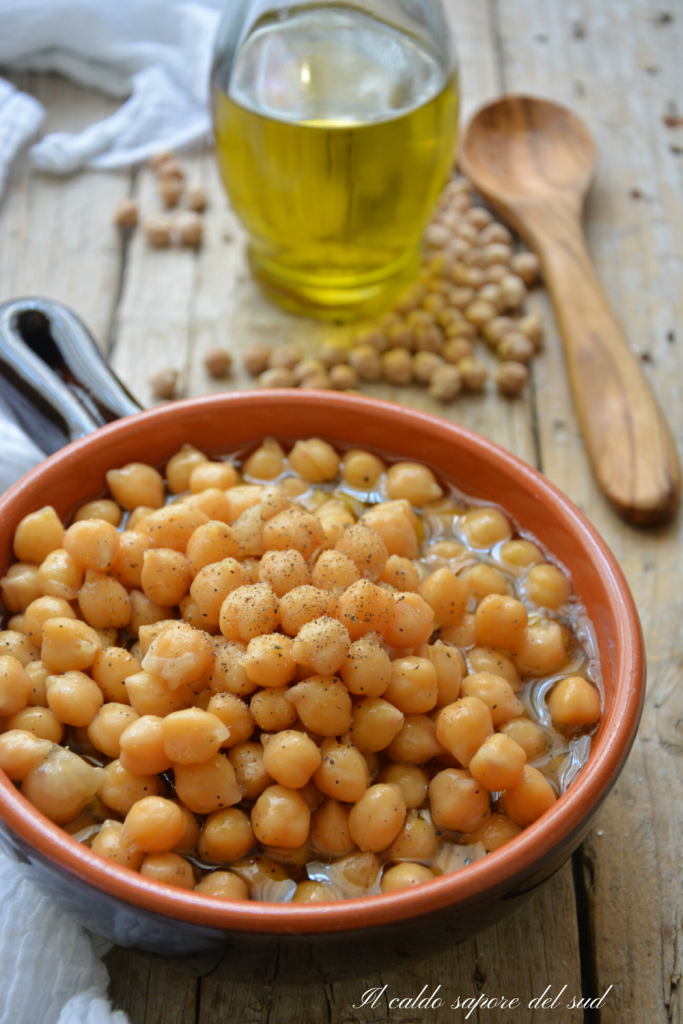
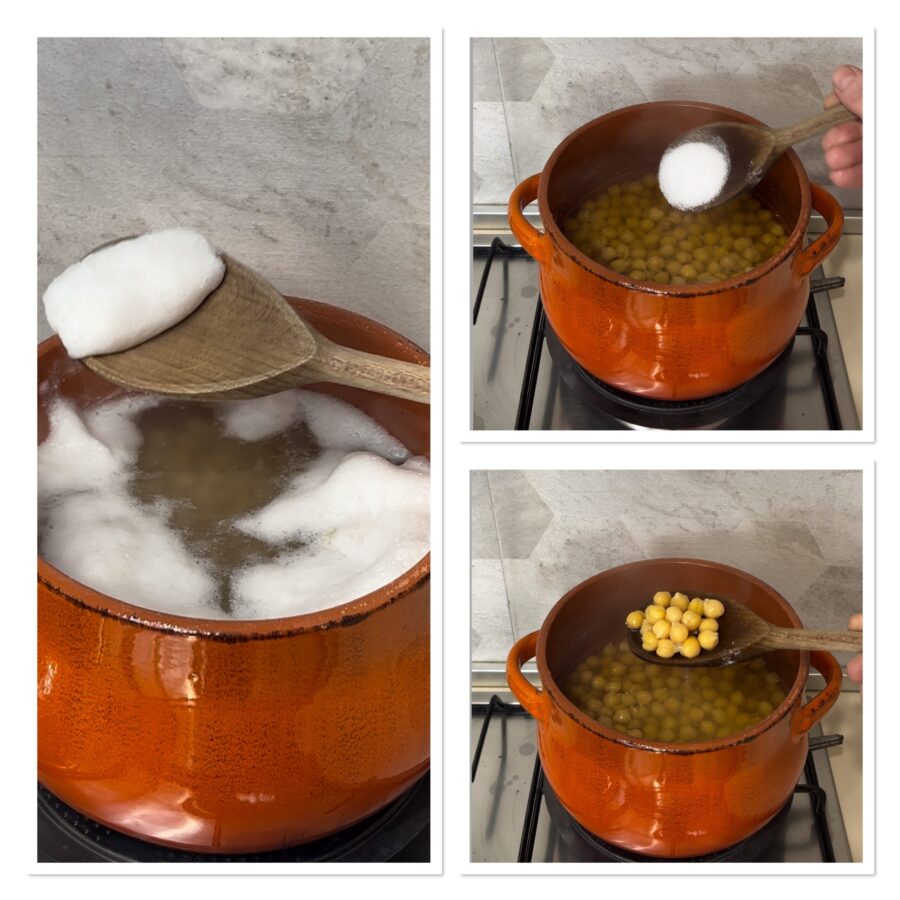
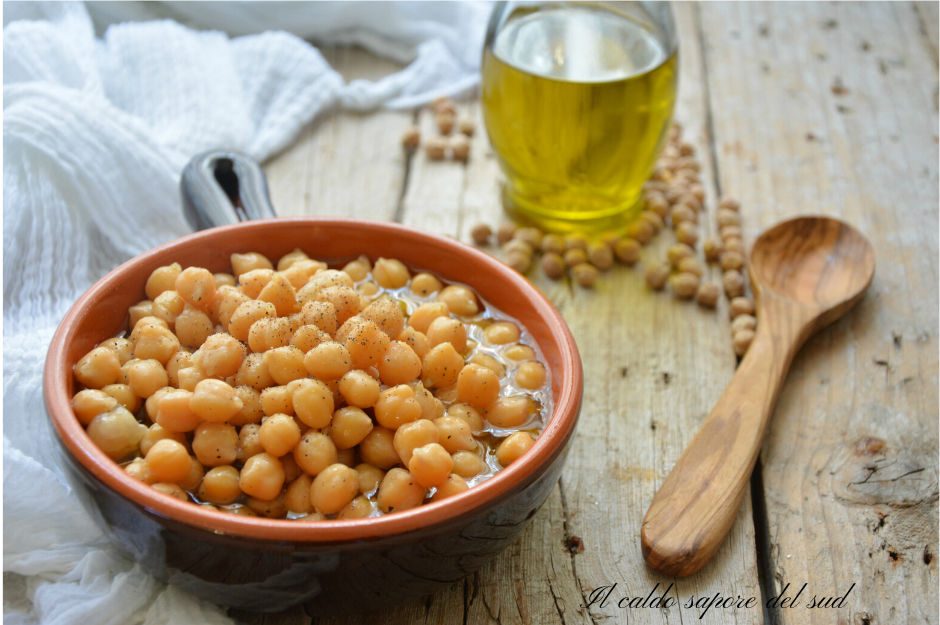
Now it’s time to cook the chickpeas: take a large, heavy-bottomed pot, or better yet an earthenware pot, put the chickpeas in and cover with water — for about 2 1/2 cups (500 g) of chickpeas, 2 liters is enough. Water is an important factor in preparing these legumes and I strongly recommend using water low in minerals; even bottled low-sodium water can work. Using water low in minerals and thus slightly acidic will not only enhance the chickpea’s flavor but will also help them cook without falling apart. Put the pot on the stove over the lowest heat on a medium burner; if you use an earthenware pot remember to use a heat diffuser. Wait until they start to foam — this will take about 30/40 minutes — then remove the foam with a strainer. As soon as they start to boil, if possible put the lid on the pot and let them cook; if the pot is small avoid closing it completely, as boiling may cause the cooking liquid to overflow. Do not stir the chickpeas, and if you do, use a wooden spoon — metal can make them tough. Cook the legumes for about three hours, and season with salt only during the last 30 minutes. Cooked this way, the chickpeas can be used in all recipes, from cold salads to soups and broths. We will eat them simply, with a generous drizzle of freshly-pressed extra virgin olive oil, black pepper, a couple of sprigs of rosemary and some good toasted rustic country bread… Enjoy!
Notes
-In the past chickpeas were cooked with rainwater collected in cisterns; today things have changed a bit and many homes have water softening systems. You can use softened water but mix it with some regular tap water in a ratio of about 1/4 soft water to the total.
-If you use canned legumes, which I don’t prefer, rinse them from their canning liquid and simmer them for a few minutes in fresh water, season with salt and serve.
-Do you know about aquafaba? Aquafaba is the cooking liquid of chickpeas and is very useful as an egg-white substitute because it can be whipped to stiff peaks. To be honest, the best aquafaba — the one that whips best — usually comes from canned chickpeas or beans because it is denser, but since you can’t be sure of its organoleptic characteristics, it’s recommended to prepare it at home. So after cooking the legumes, keep the broth, reduce it on the stove if necessary, then add a little lemon juice. Aquafaba can be kept in the refrigerator for up to one week.
-If you soak chickpeas for more than 12 hours, I recommend at least one change of water with the usual teaspoon of baking soda.