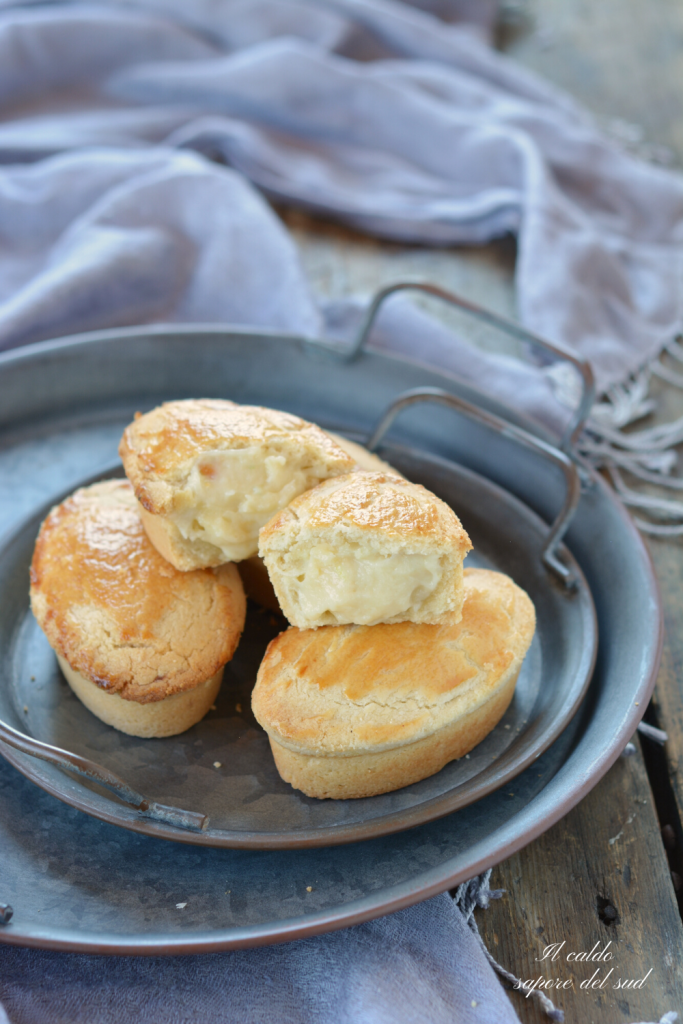
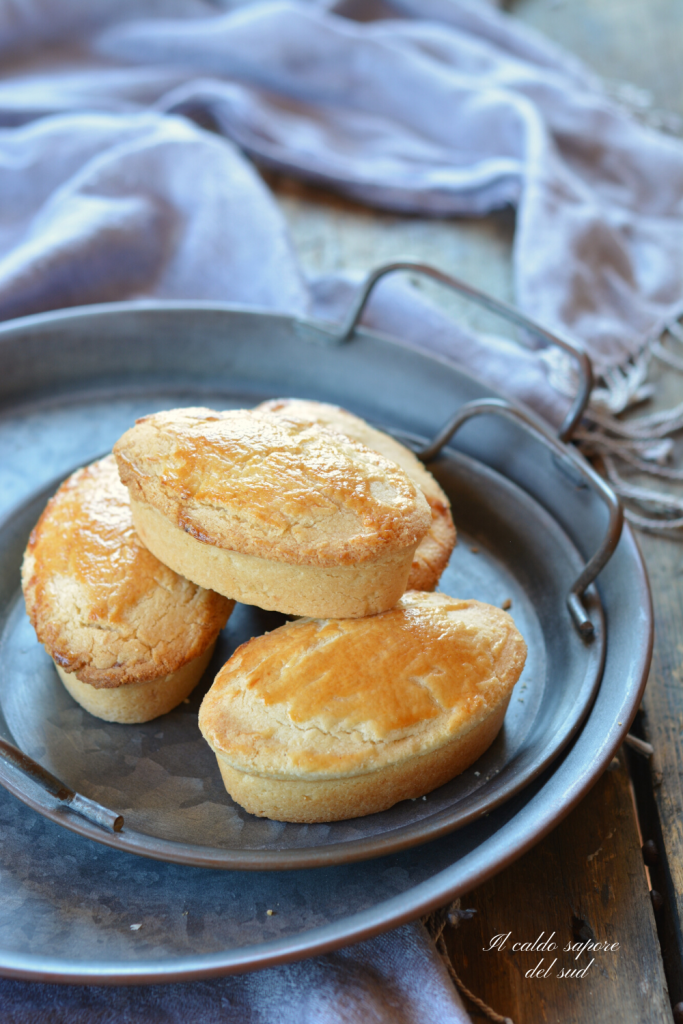
Pasticciotto from Lecce, the original grandmother’s recipe, made with lard…
If you’ve landed on this page, I know: you’ve been to Salento, you fell in love and now you can’t forget this land and its flavors!!
Do you know how I know? Because unfortunately the same thing happened to me — I fell in love with Salento eight years ago and the passion never left me, so I went back this year and I hope to go back a thousand more times! I’m Sicilian, I love my wonderful land, but I adore traveling, and discovering Salento was a unique emotion, one I’ve kept in my heart since the first time I set foot there.
I loved the people, their hearts, the sea and the food of the Salento land, and above all I adored eating those wonderful traditional sweets that are the pasticciotti!
So, if you’ve landed on this page you are looking for a special recipe that can best recreate the unique and special taste of a freshly baked pasticciotto — so warm, fragrant, crumbly and delicate that it melts in your mouth without much chewing, caressing your palate like a warm cuddle that’s hard to forget…
Are you ready to get your hands on the dough? Follow me into the kitchen, we’ll work together and prepare this unique delight!
- Difficulty: Very easy
- Cost: Budget-friendly
- Preparation time: 1 Hour
- Portions: 12
- Cooking methods: Oven
- Cuisine: Italian
Pasticciotto from Lecce original recipe with lard: ingredients…
- 2 1/2 cups whole milk
- 1 egg (large)
- 1 egg yolk
- 3/4 cup + 1 tbsp cups 00 flour (about 100 g)
- 3/4 cup + 2 tbsp cups granulated sugar (about 180 g)
- 1 packet vanillin (vanilla powder)
- to taste lemon zest
- 4 cups + 2 tbsp 00 flour (about 500 g)
- 1 1/4 cups powdered sugar (about 150 g)
- 1 1/4 cups lard (about 10 oz / 280 g)
- 1 egg (large)
- 1 egg yolk
- 1 packet vanillin (vanilla powder)
- Half tsp baking powder (for sweets)
- to taste lemon zest
- 1 egg (small, for finishing)
- Mold oval pasticciotto mold
- Oven
- Rolling pin
- Pastry brush
Pasticciotto from Lecce original recipe with lard: preparation…
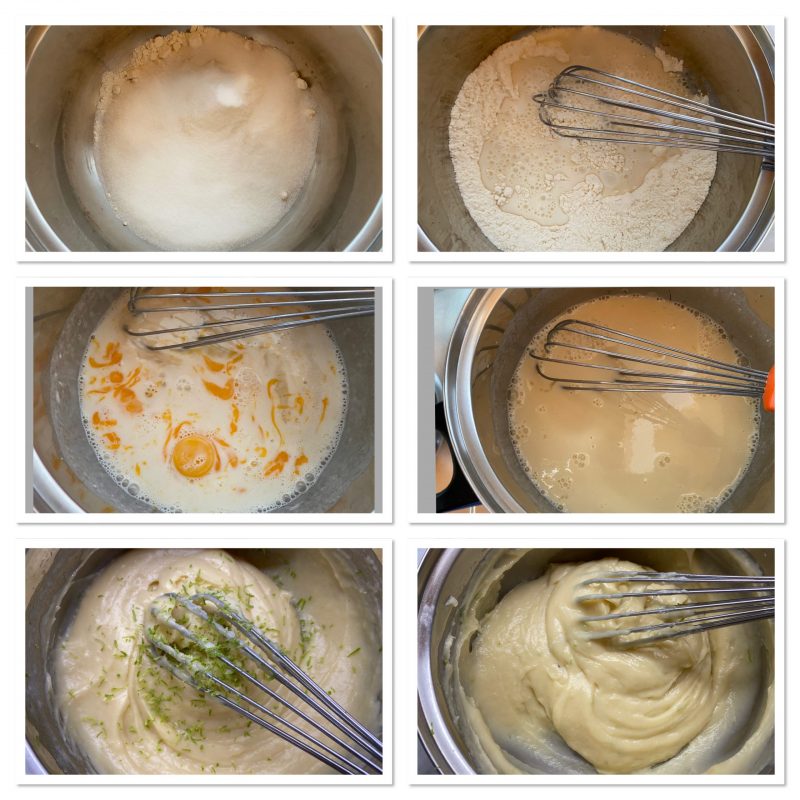
To start preparing the pasticciotti, begin with the cream. I use a faux pastry cream, much lighter than the classic version but still delicious.
In a saucepan combine the flour, sugar and vanillin, mix, then add enough milk to dissolve and smooth out any lumps. Add the whole egg and the yolk and mix until the mixture is uniform.
Continuing to stir, add the rest of the milk and make the mixture smooth and fluid.
Place over low heat and stir until the cream thickens (you may notice some lumps forming; don’t worry — they will dissolve if you keep stirring continuously with a whisk). Turn off the heat just before it reaches a boil.
With the heat off, add a generous grating of organic lemon zest, mix and transfer everything to a bowl. Cover with cling film and let it cool.
After preparing the cream, you can move on to the shortcrust pastry.
The pasticciotto pastry is a typical dough from the south of Italy that uses lard as the fat component instead of oil or butter.
Lard, besides making the pastry more delicate and crumbly, allows better handling during summer and spring temperatures because it melts less easily than butter, making the dough more workable.
Don’t ask me to replace the lard with butter or oil — you’d completely change the structure of the pastry, creating something totally different, less crumbly and rather crunchy.
Now for our pastry: pour the flour onto a work surface, form a well, add the lard and work it with your hands until you obtain a sandy, fairly homogeneous mixture. Reform the well and add the egg, the yolk, the sugar, the vanillin and the baking powder, then work quickly with your hands until you get a smooth, homogeneous dough.
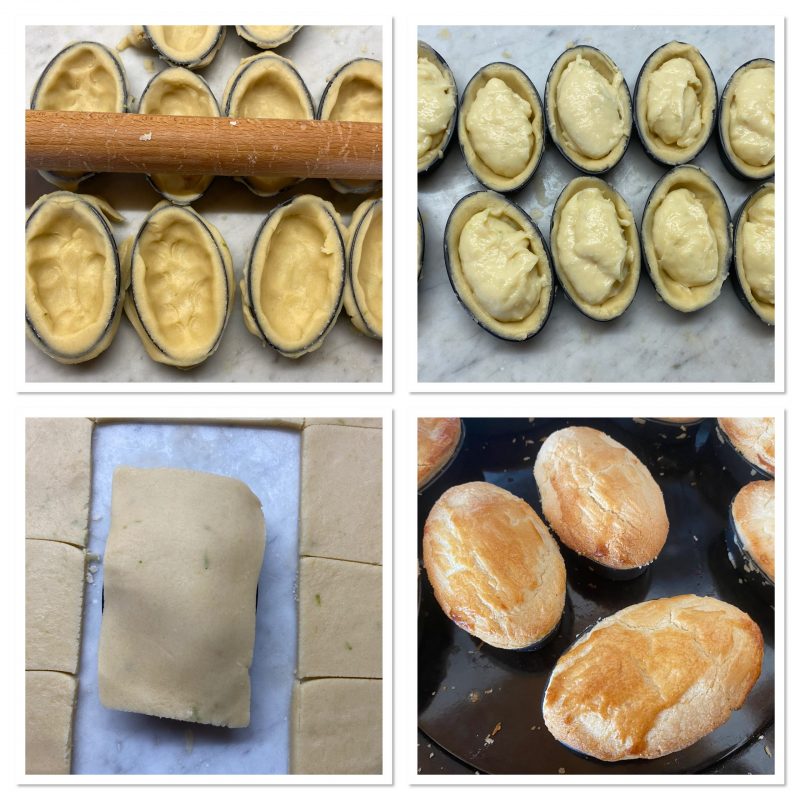
Divide the dough into two pieces and with one of them line the molds. Simply detach a small piece and press it into the mold to cover it well.
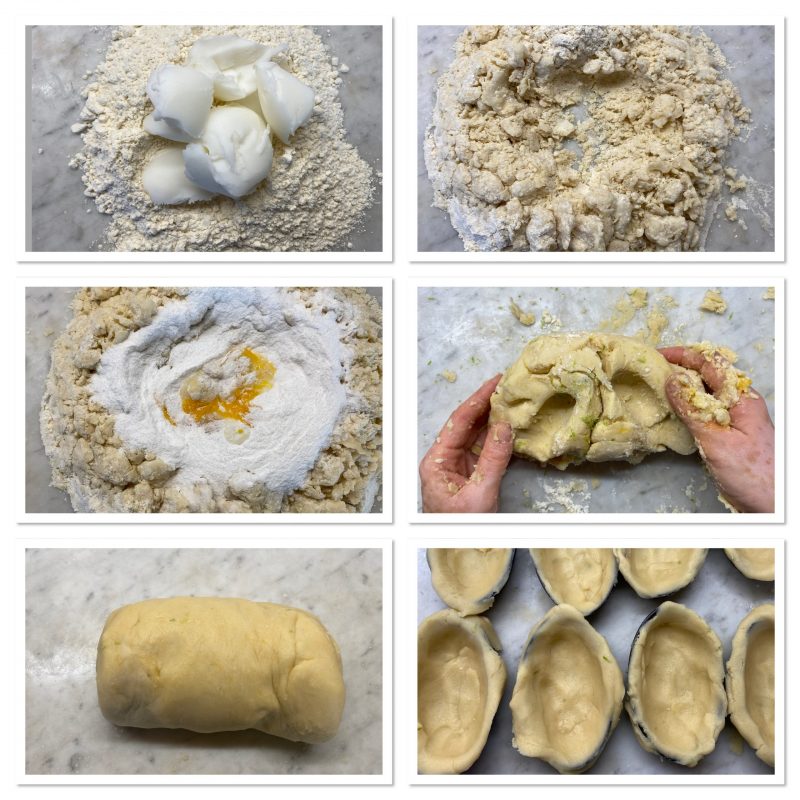
After lining the molds, roll over them with the rolling pin to cut off the excess dough cleanly.
Fill each mold with a generous spoonful of cream, forming a slight dome.
Dust the work surface with flour and roll out the remaining pastry into a sheet about 3/16″ (4–5 mm) thick. Cut the sheet into rectangles and place one rectangle over each pasticciotto. Be careful not to press them down, so as to keep the dome created by the cream. Use your thumb pressed against the edge of the mold to remove excess dough while sealing the pasticciotto at the same time (unfortunately there’s no photo of this final step). Once assembled, brush with a beaten egg mixed with a little milk and bake in a conventional oven at 356°F for 15 minutes, or until you reach the desired golden color.
Turn off the oven, let them cool slightly for about thirty minutes, unmold and serve.
Store leftover pasticciotti for a maximum of two days, covered under a glass dome in a cool, dry place. Over time they will soften, but will still be delicious.
If you liked this recipe, take a look at:
–Focaccia Barese with cherry tomatoes and olives;
–Sicilian Iris with chocolate cream;
–Cream and fig tart scented with cinnamon;
–Quick pastry cream with whipped cream;
–Baked zeppole with pastry cream;
–Catanese sweet panzerotti with white and cocoa cream;
In the traditional pasticciotto recipe, ammonia (baker’s ammonia) is used as a leavening agent — an ingredient common to many sweets from southern Italy.
However, ammonia leaves a persistent smell in freshly baked goods, so I prefer to replace it with baking powder.
If you want to buy the molds, you can commonly find them online; here’s an example link: stampo per pasticciotti.
If you want to stay updated on my recipes, follow me on:
facebook , pinterest, instagram, twitter.
From here, you can return to the HOME and discover new recipes!
“This recipe contains some affiliate links, which earn a small share of revenue at no extra cost to you. They are simply purchase suggestions, with no obligation.”