Eggplant caponata the grandma’s recipe for Palermo-style fried eggplant caponata is one of the cornerstones of Sicilian cuisine and traditional family recipes. Today we’ll prepare together the Sicilian fried eggplant caponata fried, a recipe with eggplant perfect as tradition dictates: a vegan and vegetarian side dish and even an appetizer that everyone loves. Caponata has ancient origins in Sicily and within the region there are many variants of a dish that, while sharing the same name, may include some ingredients rather than others depending on where you eat it. Usually the ingredients of caponata vary from province to province, while keeping in common the sweet-and-sour flavor and the presence of onions and fried eggplant. Depending on where you have it, you may also find peppers, potatoes or tomatoes, or even strained tomatoes or double concentrate; in any case, it will always be an original caponata, also because in Sicily there are about 30 registered versions. Today’s recipe is the eggplant caponata recipe that features this vegetable as the main star of the dish; this way of preparing caponata is typical of the Palermo area and is as delicious as the other version that includes peppers and is more common in the Catania area, see:Sicilian caponata original recipe with peppers. By custom, the origin of the dish is traced back to the “capone”, the name used in Sicily for the amberjack fish, a white fish with fairly dry flesh that was served at aristocratic tables dressed in sweet-and-sour sauce. It is said that the common people, not having fish available, replaced it with the prolific yet slightly bitter eggplant. Truthfully, there are no certain facts about the dish’s origins, only legends. If you love Sicilian cooking, this delicious recipe should definitely be part of your collection of favorite dishes, so join me in the kitchen and we will discover together how to make the authentic Palermo-style fried eggplant caponata. Before we roll up our sleeves, I remind you that if you want to stay updated on all my recipes, you can follow my Facebook page (here) and my Instagram profile (here).
Take a look:
–Swordfish caponata Sicilian recipe;
–Baked Sicilian caponata with peppers and eggplant;
–Light baked caponata — delicious
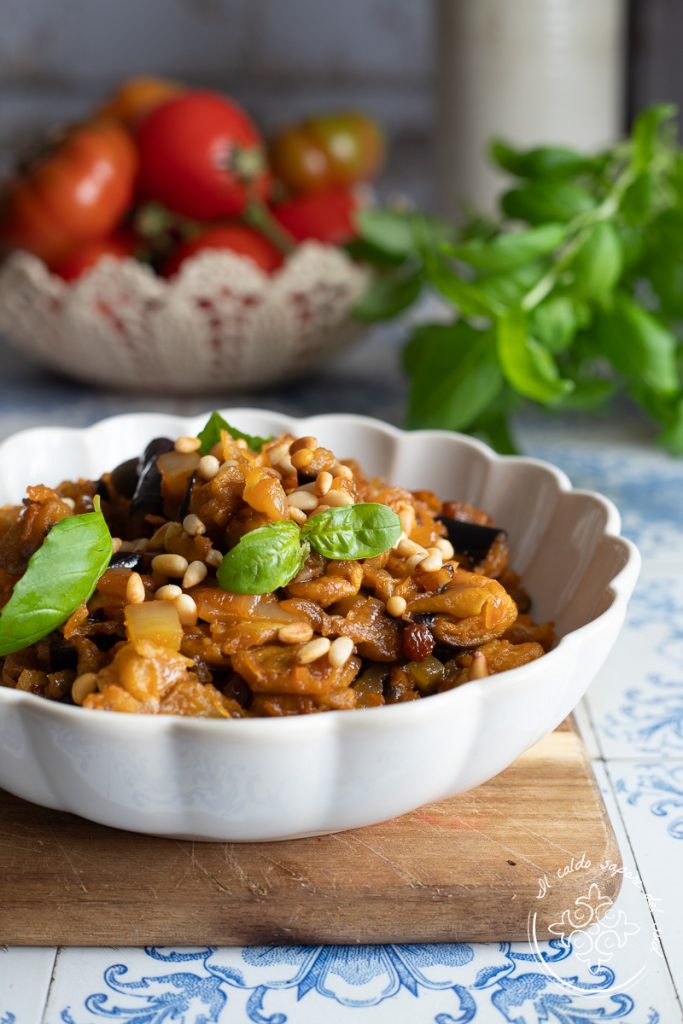
- Difficulty: Very easy
- Cost: Very inexpensive
- Preparation time: 1 Hour
- Cooking time: 1 Hour
- Portions: 6 servings
- Cuisine: Italian
Ingredients
- 6 Eggplants (medium, fresh and firm)
- 2 Onions (large)
- 2 stalks Celery
- 2 tablespoons Tomato paste (or 6 tablespoons of tomato purée)
- 2 tablespoons Sugar
- Half cup White wine vinegar (White)
- to taste Salt
- 1.8 oz Green olives in brine
- 1 tablespoon Capers
- 3 tablespoons Pine nuts (or sliced almonds)
- 1/4 cup Raisins
- to taste High-oleic sunflower oil (for frying)
- to taste Basil
Tools
- Pot
- Frying pan
Preparation
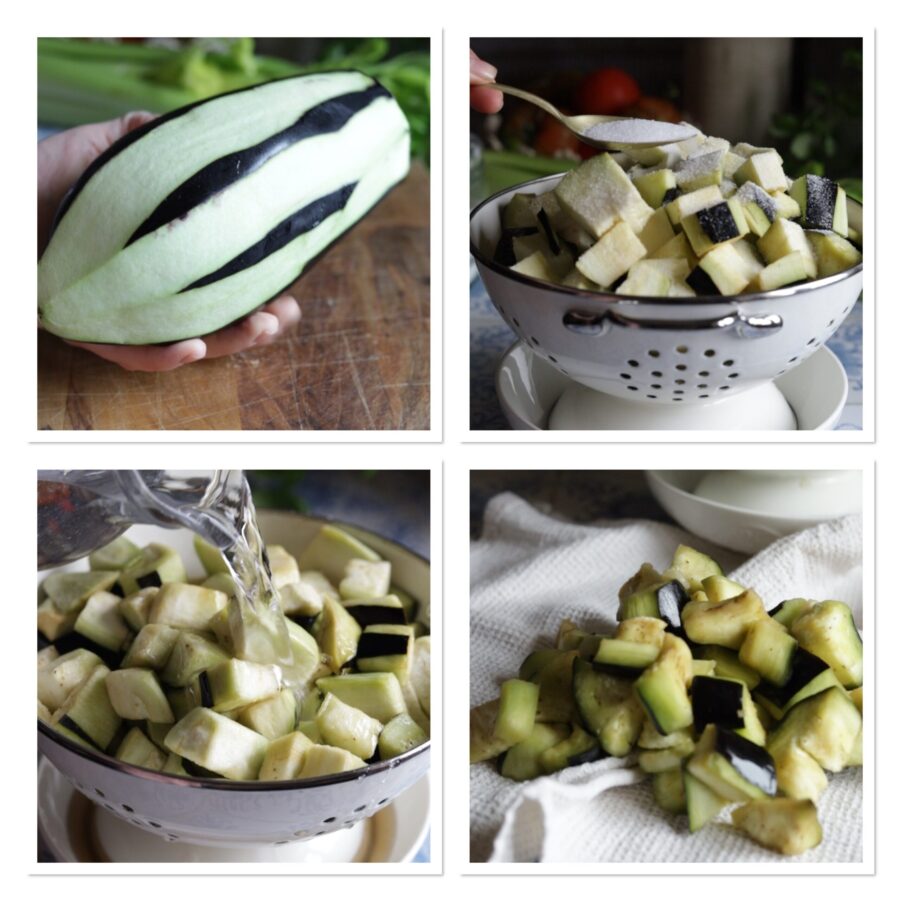
Peel the eggplants, but not completely: leave a few strips of skin to add flavor and prevent the caponata from darkening too much. Cut them into chunks, place them in a colander, sprinkle with a couple of tablespoons of salt and let them release some of their watery liquid. After about thirty minutes, rinse them thoroughly with clean water or under running water to remove excess salt. Squeeze them by hand and pat them dry with a kitchen towel.
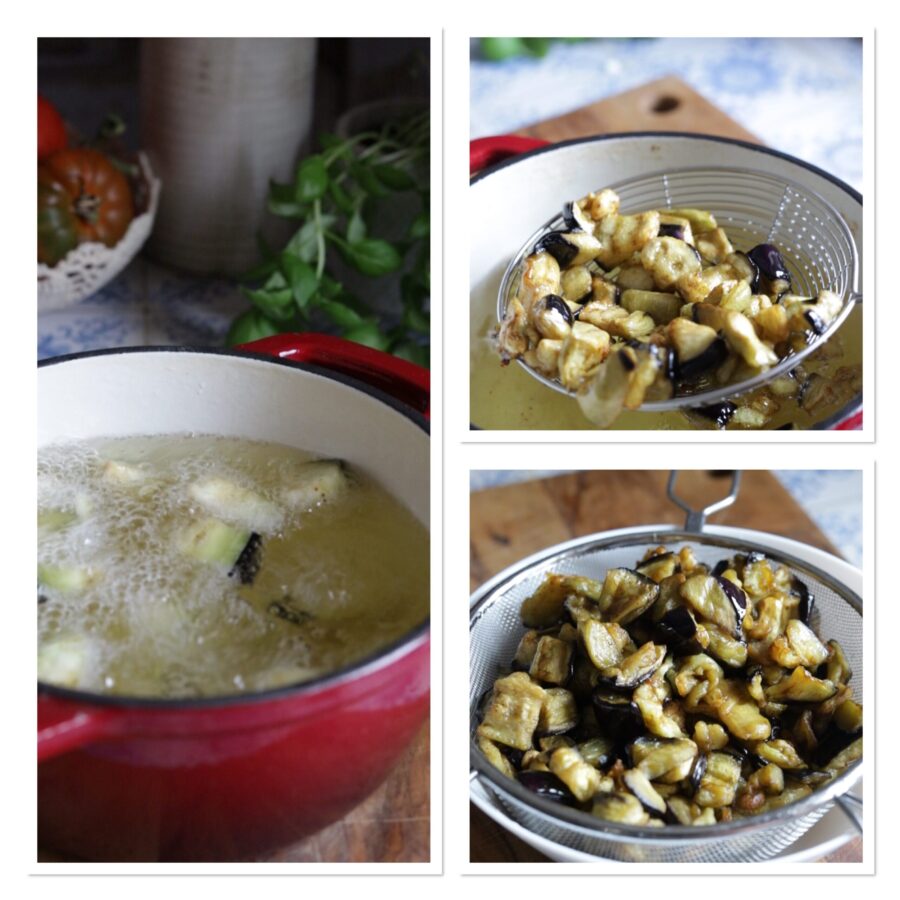
Then fry half of them at a time in a pot with already hot oil and fry until golden. It may take up to 30 minutes; when cooked, lift them out with a slotted spoon, place them on a colander or a large sieve and let the excess oil drain. Then proceed to cook the second half of the eggplants.
Avoid frying all the eggplants in a single batch: the oil could cool down and you would end up boiling the eggplants instead of frying them.
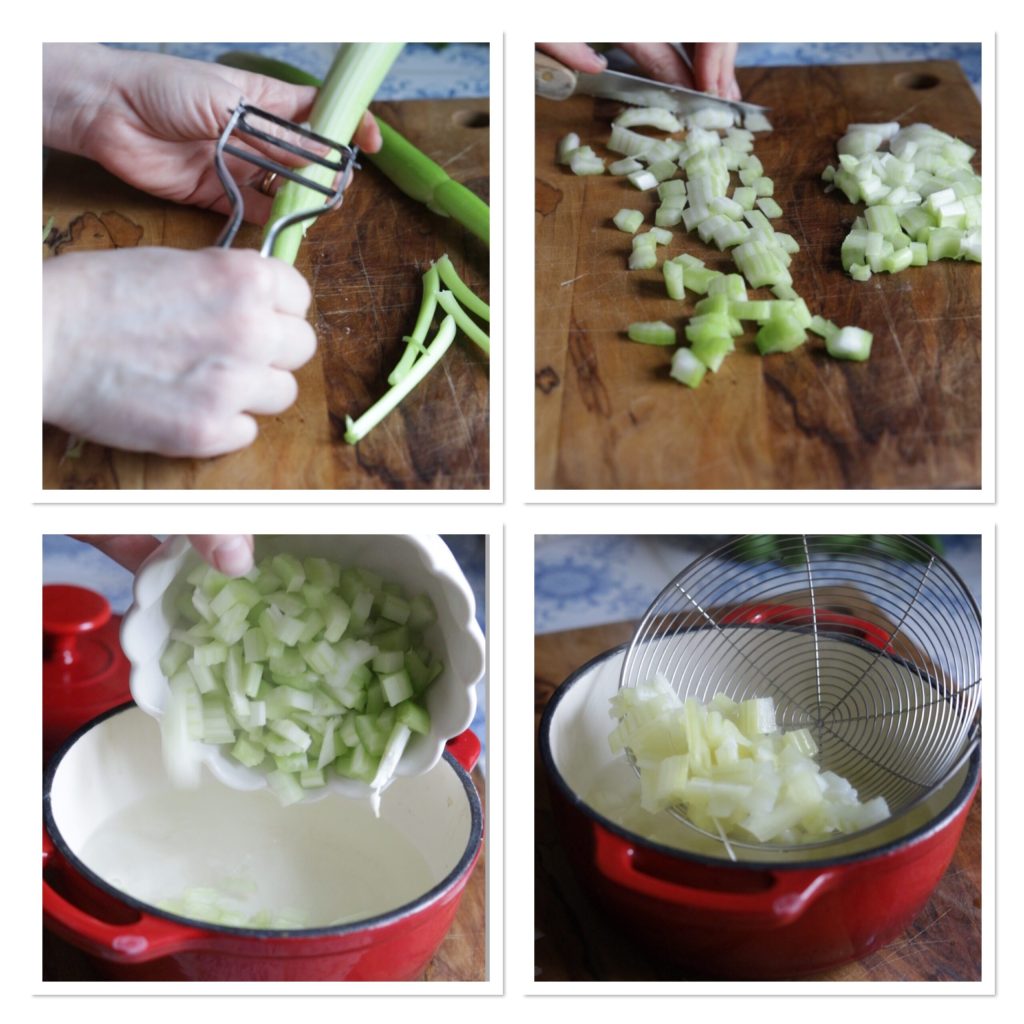
While the eggplants are frying, cut the celery and blanch it in water and vinegar.
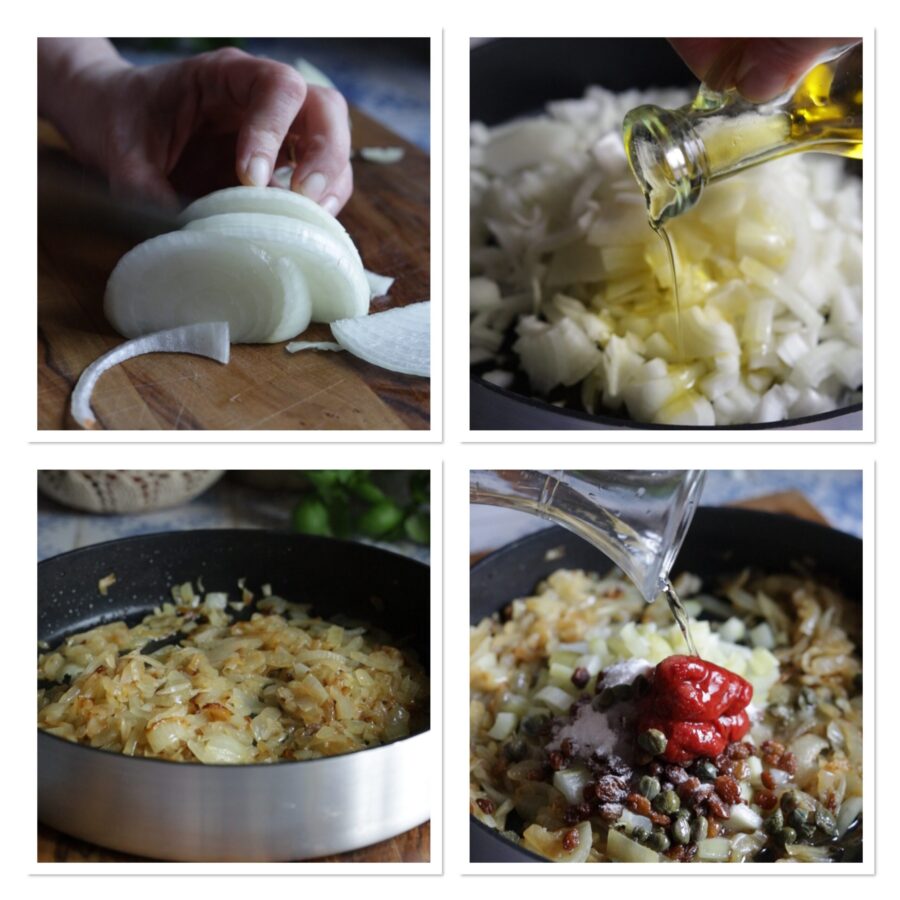
It’s time to prepare the rest. Slice the onions after peeling and rinsing them, add a generous drizzle of olive oil and let them sauté over medium heat in a large pan. The onions should cook and caramelize, so stir often and be careful not to burn them; if needed, add a little water to finish cooking. Then add the celery, the tomato paste, the vinegar, the sugar, half a cup of water, salt, desalted capers and raisins, mix everything and put it on the stove. Continue cooking until the vinegar has completely evaporated and lost its sharp taste.
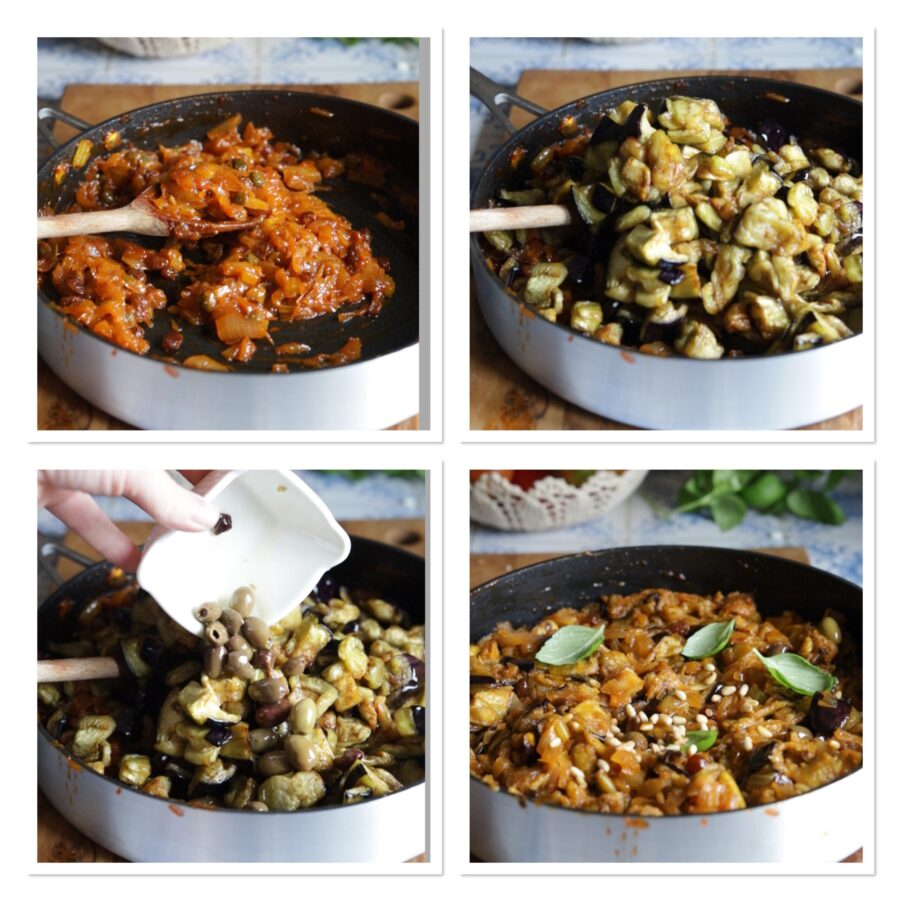
Add the eggplants and the olives (I add them last so they don’t become too soft, but you could also add them to the sauce in the previous step).
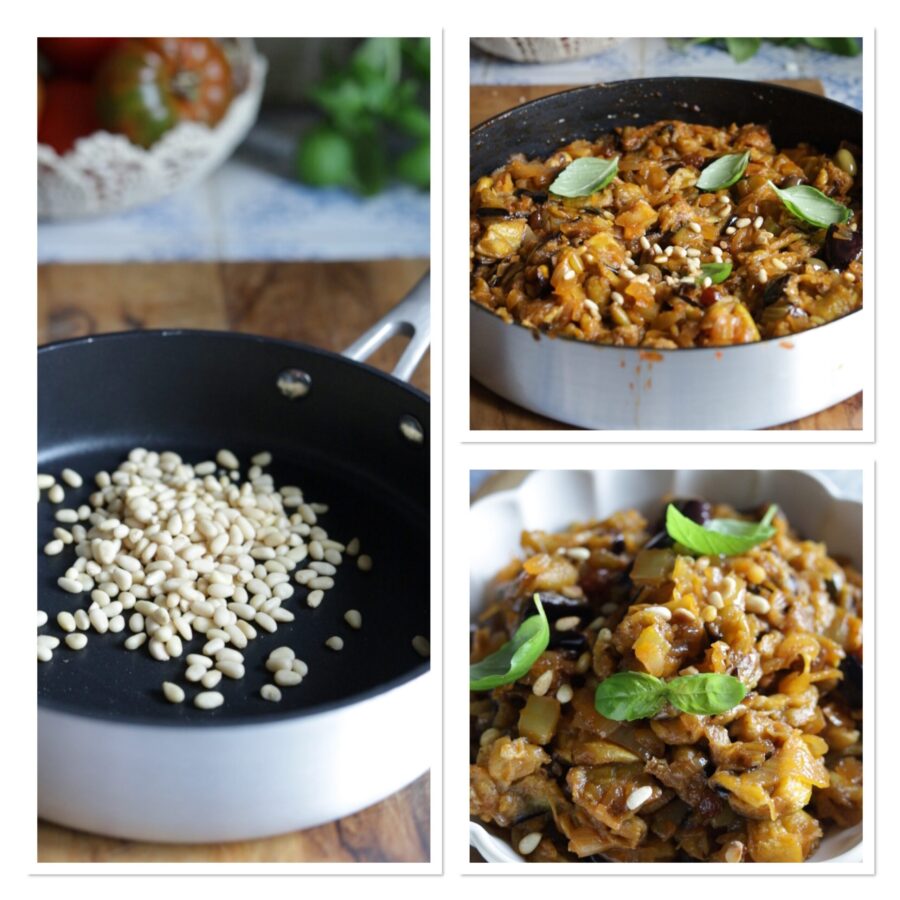
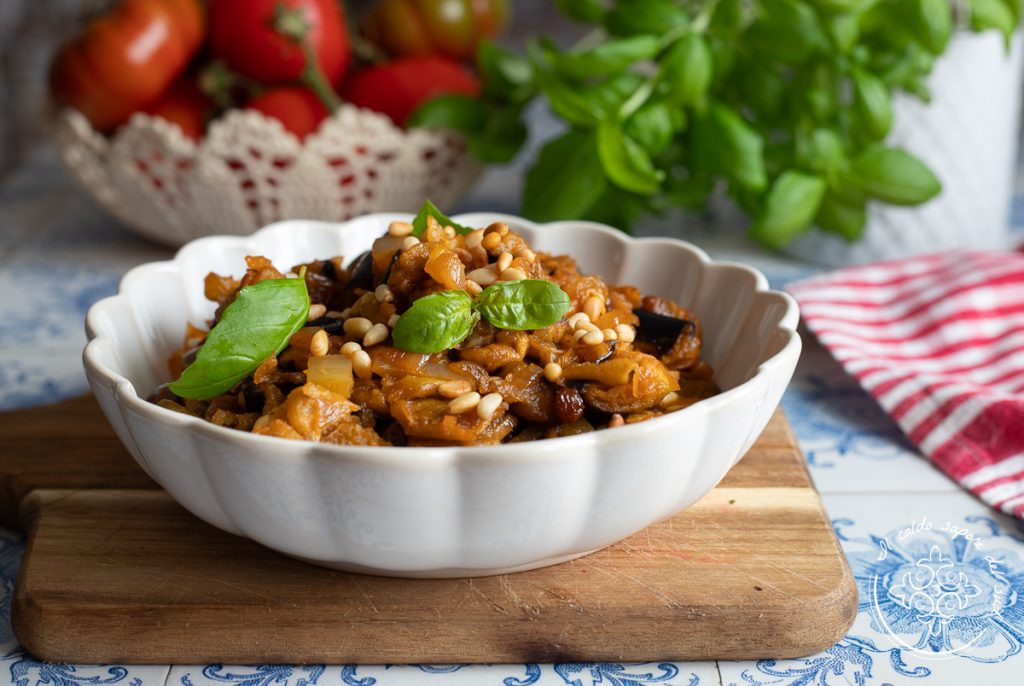
Toast the pine nuts in a pan gently without burning them; this will make them more aromatic. Add them to the caponata, heat everything for 5 minutes over high heat (you may want to add a little water if everything seems too dry for your taste) and the caponata is ready.
Let it rest for at least an hour before enjoying it — as everyone knows, the longer caponata rests, the better it gets.
Store the caponata in the refrigerator in an airtight container for up to 5 days; it will keep very well.
You can also preserve it by sealing it in jars under vacuum.
Notes
If you want to stay updated on my recipes, follow me also on:
pinterest; twitter, you tube and tiktok.
From here, you can return to the HOME and discover new recipes!