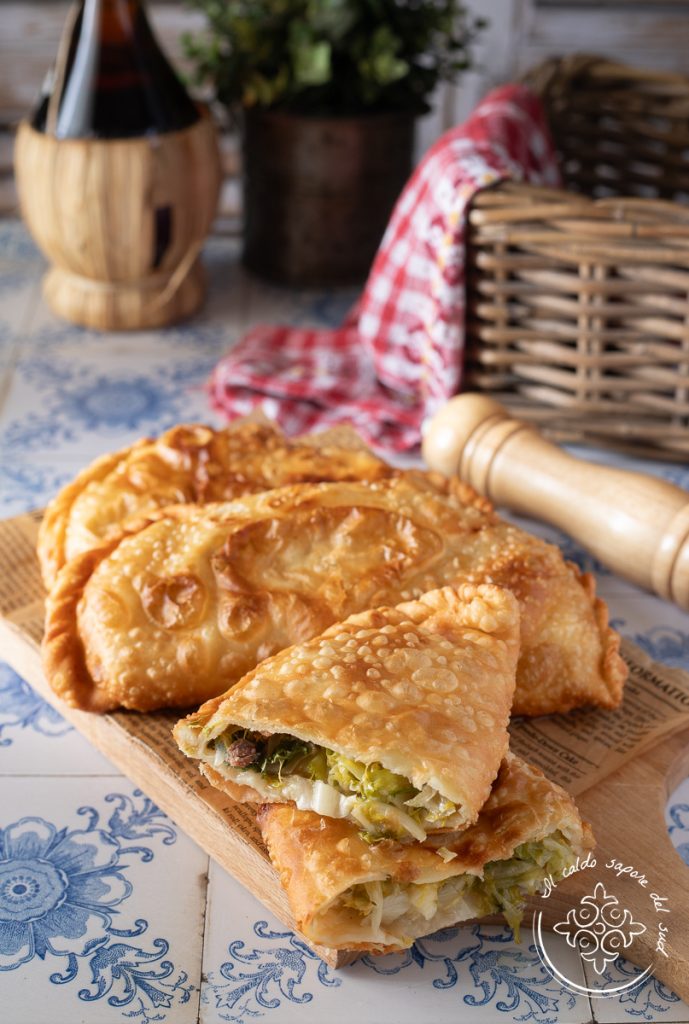
The fried Messina pitoni, also known as piduna, are among the most authentic symbols of Messina street food, made with a simple yeast-free dough that encloses a savory filling of escarole, anchovies and cheese. This recipe is part of our Sicilian Cuisine collection and a specialty of the varied Sicilian rosticceria, which, like arancini, Sicilian fried calzones, cipolline, cartocciate and more, you absolutely must try them as soon as you cross the Strait.
In Sicily, as I always say, some recipes don’t need long times or waits: just a few ingredients and gestures handed down from generation to generation to create unique and special dishes. This original recipe for fried yeast-free Messina pitoni is born from the tradition of simple, peasant cooking, when doughs were made in the home with water, white wine and flour — an impasto for pitoni messinesi perfect for putting something warm and nourishing on the table quickly. The result is a golden, crunchy exterior but soft inside, perfect to enjoy right after frying.
The escarole filling (curly endive), a typical ingredient in many regional preparations, gives the Messina pitoni a slightly bitter note that pairs perfectly with the saltiness of anchovies and the mildness of tuma cheese. If you love this leafy green, you can find many other ideas with escarole, like Neapolitan-stuffed escarole or escarole pizza.
Making yeast-free Messina pitoni at home means rediscovering one of the most loved dishes of the Sicilian tradition, just like many other specialties passed down over time that are part of our gastronomic identity, such as scacciata, cudduruni, scaccia and many more.
With this recipe for yeast-free Messina pitoni you can easily make fragrant and tasty bundles, perfect as an appetizer, a snack dinner or homemade street food, just like those from the rosticcerie of Messina. Ready to make them together? Let’s go to the kitchen, but first, as always, remember that if you want to stay updated on all my other recipes you can follow my Facebook page and my Instagram profile.
Also take a look at these Sicilian specialties:
- Difficulty: Very easy
- Cost: Very inexpensive
- Rest time: 30 Minutes
- Preparation time: 20 Hours
- Portions: 10-12
- Cooking methods: Frying
- Cuisine: Italian
- Seasonality: Autumn, Winter and Spring
Ingredients to make authentic yeast-free Messina pitoni
To prepare the authentic fried pitoni from the tradition, it is essential to start from a good yeast-free dough for Messina pitoni, worked by hand until you obtain an elastic, thin sheet.
- 4 1/4 cups re-milled durum wheat semolina
- 2 1/2 cups type 00 flour (all-purpose)
- 4 tsp salt
- 1 1/4 cups water
- 3.4 fl oz white wine
- 2 tsp sugar
- 2 heads curly escarole (endive) (medium-sized heads)
- as needed extra virgin olive oil
- 1.1 lb primo sale (cow cheese) (Sicilian or preferably fresh tuma (about 17.6 oz))
- as needed salt
- 20 fillets anchovy fillets in oil (optional)
- 1 pinch black pepper
- sunflower seed oil (high-oleic for frying, or lard)
Tools
- Bowl
- Stand mixer optional
- Rolling pin
- Pan
Steps to make Messina pitoni
To make the dough for Messina pitoni you can work it by hand or, for convenience, use a stand mixer, as I did.
To prepare the yeast-free dough for Messina pitoni, put the re-milled semolina, type 00 flour, salt and sugar into the bowl of the stand mixer (or on a work surface). Then add the water and white wine and begin to knead.
Knead the dough for about 8–10 minutes, until you obtain a smooth, compact and elastic texture. It should be soft but not sticky, easy to roll out without tearing. If it seems too dry, add a little more white wine.
Form a dough ball, wrap it in plastic wrap and let it rest at room temperature for at least 30 minutes. This step is essential to obtain a thin, workable sheet, just as the Messina tradition requires.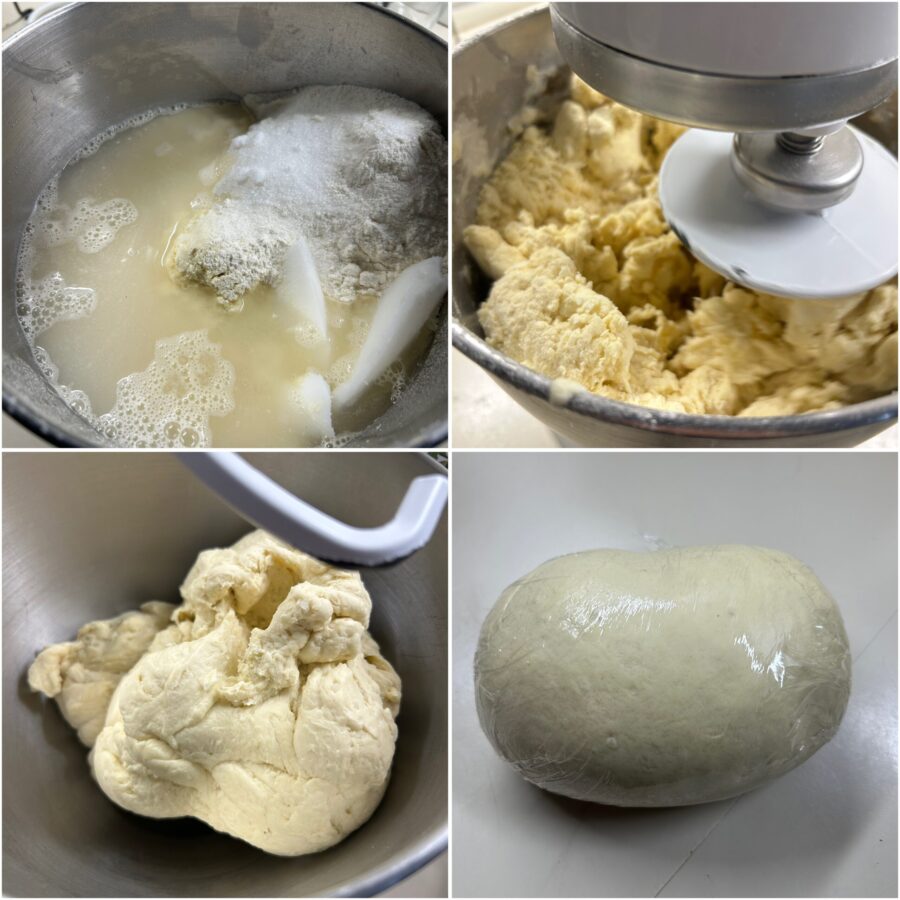
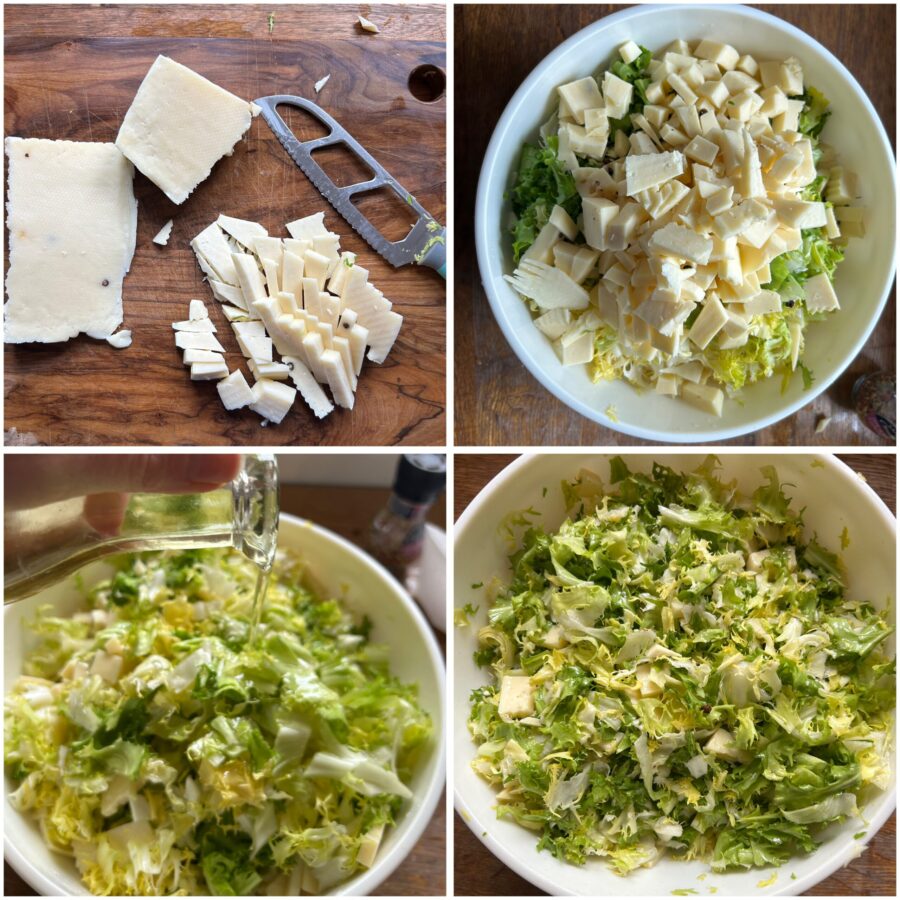
For the Messina pitoni filling, clean the curly escarole by removing the tougher outer leaves, rinse thoroughly and drain well. Chop it finely and transfer it to a large bowl.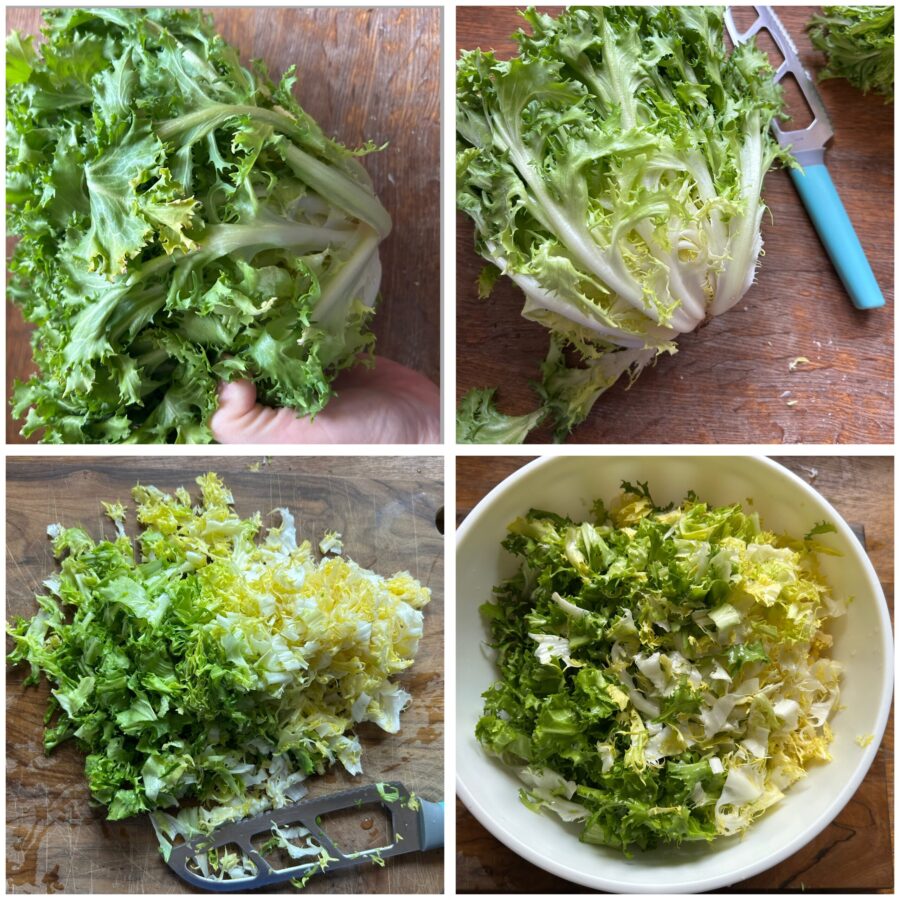
Add the tuma (cut into cubes) or primo sale, plenty of extra virgin olive oil (the vegetable should be well coated until glossy), and a grind of black pepper. Mix gently until you have a homogeneous filling.
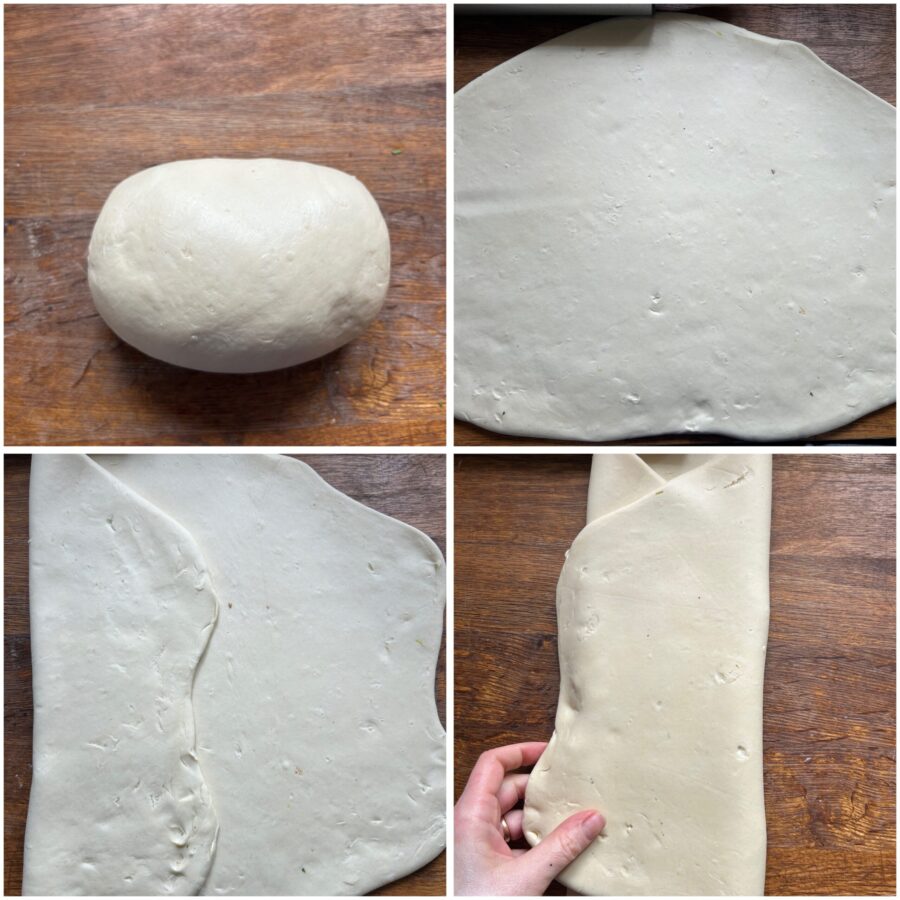
Take the dough, roll it out with the rolling pin and give it a series of wallet folds. This step will help create a light layering and many bubbles during frying.
Once folded and you have this dough log, without deforming it divide it into pieces to obtain 10–12 portions.
Roll out each piece with the rolling pin until you obtain a very thin sheet, almost transparent — if it is thick the pitoni will not form the classic bubbles.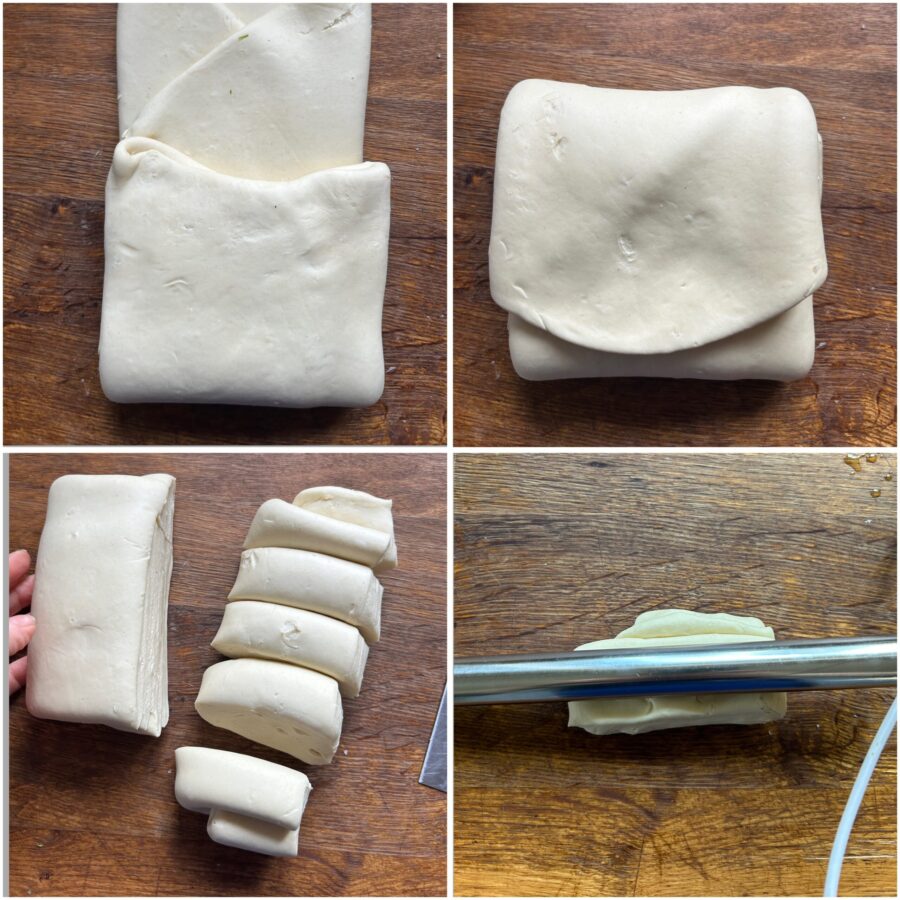
Place the escarole, tuma and two anchovy fillets in the center if you like, leaving the edge free. If you use ingredients like primo sale and anchovies you won’t need additional salt, but if you use tuma and omit anchovies, sprinkle a little salt.
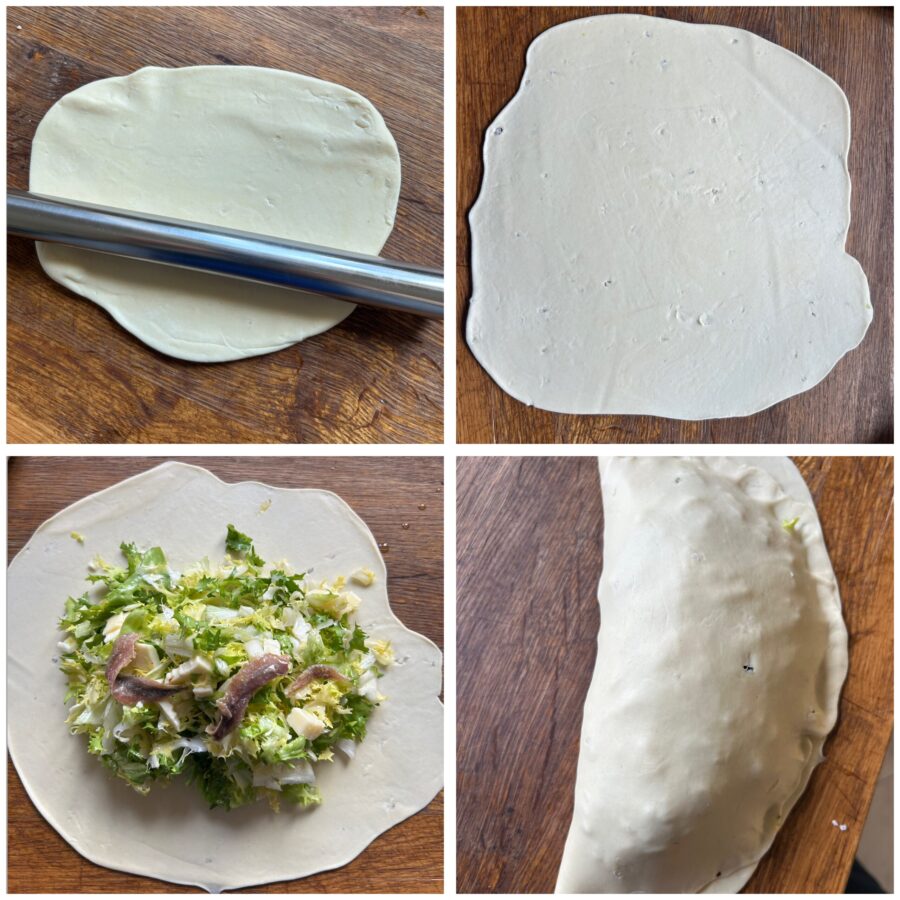
Fold the dough over itself to form a half-moon and seal the edges well by pressing with your fingers, then finish with the classic crimping to prevent the filling from leaking during cooking.
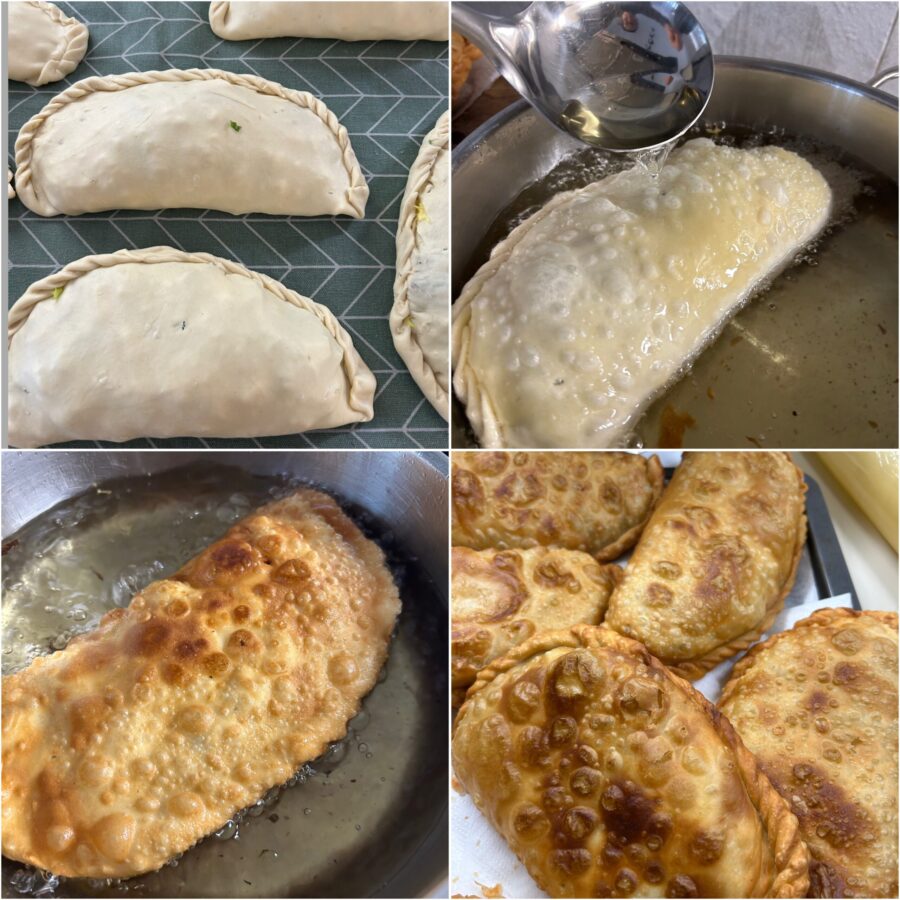
Heat abundant seed oil in a large pan and bring it up to temperature.
Fry the pitoni a few at a time, immersing them in the hot oil.
During frying, spoon hot oil over the surface: this will make them puff up, forming the typical bubbles.
When they are well golden and crispy, drain on absorbent paper and serve very hot.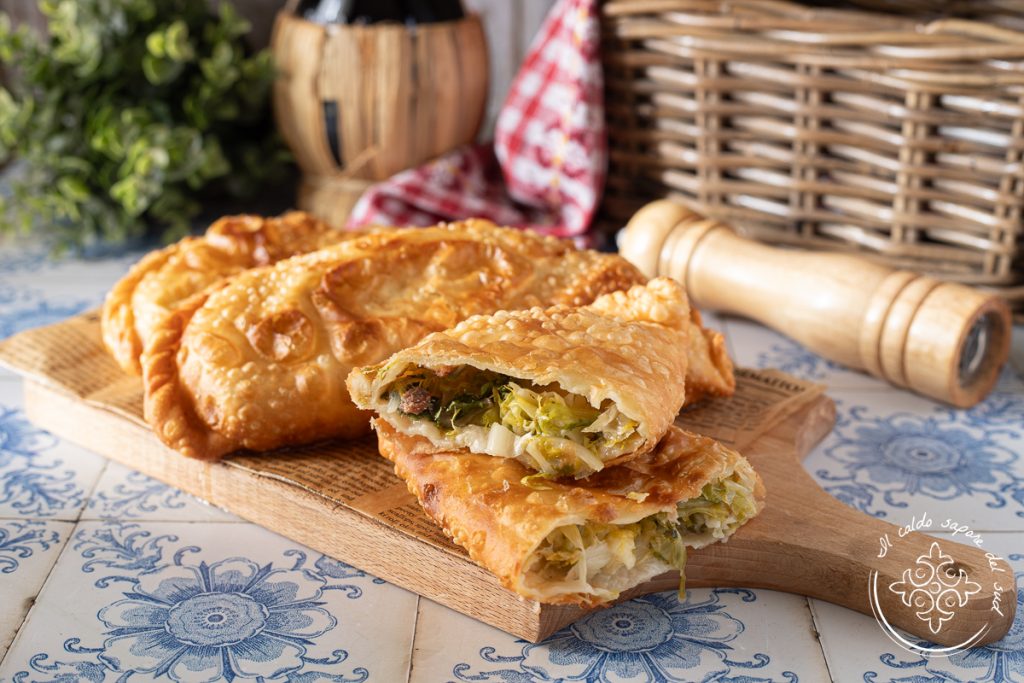
Storage notes and tips
Note on tradition
In the past, in homes and fry shops in Messina, pitoni were fried in lard rather than seed oil. Lard was indeed the most used fat in poor Sicilian cooking and allowed for an even crispier, more golden pastry.
From a technical point of view, lard also has a fairly high smoke point (about 374°F), which makes it particularly suitable for deep frying. This characteristic yields drier, crispier pitoni with even coloring and less fat absorption during cooking.
Today, as an alternative to lard, you can also use a good high-oleic seed oil, such as high-oleic sunflower oil, which because of its high stability at elevated temperatures and high smoke point is well suited for frying Messina pitoni. This type of oil allows you to obtain even browning and a lighter fry while keeping the dough crunchy on the outside and soft inside.
Storage, tips, notes and variations
Messina pitoni are best eaten right after frying, when the shell is still warm and fragrant and the filling releases its full aroma. If you have leftovers and don’t eat them the same day, you can store them in the refrigerator for 1 day, tightly closed in an airtight container.
To enjoy them best the next day, I recommend reheating them in a conventional oven at 356°F for about 8–10 minutes. Avoid the microwave, which would make the dough soggy and rubbery.
I do not recommend freezing them either raw or cooked.
As with any home recipe, pitoni lend themselves to small variations: some add a pinch of black pepper, others replace tuma with primo sale or enrich the filling with diced tomatoes. Every family keeps its own version, handed down from generation to generation.
FAQ (Questions and Answers)
Can Messina pitoni be frozen?
No, traditional Messina pitoni with escarole filling are not suitable for freezing raw. The vegetable tends to deteriorate in the cold, releasing water during thawing: this can compromise the dough’s integrity during frying, causing the edges to open and making the pitoni less crisp.
How to store already-fried Messina pitoni?
Messina pitoni are best right after frying, but if you have leftovers you can store them in the refrigerator for about 24 hours in an airtight container. To eat them, reheat in a conventional oven at 356°F for 8–10 minutes, avoiding the microwave which would make the dough moist and rubbery.
Can the dough for Messina pitoni be prepared in advance?
Yes, the dough for Messina pitoni can be prepared in advance and stored in the refrigerator, well covered with plastic wrap, for a few hours. Before using it, let it rest at room temperature for about 30 minutes to make it elastic again and easy to roll out.