
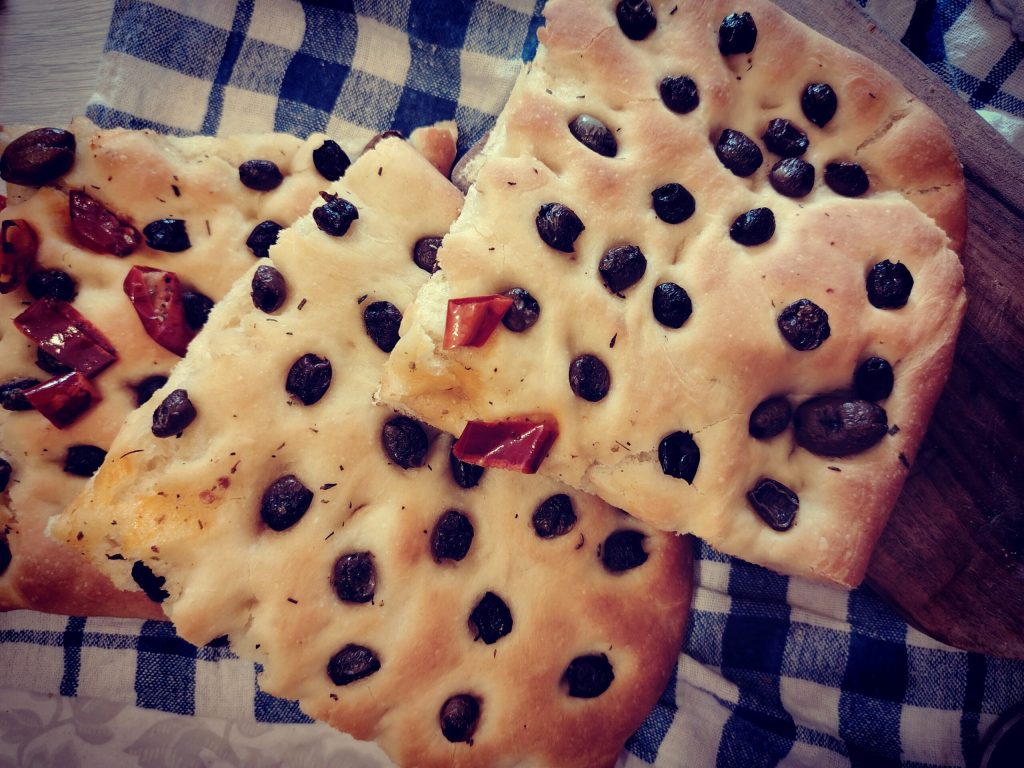
Semolina and flour focaccia with olives. Focaccia — this unknown, or perhaps very well-known focaccia with a thousand faces and a thousand recipes to try. Sometimes the name changes, but what you get is a slice of soft and crunchy low bread, seasoned and enjoyed hot or cold. Which then is not really a bread, but a true institution. And if you are in Genoa: focaccia it is!
Everywhere you find people walking the streets with a paper cone holding a piece of focaccia. Morning breakfast, students’ break at school, a quick lunch with some cold cuts, an afternoon snack or dinner; this focaccia is there for every occasion. It cannot be missing even at buffets.
I make it in many versions; one day I’ll have transcribed them all here!
On this occasion I present a mixed semolina and flour focaccia, double fermentation, medium hydration. My only personal flaw in preparing this specialty: I’m not especially fond of olive oil, so I use it sparingly (cholesterol thanks me); my son, while admitting it’s good, always tells me that you should be able to taste the oil in focaccia.
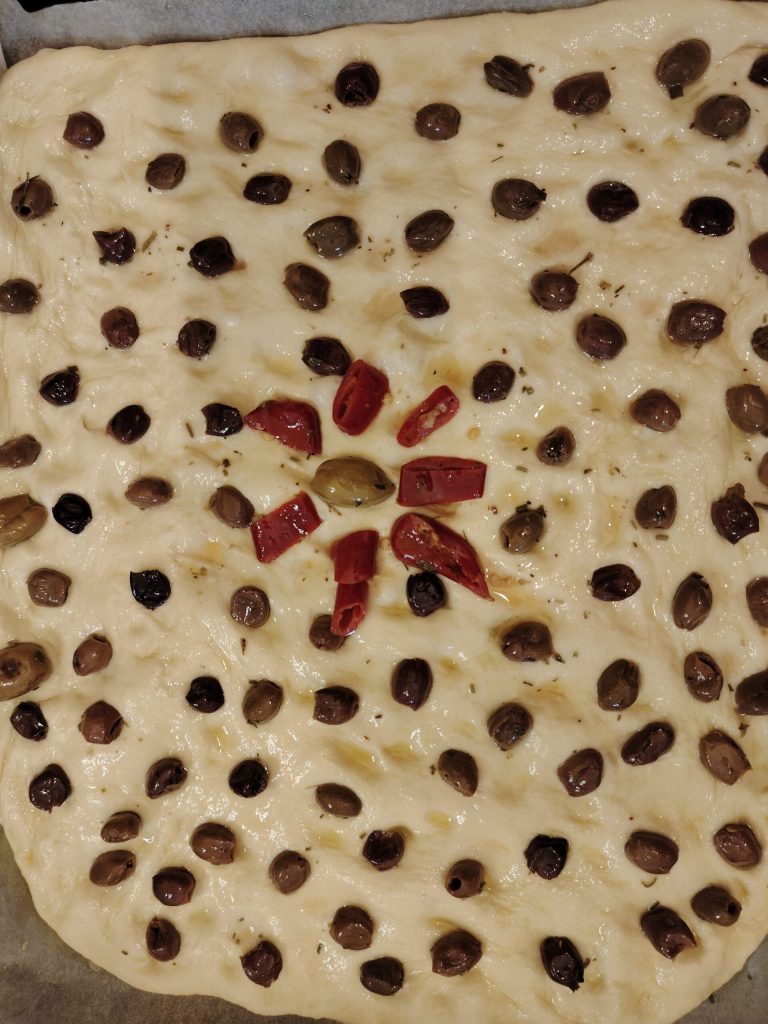
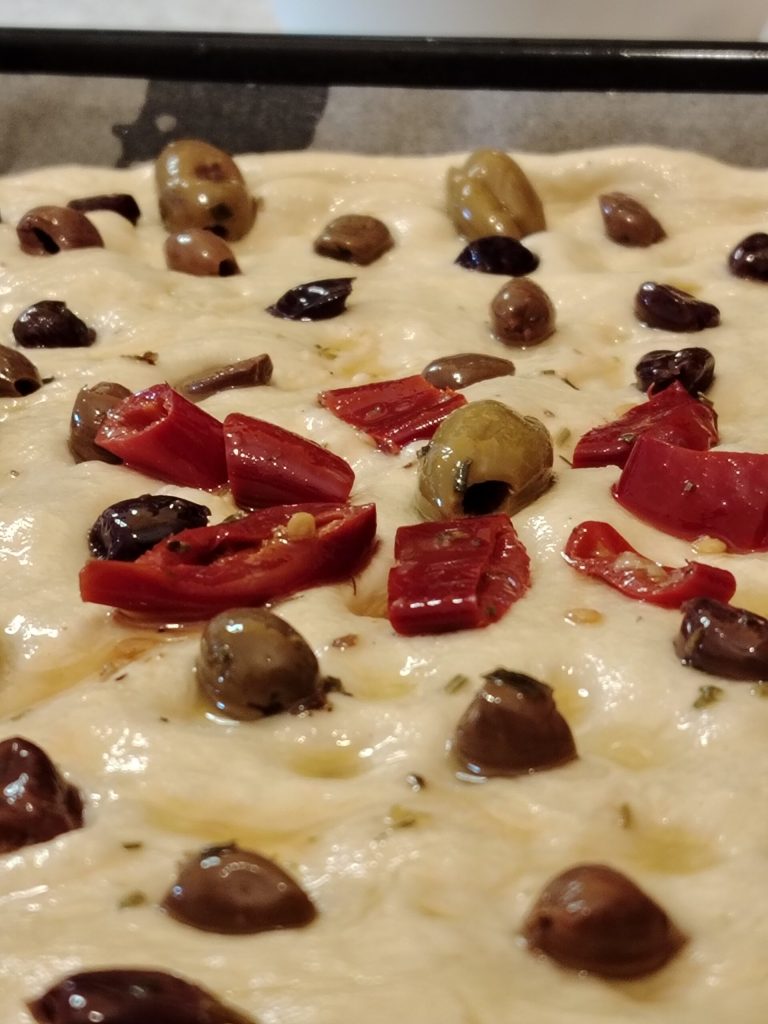
I used Taggiasca olives, Calabrian olives with garlic and oregano, oven-blackened black olives… In short, for every taste.
For other recipes I refer you to the links below:
- Difficulty: Easy
- Cost: Economical
- Rest time: 4 Hours
- Preparation time: 1 Hour
- Portions: 6
- Cooking methods: Oven
- Cuisine: Italian
- Seasonality: All seasons
Ingredients
Re-milled semolina, flour, oil and olives and then…
- 3 cups re-milled durum wheat semolina (about 500 g)
- 4 1/4 cups flour (about 500 g)
- 1/3 cup olive oil (about 80 ml / 5 1/3 tbsp)
- 1 1/4 tsp compressed brewer's yeast (about 12 g fresh; approx. 1 1/4 tsp active dry equivalent)
- 2 1/2 cups water (about 600 ml)
- 3 1/3 tsp salt (about 20 g)
- to taste pitted olives
Tools
A bowl for mixing if you don’t use a stand mixer, a pan for the focaccia… The tools I use can be found in my buying recommendations
- Bacinelle
- Caraffe
Steps
You mix, you fold, and you wait…
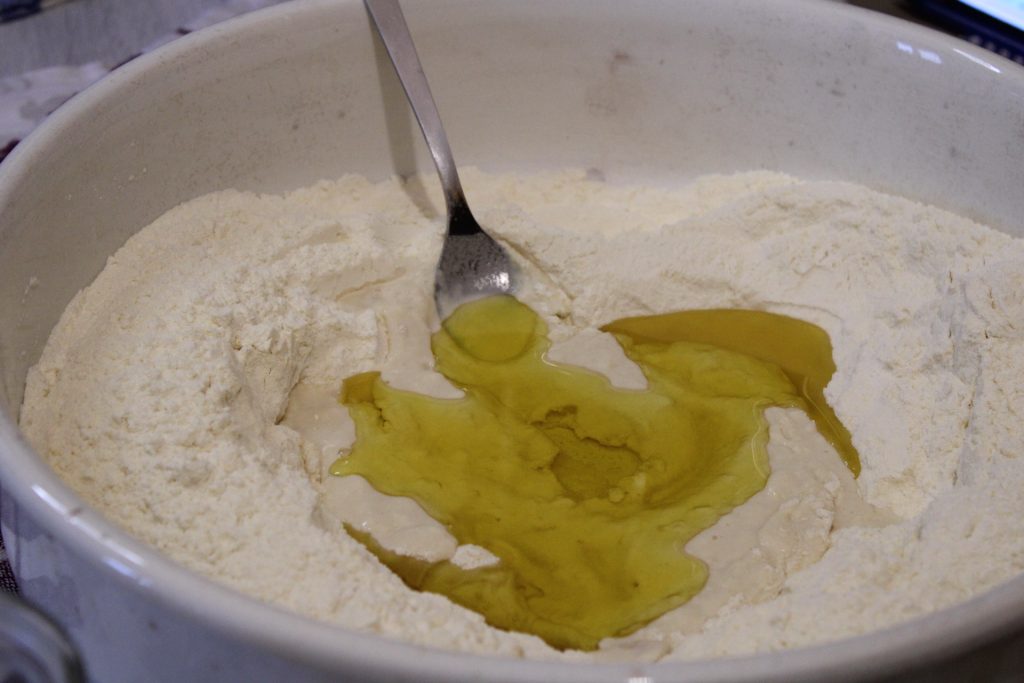
Sift the flours with the salt in a large bowl. Add one cup of warm water with the dissolved yeast, make a little cream in the center of the flour and add the oil.
Continue with warm water, adding a little at a time, and form a nice dough ball kneaded carefully for at least 5 minutes.
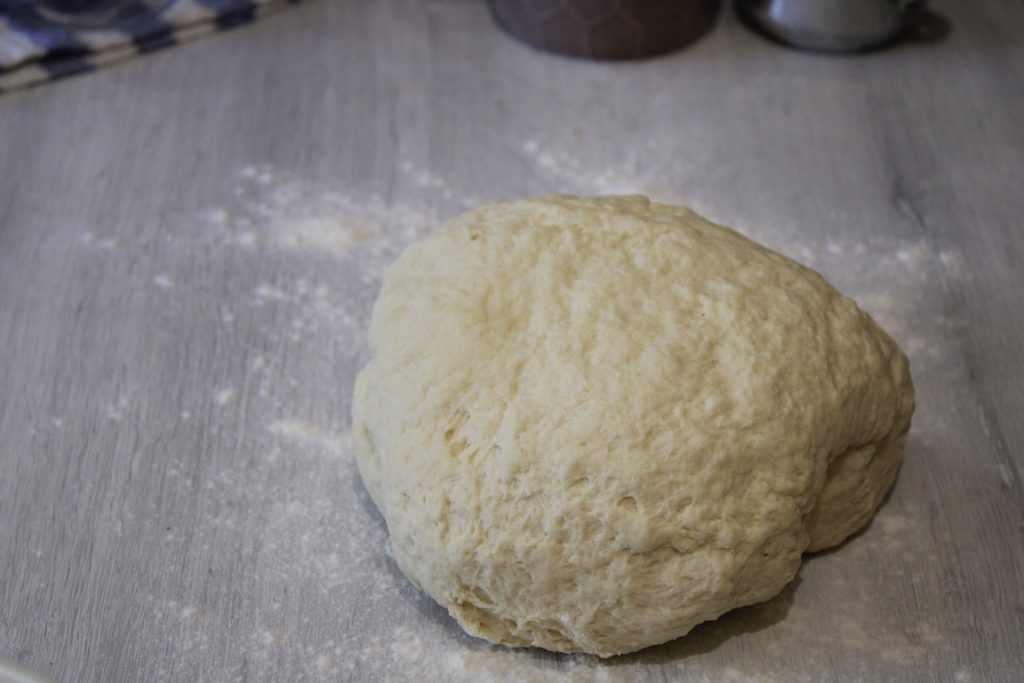
Using your fingertips, stretch it on the work surface until you obtain a rectangle; then make a three-fold (letter fold) as you can see in the photo.
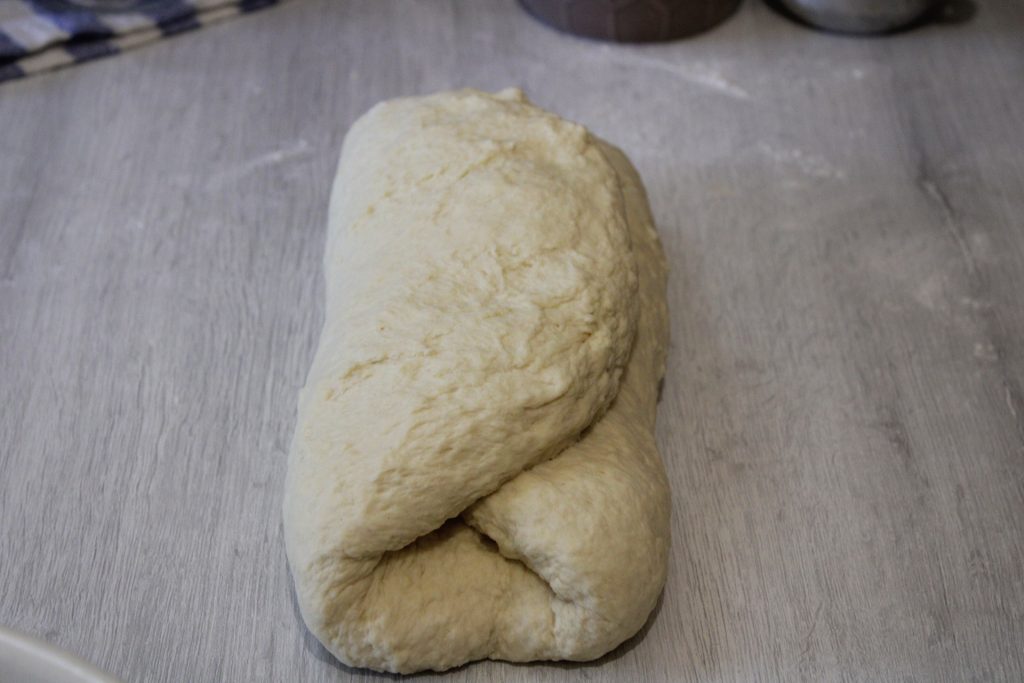
Turn the dough and repeat the folds without flattening. Transfer to a bowl and cover to let rise until doubled. I use the oven with a small pot of boiling water on the bottom. It works very well as a proofing chamber.
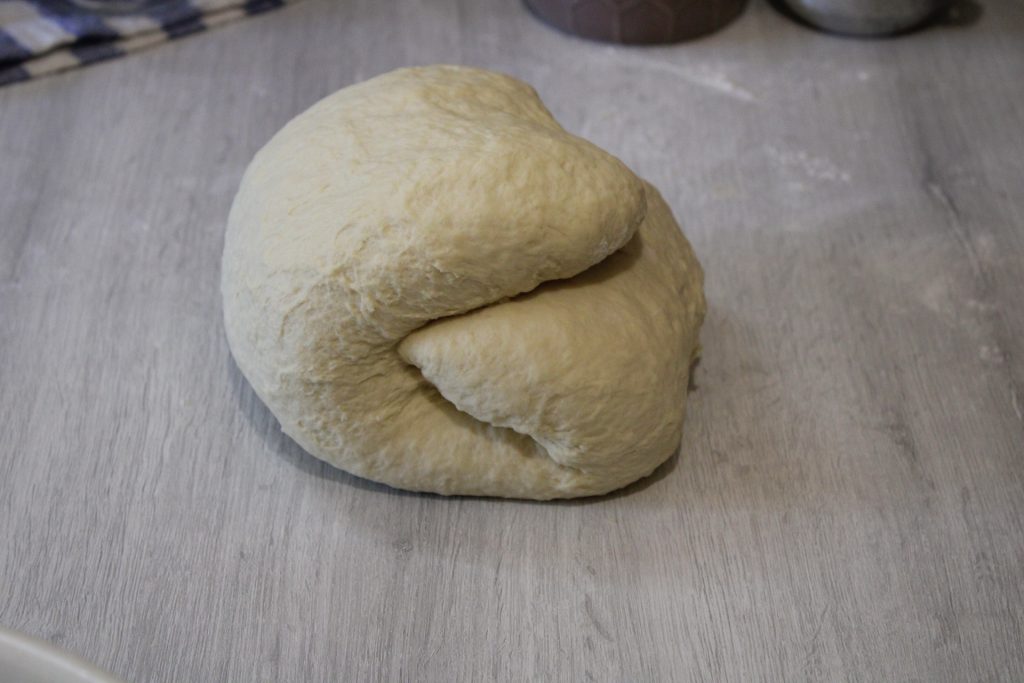
After the necessary time divide the dough into two, oil the pan well and stretch the dough. You can place the olives now and let it rise. Or let it rise and then add the olives. Same procedure for the rest of the dough. Optionally you can make small focaccine. Let rise until you see a bubbly surface and bake at 392°F in a preheated oven, after salting a little more. It will take about thirty minutes.
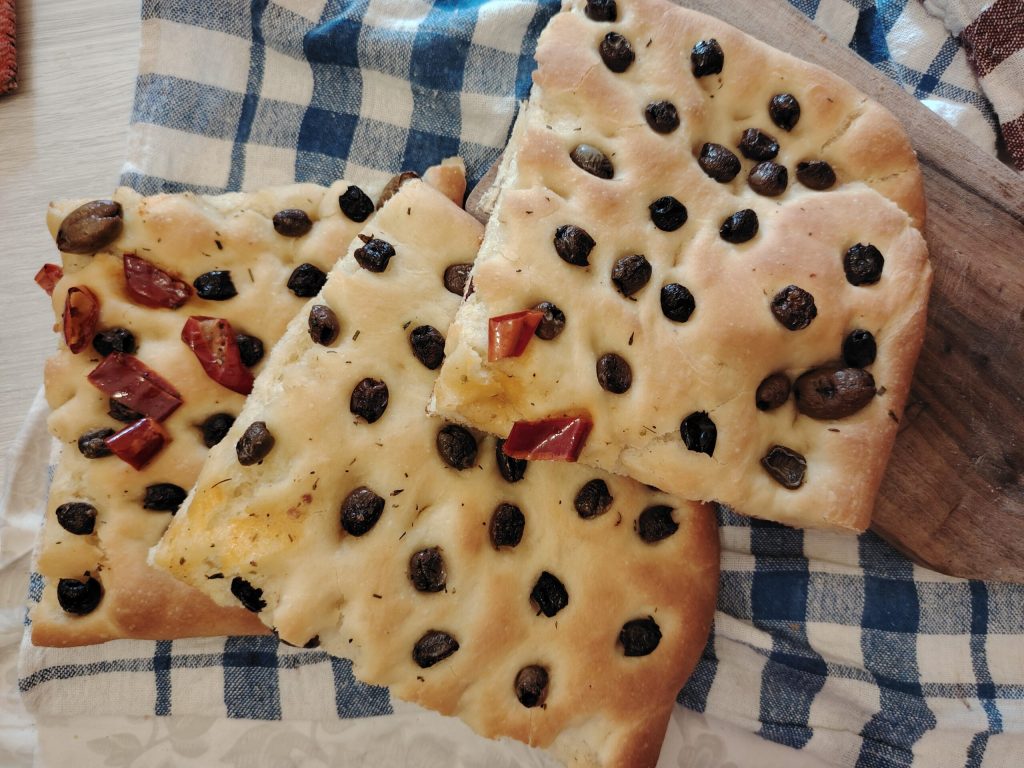
The focaccia is ready! The aroma will tell you. Crispy and soft. With olives and oregano that tie into good cooking.
A few extra tips
You can also mix in the evening and let it rise in the refrigerator until morning, then proceed as described if you want to anticipate for lunch or other occasions. Resting in the refrigerator will give more digestibility and a good open crumb structure.
