
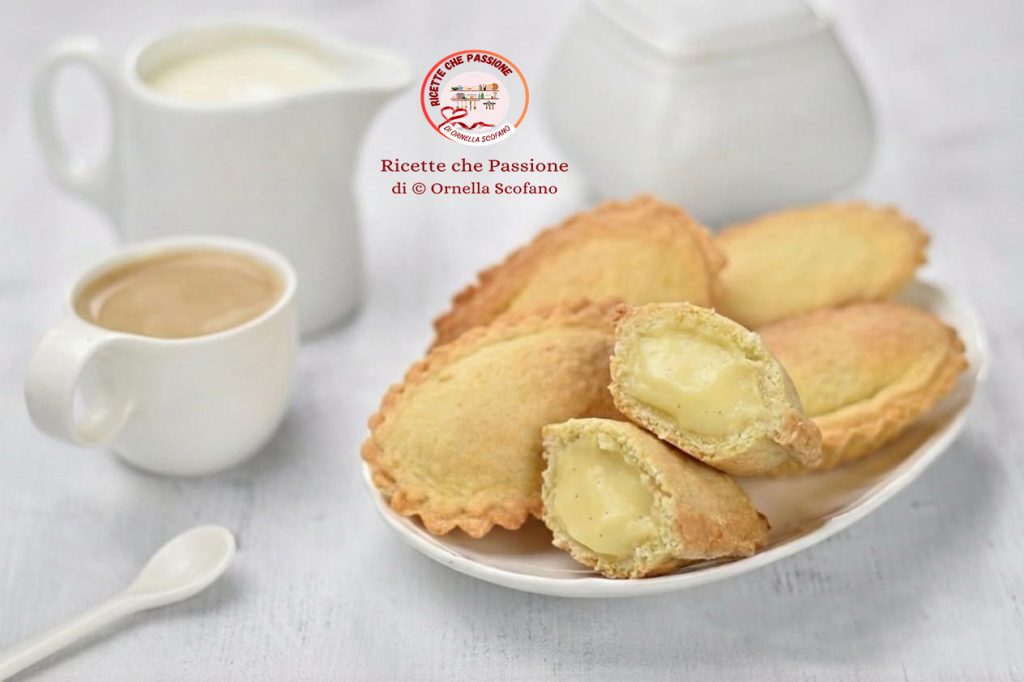
Leccese pasticciotti are shortcrust pastries filled with pastry cream — the original Leccese version. Alternatively, if you like, you can add sour cherries in syrup (amarene) to the cream. Over the weekend I mentioned that I was in Lecce, and I took the opportunity to settle a doubt: does the Leccese pasticciotto contain amarene in syrup or not? The answer was no, although many add them to give the filling more flavor. In Lecce I enjoyed this original and traditional pastry without amarena; it was served warm so the shortcrust becomes super-crumbly and the warm cream is soft and enveloping. They can also be filled with chocolate cream and amarene, but remember they are very similar to Calabrian bocconotti, which are usually filled with wild-grape jam; the filling can vary—some make them with pastry cream, some with Nutella, or, as in Amantea, with a spiced chocolate filling. As soon as I find that recipe I’ll try to make them at home; meanwhile I leave you the ones available.
- Difficulty: Easy
- Cost: Inexpensive
- Rest time: 1 Hour
- Preparation time: 40 Minutes
- Portions: 12 pieces
- Cooking methods: Stovetop, Oven
- Cuisine: Italian
- Seasonality: All seasons
Ingredients for about 12 pasticciotti
- 2 1/2 cups all-purpose flour (about 300 g / 10.6 oz)
- 1/2 cup granulated sugar (about 100 g / 3.5 oz)
- 2 medium eggs
- 7 tbsp lard (about 100 g / 3.5 oz). Alternatively 8 tbsp (120 g / 4.2 oz) butter
- grated lemon zest
- 3/4 tsp baking powder for desserts (or baker's ammonia) (about 3 g)
- 2 cups whole milk (about 500 ml / 16.9 fl oz)
- 2 egg yolks
- 5 1/2 tbsp frumina (wheat starch) (about 45 g)
- 1/2 bean vanilla bean
- 1/3 cup granulated sugar (about 70 g / 2.5 oz)
Tools to prepare Leccese pasticciotti
- 1 Bowl
- 1 Work surface
- 1 Rolling pin
- 12 Molds
- 2 Small saucepans
- 1 Kitchen spatula
- 1 Sieve
- 1 Knife
- 1 Plastic wrap
Preparation steps for Leccese pasticciotti
Let’s start with my shortcrust pastry made with lard. Prepare it in a bowl by working the lard with the flour and sugar, add the lemon zest and finally the eggs; instead of baking powder use baker’s ammonia for that characteristic crumbly texture of the Salento pasticciotto. Work quickly to obtain a homogeneous dough ball. Chill in the refrigerator and prepare the pastry cream.
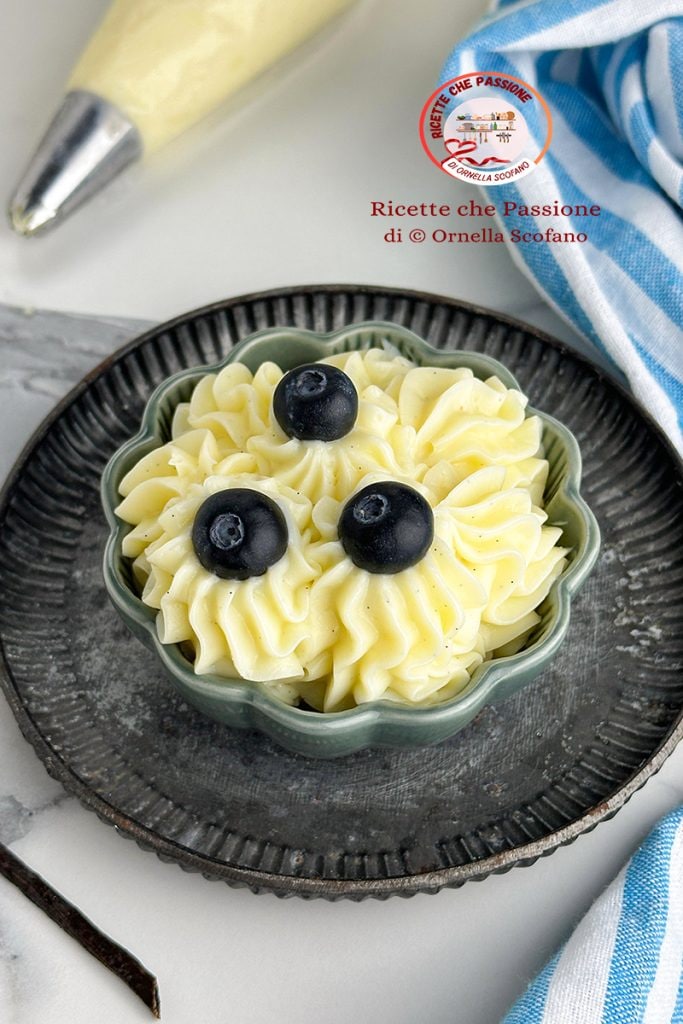
Split half a vanilla bean lengthwise, scrape out the seeds and mix them with the sugar. Use the pod to flavor the milk which you heat in a small saucepan.
In a small heavy-bottomed saucepan place the frumina with the sugar and one egg yolk, mix until you have a lump-free cream, add the second egg yolk and stir, then little by little add the hot strained milk. Bring to the boil, stirring constantly. Transfer the cream to a wide bowl, cover with plastic wrap in direct contact with the surface and let cool.
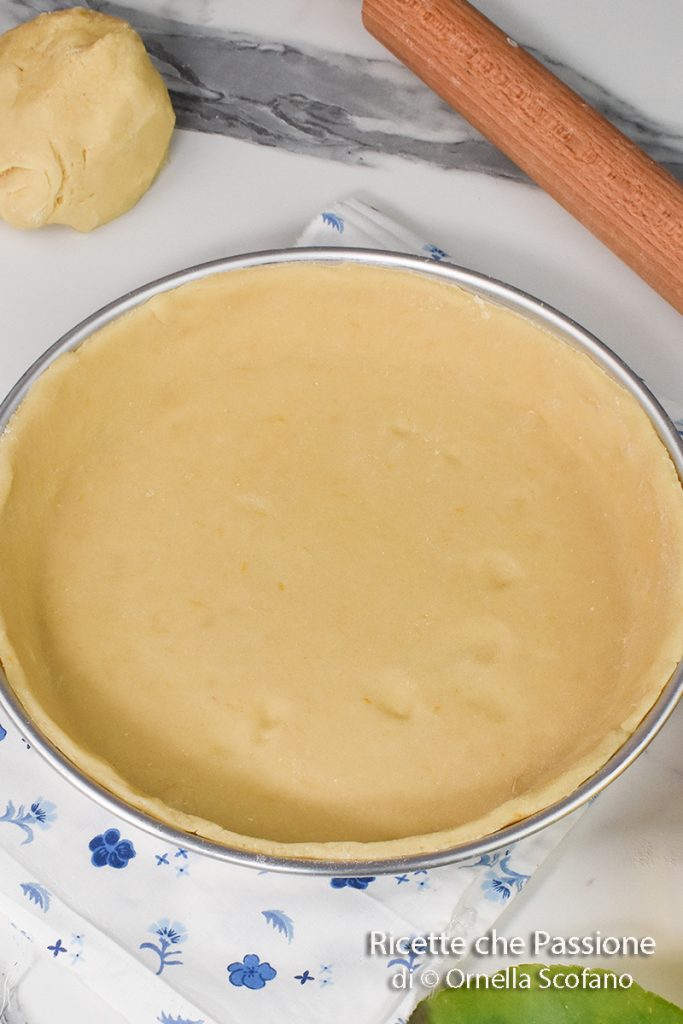
Take the pastry back after resting for an hour in the fridge. Roll it out to about 3–4 mm thickness (about 1/8 inch) on a floured surface, using flour so it doesn’t stick to the rolling pin. Cut rectangles able to line the entire base of the molds. To make pasticciotti you would typically use smooth pasticciotti molds, but since I already have molds for bocconotti (Calabrian) molds I used the bocconotto ones which have fluted edges; otherwise the oval shape is the same. Cut an equal number of oval discs to close the pasticciotti.
You can butter and flour the molds, or use a simpler method: generously dust with flour the base that will rest in the mold.
Fill each pastry with plenty of already-cooled pastry cream using a teaspoon or a piping bag, then close with another sheet of dough rolled even thinner. If you wish, you can brush the surface with a little of the reserved egg white.
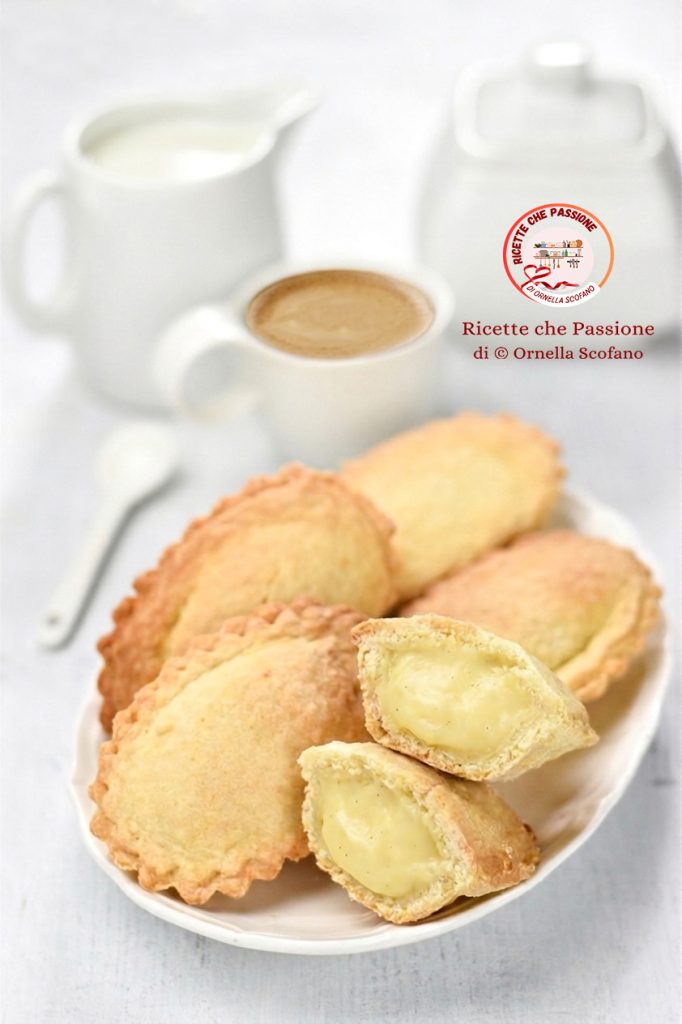
Bake for about 20 minutes in a preheated conventional oven at 356°F. Remove from the oven and enjoy; excellent still warm — as per tradition in Lecce they are served warm, sometimes sprinkled with a little powdered sugar. Perfect for breakfast or an afternoon snack with a coffee or a good cappuccino.
Store in a cool, dry place; refrigerate if it’s hot.
