
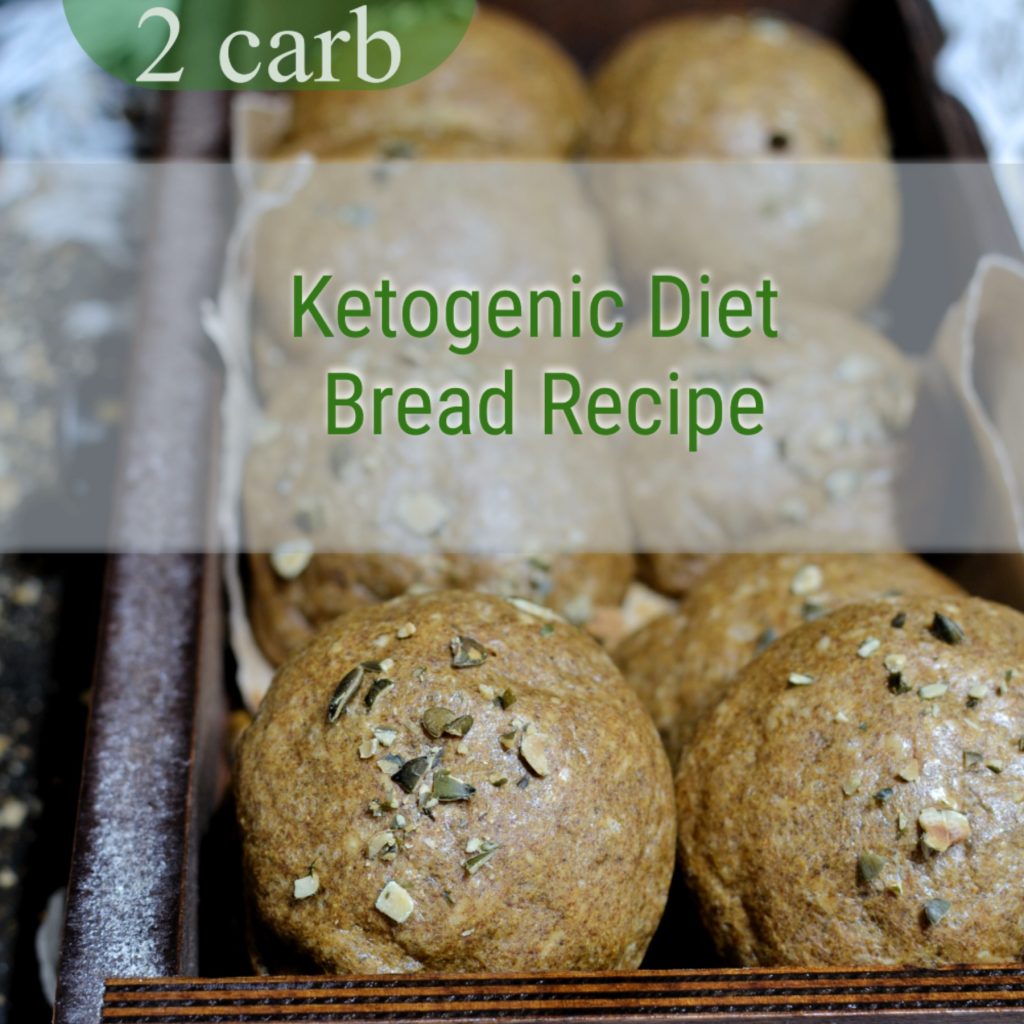
Have you ever wanted to make a ketogenic bread with only 2 g of carbohydrates? Thanks to the recipe I propose today, you can prepare it in no time: but it is necessary to use lupin flour to replace regular white flour, plus a few other ingredients that we will see in detail shortly. With this recipe I make 12 very soft rolls and I have bread for 1 week. I enjoy my Keto Diet with more satisfaction. Also suitable for diabetics and celiacs.
Now let’s make the lupin flour rolls. Mix everything in a bowl, so you barely dirty any dishes. No rising time is needed, so in a moment they are ready to go in the oven. How wonderful!
- Difficulty: Easy
- Cost: Economical
- Preparation time: 5 Minutes
- Portions: 12
- Cooking methods: Oven
- Cuisine: Italian
- Seasonality: All seasons
- Energy 92.07 (Kcal)
- Carbohydrates 3.82 (g) of which sugars 0.00 (g)
- Proteins 6.42 (g)
- Fat 4.18 (g) of which saturated 1.12 (g)of which unsaturated 0.45 (g)
- Fibers 1.67 (g)
- Sodium 134.82 (mg)
Indicative values for a portion of 46 g processed in an automated way starting from the nutritional information available on the CREA* and FoodData Central** databases. It is not food and / or nutritional advice.
* CREATES Food and Nutrition Research Center: https://www.crea.gov.it/alimenti-e-nutrizione https://www.alimentinutrizione.it ** U.S. Department of Agriculture, Agricultural Research Service. FoodData Central, 2019. https://fdc.nal.usda.gov
Ingredients for 12 keto rolls
If you don’t have all the ingredients, click on the one you’re interested in
- 3/4 cup + 2 tbsp (about 200 g / 7.1 oz) cup water
- cup lupin flour
- 1/2 cup (about 50 g / 1.8 oz) cup grated Parmesan (if you don't like it you can substitute it or omit it)
- 1/2 tsp (about 3 g) tsp instant leavening agent for savory preparations
- 1/2 tsp (about 3 g) tsp baking soda
- tbsp psyllium husk powder
- 3/4 tsp (about 2 g) tsp xanthan gum
- egg whites egg white
- pumpkin seeds (optional)
- tbsp extra virgin olive oil (optional)
Tools
to make 12 ketogenic rolls
- 1 Mixing bowl for the dough
- 1 Spatula for mixing
- 1 saucepan to heat the water
- 1 baking sheet about 12 x 8 in
- the oven used is this
Preparation
Prepare all the ingredients on the work surface:
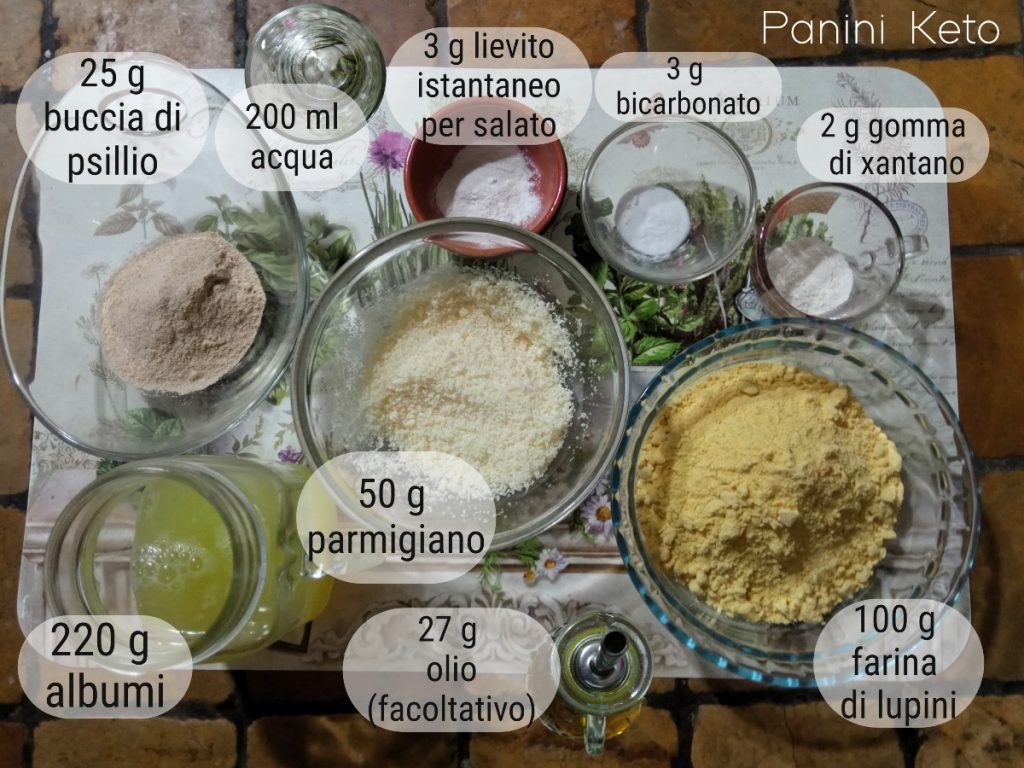
In a bowl put the lupin flour (if you don’t have it you can find it here), the baking powder, the baking soda, the psyllium husk and the xanthan gum. Mix with a spatula or a spoon.
Add the egg white. Mix then add the Parmesan. Continue mixing until it is absorbed.
Finally add the boiling water. Mix immediately with the spatula. Continue until the mixture becomes thick.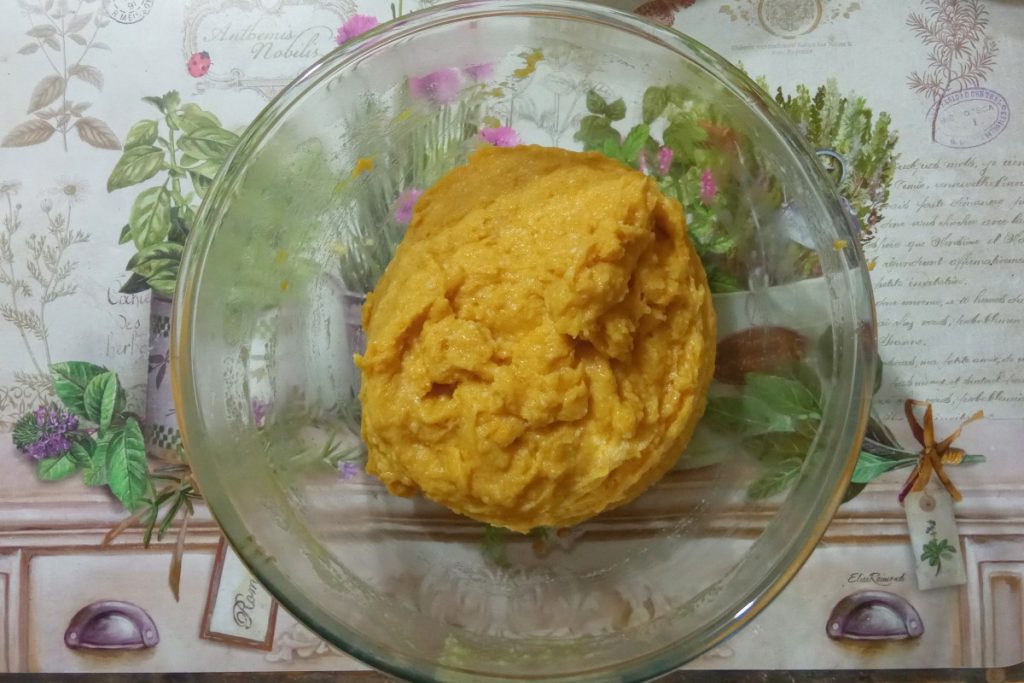
Start taking one spoonful of the mixture at a time (which corresponds to about 50 g) and place them on a baking sheet lined with parchment paper. Now wet your hands and take one roll at a time to round it, then place them back on the same baking sheet as you go.
Sprinkle with pumpkin seeds (or other seeds as you like). If you prefer to omit them that is fine too; the rolls turn out well regardless.

Transfer the tray of rolls to a preheated oven at 356 °F (180 °C). After 30 minutes lower the oven temperature gradually for drying, down to 266 °F (130 °C). After 1 hour of drying turn off the oven. Leave the rolls in the oven with the door slightly open for 5–10 minutes, then they are ready to take out of the oven.
Never open the oven during the entire baking time, otherwise the rolls can collapse.
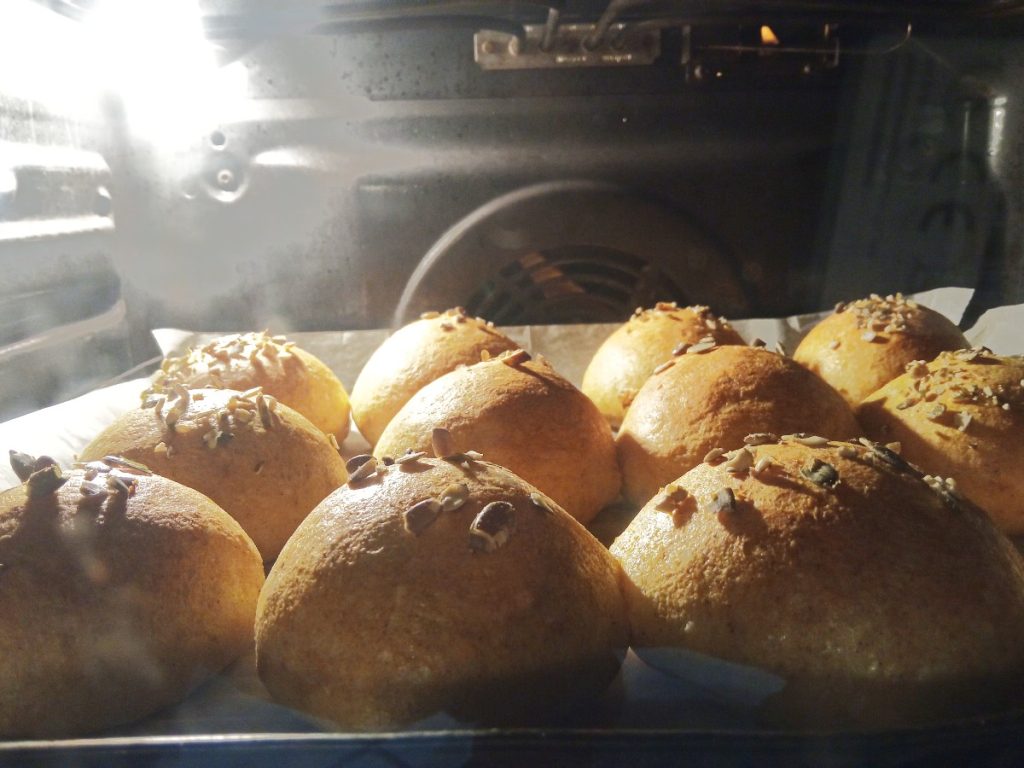
Let them cool well before consuming.
Storage
Keto rolls keep for about 5 days. For longer storage use freezing techniques.
Calories and Macronutrients per 1 roll (50 g)
1 roll has 92.07 kcal per serving _ Energy 92.07 _ (kcal) Net carbs 2.15 (g) _ of which Sugars 0.00 (g) _ Protein 6.42 (g) _ Fat 4.18 (g)
Questions and Answers
How many carbohydrates per day on a keto diet?
It is recommended to limit carbohydrate intake to 5% or less of total calories on a keto diet. This equals an average of 20 grams of net carbs per day.
What foods are allowed on the keto diet?
Meat – fish, beef, lamb, poultry, eggs
Low-carbohydrate vegetables – broccoli, cauliflower, spinach, kale and others
Full-fat dairy – hard cheeses, high-fat cream, butter
Nuts and seeds – macadamia, walnuts, sunflower seeds and others
Avocado and berries – raspberries, blackberries and other low-glycemic berries
Sweeteners – stevia, erythritol monk fruit and other low-carb sweeteners
Other fats – coconut oil, high-fat salad dressings, saturated fats, etc.What foods are not allowed on the keto diet?
Grains – wheat, corn, rice
Sugar – honey, agave, maple syrup
Fruit – apples, bananas, oranges
Tubers – potatoes, sweet potatoesHow much protein per day on a keto diet?
Protein plays a very important role on a ketogenic diet: taking too much can kick you out of ketosis, taking too little can cause loss of muscle mass. In general, it is recommended about 1 g of protein per kg of body weight, but you can go up to 1.5–1.7 g if you do physical activity.
What is the ketogenic ratio called K Ratio (or Keto Ratio)?
The ketogenic ratio establishes whether a recipe or meal fits ketosis parameters. The numerator includes stimuli defined as ketogenic and the denominator includes anti-ketogenic stimuli. If the result is greater than 1 it means the recipe (or a complete meal) is structured correctly. For example, the recipe for the ketogenic rolls we prepared today with lupin flour and oil gives a result of 1. The same recipe but without oil gives a result of 1.7. Therefore both could be acceptable. You can find the formula here.
Are the lupin-flour keto rolls tasty?
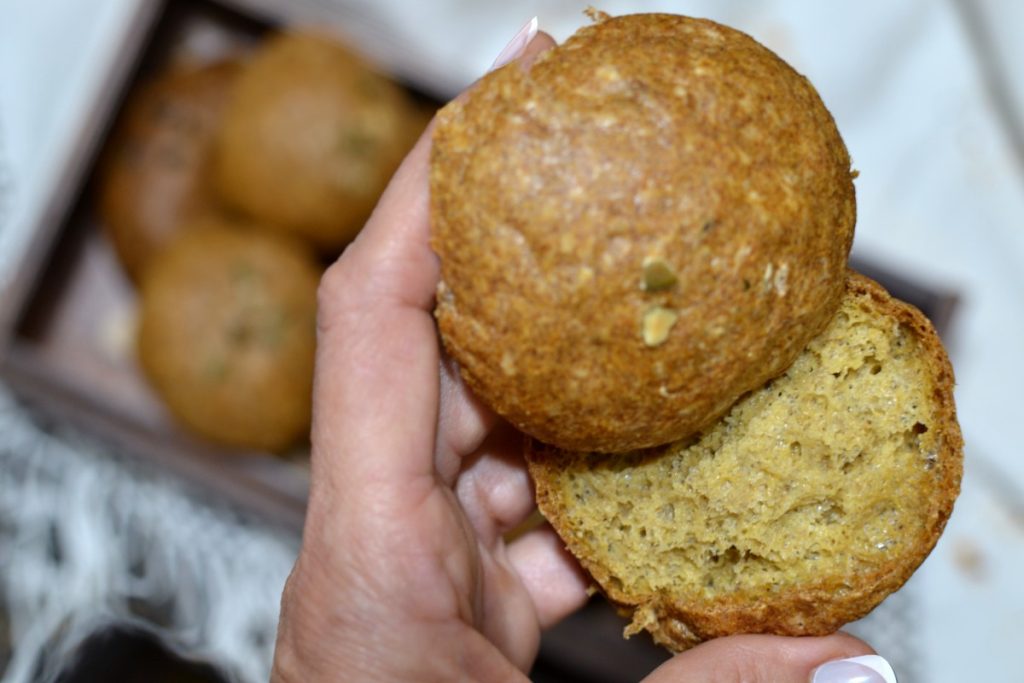
First of all, visually they look very similar to classic rolls made with wheat flour. The taste is a bit different, but they are good. The ingredients that may create a very slight mouth-drying sensation (but really mild) are psyllium husk and xanthan gum. Naturally they cannot be excluded from the recipe, but stick to the recommended grams — it is better to be slightly under than to overdo it. As for texture they are very soft. For baking it is essential to cook them 30 minutes at 356 °F (180 °C), then (without ever opening the oven) proceed with drying for 1 hour at 266 °F (130 °C). Why is drying essential? During the first 30 minutes of baking the rolls rise a lot and look beautiful through the oven glass, but if you open the door they collapse and do not rise again. The same thing happens if you do not dry them — they would collapse and also remain too moist inside. Therefore it is essential to bake them 30 minutes at 356 °F (180 °C) + 1 hour drying at 266 °F (130 °C). In conclusion, these rolls give a wonderful feeling of being able to eat bread during a keto diet; I assure you you will really appreciate them.
Can I omit the oil from the rolls recipe?
One roll (weighing about 45–50 g) provides 2 g of carbohydrates, 6.9 g of protein, 4 g of fat and 80 calories. Ketogenic Ratio (K-Ratio) = 1. Therefore the recipe as formulated perfectly matches ketogenic (ketosis) parameters. If you prepare the same recipe without adding the 27 g of oil, the rolls are identical, puffed and very soft, but with fewer calories (60 instead of 80 per roll) and therefore less than half the fat (i.e. instead of 4 g of fat per roll you find less than 2 g). Regarding the ketogenic ratio in this case you get 1.7. In conclusion, with oil they are perfect for a ketogenic diet, without oil they are slightly unbalanced but could still be fine. So everyone can decide based on their needs and the calories they need to take in.
Is keto bread also suitable for intolerances? Which ones?
Here are some conditions and intolerances for which keto bread can be suitable:
Gluten intolerance: Because many keto bread recipes do not use wheat flour, they are generally gluten-free, making them suitable for people with celiac disease or gluten intolerance.
Diabetes: Being low in carbohydrates, keto bread can be a better choice for people with diabetes or insulin resistance, as it has a lower impact on blood glucose than traditional bread.
Metabolic syndrome: A ketogenic diet can help improve markers of metabolic syndrome, and consuming keto bread can fit into a targeted eating plan.
Obesity or overweight: A ketogenic eating plan including keto bread can support weight loss through reduced calorie and carbohydrate intake.
Other food intolerances: If the bread is made without common ingredients that could cause allergies or intolerances (such as dairy, soy, or legumes), it may also be suitable for these people, provided they choose safe ingredients for their condition.
