
This week Light and Tasty brings you vegetarian and vegan recipes. I couldn’t miss this tasty opportunity to cook a vegan recipe! I love vegan cooking! 😊 Today I present a recipe that was missing on this blog: seitan ragù, a great vegan alternative to classic ragù, joining the other two protein-rich vegan ragùs already on the blog: the soy granules ragù and the tempeh (and mushroom) ragù.
What seitan is I told you about in a dedicated in-depth article about both seitan and tempeh — an article I encourage you to read to learn more about these two high-protein foods. In short: seitan is a derivative of wheat flour (or spelt or other flours); in other words, it’s the gluten extracted from the flour through a process — which is not as complicated as you might think — that can even be done at home (yes, it’s one of the homemade preparations I’d like to try — will our heroes manage it one day? 😄).
But today, to make this seitan ragù we’ll use the quick method: buying a ready-made package of seitan. One step at a time! 😄😉
〰 〰 〰
If seitan piques your curiosity, try it with green peppercorns or ginger! 👇
- Difficulty: Easy
- Cost: Budget-friendly
- Preparation time: 20 Minutes
- Cooking time: 50 Minutes
- Cooking methods: Stovetop
- Cuisine: Italian
- Seasonality: All seasons
Ingredients
👉 The seitan commonly found in supermarkets is vacuum-packed, sliced or in medallions, usually weighing about 3.5–4.4 oz each (100–125 g), but you can also find single-piece packages of roughly 8.8–10.6 oz (250–300 g), especially in natural food stores.
😉 For this recipe I used two pieces of about 3.5 oz (100 g) each, but if you prefer a less ‘seitan-heavy’ ragù it’s fine to use just one piece.
- 200 g seitan
- 2 carrots
- 1 gambo celery stalk
- Mezza onion
- 400 g tomato passata
- extra virgin olive oil
- rosemary (a small sprig)
- chili pepper
- clove (just 1, maximum 2)
- cinnamon stick (a small piece)
Tools
- Frying pan with lid
- Chopper
Steps
Chop the seitan.
👉 You can also chop it with a knife but I prefer to use the chopper.
Then proceed as you would when preparing a traditional ragù:
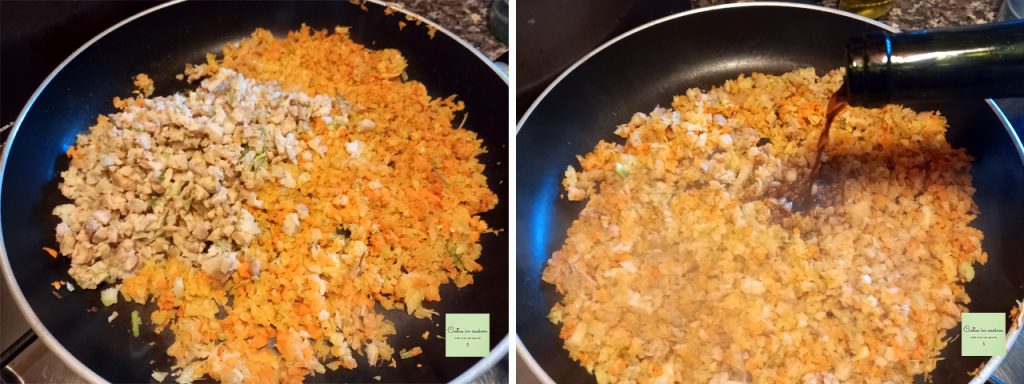
Chop all the vegetables (if you like, you can chop them together with the seitan).
Sauté the vegetable mix in a little oil, and after a few minutes add the seitan.
Add the rosemary (or other aromatic herbs to taste) and the spices.
Cook over medium heat for about 10 minutes, then deglaze with wine (I used red but white is fine too).
When the wine has evaporated, pour in the tomato passata.
Cook with the lid half-closed over low heat for another 30–40 minutes. Stir occasionally and, if needed, moisten with a few tablespoons of hot water (or vegetable broth).
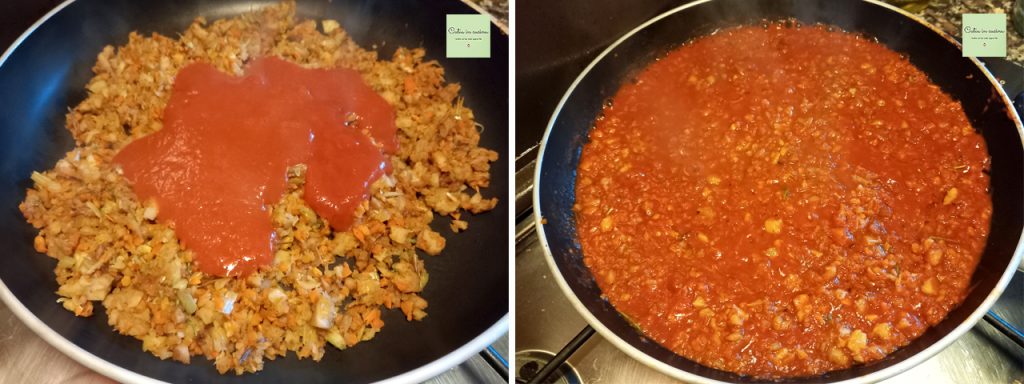
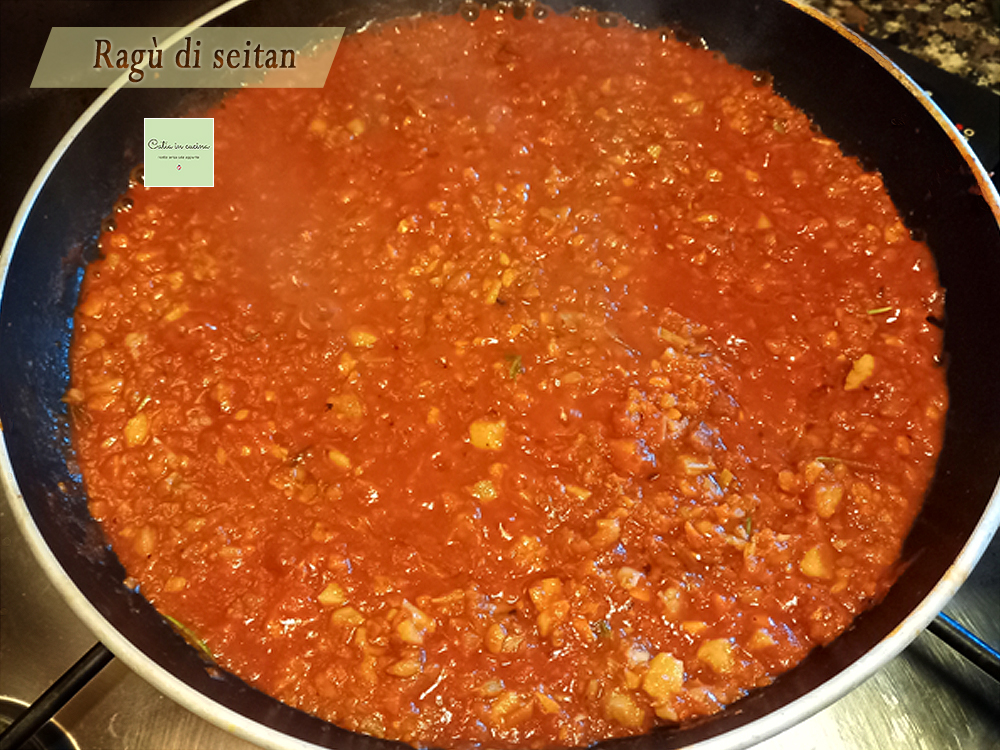
The seitan ragù is ready!
It looks just like meat ragù. 😉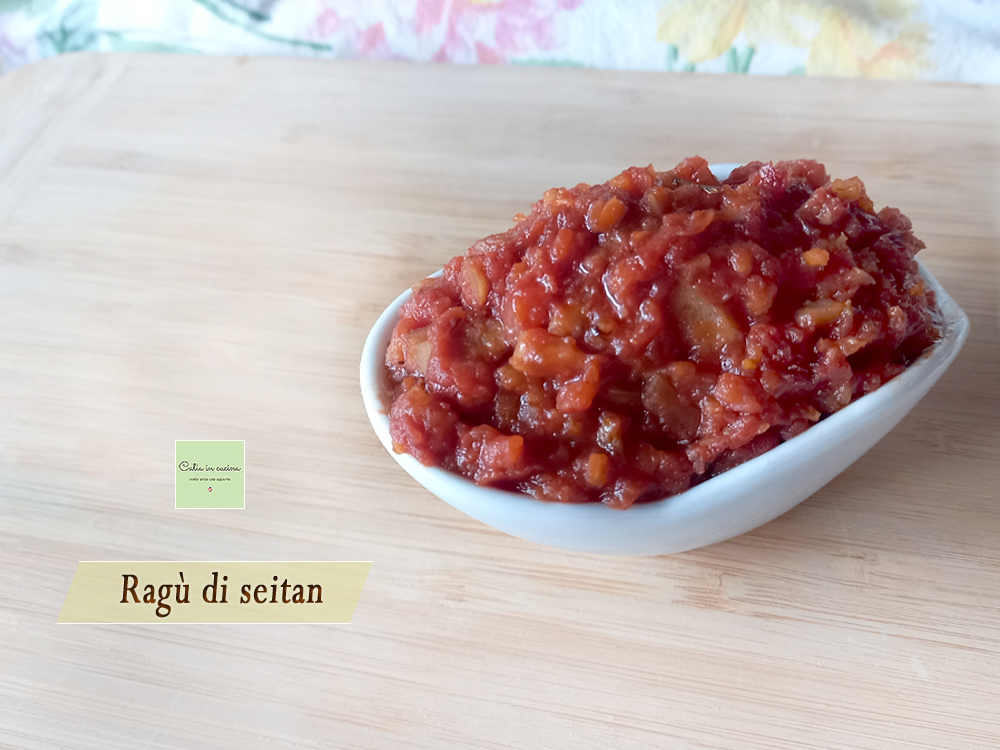
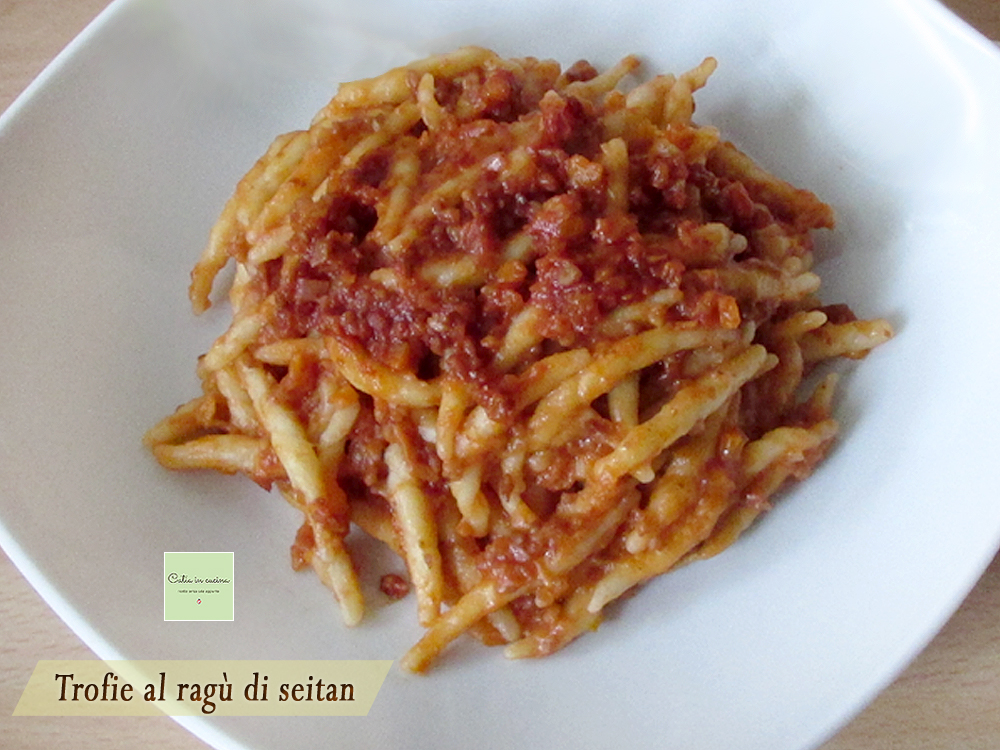
You can use it to dress any type of pasta, lasagna included. In the photo below I had chopped it more finely and used it to dress trofie:
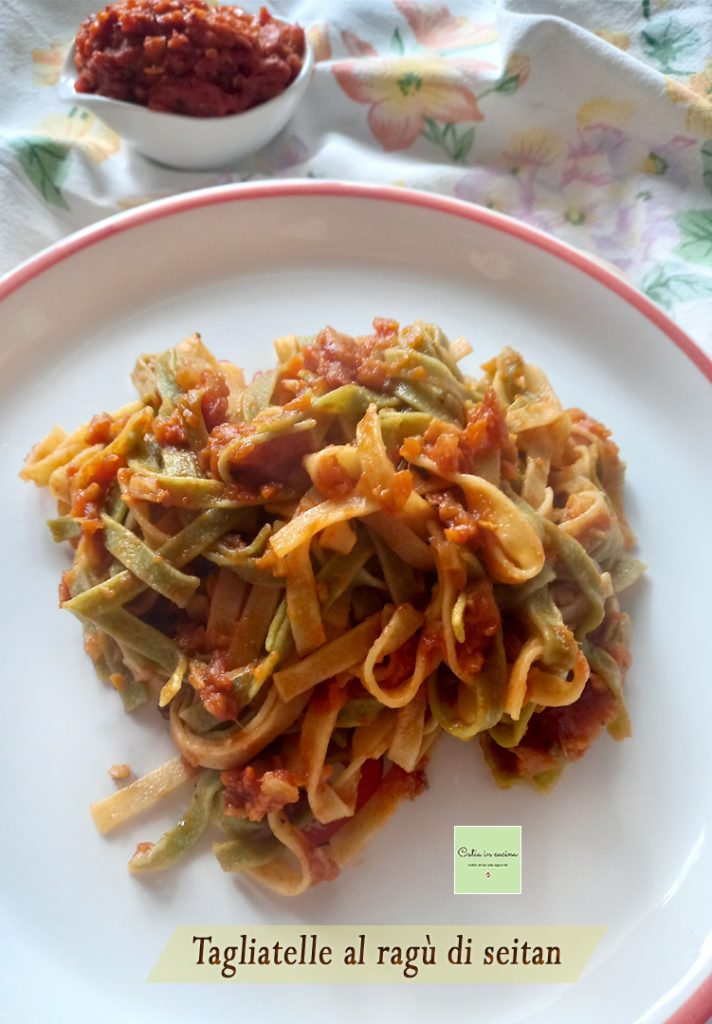
Today I used it with straw-and-hay tagliatelle (egg and spinach pasta).
Enjoy your meal!
Salt-free Advice
 As always, I didn’t add salt to this seitan ragù, also because packaged seitan already contains quite a bit of salt. I used the spices I always use in meat ragù: one clove and a small piece of cinnamon, plus rosemary and a touch of chili.
👉 Purchased ready-made seitan is high in salt, so it should be eaten occasionally, even for those following a low-sodium diet (in addition to its high gluten and sugar content).
☝ To reduce sodium before cooking, you can: blanch it — slice the seitan and boil it for 5 minutes in unsalted water so some of the salt will leach into the water. Or soak it in cold water for 30–60 minutes, changing the water at least once.
If you’re interested in reducing or eliminating salt, always remember to:
▪ Reduce salt gradually so your palate gets used to it.
▪ Use spices: chili, pepper, curry, nutmeg, cinnamon, cloves, cumin…
▪ Use aromatic herbs: basil, parsley, oregano, thyme, sage, marjoram, rosemary, mint…
▪ Use seeds: sesame, pine nuts, almonds, walnuts…
▪ Use pungent vegetables or fruits: garlic, onion, lemon, orange…
▪ Use my salt-free vegetable granules and gomasio.
▪ Prefer fresh foods.
▪ Avoid boiling in water; prefer cooking methods that preserve flavors (griddle, foil, steam, microwave).
▪ Avoid bringing the saltshaker to the table!
▪ Allow yourself the occasional indulgence. It’s good for the mood and helps you keep going.
If you don’t want, or cannot, give up salt:
▪ You can still try my recipes and salt them according to your habits.
Follow me!
On the WhatsApp channel and on Instagram, on the Facebook page and Pinterest boards, in my two groups: Il gruppo di Catia, in cucina e oltre and Proprio quello che stavo cercando! — and if you like… subscribe to my Newsletter
Other Light and Tasty recipes, vegetarian or vegan:
Carla Emilia: Grilled artichokes
Claudia: Tofu and carrot croquettes in the air fryer
Daniela: Apple and strawberry crumble without butter
Elena: Stuffed pumpkin slices
Milena: Whole wheat penne with confit cherry tomatoes and red cabbage
