
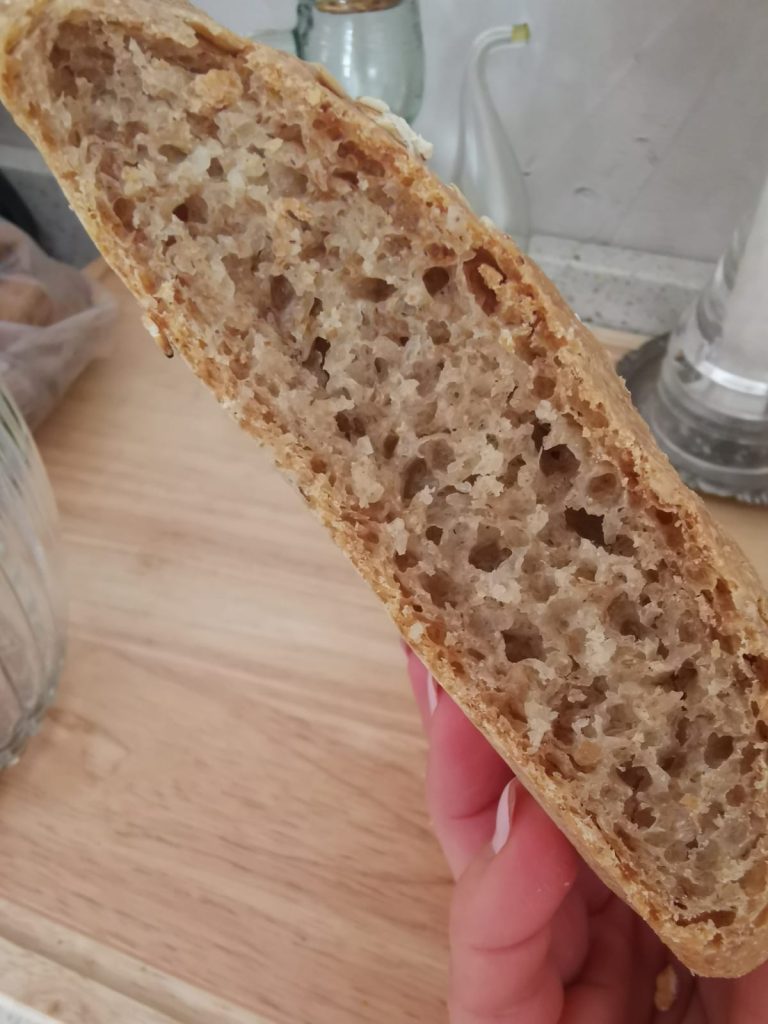
This rustic spelt and rye wholemeal bread made at home is a simple recipe but full of flavor, perfect for those who love genuine leavened breads.
The golden, crunchy crust encloses a soft, aromatic crumb, ideal to bring to the table every day.
If you enjoy baking bread at home, also try 👉whole wheat walnut bread or 👉easy and quick ciabatta, among the most loved recipes. If you prefer alternatives, you can also find 👉 bread made with dried sourdough or the soft 👉 milk bread.
- Difficulty: Easy
- Cost: Very affordable
- Rest time: 1 Day
- Preparation time: 20 Minutes
- Cooking time: 35 Minutes
- Portions: 4 pieces
- Cooking methods: Oven
- Cuisine: Italian
- Seasonality: All seasons
Ingredients
- 5 7/8 cups spelt flour
- 2.5 cups rye flour (whole)
- 3 1/8 cups water (total)
- 2 tsp extra-virgin olive oil
- 1 3/4 tsp salt (you can increase to 2 1/2–3 teaspoons for more seasoning)
- 2 tsp fresh baker's yeast
Tools
To prepare the bread you can use some useful kitchen tools.
Below you’ll find the ones I commonly use, with a direct link to purchase them online.
- 1 Stand mixer
- 3 Bowls
- 1 Flexible spatula
- 1 Knife
- Baking sheets
Steps
In a bowl (or in the stand mixer) pour about 2 7/8 cups of water (700 g) and add the spelt and whole rye flours.
Mix until you obtain a rough mixture and let it rest for about 1 hour at room temperature: this step is called autolysis and helps improve the bread’s structure.
After the time has passed, dissolve the baker’s yeast in the remaining about 3 tbsp + 1 tsp of water (50 g) and add it to the dough along with the oil and salt (add salt last).
Work everything until you obtain a homogeneous mixture, soft and slightly sticky.
Divide the dough into several lightly oiled bowls, cover and transfer to the refrigerator for a slow overnight fermentation.
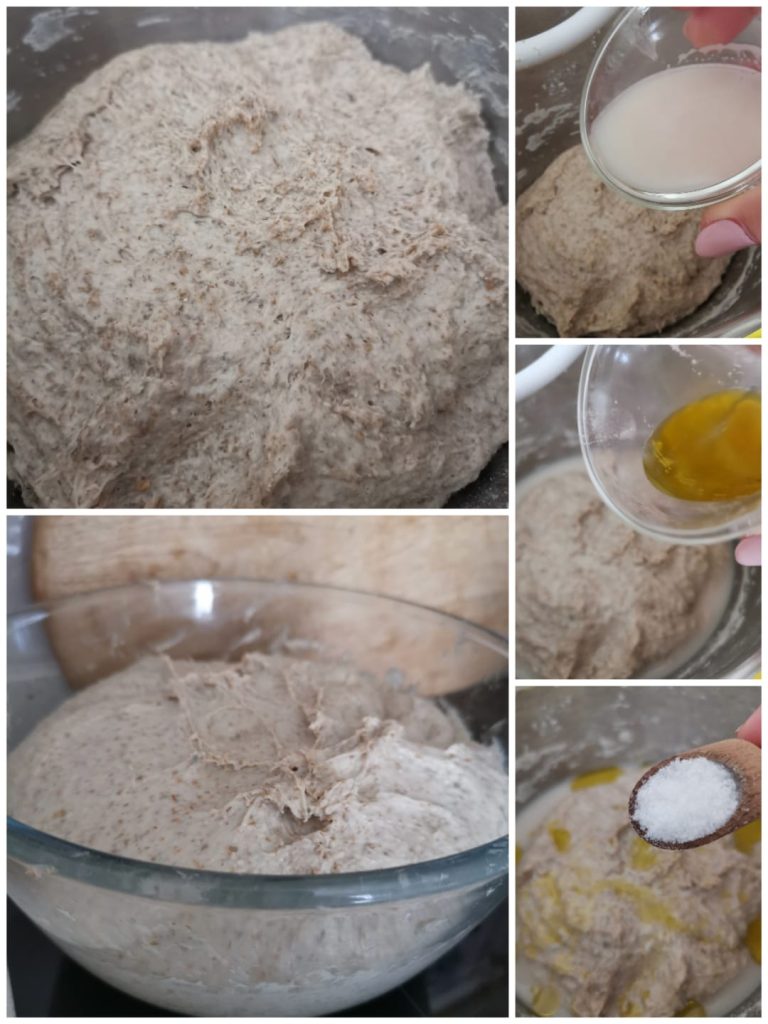
The next morning, take the doughs out of the refrigerator and let them rest for about 1 hour at room temperature.
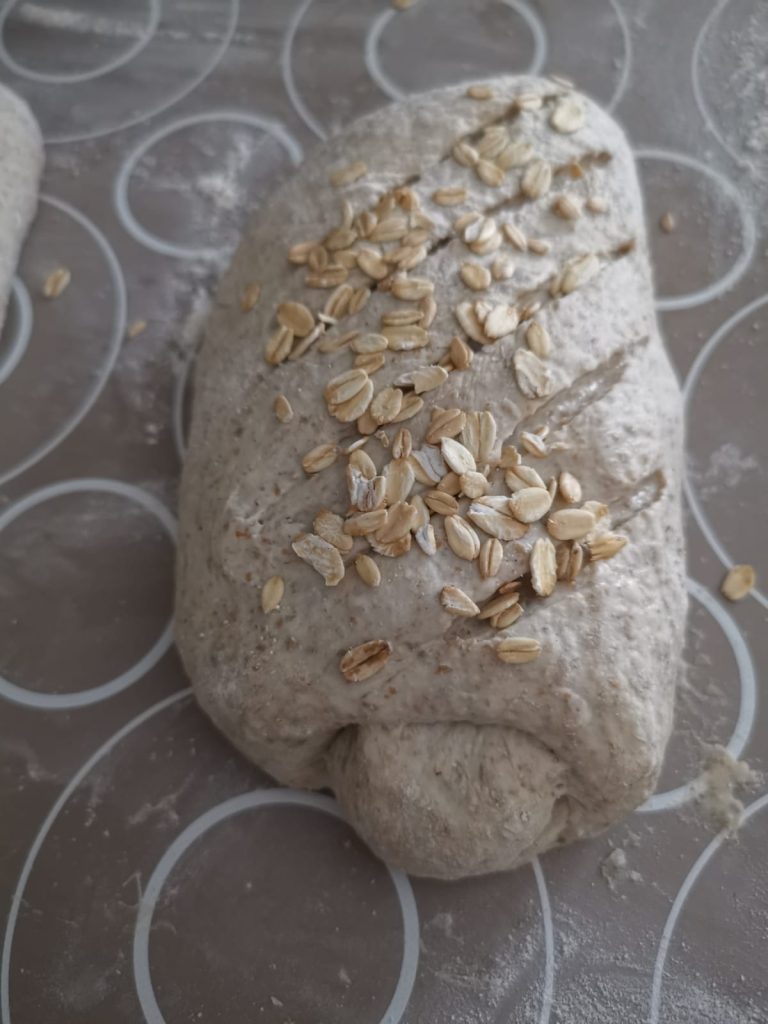
Then proceed with shaping the loaves, trying to build surface tension without overworking the dough.
If the dough tends to stick, don’t worry: it’s normal with this type of bread.
Lightly dust the work surface and your hands with a little flour, or use a lightly floured flexible spatula to handle the dough more easily.
Let rest for another hour.
Meanwhile, preheat the conventional oven to 428°F (220°C), placing a small pot of water inside to create steam.
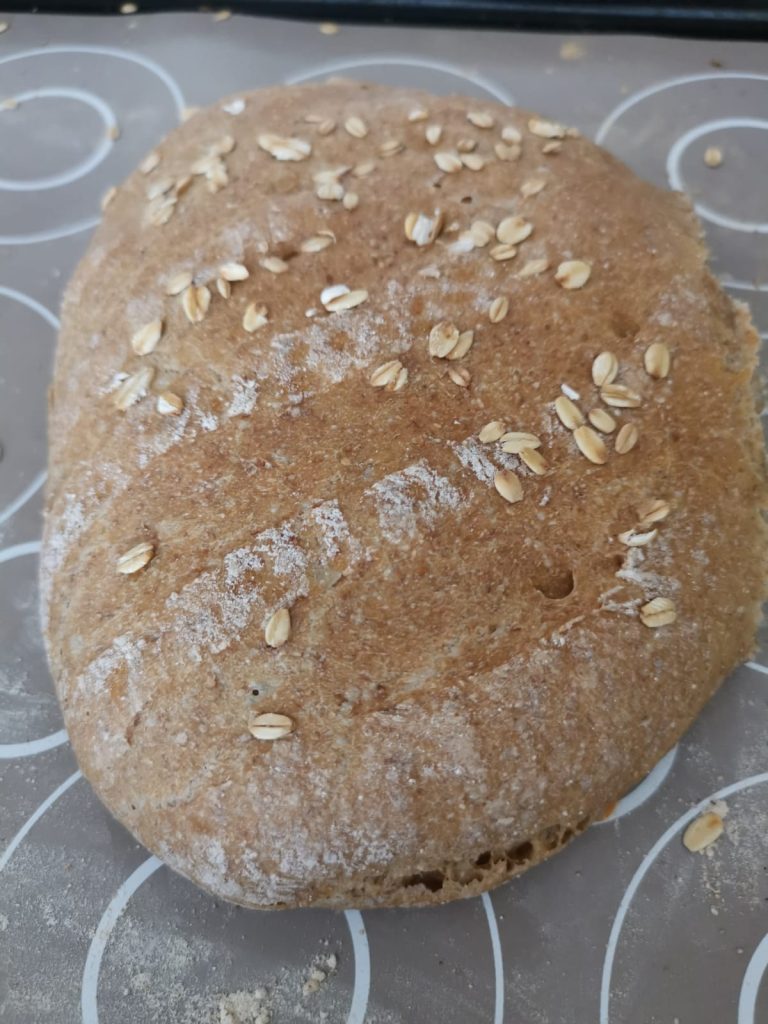
Bake the loaves at 428°F for the first 20 minutes, then lower the temperature to 356°F and continue baking for another 10–15 minutes until golden brown.
To check for doneness, you can tap lightly on the base of the bread: if it sounds hollow, it’s ready. Alternatively, you can do a skewer test, which should come out without wet dough.
Remove the bread from the oven and let it cool completely on a rack before slicing.
This step is essential to allow the crumb to stabilize and achieve the right internal texture.
Once cool, the bread will be ready to enjoy, crisp outside and soft inside.
Perfect to enjoy with cured meats, cheeses, or simply a drizzle of extra-virgin olive oil.
Useful tips and storage for homemade spelt and rye bread
To keep all the aroma and crispness of this rustic bread intact, it’s important to store it correctly.
Once completely cooled, you can store it:
In a paper bag to keep the crust crunchy
or wrapped in a clean kitchen towel, ideal for daily use
If you want to keep it longer, the best advice is to slice it and freeze it: this way you can thaw only the amount you need, preserving taste and texture almost like freshly baked.
Avoid plastic bags, which tend to make the crust lose crispness and become soggy.
For an even more aromatic result:
you can extend the refrigerator fermentation up to 24 hours
add seeds (sunflower, flax, pumpkin) for a richer bread
use a baking stone for a more professional bake
FAQ (Questions and Answers)
Can I replace the spelt flour to make this bread?
Yes, you can replace it with type 1 or type 2 wheat flour, but the flavor will be less rustic and aromatic.
Does rye bread rise less?
Yes, rye flour contains less gluten, so the bread will be denser but still soft and reasonably open-crumbed.
How long does this bread keep?
It keeps well for 2–3 days at room temperature, maintaining a good internal softness.
Can I make the dough without a stand mixer?
Of course, you can work it by hand: the dough will be sticky but that’s normal; help yourself with a spatula or flexible spatula.
