Homemade sauerkraut is one of the simplest methods for preparing naturally fermented vegetables.
There are ancient preparations that were born out of the need to preserve food and that today are once again appreciated for their unique flavor and simplicity. Homemade sauerkraut, obtained by the natural fermentation of cabbage, is part of this tradition.
With just two ingredients – cabbage and salt – and a bit of patience, a natural process begins that transforms the vegetables: the cabbage softens, develops its characteristic slightly tangy flavor and becomes enriched with live cultures. It is a simple but fascinating preparation, in which time and microorganisms do their work slowly, giving a flavorful product full of character.
Vegetable fermentation is a practice widespread across many cultures. Besides classic sauerkraut, you can also prepare fermented cauliflowers, fermented red cabbage, or other seasonal vegetables preserved in brine such as green olives in water and salt. In other parts of the world there are famous preparations such as Korean kimchi, rich in spices and aromas, or the fragrant preserved lemons typical of North African cuisine.
Some beverages are also born from similar processes: kombucha, for example, is a slightly fizzy fermented tea that has become very popular in recent years.
Making sauerkraut at home means rediscovering an ancient, simple and natural technique. All it takes is a glass jar, a good head of cabbage and a few days of waiting: slowly the cabbage will begin to ferment in its own juice, transforming into a crunchy and tasty side dish, perfect to enjoy on its own, in salads or alongside rustic dishes and sandwiches.
A recipe that tells of patient cooking, made of simple gestures and natural transformations, just like in the old days. Would you like to try making homemade sauerkraut too? Then follow me in the kitchen, but first I remind you that if you want to stay updated on all my other recipes, you can follow my Facebook page and my Instagram profile.
Also, take a look at these home ferments:
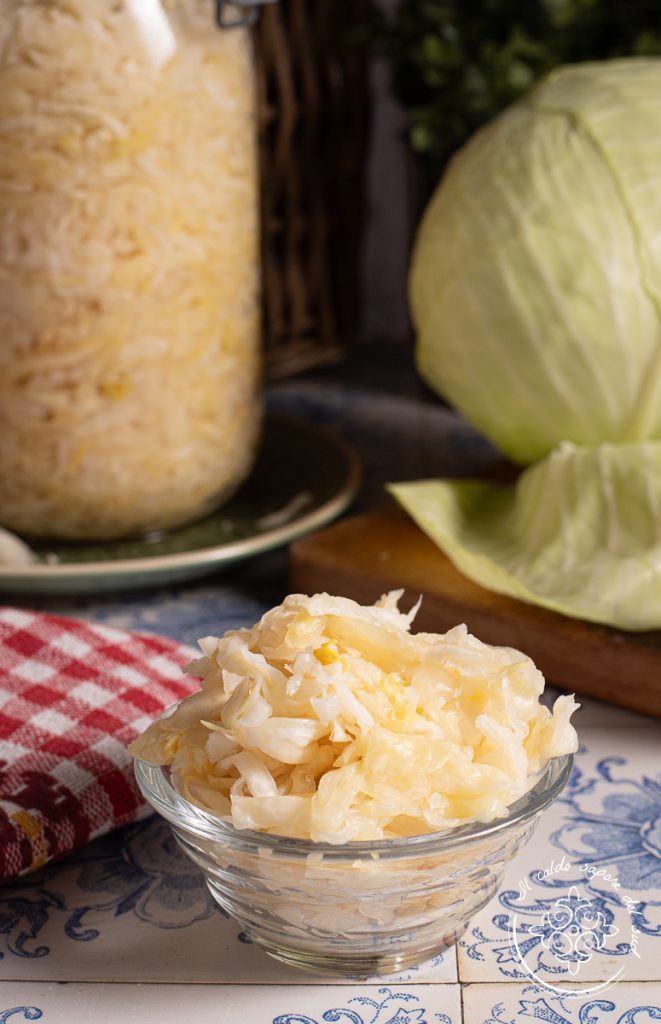
- Difficulty: Very easy
- Cost: Very economical
- Rest time: 15 Days
- Preparation time: 1 Hour
- Cooking methods: No-cook
- Cuisine: Italian
- Seasonality: Autumn, Winter and Spring
Ingredients to make homemade sauerkraut
- 4.4 lb green cabbage
- 2 3/4 tbsp fine salt
Tools
- Bowl
- Jar
- Pestle
Steps to make homemade sauerkraut
Homemade sauerkraut is one of the simplest and oldest preparations of natural vegetable fermentation . Cabbage and salt are all it takes to start a spontaneous process that transforms cabbage into one of the most well-known fermented foods in the world.
To make homemade sauerkraut, remove the outer damaged leaves of the cabbage and rinse it quickly under running water. Dry it well and place it on a cutting board.
Cut the cabbage in half with a sharp knife and then slice it very thinly into fine strips. The thinner the cut, the more even the fermentation will be.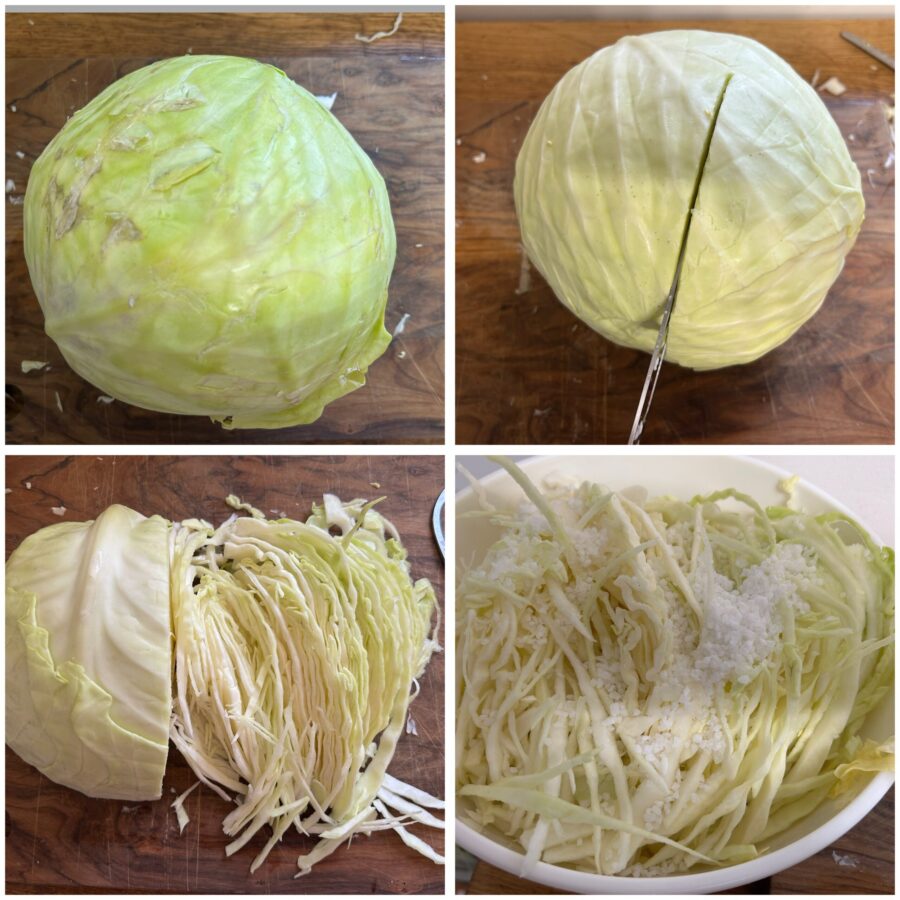
Transfer the sliced cabbage to a large bowl and add coarse salt (about 2–3% of the cabbage weight).
With clean hands begin to massage and squeeze the cabbage for several minutes. The salt will naturally draw out the cabbage’s water and the cabbage will become softer and glossy.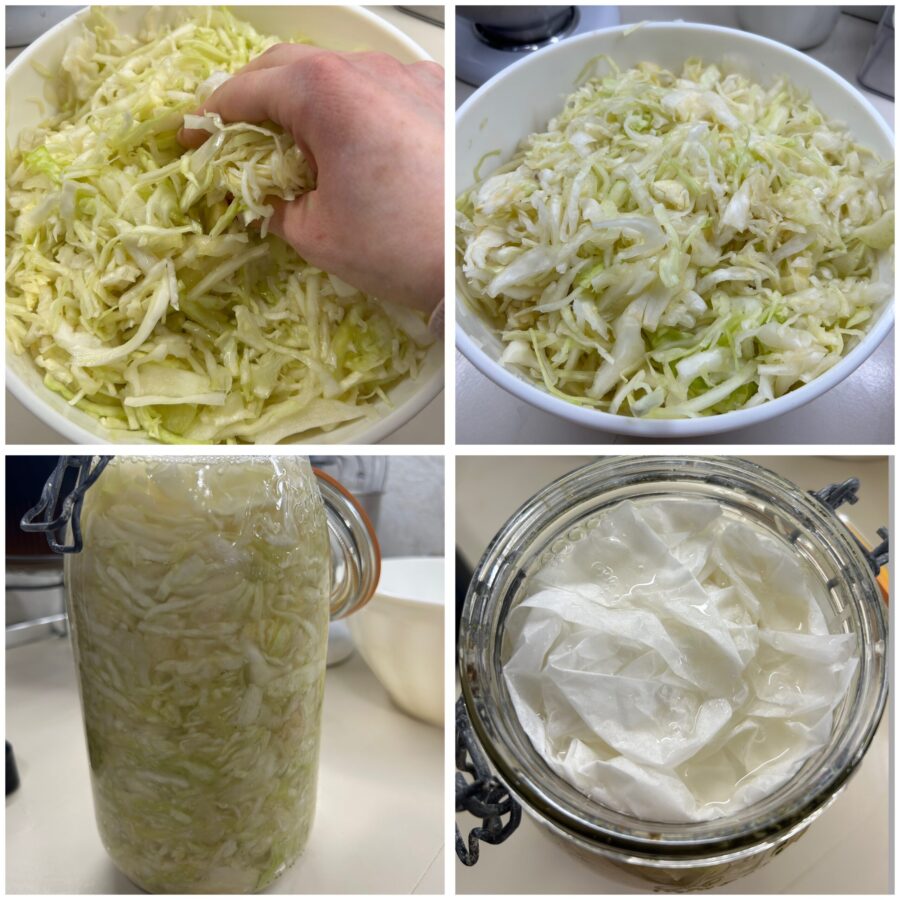
Continue working it until you see some liquid collect at the bottom of the bowl: this is the natural brine that will allow fermentation.
Pack the cabbage into a clean glass jar, pressing it down firmly with your hands or a spoon to remove air bubbles. The cabbage must remain completely submerged in its liquid.
Cover the surface with a piece of parchment or food-safe paper to keep the cabbage well immersed in the brine.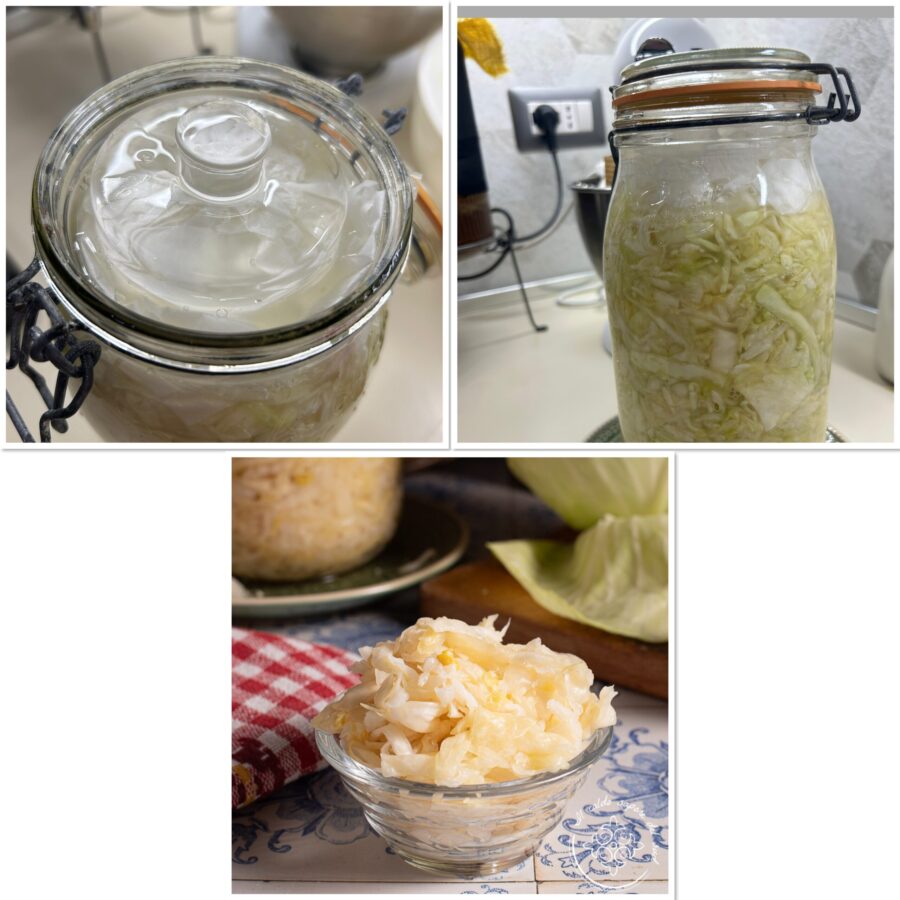
Insert a weight or press and close the jar with the lid.
Leave the sauerkraut to ferment at room temperature for about 7 days. During this time small bubbles will begin to form: this is a sign that fermentation has started; after at least 2 weeks from the start of the process you can begin to taste them. I, however, prefer to wait at least a month.
When the sauerkraut has reached the desired flavor, transfer the jar to the refrigerator. The cold will slow the fermentation and the sauerkraut will keep for several weeks.
A small practical tip during fermentation is to place the jar on a plate or in a small bowl. In the first days the fermentation can be quite active and some brine may spill out of the jar. The plate will collect any liquid, preventing the kitchen surface from getting dirty.
This is a completely normal phenomenon: it simply means the fermentation is in progress and the sauerkraut is developing its typical slightly tangy flavor.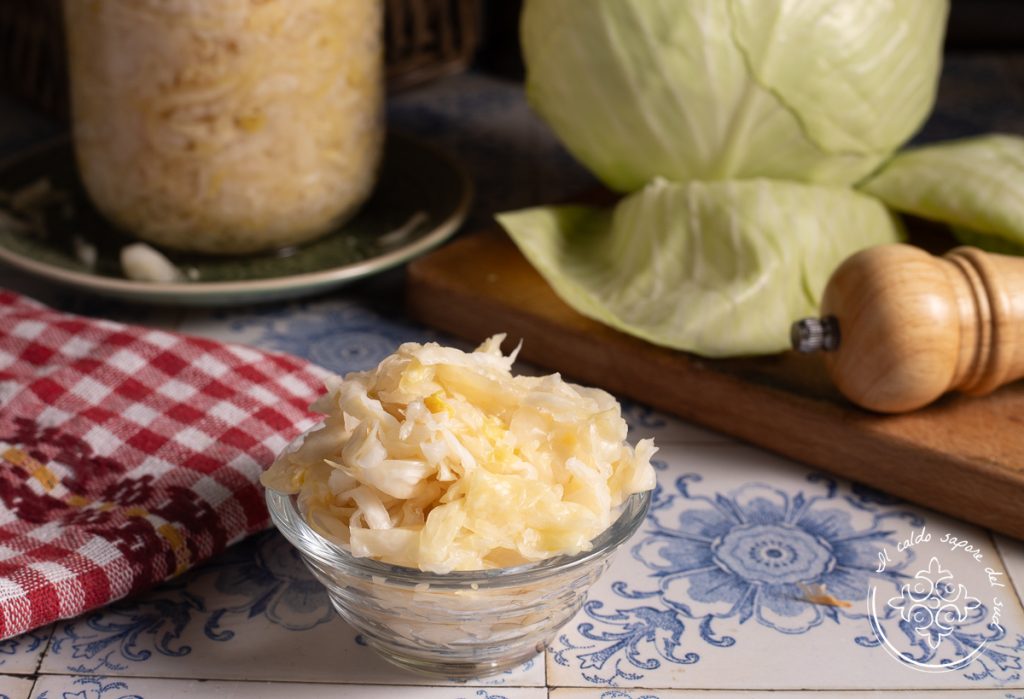
Storage notes and tips
Once ready, homemade sauerkraut is stored in the refrigerator, always kept submerged in its brine and tightly sealed in the jar. This way it can last for several weeks while retaining flavor and properties.
During fermentation it is important that the cabbage always remains completely covered by the liquid: this prevents mold from forming and allows the beneficial lactic acid bacteria to work properly.
If a light foam appears on the surface in the first days, this is completely normal: it is part of the fermentation process.
To obtain crunchy, well-fermented sauerkraut remember a few small tips:
use fresh, firm cabbage
respect the proportion of about 2–3% salt relative to the weight of the cabbage
massage the cabbage well to release its natural water
always press the cabbage well into the jar to remove air.
Sauerkraut is one of the simplest examples of natural vegetable fermentation, the same process used to prepare other fermented foods such as kimchi, fermented red cabbage, fermented cauliflowers or preserved lemons.
Once ready you can enjoy it raw in salads, in sandwiches or as a side dish, or quickly sauté it in a pan.
If you want to stay updated on my recipes, follow me also on:
Pinterest; X; YouTube; TikTok.
From here, you can return to the HOME and discover new recipes!
Frequently Asked Questions
How long should sauerkraut ferment?
To obtain well-fermented homemade sauerkraut, it is recommended to let it ferment for at least 15 days at room temperature.
During the first days the fermentation will be more active and you may notice small bubbles and a slight increase in the liquid in the jar: this is a completely natural process due to the beneficial lactic acid bacteria.
After about 2 weeks the sauerkraut will have developed its characteristic slightly tangy flavor and will be ready to enjoy. If you prefer a stronger taste, you can let it ferment for 3 or 4 weeks.
Once the desired degree of fermentation is reached, transfer the jar to the refrigerator, where the sauerkraut will continue to keep for several weeks.How much salt is needed to make sauerkraut?
To prepare homemade sauerkraut you generally use between 2% and 3% salt relative to the weight of the cabbage.
This means that for 1 kg of cabbage you will need 20–30 g of salt; I use 25 g. This proportion allows lactic fermentation to occur correctly, promoting the development of beneficial bacteria and preventing mold formation.
After adding the salt, the cabbage should be massaged well with your hands until it releases its natural water, which will become the brine in which the sauerkraut will ferment.Which cabbage is used to make sauerkraut?
For homemade sauerkraut white (green) cabbage is generally used, as it is the variety best suited to fermentation. It has firm, crunchy, water-rich leaves, ideal characteristics for naturally developing brine during lactic fermentation.
Alternatively, you can also use red (purple) cabbage, producing sauerkraut with a more intense color and a slightly stronger flavor — an excellent fermented red cabbage.
The important thing is to choose fresh, firm cabbages that are not too old, because they naturally contain the beneficial bacteria that allow fermentation.Why do sauerkraut become acidic?
Homemade sauerkraut naturally becomes tangy during fermentation. This happens thanks to lactic fermentation, a natural process in which the bacteria present on the cabbage convert the vegetable sugars into lactic acid.
It is precisely lactic acid that gives sauerkraut its typical fresh and slightly sharp flavor, as well as helping to preserve the cabbage.
During fermentation you may also notice small bubbles and a slight increase in the liquid in the jar: these are normal signs that indicate the fermentation process is proceeding correctly.