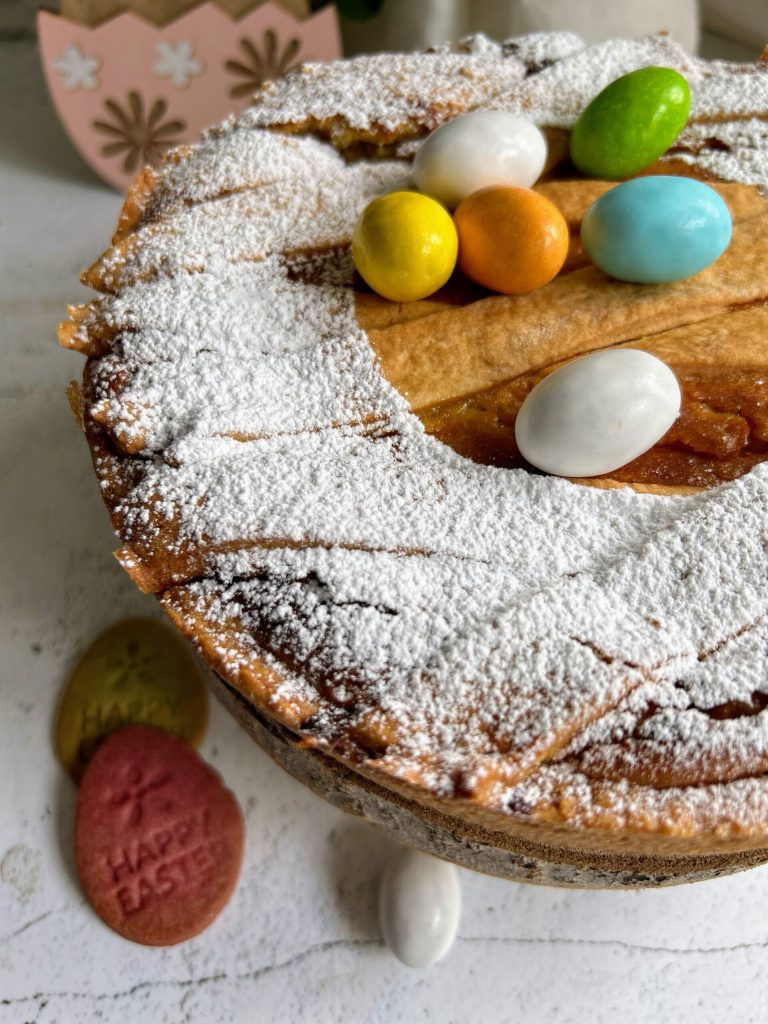
The Neapolitan pastiera is much more than a simple cake: it is a symbol of tradition, family and spring. Scented with orange blossom and enriched with simple but precious ingredients such as cooked wheat, ricotta and eggs, this tart captures all the magic of Easter in Naples. Each family preserves its own version, handed down from generation to generation, with small secrets that make every pastiera unique and special.
Making it is a true ritual: it begins with shortcrust pastry, crumbly and delicate, which holds a creamy and very fragrant filling. The result is a dessert with an unmistakable taste, capable of evoking memories and creating new traditions. Perfect to enjoy after a few days of resting, when the flavors have blended perfectly, the pastiera is the ideal dessert to share with loved ones.
Here you can find the pastiera in the version with pastry cream:
- Difficulty: Medium
- Cost: Medium
- Rest time: 30 Minutes
- Preparation time: 5 Hours
- Cooking time: 50 Minutes
- Portions: 12
- Cooking methods: Oven, Electric oven
- Cuisine: Italian
- Seasonality: Autumn, Winter and Spring, Easter
Ingredients
Makes 2 pastiere in 9 1/2-inch (24 cm) pans
- 4 cups all-purpose flour (farina 00)
- 1 cup granulated sugar
- 1 cup lard (about 7 oz)
- 3 whole eggs
- 1 packet vanillin (vanillina)
- 20 oz (about 2 3/4 cups) cooked wheat (grano cotto)
- 1 cup milk
- 3 1/2 tbsp butter
- orange zest
- to taste vanilla (vanilla extract or vanilla pods)
- 3 1/2 cups sheep's ricotta (ricotta di pecora)
- 2 1/2 cups granulated sugar
- 7 whole eggs
- 2 egg yolks
- 5 oz (about 1 cup) candied orange peel (scorza d'arancia candita)
- ground cinnamon
- 2 vials orange blossom water (fior d'arancio)
Tools
- 1 Pot
- 2 Tart pans 9 1/2 in
- 1 Rolling pin
Steps
In a bowl, work the lard cut into pieces with the sugar, then add the eggs and the grated lemon zest or the vanillin or both. Add the flour little by little and knead until you obtain a homogeneous mixture. Form a ball, wrap it in plastic wrap and let it rest in the refrigerator for at least 1 hour.
In a small pot, pour the cooked wheat with the milk, the butter and the lemon and orange zest and the vanilla. Cook over low heat, stirring, until you obtain a thick cream. Let it cool completely.
In a bowl, work the ricotta with the sugar until you obtain a smooth cream. Add the eggs one at a time, then incorporate the cooled cooked wheat. Add the diced candied peel, the orange blossom water and, if you like, a pinch of cinnamon.
Roll out the shortcrust pastry on a floured surface and line a 9 1/2-inch (24 cm) buttered and floured tart pan. Pour the filling inside and level it up to the edge. With the remaining pastry, create strips and arrange them in a lattice on the surface.
Bake in a preheated conventional oven at 338°F (170°C) (convection is also fine) for about 60–70 minutes, until the surface is well browned. If necessary, cover with aluminum foil near the end of baking to prevent excessive browning.
Let the pastiera cool completely and rest for at least 24 hours before serving. Dust with powdered sugar and enjoy.
Storage
The Neapolitan pastiera keeps well at room temperature for 2–3 days, covered with a cake dome or plastic wrap, in a cool, dry place. Thanks to the sugar and aromas, it retains fragrance and flavor for a long time. If temperatures are high, it is preferable to store it in the refrigerator, well covered, for up to 4–5 days. Before serving, bring it to room temperature for at least 30 minutes to enhance its flavor. It can also be frozen already baked: simply thaw it slowly in the refrigerator and then bring it back to room temperature.
Tips
For a perfect pastiera, use well-drained sheep’s ricotta to obtain a creamy but compact filling. Let the dessert rest at least one day before tasting: this step is essential to allow the aromas to meld. Do not overdo the orange blossom water: a few drops are enough to give the typical fragrance without being overwhelming. Finally, bake the pastiera slowly to avoid cracks on the surface.
Variations
There are several variations of the pastiera. For a more delicate version you can replace the candied peel with chocolate chips or omit them entirely. If you prefer a more intense flavor, add a pinch of cinnamon or vanilla to the filling. In some modern versions, pastry cream is used to make the filling even softer. For those seeking a gluten-free alternative, it is possible to use gluten-free cooked wheat or rice.