In Japan it is well known, the Anko red azuki jam, a delightful legume-based preserve you’ll want to make again and again.
The beans used to make this spread are often improperly called “red soy” or azuki beans (Vigna angularis), which actually have nothing to do with the yellow soybean we know (Glycine max), since they belong to different species and genera.
I tried making anko in this version and I must say I was very pleased.
Anko red azuki jam can be used in various ways, even simply spread on bread like an ordinary jam.
Anko goes well with ice cream, especially milk (fiordilatte) or vanilla — try it!
The Japanese fill dorayaki with it, a typical sweet made of two pancakes spread with anko.
Here are a few more Asian recipes:
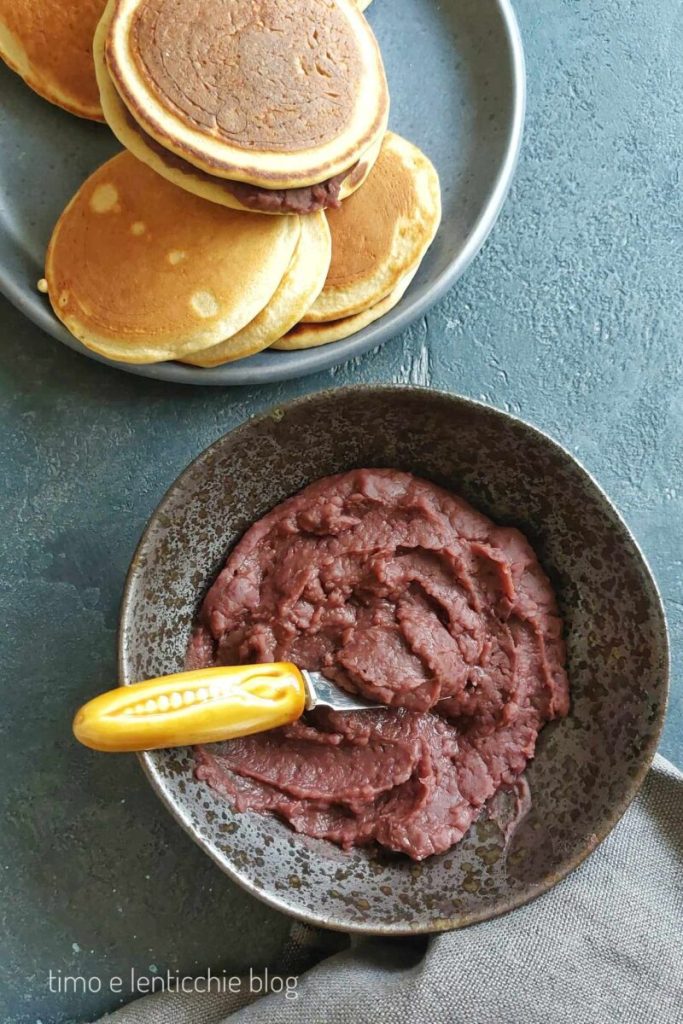
- Difficulty: Very easy
- Cost: Inexpensive
- Preparation time: 10 Minutes
- Cooking time: 30 Minutes
- Portions: 1 Piece
- Cooking methods: Stovetop
- Cuisine: Japanese
- Seasonality: All seasons
Ingredients Anko red azuki jam
- 1 cup red azuki beans (cooked (about 7 oz / 200 g))
- 5 tbsp rice malt (malt of rice) (about 3.5 oz / 100 g)
Steps
The first operation is to wash the azuki beans well (in Japanese this operation is called Shibunuki, extracting the sharp flavor), then soak them in cold water overnight.
Rinse the beans, put them in a pot with water and bring to a boil and boil 5–10 minutes, then drain the water.
Now cover the beans with fresh water so that the beans are covered twice the height: for example, if the height of the beans in the pot is 2 cm (about 3/4 inch) you should add water up to a height of 6 cm (about 2 3/8 inches) (I hope this is clear).
Add about 2 1/2 tbsp of rice malt (half of the total), stir and turn on the heat.
Allow most of the water to evaporate, then add the remaining 2 1/2 tbsp of rice malt, stir and continue cooking. At the end the jam (which is actually a preserve) should be soft.
At this point you decide: you can leave it as is or blend it with an immersion blender as I did!
You can put it into jars and vacuum-seal them to preserve longer.
The first operation is to wash the azuki beans well and then soak them overnight in cold water.
Put the beans covered with about 3/4 inch of water in an open pressure cooker, bring to a boil for 5–10 minutes, then drain the water.
Now cover the beans with more water so that the beans are covered twice the height: for example, if the height of the beans in the pot is about 3/4 inch you should add water up to about 2 3/8 inches; add about 3/4 inch of kombu seaweed, close the pressure cooker and cook 25 minutes from the first whistle.
Turn off and let cool in the pot.
Put the cooked azuki in the mixing bowl; they should have absorbed all the water. Process 20 seconds at speed 4, add the 3.5 oz (about 100 g / 5 tbsp) of rice malt and just enough water to barely cover everything. If instead they have not absorbed the water while cooling, you don’t need to add extra.
Cook 30 minutes at 212°F, speed 2 without the measuring cup (beware of splashes).
Then 30 seconds at speed 6 to make the jam silky.
You can put it in jars and vacuum-seal them to preserve longer.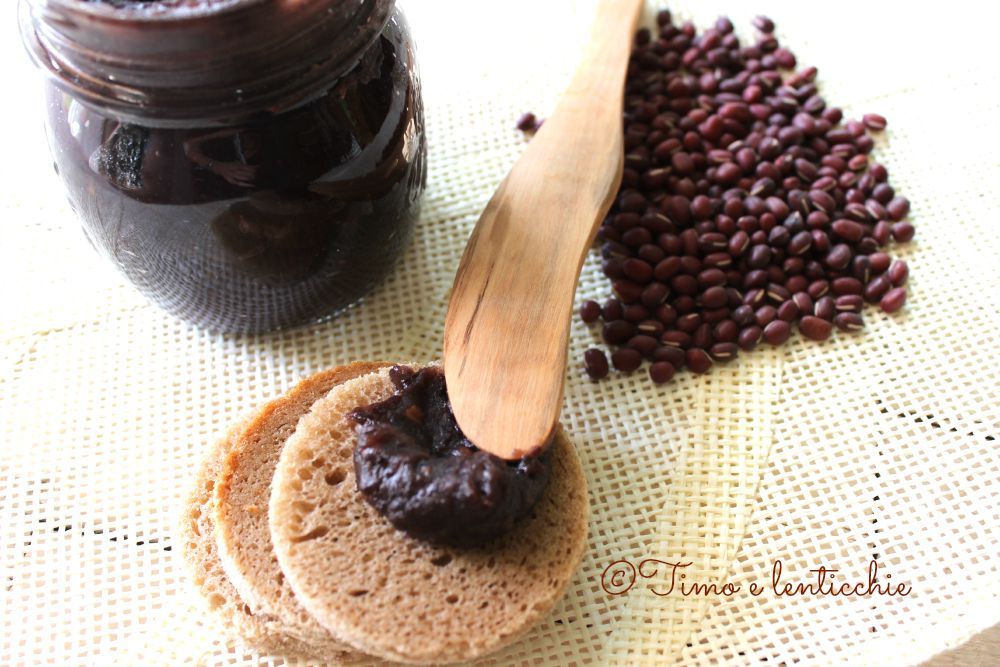
The original version of anko calls for equal quantities of azuki and sugars, and in the recipe above I used half that amount. Here is a very quick version of anko to prepare often, because instead of 100 g of sugar you use only one tablespoon of rice malt.
I assure you that since azuki is already a slightly sweet bean, even one tablespoon of malt is enough to make it delicious.
Start from a jar of azuki in glass that contains only water and salt and rinse well.
Pour them into a small pot with about 1/3 cup (70 g) of water and one tablespoon of rice malt or brown rice syrup, and simmer over low heat for about 20 minutes until it dries out. Blend well with an immersion blender and the quick-version anko is ready.
Daniela’s tips
Do not prepare more than one batch of anko at a time because it does not keep very long. If you make more, since azuki are cooked in a pressure cooker, it’s best to divide it into jars and freeze it.
FAQ (Questions and Answers)
Can I prepare anko with other legumes?
Yes, of course, although it will no longer be called anko but rather a cannellini or lentil jam. Use a legume with a neutral flavor; with borlotti beans, for example, it can be a bit savory.
Can I freeze anko?
Sure, you can freeze the jars like any fruit preserve.
Can anko be made with canned azuki?
Yes, just make sure they are in glass jars and contain only water and salt. With dry beans cooked under pressure, the result is usually sweeter and more flavorful.