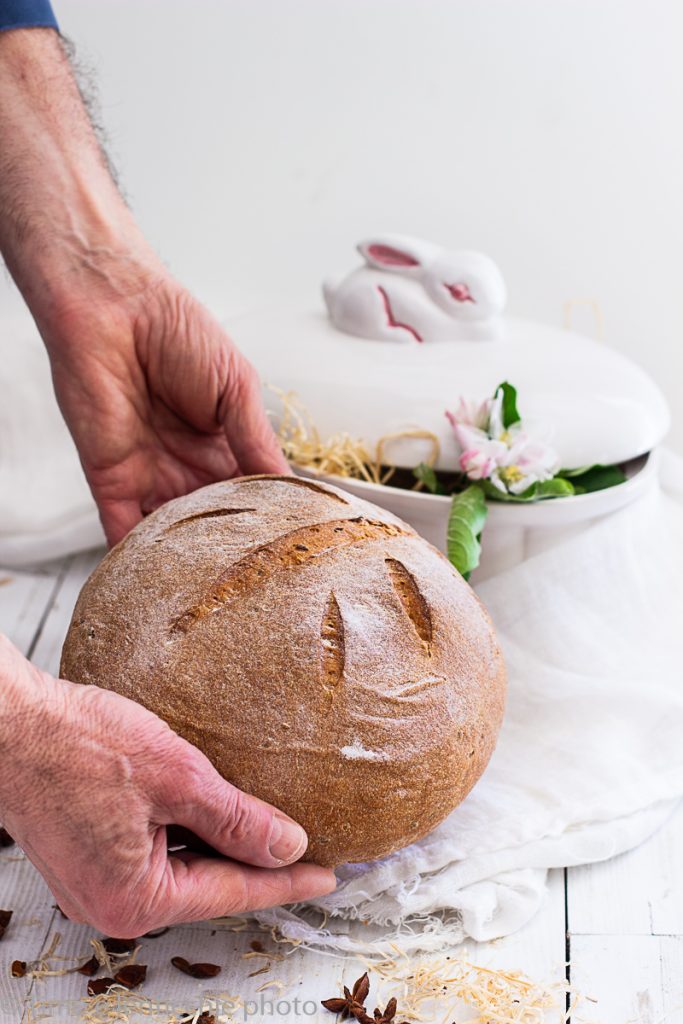
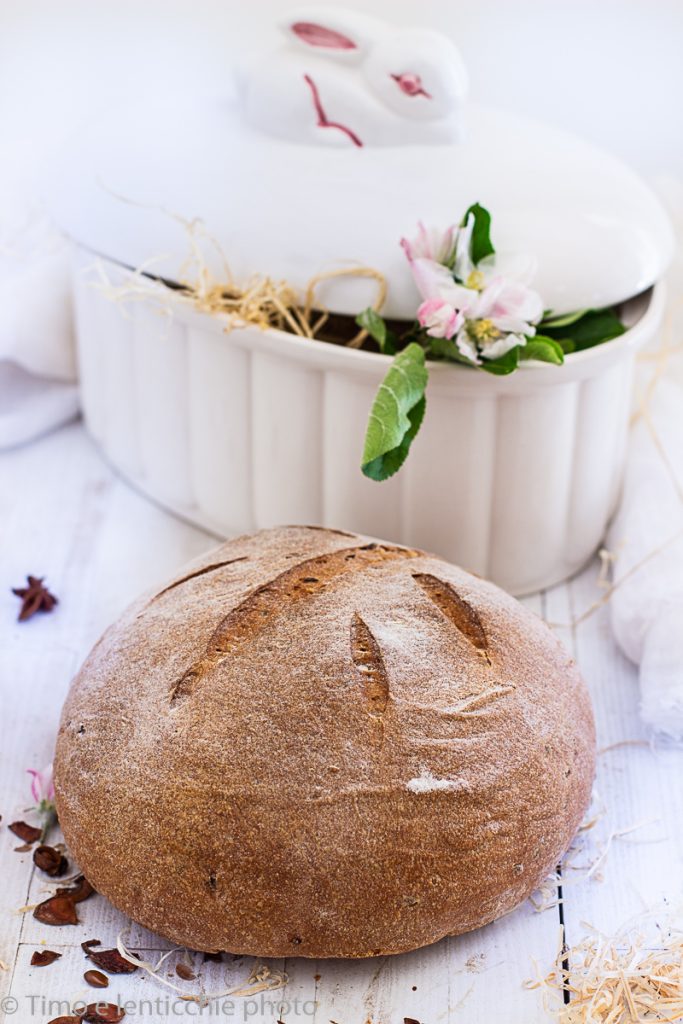
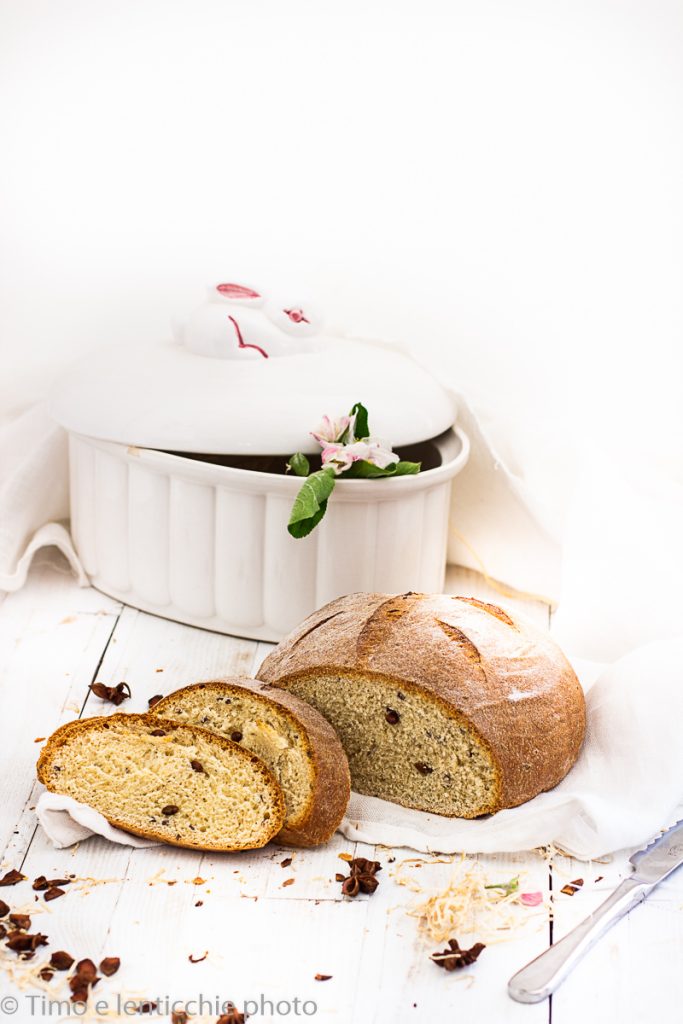
South Tyrol Easter Bread Fochaz. The South Tyrol Easter bread is a slightly sweet, buttery bread flavored with anise seeds. A simple, very soft bread—an incredible comfort.
With Easter here, how could you not bring a traditional bread dedicated to this holiday to the table?
As a mountain lover, I feel at home among forests and valleys; I could already smell the aroma that anise seeds evoke. Mountain huts, clear skies, crisp air, green—mountains, in short.
So I got to work and put all my love into kneading and relaxing in the kitchen.
I apologize in advance to the people of South Tyrol, but given the period I couldn’t find the usual anise seeds; I only had star anise, so I added a few seeds of that as well.
South Tyrol is a land with strong traditions; every year at Easter the Fochaz, a festive anise-flavored Easter bread, is brought to the table.
The South Tyrol Easter Bread can be served sweet or savory. Usually the savory version is presented as a loaf, while the sweet version is shaped like a bunny or a little sheep and sprinkled with coarse sugar.
I chose the recipe by Stefano Cavada, a young and very talented South Tyrolean chef who brings the Fochaz to the table every year.
The tradition is to serve it with asparagus starters, eggs, Bolzano-style sauce and cren (horseradish sauce). I will serve it with asparagi alla Bassanese.
Here are a few Easter recipes you could pair with the South Tyrol bread:
- Difficulty: Medium
- Cost: Budget
- Rest time: 1 Day
- Preparation time: 30 Minutes
- Cooking time: 35 Minutes
- Portions: 6
- Cooking methods: Oven
- Cuisine: Italian
- Seasonality: Easter
Ingredients for the starter of the South Tyrol Easter Bread
- 3 1/2 tbsp milk (warm)
- 1 1/2 packet active dry yeast
- 1 2/3 tbsp whole cane brown sugar
- 3 1/4 cups type 1 flour (Italian)
- 2 tbsp anise seeds
- 3 1/2 tbsp white wine
- 2 1/2 tbsp granulated sugar
- 1 egg
- 1/3 cup milk
- 1 tsp sea salt
- 5 2/3 tbsp butter
Tools for the South Tyrol Easter Bread
- Stand mixer
Preparation of the South Tyrol Easter Bread
At least 3 hours before starting, soak the anise seeds in the white wine.
Dissolve the dry yeast in a small glass with the warm milk and the sugar, cover and set aside for about half an hour in a warm place.
In a bowl, beat the egg with the milk, the anise seeds and the wine, and the salt.
In the large bowl of the stand mixer, pour the sugar and flour and mix. Pour the egg mixture over them and then add the starter.
Attach the dough hook and let the dough come together and develop for about ten minutes.
Then add the softened butter in small pieces, a few pieces at a time, allowing each to incorporate well before adding more. The butter must be incorporated slowly.
Turn the dough out onto the work surface, pull it toward you, then rotate and pull it again, and then shape and roll it well until you have a smooth round ball.
Place it in an oiled bowl in a warm spot for about an hour.
Take the dough back, perform folds to give it strength: pull a part of the dough to the right, one to the left, one up and one down, then round it into a ball by rolling, and place it back in a warm place.
After an hour, do another round of folds, round the dough again, put it in a bowl and transfer it to the refrigerator for 18–24 hours.
Remove the dough from the refrigerator and let it come to room temperature for about an hour. Do another round of folds.
Transfer to a baking sheet lined with parchment paper and let it rise for another couple of hours.
Preheat the oven to 356–392°F.
Brush the bread with milk, make slashes with a razor blade, and place a small pot with water in the oven to create a little steam while baking.
Place the bread in the oven and bake for 35 minutes. Let cool.
Daniela’s Tips
This buttery bread keeps for a couple of days at room temperature and then in the refrigerator. Toasted a little, it tastes at its best. It is very fragrant and flavorful. Note: remember to use anise seeds, not star anise, as star anise seeds are larger and quite tough. I left some whole and chopped the rest.