
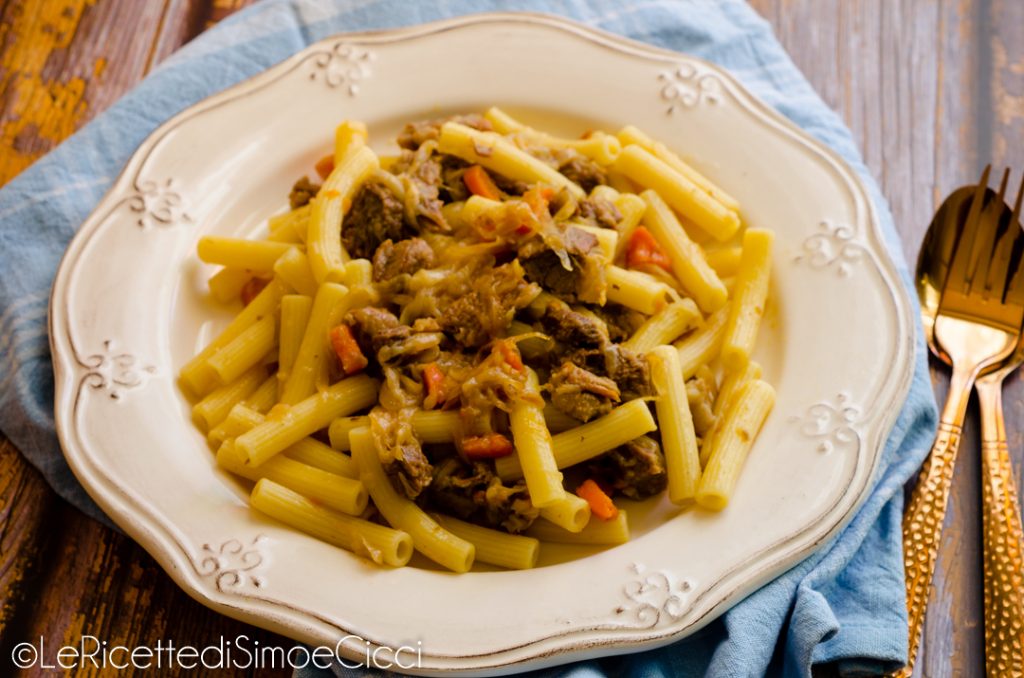
There are dishes that tell the story of a city even before you taste them. Ziti alla Genovese is one of these. A great classic of Neapolitan cuisine, made with a few simple ingredients and a long cooking time that slowly transforms onions and meat into a creamy, fragrant and incredibly flavorful sauce.
The Genovese fills the house with its aroma for hours. A pot full of onions simmers gently on the stove and, together with the meat, melts down until it becomes an enveloping sauce perfect for pasta. Despite the name, this recipe has nothing to do with Genoa: it is in fact one of the most authentic symbols of Neapolitan tradition.
The most commonly used pasta is ziti broken by hand, which holds the sauce perfectly. The result is a rich, rustic and deeply satisfying first course. And, as tradition dictates, the meat used for the sauce is not wasted: it is served after the pasta as a second course.
A recipe that requires time and patience, but rewards with an intense and unmistakable flavor.
- Difficulty: Very easy
- Cost: Medium
- Preparation time: 20 Minutes
- Cooking time: 5 Hours
- Portions: 4Servings
- Cooking methods: Slow cooking
- Cuisine: Italian regional
- Region: Campania
- Seasonality: All seasons
Ingredients
- 11 oz ziti
- 2.2 lbs beef (beef shin or veal eye round)
- 4.4 lbs ramata onions
- 2 carrots
- 1 stalk celery
- 7 fl oz white wine
- 3.5 tbsp lard
- 10 tbsp extra virgin olive oil
- 1 leaf bay leaf
- parsley
- cheese (grated)
- salt
- pepper
Steps
To prepare ziti alla Genovese, start with the aromatic base. Finely chop the carrot and the celery stalk and set aside.
In a large pot heat the extra virgin olive oil together with the lard. Add the meat cut into large pieces and brown it well on all sides until nicely golden.
When the meat is browned, remove it from the pot and set aside temporarily. In the same fond, add the chopped celery and carrot and let them sauté for a few minutes.
Then add the onions sliced very thinly, add a bay leaf and mix well. Cover with a lid and let the onions soften for about 20 minutes, stirring occasionally.
At this point put the meat back into the pot, deglaze with the white wine and let the alcohol evaporate. Cover and continue cooking over a very low heat for about 5 hours, stirring from time to time. The onions should become extremely soft and almost fall apart, creating a creamy sauce.
When the sauce is ready, season with salt and pepper and flavor with parsley and a few chopped celery leaves.
Meanwhile break the ziti by hand and cook them in plenty of boiling salted water. Drain the pasta al dente and transfer it directly to the pot with the Genovese.
Toss with a generous handful of grated cheese and serve piping hot.
Storage
Genovese keeps in the refrigerator for 2-3 days in an airtight container.
It can also be frozen, preferably without the pasta, for up to 2 months.
Tips
Slice the onions very thinly: this will help achieve a creamy sauce.
Cooking must be very slow: the secret of Genovese is the long caramelization of the onions.
If during cooking the fond dries out too much, you can add a few tablespoons of hot water.
Variations
Genovese with beef: beef shin is one of the most traditional choices.
Mixed version: you can use a mix of beef and veal for a richer flavor.
With different pasta: paccheri, rigatoni or broken candele are also perfect for this sauce.
FAQ (Questions and Answers)
Why is it called Genovese if it’s Neapolitan?
The name probably stems from Genoese cooks who worked in Naples in the past, but over time the recipe became one of the symbols of Neapolitan cuisine.
Can it be prepared in advance?
Yes, in fact it is even better the next day because the flavors meld together more.
