
Soft Hot Cross Buns: the fail-safe recipe with raisins and dried cranberries
Homemade sweet buns: cloud-like soft (even the day after)
Do you know that heavenly scent of spices and butter that fills the kitchen when you’re baking a leavened dough?
Well, Hot Cross Buns are exactly that: a soft, comforting hug that smells like home. Yet, the risk of ending up with a “brick” is always around the corner.
Many get discouraged because often these buns, once cooled, become hard or contain raisins so dry they’re unpleasant to bite. The common problem? An under-hydrated gluten network or, worse, adding the dried fruit “as is” so it soaks up all the dough’s moisture, stealing it from the crumb.
To fix this issue and give you buns that stay cloud-like for days, I have perfected the recipe over time by balancing the fat contribution from whole milk and butter to obtain that slightly stringy texture typical of the best sweet leavened goods.
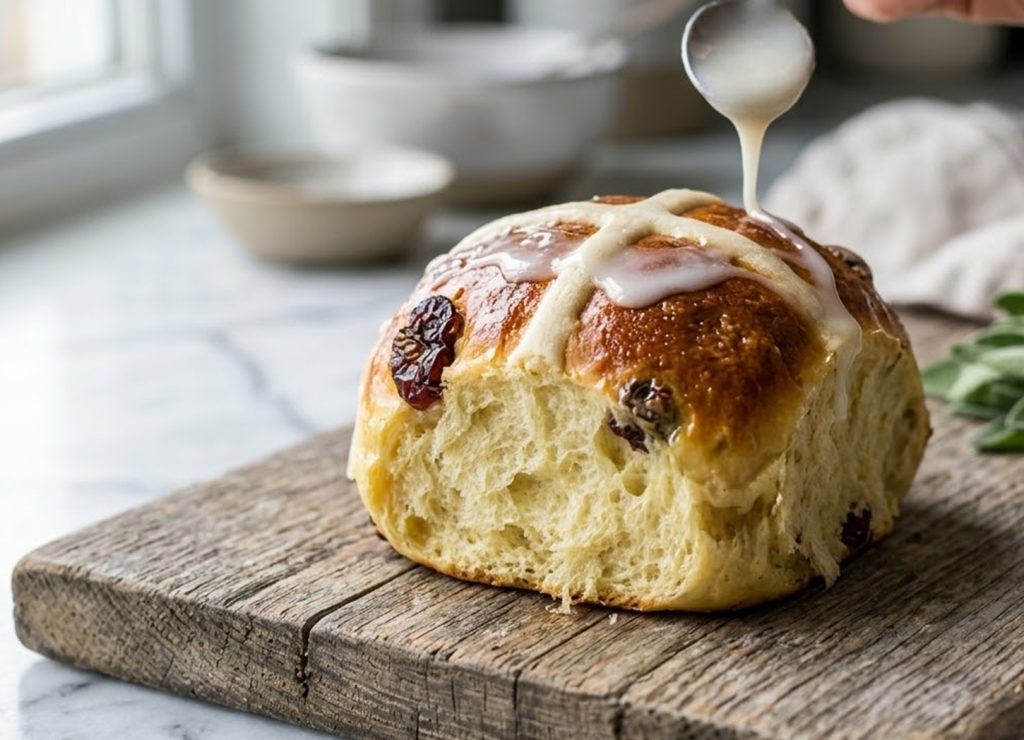
You don’t need to be a master baker: with the right patience during the rises and the gentle heat of the oven, you’ll bring to the table shiny, fragrant buns with that perfect cross of icing that doesn’t run.
Make them for Easter breakfast or for a special afternoon tea; your guests’ smiles will confirm you hit the mark.
- Difficulty: Medium
- Cost: Inexpensive
- Rest time: 2 Hours 10 Minutes
- Preparation time: 30 Minutes
- Cooking time: 16 Minutes
- Portions: 12 sweet buns (about 3 oz / 80–85 g each).
- Cooking methods: Oven
- Cuisine: Italian
Hot Cross Buns Ingredients
- 3 1/2 cups 00 flour (all-purpose)
- 3/4 cup whole milk (divided into 1/4 cup for the yeast and 1/2 cup for the dough)
- 4 tbsp butter (softened (about 2 oz / 55 g))
- 1 sachet active dry yeast (1 sachet (7 g / ~2 1/4 tsp))
- 1/2 cup granulated sugar (+ a pinch to activate the yeast)
- 2 eggs (large, well beaten)
- 1/2 cup raisins (or dried cranberries)
- 1/4 teaspoon ground cinnamon
- 1/8 teaspoon nutmeg (ground)
- 1 egg (beaten (for brushing))
- 1 teaspoon water
- 1/2 cup powdered sugar
- 2 1/2 tbsp whole milk (for the glaze (2 tbsp; alternative: 1/2 tbsp if needed to adjust consistency))
Tools
- Kitchen scale
- Stand mixer
- Measuring jug
- Small bowl
- Sieve
- Bowl
- Baking pan
- Dough cutter / Pizza wheel
- Brush
- Piping bag
- Cooling rack
How to make Hot Cross Buns at home
Start by placing the cranberries and raisins in a small bowl and cover with boiling water for 10 minutes. This step is essential to prevent them from becoming hard after baking. At the same time, dissolve the yeast in 1/4 cup (60 ml) of warm milk with a pinch of sugar and wait until it becomes foamy.
In a large bowl, mix the remaining 1/2 cup (120 ml) of warm milk with the sugar, the butter and the spices. When the butter has melted, add the eggs and the activated yeast. Add the flour little by little, kneading (preferably with the hook of a stand mixer) for about 10 minutes, until the dough is smooth and elastic. The dough should be slightly sticky to the bowl but not to your fingers.
Thoroughly dry the drained dried fruit and fold it into the dough. Put the dough to rise in a buttered bowl in a warm place for about an hour and a half (until doubled). Then divide the dough into 12 equal pieces, shape into balls and place them in a buttered baking pan (about 9 x 13 in). Let rise again for 30 minutes until well puffed.
Preheat the oven to 374°F. Brush the buns with the beaten egg and bake for 15–17 minutes until the tops are nicely golden. Once the buns are just warm (not hot!), prepare the glaze by mixing the powdered sugar and 2 tablespoons of milk and pipe the classic crosses with a piping bag or a small food bag with the tip cut off.
Storage
Store them in an airtight container for 2–3 days. To bring them back to just-baked condition, heat them for 10 seconds in the microwave: the internal moisture will reactivate immediately, making the crumb elastic again.
Notes on Ingredients
To obtain Hot Cross Buns worthy of a London bakery, the quality of the ingredients is key. Here’s how to manage your pantry and which variations have been kitchen-approved:
Flour: The recipe calls for 00 flour for a soft but slightly denser texture. If you prefer a more open, “stringy” crumb, you can replace it with strong flour (Manitoba) or a 50/50 mix. In that case, add 1–2 extra tablespoons of milk, as high-protein flours absorb more liquid.
Milk: Whole milk provides the fat needed for an elastic crumb. You can substitute with unsweetened soy or oat milk without changing weights; avoid rice milk as it is too watery and low in protein to support the gluten network.
Butter: For a lactose-free version, tested substitutes are high-quality vegetable margarine or solid coconut butter. I do not recommend seed oil in this specific recipe: butter gives the buns cold structure during shaping.
Spices: If you don’t like nutmeg, replace it with a pinch of ground ginger or cardamom for a more citrusy touch.
Dried Fruit Mix: In addition to raisins and cranberries, you can use small diced candied orange peel or chopped dried apricots. If you choose chocolate chips, make sure they have been in the freezer for 30 minutes before folding in to avoid melting and staining the dough during handling.
A bit of History and Curiosities
Did you know that behind these soft buns lies a story that blends sacred and profane? Hot Cross Buns are not just an Easter treat, but a symbol of Anglo-Saxon tradition, with origins going back as far as the 12th century. Legend has it that an Anglican monk first prepared them specifically for Good Friday, marking them with a cross to honor the holiday. But the most incredible curiosity dates back to the era of Elizabeth I: the Queen issued a decree forbidding their sale except on Good Friday, Christmas and funerals. They were considered so “special” (and almost magical) that common people began to bake them secretly at home, convinced that a bun baked on Good Friday would never mold!
Even today, according to a charming superstition, giving a Hot Cross Bun to a friend is a gesture that seals a friendship for the coming year, accompanied by the ritual phrase: “Half for you and half for me, between us two shall goodwill be”. Hanging one in the kitchen is said to protect the house from fires and ensure that all your bakes for the year come out perfect. In short, beyond being delicious, these buns carry a load of luck and legend that will make your Easter spread even more magical and a topic of conversation among guests!
FAQ (Questions & Answers)
Why does my glaze run and not hold its shape?
The secret is to decorate the buns when they are warm, never piping on boiling-hot ones. If the glaze is too runny, add an extra teaspoon of powdered sugar until it reaches a toothpaste-like thickness.
Can I use Manitoba flour?
Yes, Manitoba will help obtain taller, softer buns, but the dough may require a splash of extra milk because this flour absorbs more liquid.
What can I use instead of honey or sugar in the dough?
You can use maple syrup for a more autumnal aroma, keeping the same proportions as sugar.
What can I do if the dough doesn’t double?
Make sure the milk wasn’t boiling (it kills the yeast) and that the room is free of drafts. In winter, you can use the oven turned off with the light on to create the ideal microclimate.
