
How to make the perfect Mimosa Roll: step-by-step recipe with an elastic sponge cake
Mimosa Roll: how to prevent it from breaking or the filling from slipping away
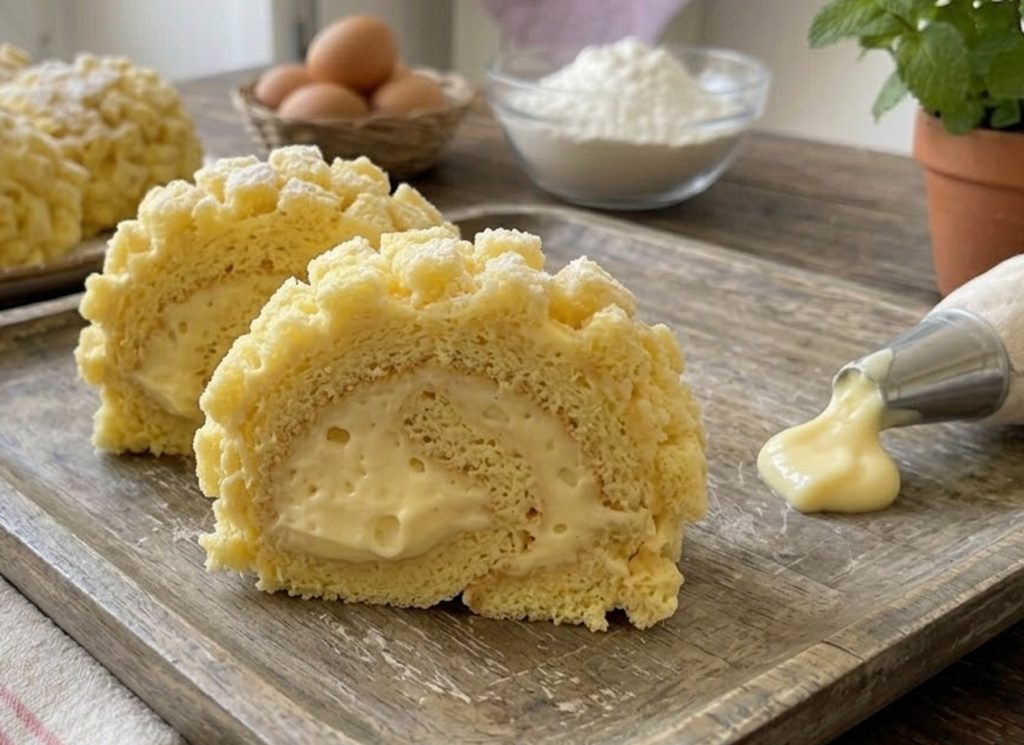
Let’s admit it: the mimosa cake is a classic, but the roll format has that modern touch that immediately wins over the table.
It’s the perfect dessert to celebrate International Women’s Day or to welcome spring with something yellow, soft and fragrant.
The preparation requires a bit of patience for the chilling times, but I assure you that seeing those little cubes of sponge cake that perfectly adhere to the cream is immensely satisfying. It’s a dessert that smells like home, lemon and Sunday family gatherings.
The number one problem when preparing a roll is the fear that the sponge cake will crack when rolled or that the cream, too runny, will escape everywhere ruining the scenic effect.
It often happens because the sponge dries out too much in the oven or because the fundamental resting time of the cream is not respected.
With this version of the mimosa roll, we will solve these doubts thanks to an elastic sponge and a diplomat cream supported by the right amount of gelatin.
- Difficulty: Medium
- Cost: Moderate
- Rest time: 2 Hours
- Preparation time: 30 Minutes
- Cooking time: 20 Minutes
- Portions: 8
- Cooking methods: Oven
- Cuisine: Italian
Ingredients for the Mimosa Roll
- 1 1/4 cups all-purpose flour
- 1 cup granulated sugar
- 6 eggs (at room temperature)
- 1 tbsp honey
- 5 egg yolks
- 2 cups whole milk
- 1/2 cup cornstarch
- 7/8 cup granulated sugar
- 1 tbsp + 1 tsp heavy cream (liquid)
- 4 sheets gelatin sheets
- 1 lemon zest
- 2/3 cup heavy cream for whipping
- sponge cake (leftover from the sponge batter)
Tools
- Kitchen scale
- Stand mixer
- Parchment paper
- 2 Baking pans
- Saucepan
- Bowl
How to prepare the Mimosa Roll
Foamy batter: In the stand mixer, beat the eggs, sugar and honey for 10 minutes until you obtain a mixture that “writes” (ribbons). Gently fold in the sifted flour by hand with bottom-to-top motions.
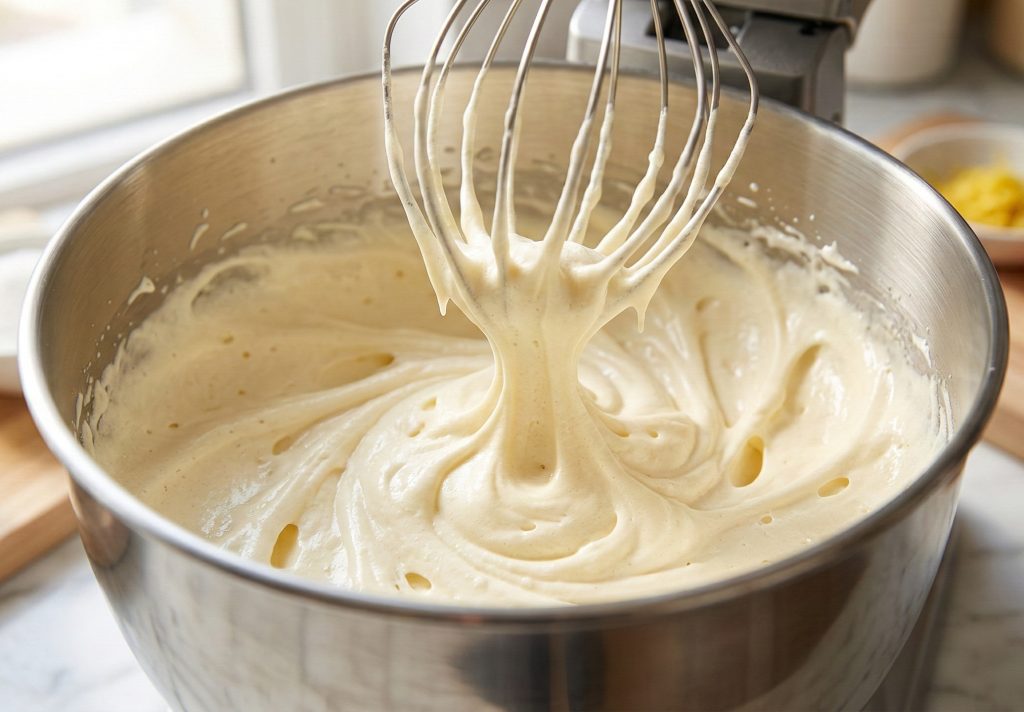
Baking: Divide the batter between two pans (40 x 30 cm and 21 x 28 cm — about 16 x 12 in and 8 x 11 in). Bake at 392°F (200°C) for 10–12 minutes. Turn the sponge out onto parchment paper, cover with plastic wrap and chill in the refrigerator for one hour.
Pastry cream base: Heat the milk with the lemon zest. Whisk together the yolks, sugar and cornstarch, temper with the hot milk and cook until thick.
Adding gelatin: Dissolve the soaked gelatin in 1 tbsp + 1 tsp of hot cream and incorporate it into the cream. Let rest in the refrigerator for 30 minutes.Filling: Spread the cream over the large sponge (darker side to the inside). Roll tightly, helping yourself with the parchment paper.
Finished roll: Let the roll rest in a concave mold in the refrigerator for one hour.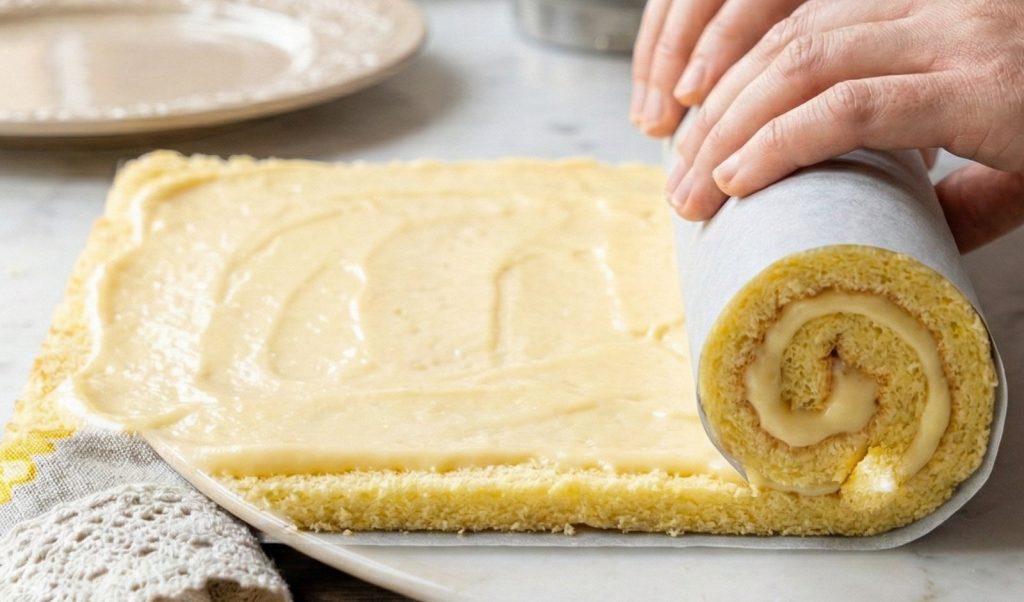
Mimosa cubes: Dice the small sponge (about 1 x 1 cm — roughly 3/8 x 3/8 in), removing the darker edges. Cover the roll with whipped cream and press the cubes and edible flowers onto the surface so they adhere.
Ingredients: notes and substitutions
Honey: It helps make the sponge more elastic; if you don’t have wildflower honey, a neutral-flavored acacia honey works well too.
Gelatin: It is essential to give stability to the cream inside the roll; if you prefer not to use it, make sure to cook the cream very well until it becomes very thick.
Storage
The mimosa roll can be stored in the refrigerator, well covered, for up to 2–3 days. Freezing is not recommended due to the cream and whipped cream, which would lose texture.
Variations
Strawberries: For an extra touch of color, you can add chopped strawberries to the filling together with the cream.
Syrup: If you prefer a moister dessert, brush the sponge with a soak made with Alchermes or limoncello before spreading the cream.
Tips
For a perfect “mimosa” effect, make sure the sponge cake cubes are very small and irregular; this will give the dessert that artisanal, soft appearance typical of carefully made homemade creations.
FAQ (Questions & Answers)
Why did my sponge cake crack while I was rolling it?
Most likely it was overbaked or baked at too low a temperature for too long, causing excessive drying. Immediately covering it with plastic wrap after baking helps retain moisture and keeps it elastic.
Can I prepare the cream the day before?
Absolutely — in fact, a longer rest will make it even more stable and easier to spread. Just whisk it briefly with a whisk before using to bring it back to a spreadable consistency.
How do I make the sponge cubes adhere well?
Whipped cream acts as the “glue.” Don’t be afraid to apply gentle pressure with your hands over the cubes: this will ensure they stay in place even while cutting.
