
How to make orecchiette with broccoli rabe, anchovies and fried breadcrumbs Social Title: Orecchiette and broccoli rabe: the secret to not making them bitter!
Orecchiette with broccoli rabe: the original Apulian recipe with a crunchy twist
You know those Sundays when all you need is a dish that tastes like home, true traditions and aromas that fill the kitchen?
For me, orecchiette with broccoli rabe is exactly that: a comforting, delicious hug that never gets old.
Often people think that getting that creamy consistency typical of Apulian trattorias is some sort of dark magic, but the truth is that a little familiarity with the ingredients and a few tricks are enough.
Sometimes broccoli rabe can turn out a bit too bitter or the pasta remains separated from the sauce, as if they were two separate entities on the plate. Don’t be discouraged, it happened to me too!
The secret I’ve learned over time is to cook the pasta together with the greens: this way the orecchiette absorb every nuance of flavor and the starch creates a natural emulsion that binds everything beautifully.
In this version I added sun-dried tomatoes because I love that burst of color and the sweet-tart note that perfectly balances the assertive character of the rabe.
Shall we put the water on? You’ll see that with this technique you’ll bring to the table a first course so flavorful and balanced that your guests will ask for seconds (and maybe thirds).
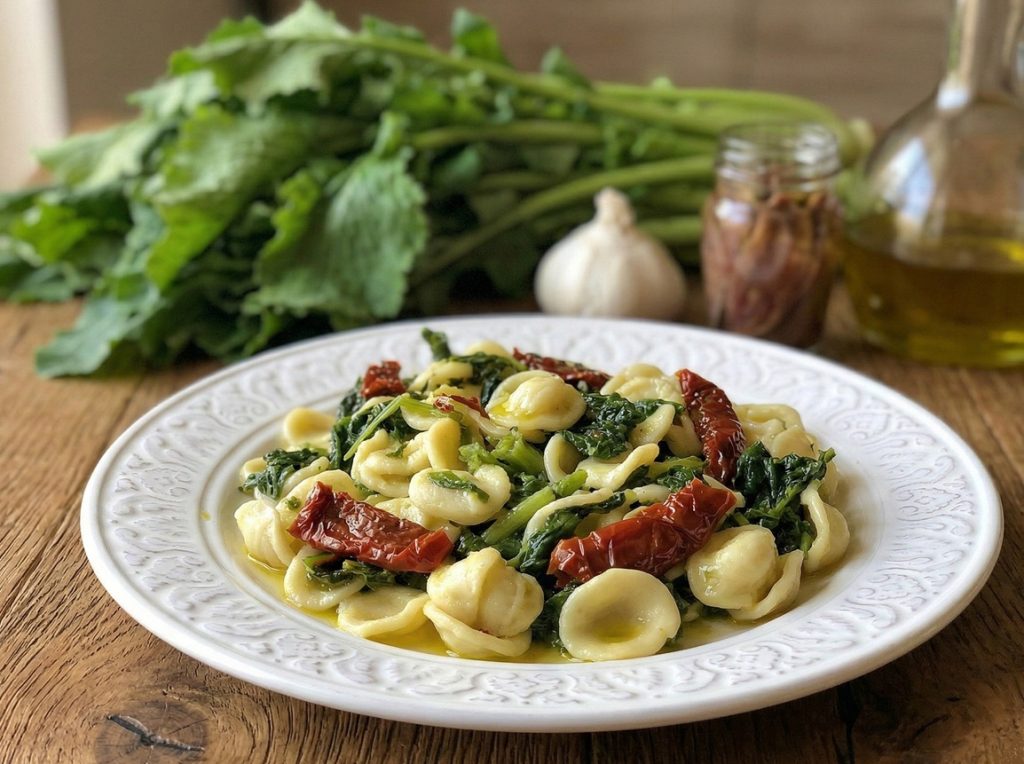
- Difficulty: Easy
- Cost: Inexpensive
- Preparation time: 15 Minutes
- Cooking time: 15 Minutes
- Portions: 4
- Cooking methods: Stovetop
- Cuisine: Italian
Ingredients Orecchiette with broccoli rabe
- 11 oz orecchiette (homemade or store-bought; alternatively any pasta of your choice)
- 2.2 lbs broccoli rabe
- 6 2/3 tbsp extra virgin olive oil (divided into two portions of about 3 1/3 tbsp (50 ml) each)
- 8 fillets anchovies in oil
- 1 clove garlic
- 1 fresh chili pepper
- 6 sun-dried tomatoes in oil
- to taste salt
- 1/2 cup breadcrumbs
Tools
- Kitchen scale
- Frying pan
- Small bowl
- Stockpot
- Kettle
How to make orecchiette with broccoli rabe, anchovies and fried breadcrumbs
A small tip to save time: to heat the pasta cooking water use a kettle — not only will the water boil in just a minute but you’ll also save energy whether you have a gas or induction stove. (my favorite kettle is the Ariete Vintage line and you can find it at this LINK)
Start by thoroughly cleaning the broccoli rabe. Remove the toughest, longest stems and peel off the fibrous ribs from the larger leaves. You should keep only the tender parts and the florets (the tops). Once cleaned, cut them with a knife into uniform pieces about 1 3/16 in (3 cm) at most. Wash them well under running water.
In a nonstick pan, heat the first about 3 1/3 tbsp (50 ml) of extra virgin olive oil. Add the breadcrumbs and toast them for a few minutes over medium heat, stirring constantly, until they turn a deep golden and crunchy color. Remove from heat and keep aside in a small bowl.
In a large pan (the one you will use to toss the pasta), heat the remaining about 3 1/3 tbsp (50 ml) of oil with the peeled garlic clove and the whole chili. Add the anchovy fillets and the sun-dried tomatoes cut into small pieces. Stir over low heat until the anchovies have completely melted, creating a flavorful little cream. Remove the garlic and the chili.
Put a pot of plenty of salted water on the heat. When it reaches a boil, add the fresh orecchiette and the cut broccoli rabe at the same time. Let them cook together for about 5–6 minutes (adjust according to the type of pasta chosen). Before draining, reserve a ladle of the cooking water.
Drain the orecchiette and the rabe well and pour them directly into the pan with the sauce. Toss over high heat for at least 2 minutes, adding a little of the reserved cooking water if the pan looks too dry. This step creates a light emulsion that will perfectly bind the pasta to the greens.
Ingredients: Notes and Substitutions
The Orecchiette: If you can’t find fresh ones, you can use dried orecchiette, increasing the cooking time according to the package. For a gluten-free version, choose rice or corn orecchiette.
Broccoli rabe: Make sure they are very fresh, with bright green leaves and tightly closed florets. If you can’t find them, you can substitute with broccolini, although the flavor will be sweeter and less “rustic”.
Anchovies: Essential for the “umami” flavor. If you are vegan, replace them with a teaspoon of miso paste or increase the amount of sun-dried tomatoes and use desalinated capers.
Storage
Orecchiette with broccoli rabe should be eaten hot immediately. If you have leftovers, store them in the refrigerator in an airtight container for up to one day. To reheat, toss again in a pan with a drizzle of oil, but note that fresh pasta tends to become very soft.
Recipe Variations
Spicy version: Add some chili powder at the end if you prefer a stronger heat.
With sausage: A classic pairing is to add crumbled, browned sausage together with the garlic and oil.
With pine nuts: For an extra touch of sweetness, add toasted pine nuts together with the breadcrumbs.
Tips
Don’t throw away the stems: If the stems aren’t too tough, peel them with a vegetable peeler, chop them finely and cook them a few minutes before the leaves.
Cooking water: Always save a little; the starch released by the pasta and the greens is the secret for a creamy finish.
FAQ (Questions & Answers)
Can I use frozen broccoli rabe?
Yes, but the texture will be softer. Boil them directly with the pasta without thawing them first.
How do I remove excessive bitterness?
The secret is the freshness of the greens and the generous use of oil and anchovies which balance the flavor.
Are dried orecchiette okay?
Absolutely, but add them to the water a few minutes before the broccoli rabe, as dried pasta usually takes longer to cook than fresh.
