
Ricotta and Spinach Cannelloni: The Secret to a Creamy Filling
The perfect cannelloni recipe: the trick for a creamy filling — goodbye to cannelloni that open and get watery in the oven!
If there’s one moment when ricotta and spinach cannelloni can disappoint, it’s when you pull the baking dish from the oven and notice that the filling’s liquid has watered down the béchamel, leaving the dish soft and flavorless.
This is the number one problem with this recipe. The failure isn’t due to the béchamel or the type of pasta, but to the fact that ricotta and spinach, even when cooked, retain too much moisture.
To achieve a firm, creamy filling that’s easy to work with using a piping bag and that will hold its shape during baking, you must focus on two fundamental steps.
Only when the spinach is completely dry will the filling, blended with the egg yolks and cheese, have the right consistency to withstand the heat.
Adopt this tip and I guarantee the filling won’t melt away — you’ll enjoy a creamy, intense result.
- Difficulty: Facile
- Cost: Economico
- Preparation time: 40 Minutes
- Cooking time: 25 Minutes
- Portions: 4
- Cooking methods: Forno
- Cuisine: Italiana
Ingredients for Ricotta and Spinach Cannelloni
- 9 oz fresh egg pasta sheets (fresh egg pasta sheets)
- 1/3 cup grated Parmesan
- 10 cups fresh spinach (washed)
- 2 cups cow's milk ricotta (drained)
- 1 cup grated Parmesan
- 3 egg yolks
- 1 clove garlic
- to taste extra virgin olive oil
- 1 pinch black pepper
- to taste salt
- 2 cups whole milk
- 4 tbsp + 1 tsp cornstarch
- 2.5 tbsp butter
- 1 pinch nutmeg
- to taste salt
- 1 pinch pepper
Tools
- Fine-mesh strainer
- Bowl
- Frying pan
- Immersion blender
- Piping bag
- Small saucepan
- Saucepan
- Baking dish
How to prepare ricotta and spinach cannelloni
Drain the ricotta: If you haven’t already, make sure the ricotta is very dry. The optimal method is to let it drain in a fine-mesh strainer set over a bowl in the refrigerator the night before using it. This way it will lose all excess whey.
Cook the spinach: Wash the spinach, dry the leaves and wilt them in a non-stick frying pan with a drizzle of extra virgin olive oil and the whole garlic clove (which you’ll remove afterward). Cover with a lid and wait about 6-7 minutes.
Squeeze the spinach: Once cooked, turn off the heat and let them cool completely. Squeeze the spinach very well now. Place the spinach in a fine-mesh strainer or wrap it in a clean kitchen towel and press hard with a spoon to remove excess water.
Prepare the mixture: Put the cold, well-drained spinach in a blender along with the drained ricotta, the egg yolks and the grated cheese. Add salt, pepper and nutmeg.
Blend and store: Turn on the blender and puree all the ingredients until you have a creamy, homogeneous mixture. Be careful: the filling must not be runny. Transfer the mixture to a piping bag (without a tip) and keep it in the refrigerator.Heat the milk: Warm the whole milk in a small saucepan.
Prepare the roux: In a pan, melt the butter over low heat. Add the cornstarch (used here instead of flour) and stir quickly until you get the roux (the binding base).
Finish the sauce: Pour the hot milk in a thin stream, season with a pinch of salt, black pepper and freshly grated nutmeg. Continue whisking the sauce.
Cook and cool: Cook the mixture until it reaches a nice thick consistency. Once ready, transfer the béchamel to a bowl and cover it with plastic wrap directly on the surface so a skin does not form.Blanch the pasta: Bring a pot of salted water to a gentle boil and blanch the pasta sheets for a few seconds (just enough to make them pliable — follow package instructions if present).
Prepare the sheets: Place the pasta sheets on a lightly oiled baking tray or work surface without overlapping them to prevent sticking.
Fill and roll: Take the blanched sheets. Pipe about 3 oz (approximately) of filling onto each sheet using the piping bag, leaving at least 3/4 inch free from the edge; this will allow you to roll the pasta into perfect cylinders.Assemble: Take a baking dish about 14 x 9 7/8 in and lightly grease it with a bit of olive oil and 3 tablespoons of béchamel. Lay the cannelloni side by side in the dish.
Cover and bake: Cover the cannelloni with the remaining béchamel and a generous sprinkling of grated cheese to promote browning.Bake your cannelloni in a preheated conventional oven at 392°F for 20-25 minutes. Remove from the oven when the surface has formed a nice golden, crispy crust.
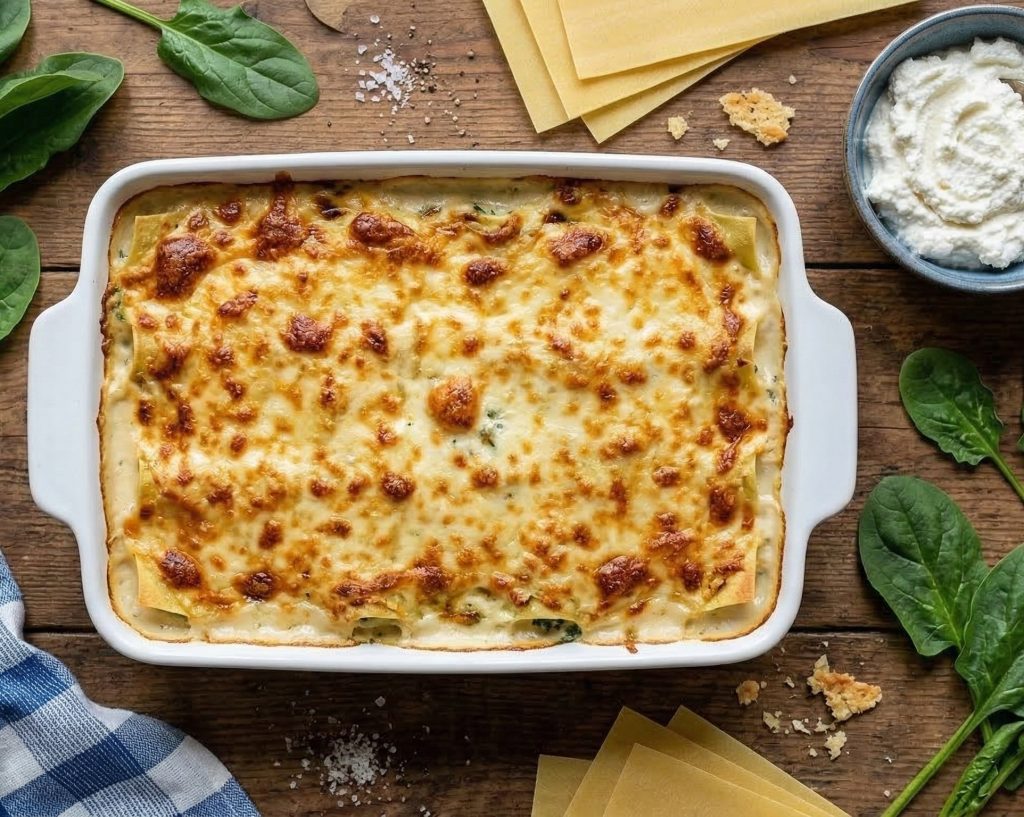
Convection oven: You can use a convection oven at 356°F, reducing the cooking time to about 15-20 minutes. If you notice the surface browning too quickly, cover the dish with aluminum foil and remove it only for the last 5 minutes.
Storage
Raw: You can prepare the cannelloni and assemble them completely (without baking) up to 24 hours in advance. Cover the baking dish with plastic wrap and store in the refrigerator. Add about 5-10 minutes to the oven time to compensate for starting from cold.
Cooked: If you have leftovers, store cooked cannelloni in an airtight container in the refrigerator for 2-3 days. Reheat in a conventional oven or microwave.
Ingredient Notes and Variations
Ricotta: You can replace cow’s milk ricotta with buffalo or sheep ricotta (which you will need to drain even more thoroughly) for a stronger flavor.
Spinach: If you don’t have fresh spinach, you can use frozen spinach, making sure to cook it, drain it and squeeze it very well before adding it to the filling.
Béchamel: Using cornstarch (as indicated in the ingredient list) instead of wheat flour makes the béchamel gluten-free and often silkier.
FAQ (Questions and Answers)
Why do cannelloni open during baking?
They open if you’ve overfilled them or if the pasta hasn’t been blanched enough to become elastic. Make sure to leave at least a 3/4 inch border free while filling.
How can I avoid a lumpy béchamel?
The secret is to add the hot milk to the roux (butter and starch/flour) in a steady stream and whisk vigorously. Continue whisking until it thickens.
Can I freeze cannelloni?
Yes, you can freeze them raw after assembling and covering them with béchamel. Wrap the tray well with plastic wrap and foil and freeze. Thaw in the refrigerator before baking or bake directly from frozen, adding about 20 minutes to the cooking time.
