
How to make crepes at home: a foolproof basic recipe, quantities and tricks for perfect crepes without lumps
Crepes or Crespelle: the secret to a smooth, perfect batter
Have you ever tried to make crepes and ended up with a batter full of annoying lumps or, worse, with crepes that tear as soon as you try to flip them?
It’s a very common problem that often discourages even the most enthusiastic home cooks. The secret to a perfect crepe is not only the ingredients, but the order in which you combine them and a small technical step that many underestimate.
In this guide I’ll show you how to get a silky, incredibly elastic batter, ideal for both sweet and savory preparations.
Whether you want to prepare lean cannelloni for Sunday or a delicious snack with hazelnut cream, this base will become your ace in the hole.
We’ll see together how to measure the flour without mistakes and how to cook them to perfection to get that typical golden color that makes them irresistible.
Get ready, because once you’ve tried these you will never buy the ready-made ones from the supermarket again!
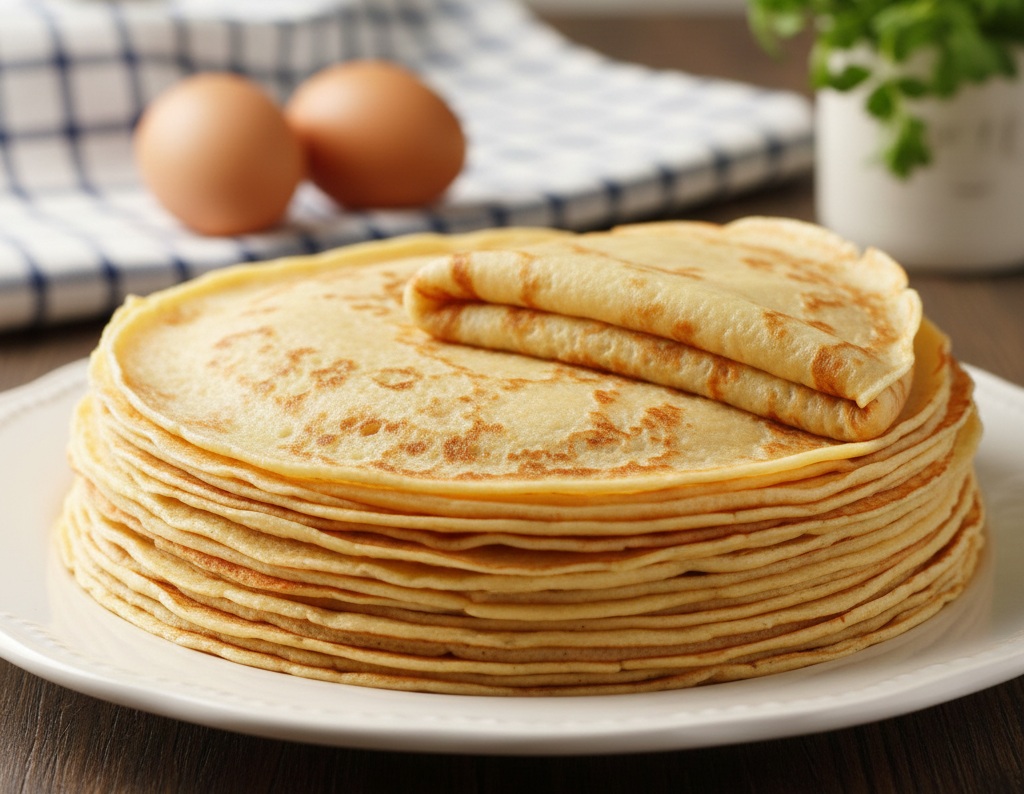
- Difficulty: Very easy
- Cost: Very inexpensive
- Preparation time: 5 Minutes
- Cooking time: 2 Minutes
- Portions: about 16 crepes
- Cooking methods: Stovetop
- Cuisine: Italian
Ingredients (Serves about 16 crepes)
- 4 eggs
- 3 tbsp butter (melted (about 40 g))
- 2 cups all-purpose flour (00) ((about 250 g))
- 2 cups whole milk ((about 500 ml))
- 1 pinch fine salt
Tools
- Kitchen scale
- Bowl
- Whisk
- Crepe pan
How to make crepes at home
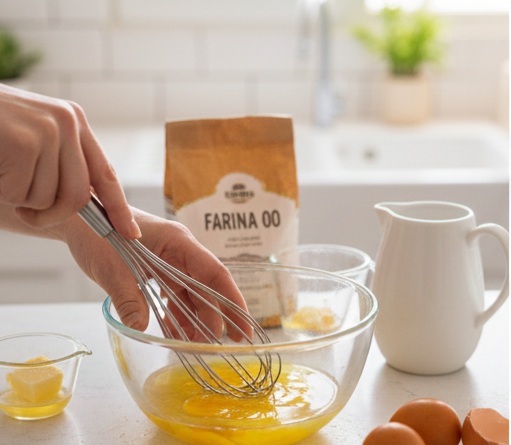
In a large bowl, break the four eggs and start whisking them vigorously with a hand whisk. Pour in the melted butter (left to cool slightly) and begin incorporating the flour little by little. At this stage you’ll get a very thick batter: don’t worry, that’s normal! Keep stirring carefully to remove the first lumps and start adding the milk in a thin stream, a little at a time, continuing to work the mixture until it becomes smooth and fluid.
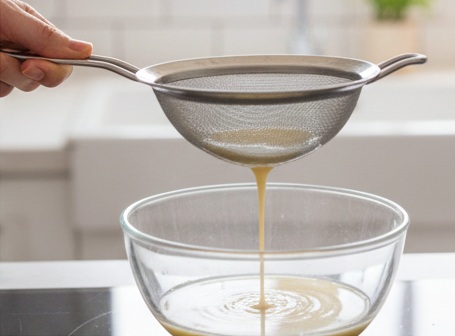
To be sure there are no lumps left, take another bowl and pass the entire batter through a fine-mesh sieve. This step is essential for a professional result.
Heat a nonstick pan (the ideal diameter is about 8.5 in). Lightly butter the bottom and, with a sheet of paper towel, remove the excess fat. Pour a small ladleful of batter at a time, rotating the pan to distribute it evenly.
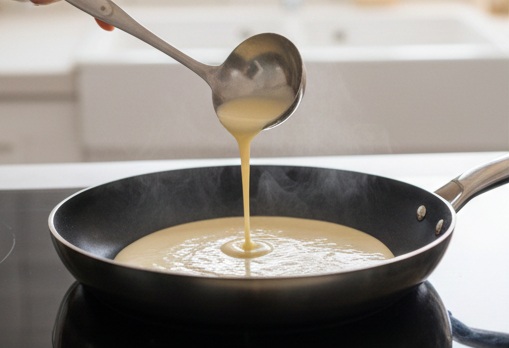
Cook over medium heat for about one minute. When the edges start to release, flip the crepe and finish cooking for another minute on the other side.
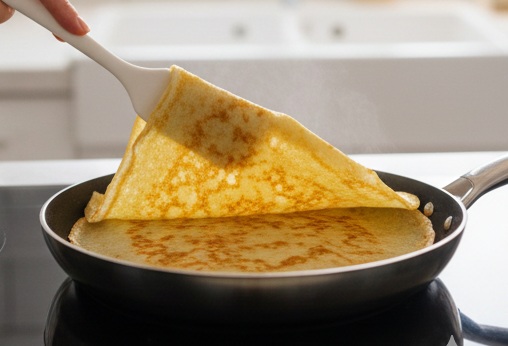
Now that they’re ready, fill them as you prefer in sweet or savory versions.
Notes on Ingredients and Substitutions
Eggs: Use room-temperature eggs to help emulsify with the butter.
Milk: Whole milk makes the crepes more flavorful, but semi-skimmed is fine.
Butter: Essential for softness. If you prefer a lactose-free version, use lactose-free butter and milk.
Butter substitution: If you don’t have lactose-free butter, you can replace it with 1½–2 tbsp of vegetable oil (sunflower or corn), adjusting based on batter consistency.
Flour: Classic 00 flour is ideal for this preparation.
Tips
Temperature: Make sure the pan is hot before pouring the first ladleful, otherwise the first crepe will tend to stick.
Consistency: If you need to reheat the crepes in the oven (for example topped with béchamel), you can keep them lighter in the pan. If you eat them immediately on the plate, extend cooking by 30 seconds per side to form a delicious crispy edge.
Fillings: Let your imagination run free! From classic ham and cheese to ricotta and spinach, to sweet versions with jam or fresh fruit.
Storing crepes
If you need to plan ahead, you can prepare and cook the crepes the day before: store them in the refrigerator stacked and well sealed with plastic wrap (they last up to 2 days). For the freezer, stack them with a sheet of parchment paper between each crepe to prevent sticking. Wrap everything in plastic wrap and freeze.
Recipe variations
Whole-wheat crepes: Replace half of the 00 flour with whole-wheat flour for a more rustic flavor.
Aromatic version: Add a pinch of nutmeg to the batter for savory preparations, or some orange zest for sweet ones.
FAQ (Questions and Answers)
Why does my first crepe always come out badly?
It’s completely normal! Often the pan’s temperature is not yet perfectly even or there’s too much butter. Consider it a technical test.
Can I prepare the batter in advance?
Absolutely yes. You can prepare the batter and let it rest in the refrigerator for 30 minutes or even a few hours; this will make the crepes even more elastic.
How do I avoid my crepes becoming rubbery?
Do not overwork the batter after adding the milk and make sure to cook them over medium heat, not too low, otherwise they will dry out excessively.
