
Easy Ricotta Castagnole: the Soft and Quick Recipe for a Carnival to Lick Your Whiskers
Who of you doesn’t wait for Carnival season just to sink your teeth into a cloud of sweetness?
Today I reveal the secret to making the softest, lightest and most fragrant Ricotta Castagnole you’ve ever tasted!
Forget heavy or greasy recipes: thanks to the addition of fresh ricotta, these little golden balls are not only incredibly soft inside, but remain so even after hours!
This is grandma’s recipe, the one that takes you back to childhood in a single bite, but with a small “upgrade”: using ricotta makes them less bread-like and protects them from excessive oil absorption during frying, making them lighter.
The unmistakable scent of orange zest wraps them in a citrusy hug that makes them irresistible and perfect for the most colorful celebration of the year.
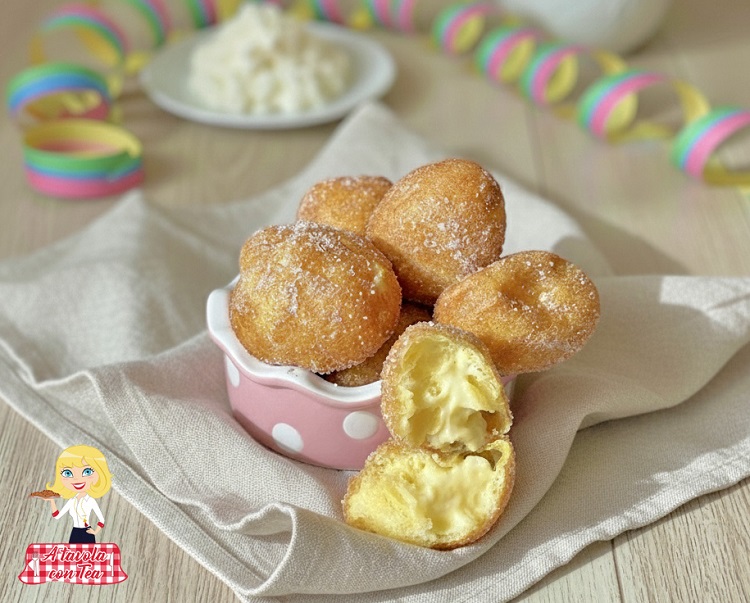
Making them is child’s play, ideal even if you are new to cooking or have children eager to help mix. In no time you’ll have a tray full of these wonders, ready to be enjoyed plain, rolled in granulated sugar, or filled with a silky pastry cream for the greediest among you.
Ready to impress? Save this recipe now and prepare to receive a flood of compliments.
- Difficulty: Very easy
- Cost: Very inexpensive
- Preparation time: 15 Minutes
- Cooking time: 15 Minutes
- Portions: 4
- Cuisine: Italian
Ingredients EASY RICOTTA CASTAGNOLE
- 1 cup ricotta (sheep, cow, or mixed)
- 1 2/3 cups all-purpose flour (00)
- 1/4 cup granulated sugar
- 1 egg (whole)
- 1 orange zest (organic and untreated)
- Half packet baking powder
- as needed seed oil (For frying)
- granulated sugar (For final coating)
- pastry cream (optional for filling)
Tools
- Kitchen scale
- Mixing bowl
- Sieve
- Hand whisk
- Citrus grater
- Sifter
- Plastic wrap
- Frying pan
- Piping bags
Method EASY RICOTTA CASTAGNOLE
In a large bowl, combine well-drained ricotta and granulated sugar. Mix with a spoon or a hand whisk until you have a creamy, homogeneous mixture. Add the whole egg and continue to mix vigorously.
Grate the orange zest (only the colored part, avoiding the bitter white pith) directly into the dough and blend well to spread the aroma. At this point, sift the all-purpose flour and the baking powder and add them to the wet ingredients. Mix well with a spoon until you obtain a homogeneous, lump-free mixture. Don’t worry if the dough is very soft and sticky: that’s the ricotta working its magic!
Cover the bowl with a sheet of plastic wrap and let rest for about 20 minutes at room temperature. This rest is essential to allow the baking powder to activate and the flour to hydrate, making the dough more workable. After the time has passed, take the dough and, with slightly dampened or floured hands, form many balls of equal size (walnut-sized).
Heat a generous amount of peanut seed oil in a narrow, high-sided pot (ideal for deep frying). The ideal temperature is about 338°F. To test the oil, dip a wooden skewer: if it sizzles immediately with lively bubbles, it’s ready. Start frying the castagnole two or three at a time to avoid lowering the oil temperature too much. Fry them for about 5 minutes, turning them often to ensure even cooking and perfect browning.
Drain the castagnole as they are ready and place them on a sheet of absorbent paper to remove excess oil. Roll them immediately in granulated sugar while still hot: this way the sugar will adhere perfectly. You can enjoy them as is, or for a gourmet touch, fill them with pastry cream (use a piping bag with a small nozzle to inject the cream).
Ingredient Notes and Substitutions
Choosing the Ricotta
Ricotta is the key ingredient in this recipe. Make sure it’s very fresh and, above all, well drained. If it’s too watery, the dough will be too soft and will absorb more oil during frying. If necessary, let it drain in a colander for a couple of hours in the refrigerator before using.
Substitutions
Flour: You can substitute 00 flour with Type 1 flour (the result will be less soft but with more fiber) or with a mix of 00 flour and potato starch (use about 20 g potato starch instead of 20 g of 00 flour) for even more softness.
Aroma: If you don’t like orange, you can replace the zest with that of an untreated lemon or use 1 teaspoon of vanilla extract or anise for a more classic flavor.
Frying: Peanut seed oil is the best because it has a high smoke point. Alternatively, you can use high-oleic sunflower oil.
Storage
Ricotta Castagnole are at their best just after frying. If you need to store them, place them in an airtight container at room temperature. They keep for 2-3 days but may lose some softness. I do not recommend refrigerating them, as they tend to harden. You can freeze the raw dough, but after thawing it will have a slightly different texture.
Recipe Alternatives and Variations
With Limoncello (or Rum): Replace the orange zest with lemon zest and add 1 tablespoon of Limoncello or Rum to the dough for a more grown-up flavor and an intense aroma.
Vegan Castagnole: Replace the ricotta with the same amount of soy ricotta or silken tofu (well pressed) and the egg with a flax egg (1 tablespoon ground flaxseed + 3 tablespoons water, let rest 5 minutes) or 30 g unsweetened apple purée.
“Baked Castagnole”: For a lighter version, you can bake the castagnole in a convection oven at 356°F for about 15-20 minutes, or until golden. Remember to brush them lightly with milk or melted butter before baking.
Pairings and Uses
Ricotta Castagnole are the quintessential sweet for Carnival season and spring festivities.
Classic Pairings: They are perfect with a good glass of Vin Santo, a passito or a glass of Prosecco DOCG to balance the sweetness with the freshness of the bubbles.
Snack Time: Serve them warm for a delicious snack. They are fantastic dipped in a cup of thick hot chocolate or alongside a steaming barley coffee.
Creative Fillings: Besides pastry cream, you can fill them with orange marmalade (to echo the dough’s aroma), hazelnut cream, or a dusting of cinnamon together with the sugar.
Origins and History of the Recipe
Castagnole are considered, together with chiacchiere and frappe, the symbolic sweets of Carnival in Italy. Their origins are lost in time, with recipes dating back to the Middle Ages and the Renaissance. The name comes from their shape, which resembles small chestnuts. In the older recipes ricotta wasn’t present; the dough was based on eggs, flour and butter. The ricotta variant is a beautiful evolution, typical especially of Central-Southern Italy and peasant kitchens, where the use of fresh dairy like ricotta or mascarpone was a way to enrich and soften the dough, while making it more economical and lighter than the butter-only version. Each region has its own version, but the basic principle remains the same: celebrating abundance before Lent.
FAQ (Questions and Answers)
1. Why did my Castagnole open or burst during cooking?
This happens because the oil is too hot or because the balls were fried immediately after being formed. Make sure the oil is around 338°F and that the dough has rested the indicated 20 minutes. Also, don’t make them too large.
2. Can I prepare the dough in advance and fry the next day?
Yes, you can prepare the dough, cover it with plastic wrap directly on the surface and keep it in the refrigerator overnight. Take it out 30 minutes before shaping the balls to bring it back to room temperature.
3. How can I prevent the castagnole from absorbing too much oil?
There are two secrets: well-drained ricotta (which makes the dough less thirsty) and a constant oil temperature (338°F). If the oil is too cold, the dough will soak up oil; if it’s too hot, they’ll burn outside while remaining raw inside. Fry a few pieces at a time!
