
Homemade Salted Caramel: The Easy Recipe for a Decadent Topping
There is a flavor that has conquered the dessert world, a perfect contrast between enveloping sweetness and a touch of salt that enhances every note: salted caramel.
It may seem like a job for an experienced pastry chef, but I promise that making salted caramel at home is incredibly simple and very satisfying.
However, the most common mistake is sugar crystallization, which makes it hard and grainy, or the risk that it burns, leaving a bitter taste.
I’ll reveal the secret to obtaining a perfect, creamy, shiny caramel:
Dry melting: You must melt the sugar over very low heat without adding water. In this phase, never stir with a spoon or a whisk; only use circular movements of the pan.
This is the trick to avoid crystallization.
Hot cream: The cream must be very hot when you pour it. If the cream is cold, it will cause a thermal shock that hardens the caramel.
Following these tips and paying attention to the moment the caramel reaches a beautiful deep golden brown color, you will create a velvety, rich sauce with the right touch of salt.
Forget store-bought products: the true flavor comes only from your own preparation.
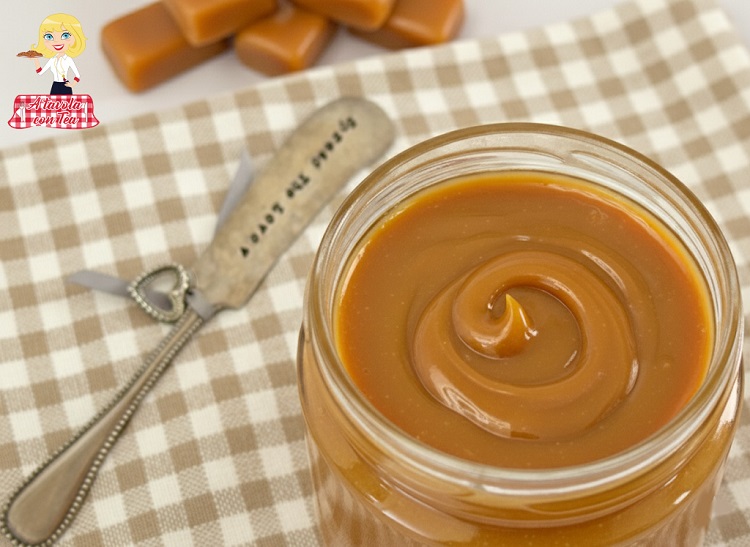
- Difficulty: Very easy
- Cost: Very inexpensive
- Rest time: 20 Minutes
- Preparation time: 10 Minutes
- Cooking time: 20 Minutes
- Cuisine: Italian
Ingredients SALTED CARAMEL
- 1 cup granulated sugar
- 1 1/4 cups heavy cream
- 1/3 tsp salt (fleur de sel)
- 1/2 vanilla bean vanilla bean
Tools
- Kitchen scale
- Saucepan
- Hand whisk
Salted Caramel Instructions
Start by warming the heavy cream in a small saucepan with the fleur de sel and the seeds from the vanilla bean (which you will have removed with a small knife). Be careful not to let it boil; it should be just very hot. Set aside.
In a heavy-bottomed saucepan with high sides, melt the granulated sugar over very low heat. Do not stir with spoons or whisks at the beginning; let it melt slowly. You can help the sugar melt evenly by gently moving the pan in circular motions.
When the sugar has become an amber, golden liquid, remove the saucepan from the heat and, very slowly and in a thin stream, add the hot cream. Whisk while adding. You will see the mixture foam and briefly solidify — that’s normal! Continue whisking vigorously until the caramel becomes a smooth, homogeneous sauce again.
Transfer the salted caramel to a glass or ceramic bowl and let it cool completely at room temperature. It will thicken further as it cools.
Notes on Ingredients and Substitutions
Cream: It is essential to use heavy cream (double cream), not whipped cream or plant-based cream. The fat content of heavy cream is what guarantees the creaminess and stability of the caramel.
Salt: Fleur de sel is ideal for its delicate flavor and flaky texture that dissolves slowly, but you can also use finely ground sea salt. Avoid iodized table salt, which has a more metallic taste.
Vanilla: A vanilla bean gives a deep, natural aroma. If you don’t have one, you can replace it with 1 teaspoon of pure vanilla extract.
Storage
Once cooled, transfer the salted caramel to a sterilized glass jar with an airtight lid. It keeps in the refrigerator for up to 2 weeks. If it becomes too firm, gently warm it in a bain-marie or microwave for a few seconds before use.
Alternatives and Variations
Butter Salted Caramel: For an even richer texture, add 3 1/2 tablespoons (about 50 g) of unsalted butter at room temperature after you have incorporated the cream. Stir until completely melted.
Added Flavors: For a different taste, you can add 1 teaspoon of almond extract, a pinch of ground cinnamon, or a grated tonka bean together with the vanilla.
Vegan Salted Caramel: Replace the heavy cream with 1 1/4 cups (about 300 g) canned coconut milk (use the thickest, fattiest part) and substitute the fleur de sel with a pinch of sea salt.
Uses and Pairings
Salted caramel is an incredibly versatile topping. It is perfect for garnishing ice cream, cheesecake, pancakes, waffles, and chocolate or vanilla cakes. It is also delicious for filling macarons, cream puffs, or for making chocolates. It pairs wonderfully with fruit, especially apples and pears.
Origins and History of the Recipe
Salted caramel, or caramel au beurre salé, is not a recent invention as many think. It was born in Brittany, France, in the 1970s, when pastry chef Henri Le Roux decided to combine traditional caramel with a local ingredient: salted butter. The success was such that it became an icon of modern pastry, spreading worldwide and becoming a ubiquitous, beloved flavor from ice cream to beverages.
FAQ (Questions and Answers)
1. My caramel has become hard as a rock — what did I do wrong?
Most likely the cream was too cold or you added it too quickly. Don’t worry! Put the mixture back on the stove over very low heat and add another tablespoon of cream or some hot water, stirring slowly with a whisk until it becomes liquid again.
2. Can I use brown sugar?
Yes, but keep in mind that brown sugar does not dissolve as uniformly as white granulated sugar and can slightly change the final flavor and color.
3. Why does my caramel taste bitter?
