
Fish Ragu: The Quick and Tasty Recipe for a Chef-Level First Course
If you think ragu is only a meat specialty, get ready to change your mind! There is a ragu that smells of the sea: fish ragu.
I was born into a family where dad and mom, both excellent cooks, prefer fish over meat, and this is a quick recipe we often make.
A refined first course, yet incredibly simple. Often, the problem with fish ragu is twofold:
Bones: The fear of finding bones in the sauce spoils the pleasure of this dish.
Fish falling apart: If the fish cooks too long or over high heat, it falls apart and loses texture, becoming mushy.
I will reveal the secrets for a perfect ragu. The first is removing the bones: you must run your fingertips along the fillet’s flesh and remove any with tweezers; this is essential for a ragu without surprises. The second is the cooking: you must cook the whole fillets, covered, on the sauce over low heat for only 10 minutes and break them up at the end. This prevents them from falling apart during cooking and keeps the flesh flavorful.
The result is a tasty, light ragu that is incredibly satisfying. Turn on the stove, because this recipe will take you straight to the Italian coasts.
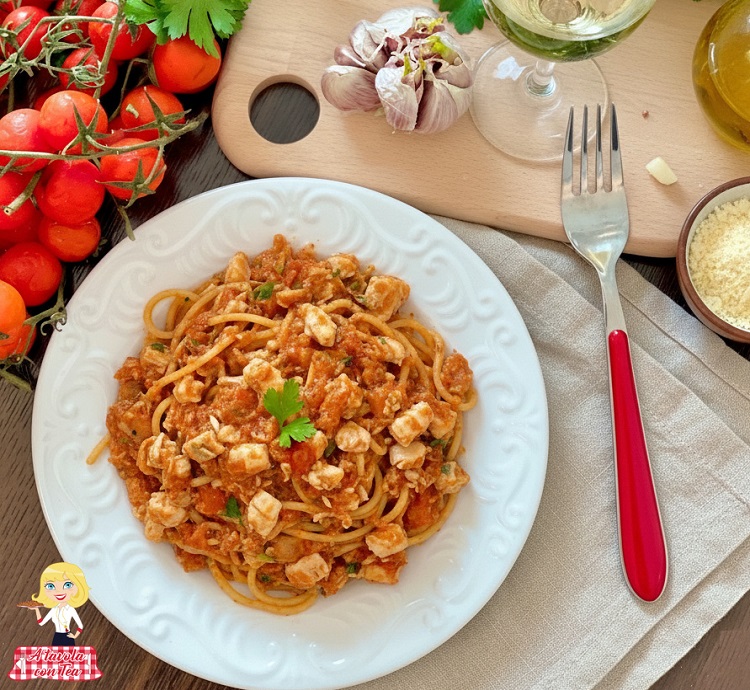
- Difficulty: Easy
- Cost: Medium
- Preparation time: 20 Minutes
- Cooking time: 15 Minutes
- Portions: 4
- Cooking methods: Stovetop
- Cuisine: Italian
Ingredients — FISH RAGU RECIPE
- 11 oz pasta (spaghetti, linguine, or a short shape like paccheri)
- 7 oz grouper fillet (or gilt-head bream, sea bass or dentex)
- 1 sprig parsley
- 2 tbsp extra virgin olive oil
- 1 clove garlic
- 14 oz diced tomatoes (diced)
- to taste fine salt
- 1 pinch black pepper
Tools
- Kitchen scale
- Frying pan
- Pasta pot
Procedure — FISH RAGU RECIPE
First of all, wash the fish fillets. With a smooth, flexible knife, remove the skin (if still present). Run your fingertips over the flesh to locate any remaining bones and remove them with tweezers. This step is essential for a ragu without surprises!
Wash and finely chop the parsley leaves together with the garlic. In a large pan, heat the oil and gently sauté the mix over very low heat, taking care that the garlic does not burn.
Add the diced tomatoes, a pinch of salt and a grind of pepper. Stir well, cover and let simmer over low heat for 10 minutes. Then uncover, stir and lay the fish fillets on the sauce, slightly covering them with some tomato. Replace the lid and continue cooking for another 10 minutes.
After 10 minutes, uncover and with a wooden spoon “break” the fish fillets, crumbling them into the sauce. Taste and adjust salt if necessary. Turn off the heat, add a drizzle of extra virgin olive oil raw and cover.
Boil the pasta in plenty of salted water. Before draining it, take about half a ladle of the cooking water and pour it into the ragu. Turn on the heat under the pan with the sauce. Drain the pasta al dente and pour it directly into the pan. Toss over high heat for a couple of minutes, stirring well to combine everything.
Notes on Ingredients and Substitutions
Fish: Choose a white fish with firm, delicate flesh. Gilt-head bream and sea bass are perfect, but dentex, cod or grouper also work well. Ask your trusted fishmonger to fillet them, or if you are practiced, do it yourself.
Tomato: Using diced tomatoes gives the sauce a rustic body, but if you prefer a smoother texture, you can opt for a high-quality tomato passata.
Oil: Use a good quality extra virgin olive oil. Its flavor pairs perfectly with the fish.
Parsley: Finely chopped fresh parsley is the ingredient that gives the distinctive aromatic note. Choose bright, healthy-looking leaves.
Storage
Fish ragu, once cooked, should preferably be eaten immediately. If it remains, you can store it in an airtight container in the refrigerator for one day, but taste and texture will be better if consumed fresh. Freezing is not recommended.
Alternatives and Variations
Mixed Seafood Ragu: For a richer ragu, add shrimp or some squid cut into pieces to the sauce after the fillets.
Adding Wine: Deglazing the garlic and parsley with a little dry white wine before adding the tomato can give the ragu an extra aromatic note.
Bottarga Pesto: For a stronger, marine flavor, add a grating of mullet bottarga at the end, directly on the plate of pasta.
Use and Pairings
This ragu is perfect with pasta shapes that embrace the sauce well, such as spaghetti, linguine, paccheri, fusilli or orecchiette. It is also a great topping for soft polenta or toasted slices of rustic bread. For a perfect pairing, serve the dish with a glass of fresh, light white wine, such as Vermentino or Falanghina.
Origins and History of the Recipe
Fish ragu does not have a specific geographic origin like the Bolognese ragu, but it comes from the culinary tradition of Italy’s coastal areas, where fresh fish was the main ingredient. It is a “peasant” recipe in the sense that it was often prepared with lesser-valued fish that fishermen could not sell. Today it has become a symbol of Mediterranean cuisine, appreciated for its lightness and intense flavor.
FAQ (Questions and Answers)
1. Can I use frozen fish?
Yes, but I recommend choosing good quality fillets and thawing them completely before use. Check that there are no bones and pat them dry with kitchen paper.
2. Can I prepare the ragu in advance?
Yes, you can prepare the ragu up to the point where you turn off the heat after breaking up the fish. Reheat it gently when ready to toss the pasta, adding some of the pasta cooking water.
3. Why is my ragu too watery?
You’ve probably used a tomato with too much water. If the ragu seems too liquid, let it cook uncovered over higher heat for a few extra minutes before adding the pasta so it reduces and thickens.
