
Gricia Pasta
Gricia pasta is one of the most well-known and appreciated Roman first courses.
It originates in the town of Amatrice, in Lazio near the border with Abruzzo, and is also called the “white Amatriciana” because it contains the same ingredients except for the tomato.
In fact, the Amatriciana is derived from the Gricia and not the other way around. It is likely that GRICIA was invented by adding guanciale to “cacio e pepe”, and later, after tomatoes arrived in the West from the Americas, Amatriciana was born.
Aside from some curiosities about its origins, let’s see what it consists of.
The RECIPE for Gricia pasta is based on a few ingredients—actually just 3—that must be precise. In particular, guanciale and Pecorino from Amatrice (or Pecorino Romano) must be used, along with the pasta.
It is made in very little time, basically the time needed to cook the pasta, and for this reason it can easily be considered a last-minute dinner saver.
Guanciale, pepper and Pecorino Romano mixed together create a flavorful and velvety dish.
As for the pasta shape, you can choose a short type like rigatoni or mezze maniche, or a long type like bucatini or spaghetti.
To make it creamy there’s only one little trick to follow, but I’ll reveal it in the recipe.
So follow me and you’ll prepare a Gricia recipe worthy of the best trattoria in Rome.
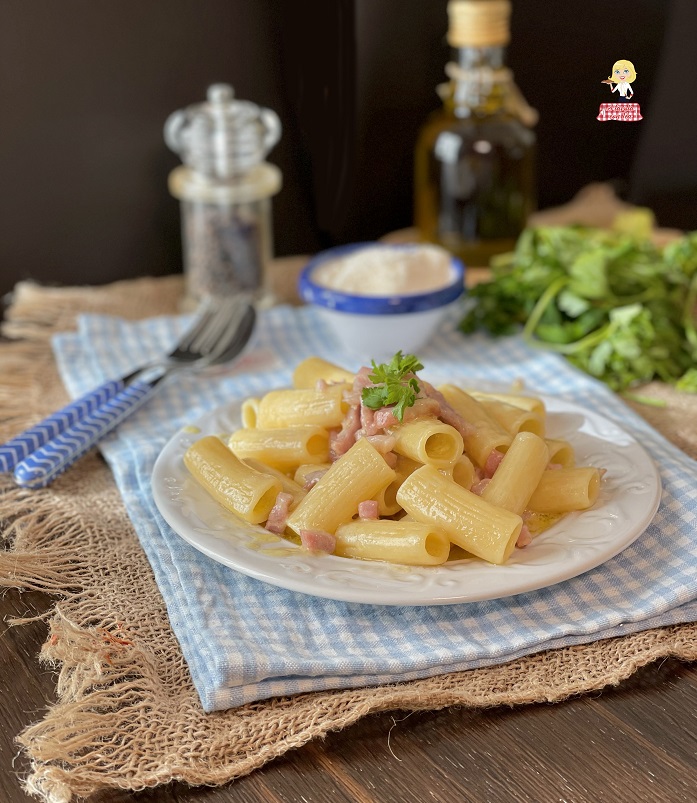
- Difficulty: Very easy
- Cost: Inexpensive
- Preparation time: 10 Minutes
- Cooking time: 15 Minutes
- Portions: 4
- Cuisine: Italian
- Energy 703.83 (Kcal)
- Carbohydrates 55.39 (g) of which sugars 1.68 (g)
- Proteins 17.14 (g)
- Fat 46.94 (g) of which saturated 17.78 (g)of which unsaturated 25.14 (g)
- Fibers 1.30 (g)
- Sodium 1,250.76 (mg)
Indicative values for a portion of 150 g processed in an automated way starting from the nutritional information available on the CREA* and FoodData Central** databases. It is not food and / or nutritional advice.
* CREATES Food and Nutrition Research Center: https://www.crea.gov.it/alimenti-e-nutrizione https://www.alimentinutrizione.it ** U.S. Department of Agriculture, Agricultural Research Service. FoodData Central, 2019. https://fdc.nal.usda.gov
Ingredients
- 3 1/4 cups rigatoni
- 9 oz guanciale (pork jowl)
- 2 oz pecorino cheese (from Amatrice or Pecorino Romano)
- to taste salt
Steps
As a first step, remove the rind from the guanciale and cut it into slices about 3/8 inch thick. From the slices, cut strips about 3/16 inch thick.
Meanwhile, put a pot of lightly salted water on the stove to cook the pasta in.
Place the guanciale in a hot pan without adding oil or butter and let it cook for about ten minutes over medium heat until it becomes golden and crispy.
Add one tablespoon of the pasta cooking water, which will be boiling by then.
This operation, thanks to the starch released by the pasta into the water, will allow you to create a sort of creamy sauce inside the pan with the guanciale.
Meanwhile the pasta will be almost cooked; drain it al dente (about 2 minutes before the time indicated on the package) and pour it directly into the sauce, reserving the cooking water.
Toss the pasta over high heat for about 1 minute, then off the heat add half of the grated pecorino and a little more cooking water.
Mix and toss the pasta again; you’ll see it become slightly creamy thanks to the action of the starch.
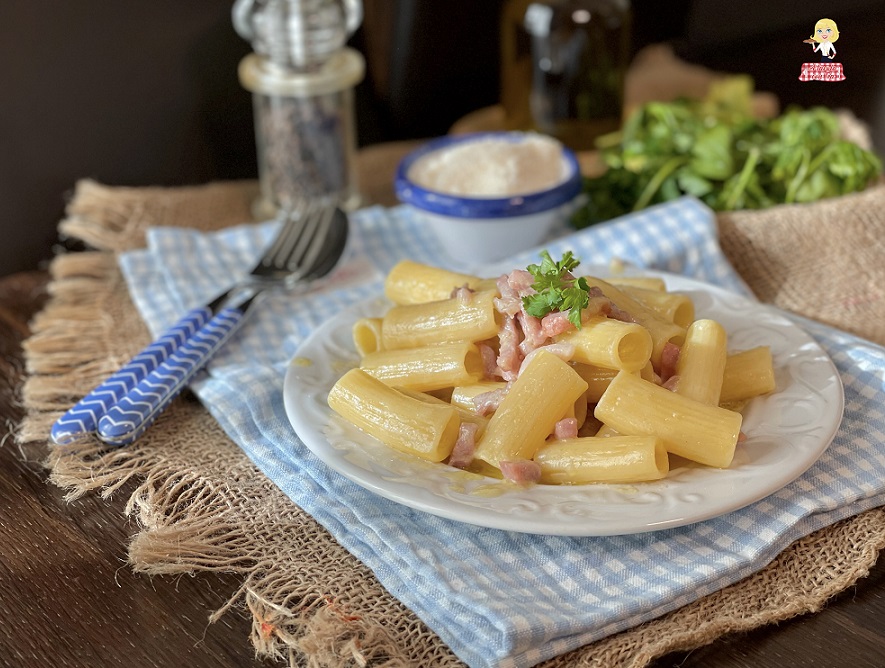
Serve immediately, sprinkling the remaining pecorino on top.
STORAGE
Gricia pasta should be eaten as soon as it’s ready to fully enjoy it. If leftovers remain, you can store them in the refrigerator for up to one day.
It is not suitable for freezing.
NOTES
For this recipe, guanciale is normally already peppered on the outside; if it isn’t, add a grind of black pepper during cooking.
One of the most common mistakes when preparing Gricia is to use pancetta; while the dish won’t be bad, it’s a completely different thing.
Likewise, never add cream.
Finally, it’s very important to cook the guanciale without any added fat (oil or butter) in a hot pan and fry it in its own fat.
