
Grandma’s ragù lasagna: secrets for a thick and creamy sauce.
Baked Lasagna with Ragù: The Traditional Recipe (and my secret trick)
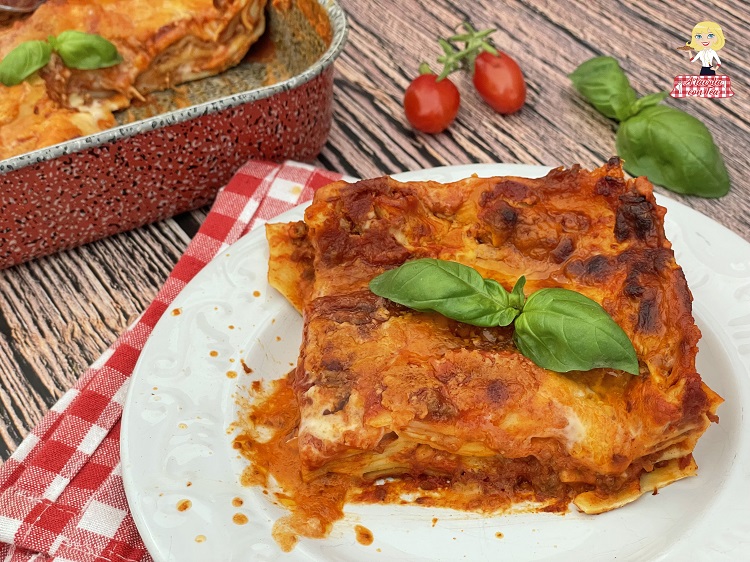
This recipe is for the mythical Ragù Lasagna, a variant of the Green Bolognese Lasagna that my grandmother used to prepare on Sundays with a mountain of sauce, béchamel and a generous amount of Parmesan.
One can say every family jealously guards a recipe passed down from mother to child, and you know, there’s nothing like homemade lasagna….
If there is a dish that screams “family Sunday” it is indeed baked lasagna.
And yet, despite being a classic, the risk of serving a lasagna that “floats” in the ragù liquid or that falls apart when cut is always around the corner.
It’s a problem that happens often: the sauce releases water during cooking and the béchamel disappears, leaving the top pasta dry and the bottom soggy.
Don’t worry, today we’ll solve these little hiccups together with an approach that combines grandma’s patience with a few technical tricks that really make a difference.
My secret? A pinch of flour in the ragù. It may seem strange, but it’s the magic touch that binds the meat and tomato juices, creating a thick, velvety sauce that wraps the sheets without sliding off.
Making lasagna takes time, I know, but the satisfaction of seeing that crispy edge and smelling the aroma that fills the house makes every minute at the stove worth it.
Some people enrich it further with cheese or mozzarella, others use caciocavallo, some like to add ham or mortadella. I prefer the classic version but, as they say, de gustibus.
So if you feel like some good traditional cooking, here is my grandmother’s version of Ragù Lasagna!
LASAGNA with RAGU’ traditional recipe
- Difficulty: Medium
- Cost: Moderate
- Preparation time: 35 Minutes
- Cooking time: 35 Minutes
- Portions: 4 servings
- Cooking methods: Oven
- Cuisine: Italian
- Energy 748.82 (Kcal)
- Carbohydrates 72.42 (g) of which sugars 14.10 (g)
- Proteins 38.50 (g)
- Fat 31.76 (g) of which saturated 13.51 (g)of which unsaturated 9.67 (g)
- Fibers 5.23 (g)
- Sodium 1,620.34 (mg)
Indicative values for a portion of 350 g processed in an automated way starting from the nutritional information available on the CREA* and FoodData Central** databases. It is not food and / or nutritional advice.
* CREATES Food and Nutrition Research Center: https://www.crea.gov.it/alimenti-e-nutrizione https://www.alimentinutrizione.it ** U.S. Department of Agriculture, Agricultural Research Service. FoodData Central, 2019. https://fdc.nal.usda.gov
Ingredients: RAGÙ LASAGNA
- 1.1 lb fresh egg lasagna sheets
- 2 cups béchamel
- 1.5 cups Parmigiano Reggiano PDO (grated)
- 9 oz ground beef
- 9 oz ground pork
- 2 cups tomato passata
- 1 package tomato paste
- 1/2 glass red wine
- 1 tablespoon all-purpose flour
- 2 sprigs rosemary
- 1 carrot
- 3 tbsp extra virgin olive oil
- 1 white onion
- 1 clove garlic
- 1 bouillon cube (vegetable)
Tools
- Casseruola
- Pentolino
- Frusta a mano
- Cucchiaio di legno
- Teglia da forno
- Grattugia
Procedure: The Stages of Tradition
Soffritto (sauté base): Chop celery, carrot and onion in a food processor.
Browning: In a pot, heat the oil and add the ground meat. Sauté for a few minutes, then add the chopped vegetables, rosemary, garlic and bay leaf. Cook over high heat until the meat is well browned.
Deglaze and Thickener: Deglaze with the wine. When the alcohol has evaporated, add the tomato passata, the paste, the bouillon cube and the teaspoon of flour. Stir well.
Anti-liquid trick: The flour is the trick for a thick ragù that won’t release water during cooking.
Slow Cooking: Add 2 cups of water. Lower the heat to minimum and cook with the lid on for about 2 hours.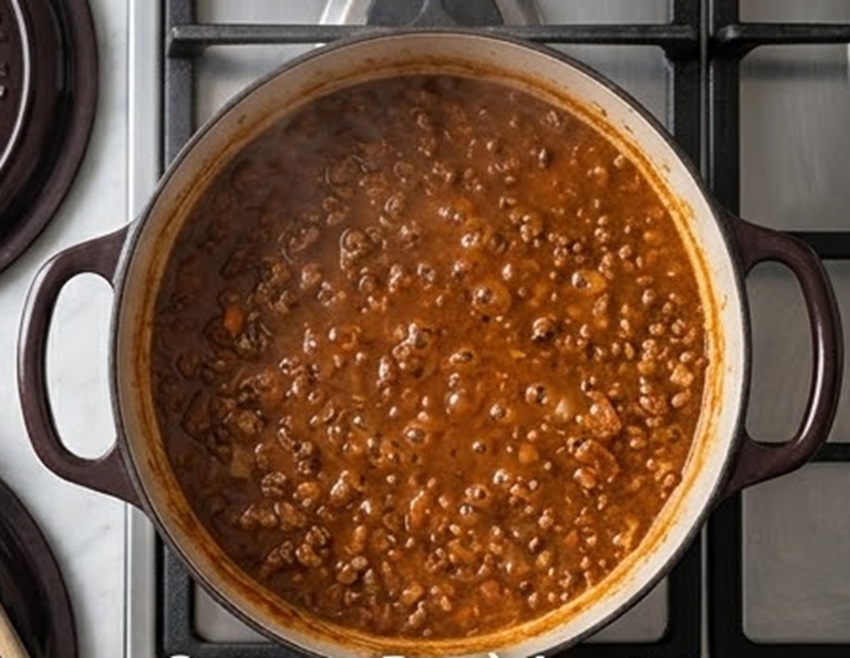
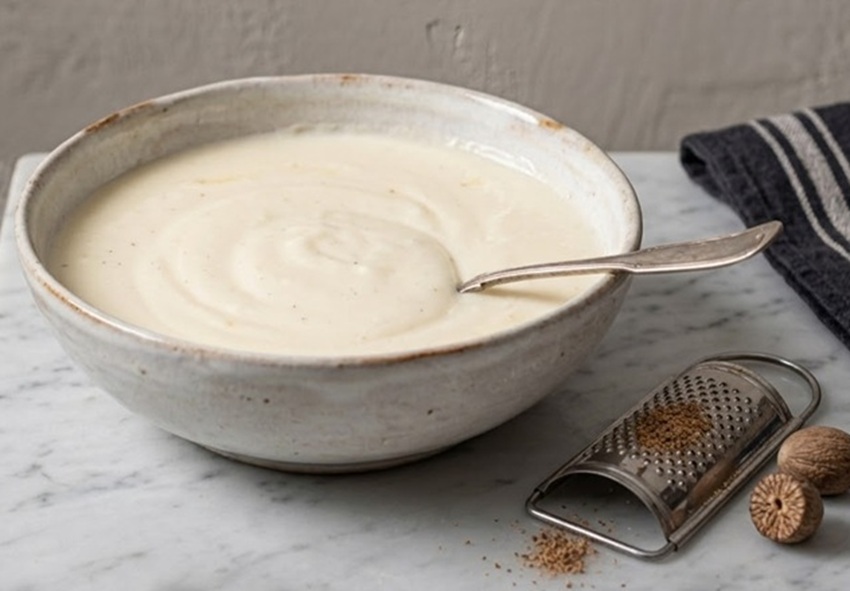
Prepare the béchamel, making sure it is smooth and not too thick so it can moisten the layers well — follow my recipe Easy BECHAMEL Recipe and tips to fix the most common mistakes
Quick Pre-cook: If you use fresh lasagna sheets, I recommend grandma’s trick: instead of blanching them in salted water, simply run them under the hot tap water. Drain and pat dry on a kitchen towel.
Time-saving trick: This hydrates the pasta just enough so it won’t dry out in the oven, saving you time and space.
First Layer: Put a light layer of béchamel in the baking dish so the pasta won’t stick. Lay down the first lasagna sheet.
Filling: Cover with a few spoonfuls of ragù, a little more béchamel and plenty of grated Parmesan.
Layering: Continue with the layers until the ingredients are used up. The top layer of lasagna should also be well covered with ragù, béchamel and plenty of Parmesan.Baking: Bake in a preheated convection oven at 392°F for about 35 minutes, until the surface is nicely golden.
Mandatory Rest: Remove the lasagna from the oven and let it rest for at least 15 minutes before serving.
Anti-collapse trick: This resting is crucial to allow the ragù and béchamel to set and bind the layers so the slice is perfect and doesn’t “crumble” when cut.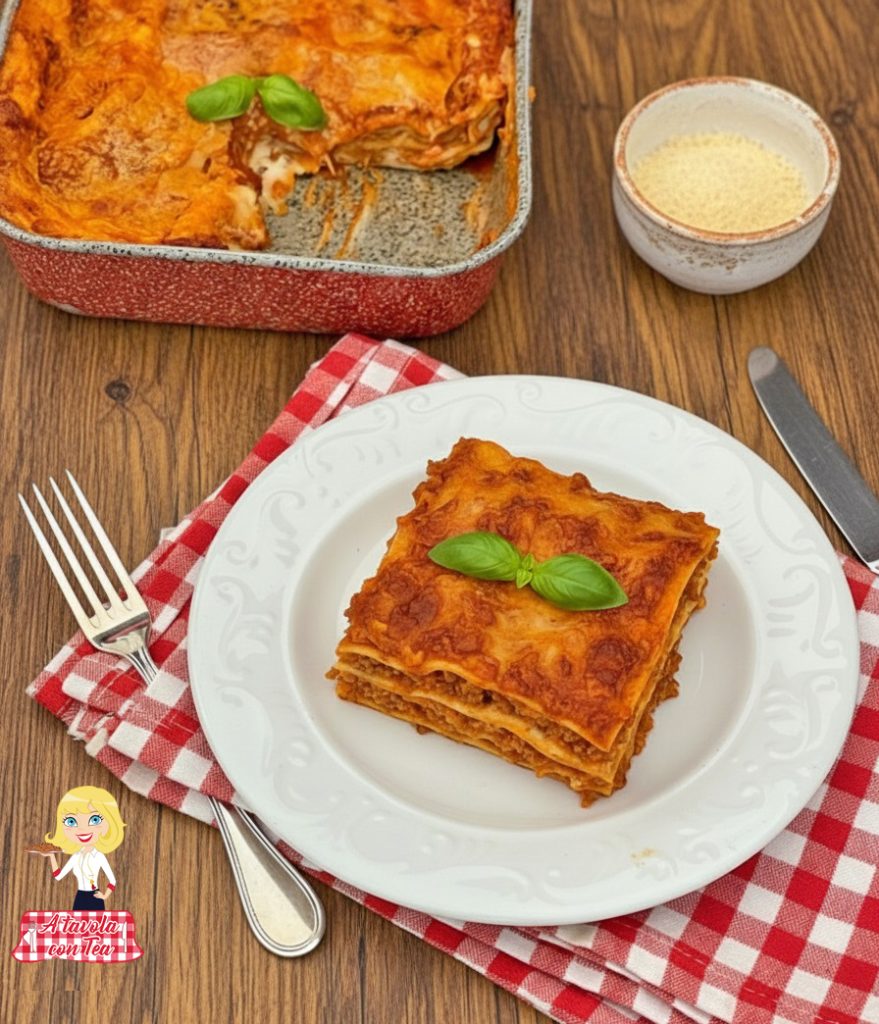
Storage
Cooked (In the Refrigerator): Once cooked, keep in the fridge for up to 2-3 days.
Uncooked (In the Freezer): You can assemble the raw lasagna and freeze it. Put it in the freezer covered with aluminum foil. For baking, it’s better to thaw it in the fridge the evening before, then bake as per the recipe.
Recipe Variations
Dry Pasta Sheets: If you use dry sheets (those that don’t require pre-cooking), you’ll need to use a slightly more liquid béchamel and plenty of ragù, as they will absorb more liquid during baking and prevent the lasagna from drying out.
Additions: For a richer version (as in some regions), you can add thin slices of mozzarella or provola between the layers, or a layer of cooked ham.
Notes on Ingredients and Substitutions
The Meat: The beef-pork mix is fundamental for the flavor. If you prefer a more robust taste, you can replace the pork with crumbled sausage.
The Sheets: If you use dry lasagna sheets that don’t require pre-cooking, be sure to prepare a slightly more liquid béchamel so the pasta can hydrate well in the oven.
Wine: Use a full-bodied red wine; the alcohol will evaporate leaving only an intense aroma.
Tips
The secret to a perfect cut? Once out of the oven, let the lasagna rest for at least 15 minutes before serving. This allows the layers to settle and the liquids to be reabsorbed by the pasta, ensuring a compact and impeccable slice.
Follow me on Instagram by clicking the following link https://www.instagram.com/atavolacontea_/?hl=it
A valid alternative to lasagna can be crepes: CREPE CANNELLONI with vegetables
Can I use dry lasagna sheets without blanching them?
If the sheet is very thin and your ragù is quite moist, you can skip the blanching. If you prefer a firmer lasagna, pass them in boiling water for 30 seconds and dry them on a dish towel.
Why do the edges of my lasagna become hard?
This happens when there isn’t enough sauce on the corners. Make sure the béchamel fully covers every millimeter of the last layer of pasta, reaching to the edges of the baking dish.
Can I use semi-skimmed milk for the béchamel?
Yes, but the béchamel will be less creamy and flavorful. For an authentic traditional lasagna, whole milk is strongly recommended.
