
Catalan Lobster: The Elegance of the Sea on a Royal Plate
If you think preparing a refined, restaurant-worthy dish is impossible, I will make you change your mind!
Today I take you on a culinary journey scented with the sea and freshness.
Catalan Lobster is one of those recipes that, despite its simplicity, manages to conquer and leave an unforgettable memory.
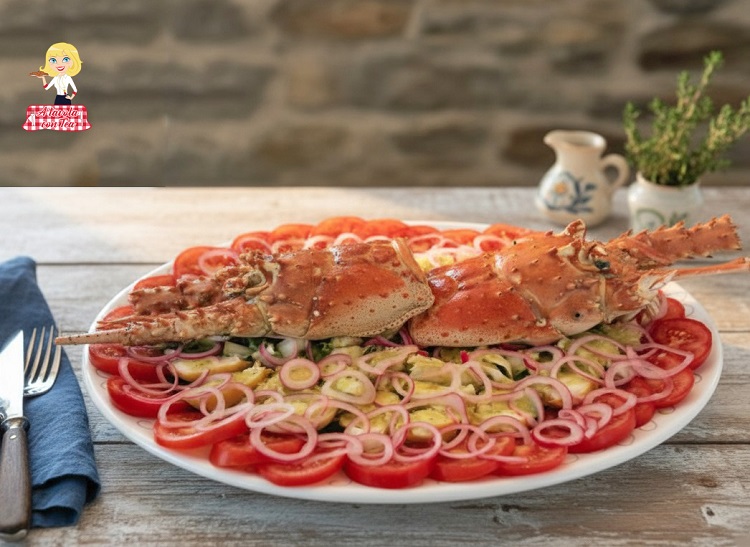
It is a dish that celebrates the authentic flavor of lobster, enhanced by the slightly spicy crunch of the onion and the sweetness of the cherry tomatoes.
The real magic, however, lies in the vinaigrette, prepared with a special part of the lobster itself that adds a uniquely deep flavor.
Don’t be intimidated, because I will guide you step by step, revealing all the secrets to achieve a perfect result.
It’s not just a recipe, but an experience that will make you feel like a true chef, able to turn a dinner into a special occasion, stress-free and with minimal effort. Ready to create a masterpiece?
At the end of the recipe you will also find Notes on ingredients and other tips such as: prepare LOBSTER (ASTICE) CATALAN STYLE, a tasty, more economical but equally good alternative
- Difficulty: Easy
- Cost: Expensive
- Preparation time: 25 Minutes
- Cooking time: 12 Minutes
- Portions: 4
- Cooking methods: Stovetop
- Cuisine: Italian
Ingredients – CATALAN LOBSTER
- 2 lobsters (about 1.3 lb each)
- 250 g cherry tomatoes (about 1 2/3 cups)
- 1 red Tropea onion
- 1/2 juice of 1/2 lemon
- 150 ml extra-virgin olive oil (about 10 tbsp (5/8 cup))
- 1 cucchiaio white wine vinegar
- to taste salt
- 1 pinch black pepper
Tools
- Bowl
- Pot
- Small bowl
Procedure – CATALAN LOBSTER
First, thinly slice the red onion and soak it in a bowl with cold water and one tablespoon of vinegar for at least 20 minutes. This step is crucial to make it more digestible and mild. Meanwhile, bring a large pot of salted water to a boil. Immerse the lobsters and cook them for 10-12 minutes from the moment the water returns to a boil. Drain them and let them cool.
Using a sturdy knife, cut the lobster shell along the abdomen and gently remove the whole meat. Don’t throw it away; slice it into rounds. With a nutcracker, open the claws to recover the precious meat inside.
In a small bowl, with a teaspoon, collect the creamy soft part found in the lobster’s head. Mix it with the extra-virgin olive oil, lemon juice, salt and a generous grind of pepper. Stir until you obtain an emulsified, homogeneous dressing.
Slice the cherry tomatoes and arrange them as a base on a serving plate. Lay the lobster meat rounds and the claw meat on top. Drain the onion slices well and distribute them over the lobster. Finally, drizzle everything with the prepared vinaigrette.
Notes on Ingredients
Lobster: choose fresh, live lobsters; the quality of the raw ingredient is essential for the success of the dish. If you live far from the sea, you can use high-quality frozen lobsters.
Red Tropea onion: it’s the best choice for this recipe thanks to its sweet and delicate flavor. If you can’t find it, use a regular red onion, but soak it a little longer.
EVO oil: use a high-quality extra-virgin olive oil. Its fruity and slightly peppery flavor pairs beautifully with the delicacy of the lobster.
LOBSTER OR EUROPEAN LOBSTER (ASTICE) CATALAN STYLE?
Although the original recipe calls for lobster, preparing it with the European lobster (astice) is now a common and much-appreciated practice. The European lobster offers a more delicate and tender meat while maintaining an intense sea flavor and a texture perfect for this dish. By substituting lobster with European lobster you won’t lose anything in terms of taste and elegance, and you may even find it easier to source and handle in the kitchen.
Storage
Catalan lobster is a dish best enjoyed immediately after preparation. It is not recommended to store it, as the lobster meat tends to lose its texture and freshness once cooked.
Alternatives and Variations
Lobster and vegetables: you can enrich the recipe by adding other raw vegetables, such as cucumbers or celery cut into julienne.
Alternative vinaigrette: if the soft part of the lobster does not appeal to you, you can replace it with a classic vinaigrette made of oil, lemon juice, salt and pepper, or add a touch of mustard.
Catalan lobster with potatoes: for a complete dish, you can add boiled potatoes cut into cubes.
Use and Pairings
This dish is ideal as a main course for an elegant dinner or as a light but substantial single course. It pairs perfectly with a fresh, savory white wine, such as Vermentino, Ribolla Gialla or an unoaked Chardonnay.
The Origins of an Elegant Dish
Catalan lobster, as the name suggests, originates in Catalan cuisine, a region of Spain. Although its roots are Spanish, it has been embraced and reinterpreted by Italian cuisine, especially in Sardinia, where it became a symbol of culinary tradition. The original recipe also included peppers, but the Italian version focuses on the freshness and simplicity of tomatoes and onion.
The Vinaigrette Is Key
Do not underestimate the importance of the vinaigrette. It’s what makes the difference and ties all the flavors together. The soft part of the lobster, albeit unusual, adds a touch of umami and sea flavor you cannot get any other way. If extracting it is difficult for you, ask your trusted fishmonger for help.
FAQ (Questions & Answers)
1. How can I tell if a lobster is fresh?
A fresh, live lobster will move, have a shiny shell and a strong sea smell. If it is already cooked, the meat should be firm and not rubbery.
2. Can I use pre-cooked, frozen lobster?
Yes, you can, but the flavor will not be the same as fresh. If you use it, thaw the lobster in the refrigerator for at least 24 hours before preparation.
3. Why is it important to soak the onion?
Soaking in water and vinegar removes the strong, pungent flavor of the onion, making it sweeter and milder.
