
Colorful Easter starter: how to make purple stuffed hard-boiled eggs
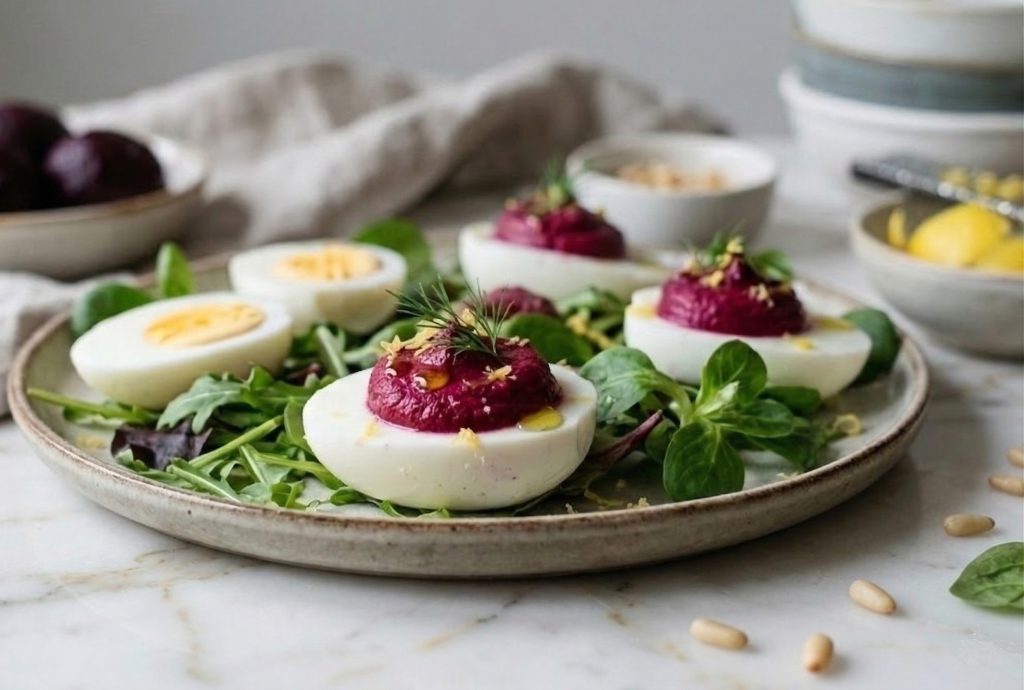
Spring Eggs: The Easter starter with a velvety beetroot filling
How to avoid cracked hard-boiled eggs or a green-gray yolk
If you’re looking for an appetizer that will wow everyone with its appearance, you’re in the right place!
However, hard-boiled eggs can sometimes be intimidating because, for example, the yolk may turn green-gray or become too dry, thus ruining the final result, or because it’s extremely difficult to remove the shell without damaging the white.
In this recipe we solve these issues with two fundamental tricks: using vinegar in the cooking water, which instantly seals any cracks, and a beetroot mousse that exploits the saltiness of cream cheese and the brightness of lemon to balance the sweetness of the beetroot.
The result is “Spring Eggs” with a velvety texture and bright purple color, perfect for decorating the Easter table without stress, since they can be prepared well in advance.
Here’s how to get impeccable hard-boiled eggs and a gourmet filling!
- Difficulty: Easy
- Cost: Budget-friendly
- Rest time: 2 Hours
- Preparation time: 20 Minutes
- Cooking time: 9 Minutes
- Portions: 4
- Cooking methods: Stovetop
- Cuisine: Italian
Ingredients for Beetroot-Stuffed Hard-Boiled Eggs
- 4 eggs (medium)
- 1 tablespoon apple cider vinegar (or white wine vinegar)
- as needed lettuce (for the serving bed)
- 1/2 cup cooked beetroot (diced (about 3 oz))
- 1/2 cup cream cheese (type Philadelphia (about 3.5 oz))
- 1 lemon zest (organic)
- pinch black pepper
- to taste fine salt
Tools
- Pot
- Immersion blender
- Piping bag
How to avoid cracked hard-boiled eggs or a green-gray yolk
Fill a large pot with cold water and add one tablespoon of vinegar. Gently place the eggs in the water, bring to a boil and, from that moment, count exactly 8–9 minutes. Adjust the heat so the water simmers gently, preventing the eggs from bumping into each other and cracking. Once done, rinse them immediately under ice-cold running water to stop the cooking.
Peel the eggs carefully and cut them in half lengthwise. Gently remove the yolks and place them in the blender cup. Add the diced beetroot, the cream cheese, the lemon zest, a pinch of salt and a sprinkle of pepper. Blend until you obtain a smooth, dense cream with an even color.
Transfer the mousse to a piping bag (or use a teaspoon) and fill the cavities of the egg whites. Place the eggs on a serving plate where you have previously laid a bed of green lettuce: this trick not only adds color but also stabilizes the eggs to prevent them from sliding. Refrigerate for at least 2 hours before serving.
VARIANT: CHICK-SHAPED HARD-BOILED EGGS
For the cute Chick-Shaped Hard-Boiled Eggs variant click HERE
Ingredient Notes and Substitutions
Cheese: If you prefer a stronger flavor, you can replace half of the cream cheese with well-drained cow ricotta.
Beetroot: Use vacuum-packed beetroot for convenience, but be sure to pat it very dry with paper towels before blending so the filling doesn’t become too runny.
Recipe Variations
Crunchy touch: Garnish each egg with a toasted pistachio kernel or a poppy seed.
Blue-cheese note: For stronger palates, add a teaspoon of mild gorgonzola to the mousse.
Storage
Spring Eggs keep perfectly in the refrigerator for 24 hours, taking care to cover them with a food dome (avoid cling film in direct contact, which would damage the mousse).
Tips
Peel without drama: Crack the shell by tapping the egg on a flat surface and begin peeling from the wider end, where the air pocket is located.
Stability: If you don’t want to use lettuce, you can shave a very thin slice of egg white from the bottom of each half to create a flat base.
FAQ (Questions & Answers)
Why did the filling become too runny?
Most likely the beetroot was too moist or the eggs were still warm. Always pat the beetroot dry and make sure all components are cold.
Can I use quail eggs?
Yes! They are delightful and bite-sized. In that case, reduce the boiling time to 4 minutes.
Can the mousse be prepared the day before?
Yes, but stuff the eggs only on the same day to avoid the white absorbing the beetroot’s purple color.
