
Duchess Potatoes: The Elegant, Show-Stopping Side Dish—Crispy Outside, Soft Inside
If you’re looking for the perfect way to make an important main course unforgettable, such as a filet or a roast, Duchess Potatoes are the answer.
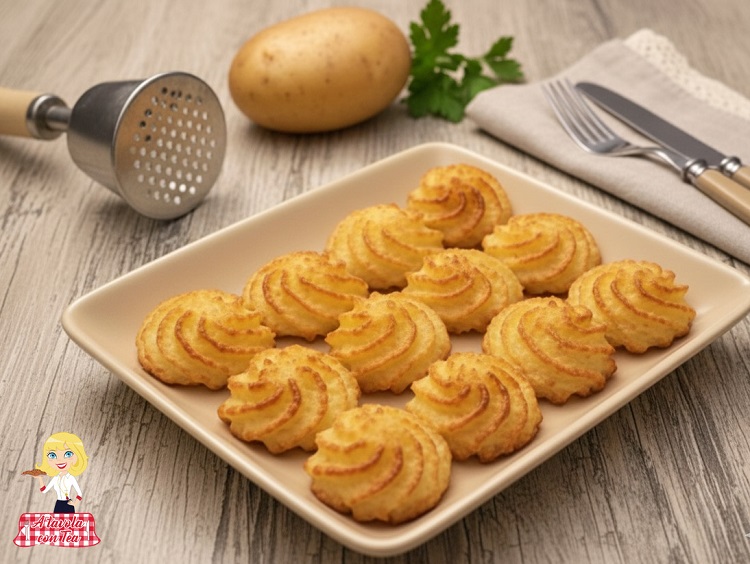
Forget the usual roast potatoes; these little golden clouds, with their swirled shape, add a touch of elegance and savoir-faire that will immediately create a “wow” effect!
The recipe is surprisingly simple, but there are two tricks that make the difference: the first is to use red potatoes (or yellow-fleshed varieties) which, when boiled and mashed, should be worked while still hot so they absorb the butter perfectly and blend seamlessly with Parmigiano Reggiano and nutmeg.
The second, crucial for the aesthetic result, is to add the yolks only after the purée has cooled slightly, to avoid a “frittata” effect and obtain a smooth mixture perfect for the piping bag.
Once piped onto the baking sheet, a short oven bake is enough to brown them to perfection, creating that irresistible crust that hides a soft, buttery center.
Are you ready to transform a simple tuber into a culinary masterpiece?
Don’t be intimidated by the piping bag: it’s easier than it looks, and the result will reward you with a flood of compliments!
- Difficulty: Easy
- Cost: Very inexpensive
- Preparation time: 30 Minutes
- Cooking time: 20 Minutes
- Portions: 4
- Cooking methods: Oven
- Cuisine: Italian
Ingredients — DUCHESS POTATOES
- 1 lb oz potatoes (yellow-fleshed (about 1 lb 2 oz / 500 g))
- 1 3/4 oz grated Parmigiano-Reggiano ((about 50 g))
- 2 egg yolks
- 3 1/2 tbsp butter ((about 50 g))
- 1 pinch ground nutmeg
- to taste salt
- 1 pinch black pepper
Tools
- Kitchen scale
- Pot
- Colander
- Potato ricer
- Bowl
- Piping bag
- Baking sheet
- Parchment paper
Procedure — DUCHESS POTATOES
Peel and cut the potatoes into evenly sized chunks. Boil them in plenty of salted water for about 10–15 minutes, or until tender. Drain immediately and, while still very hot, mash them with a potato ricer or masher (avoid using a blender which makes the mixture gummy!).
Transfer the purée to a bowl and immediately add the butter (cut into cubes), mixing until fully melted. Stir in the grated Parmigiano, nutmeg, salt and pepper. Let the purée cool slightly. Only when the temperature has dropped, add the egg yolks all at once and mix quickly to incorporate them evenly into the mixture.
Place the potato mixture into a piping bag fitted with a large star tip (about 10–12 mm). Line a baking sheet with parchment paper and pipe out “nests” or rosettes (about 18–20 g each — approximately 3/4 oz each).
Bake in a preheated conventional oven at 374°F for 15–18 minutes. Duchess Potatoes are ready when they are puffed and golden on the surface. Remove from the oven and serve immediately!
Ingredient Notes and Substitutions
Choosing the Right Potato
The key to a perfect Duchess is the use of floury potatoes (such as red baking potatoes or older potatoes). These absorb less water and break apart well, creating a light purée. New potatoes, which are juicier, should be avoided.
Substitutions
Butter: For a more flavorful version, you can use clarified butter for seasoning or replace half the butter with a mild extra virgin olive oil.
Cheese: Parmigiano Reggiano can be replaced with Grana Padano or a mix of Grana and a sprinkle of Pecorino for a saltier touch.
Milk/Cream (Variation): If your purée is too dry, you can add 1–2 tablespoons of hot milk or heavy cream together with the butter to soften the mixture before adding the yolks.
Storage
Duchess Potatoes are best straight from the oven for their crispness.
After Baking: They keep in the refrigerator for 1–2 days in an airtight container. To reheat, use the oven for a few minutes to revive the crust.
Make-Ahead (Raw): You can pipe the rosettes onto the baking sheet and keep them covered in the fridge for up to 24 hours before baking.
Freezing: You can freeze Duchess Potatoes raw: place them on a tray in the freezer and, once frozen, transfer them to a freezer bag. Bake them straight from frozen, adding 5–7 minutes to the cooking time.
Alternatives and Recipe Variations
Melty Duchess: Hide a small cube of mozzarella or smoked provolone (well dried) in the center of each rosette before baking for a gooey center.
Brush for a Deeper Color: For a more intense, glossy browning, brush the rosettes gently with a beaten yolk mixed with 1 teaspoon of milk before baking.
Herbed Duchess: Add 1 tablespoon finely chopped chives or fresh thyme to the mixture before piping for a fresh herbal aroma.
Pairings and Uses
Duchess Potatoes are ideal for elegant mains, often served on special occasions.
They are a classic side for roasts, beef filets (such as red wine–braised), lobster Thermidor, or lamb chops.
Wine Pairing: Serve them alongside the same wine chosen for the main dish. If the main is red meat, choose a structured red (Chianti or Nebbiolo); if it’s fish, a creamy white (Chardonnay) works well.
The Importance of the Piping Bag
The real aesthetic difference of Duchess Potatoes is their shape. To get the classic swirled effect, a piping bag with a star tip is essential. Don’t have a star tip? No problem! You can use a plain round tip and make small elegant towers. If you don’t have a piping bag, use a freezer bag and cut off a corner; you won’t get the swirl, but you can still pipe attractive potato nests. The important thing is that the mixture is smooth and not too hot!
FAQ (Questions & Answers)
1. Why did the mixture become gummy?
Most likely the potatoes were overworked with a blender or you overmixed them when adding the yolks. Work the purée as little as possible to combine.
2. Why did the potatoes deflate in the oven?
This happens if you overworked the mixture or used potatoes that were too watery. Also make sure the oven is very hot (374°F) before baking, otherwise slow heat won’t set the shape quickly.
3. Can I use only egg whites instead of yolks?
No, the yolks are essential. Their fat and texture not only bind the mixture but are also responsible for the lovely golden color and crust that forms on top. Egg whites make the mixture more elastic and less stable.
