Cuttlefish, squid and longfin squid are versatile ingredients in cooking and stars of many Mediterranean traditional recipes.
Cleaning them may seem complicated, but in reality a few simple steps are enough.
In this guide we show how to clean cuttlefish, squid and longfin squid step by step with clear and practical instructions.
You may be interested in:
- Difficulty: Easy
- Cost: Medium
- Preparation time: 20 Minutes
- Cuisine: Italian
Ingredients
- cuttlefish
- squid
- longfin squid
Tools
- Knife
- Cutting Board
- Scissors kitchen
Tutorial
Before seeing how to clean them, let’s see how to recognize cuttlefish, squid and longfin squid.
Cuttlefish, squid or longfin squid?
It’s not always easy to distinguish them.
In fact a few details are enough to recognize them immediately: body shape, type of fins and the presence of the cuttlebone.How to recognize cuttlefish, squid and longfin squid:
Cuttlefish
– broad, oval body;
– gray-brown color;
– presence of the cuttlebone.
Squid
– elongated body;
– light color;
– long diamond-shaped fins.
Longfin squid
– elongated body;
– pinkish-violet color;
– short triangular fins.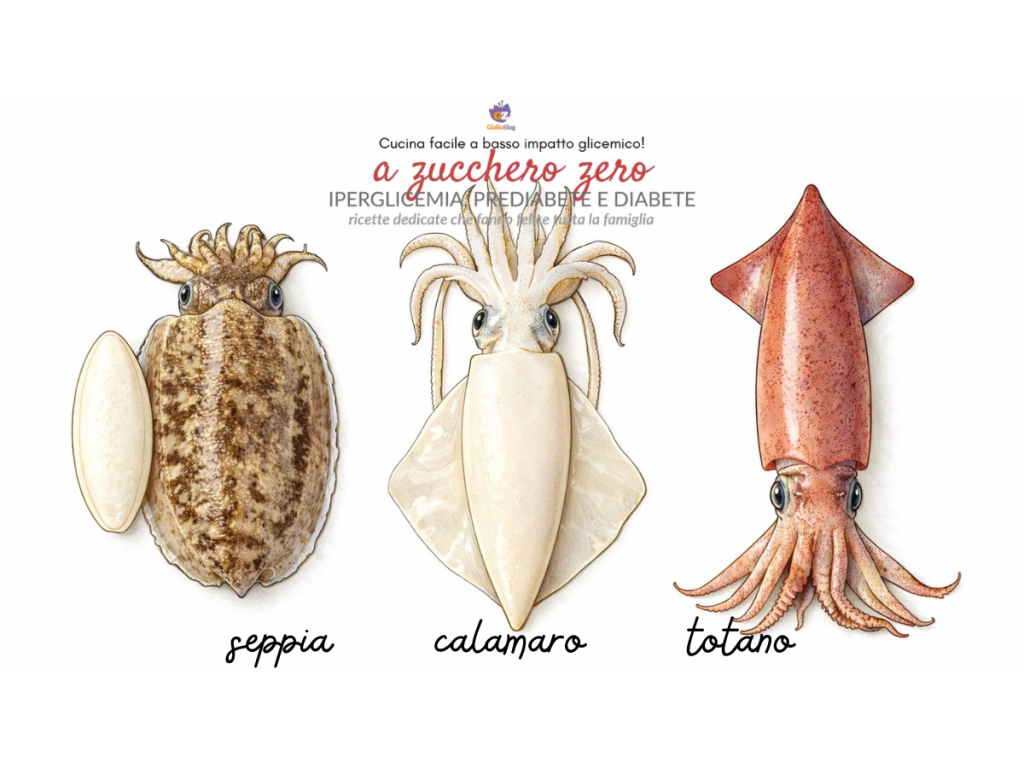
Cleaning cuttlefish and extracting the ink
You can find a very clear video on cleaning cuttlefish on YouTube which describes in detail how to recover the ink sac.Rinse the cuttlefish under running water and pat it dry with kitchen paper towels.
Remove the eyes and the beak and extract the cuttlebone.
Rinse again.
Proceed to remove the viscera.
After extracting the cuttlebone, part of the mantle (the cuttlefish sac) remains open:
– cut the skin that covered the cuttlebone to open the inner cavity that contains the viscera;
– gently extract the viscera, using a small knife if necessary: the eggs, cuttlefish milt and the ink sac often come out in a single block, while the livers and gills are separate.
The eggs and the milt of the cuttlefish are a true delicacy.
The livers are also edible.
The gills should be discarded.
Locate the ink sac and separate it carefully and whole so as not to spill its contents.
The walls of the sac are very thin and break easily, so keep a small glass or bowl handy in case you need to recover its contents quickly.
After removing the viscera, check that no residues remain inside the mantle.
Skin the cuttlefish: note that the skin is edible so this is not a necessary operation:
– peel the skin by pulling it along the mantle from one side and then the other.
Wash the sac thoroughly, inside and out, and the tentacles under running water.
Pat dry with kitchen paper.
The cuttlefish is clean and ready for cooking, whole or portioned.Can cuttlefish ink be preserved?
For the detailed step-by-step procedure you can read the tutorial by clicking on the following link: freeze cuttlefish ink in tomato sauce | without crystals and granules.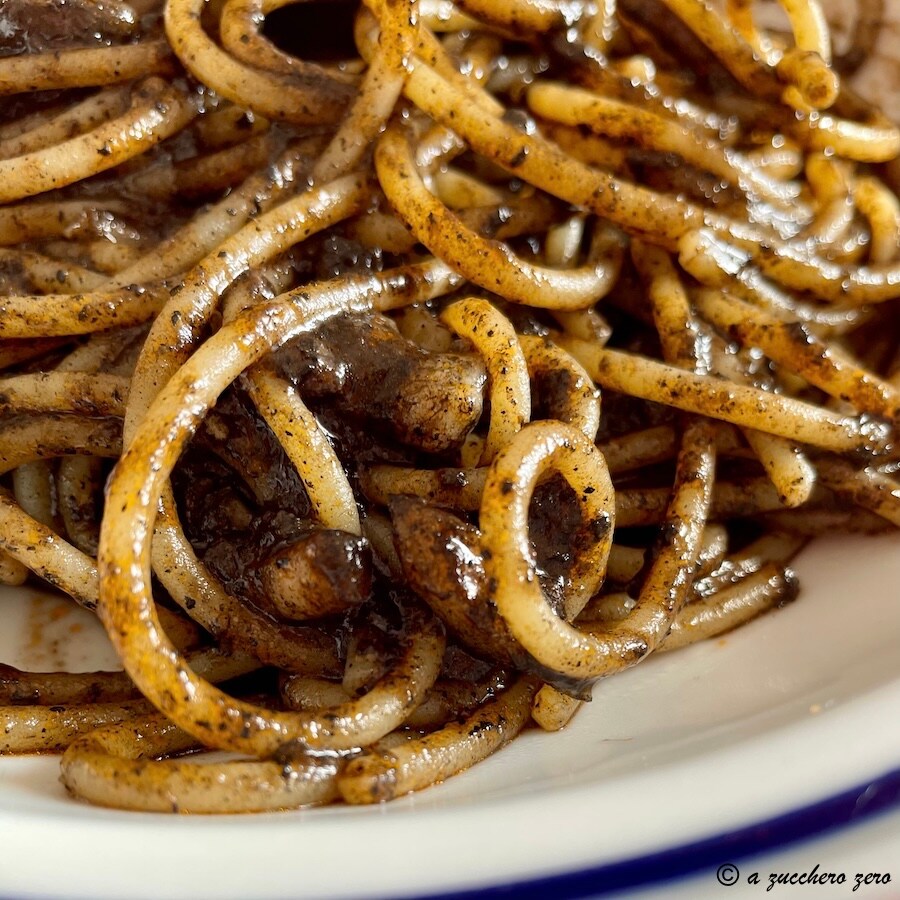
Squid and longfin squid are very similar and the cleaning operations are practically identical.
Cleaning squid or longfin squid [closed sacs]
Rinse the squid or longfin squid under running water and pat them dry with kitchen paper towels.
Grab the tentacles and pull them gently: the head and the innards will come away with them.
Remove the cartilage (transparent rigid strip, similar to plastic) present inside the sac.
Proceed to clean the tentacles:
– cut the head just above the eyes, separating it from the tentacles, taking care not to let the black ink that surrounds them splatter;
– open the tentacles, locate the hard beak at the center and remove it.
Peel the sac: note that the skin is edible so this is not a necessary operation.
Check that no residues remain inside the sac.
Wash the sac thoroughly, inside and out, and the tentacles under running water.
Pat dry with kitchen paper.
The squid or longfin squid are clean and ready for cooking: you can cook them whole, stuff them or cut them into rings.Cleaning squid or longfin squid [open sacs]
Rinse the squid or longfin squid under running water and pat them dry with kitchen paper towels.
Lay the squid or longfin squid on a cutting board.
Using scissors, open the sac lengthwise.
Remove the head and the innards.
Remove the cartilage (transparent rigid strip, similar to plastic) present inside the sac.
Proceed to clean the tentacles:
– cut the head just above the eyes, separating it from the tentacles, taking care not to let the black ink that surrounds them splatter;
– open the tentacles, locate the hard beak at the center and remove it.
Peel the sac: note that the skin is edible so this is not a necessary operation.
Wash the opened sac and the tentacles thoroughly under running water.
Pat dry with kitchen paper.
The squid or longfin squid are clean and ready for cooking: you can cook them whole or cut them into pieces.Are longfin squids less tasty than squid?
Many people think that longfin squids are less tasty than squid.
Contrary to popular belief, longfin squids do not have less tender flesh than squid but rather a firmer, crisper texture; moreover, this mistaken belief means they are often much cheaper.When purchasing, ask your trusted fishmonger to clean the molluscs for you.
After cleaning you can:
– leave them whole [closed sac], for example for stuffed recipes;
– cut them into rings;
– leave them whole [open sac];
– cut them into pieces.The meats of cuttlefish, squid and longfin squid are rich in collagen and muscle fibers.
There is a simple rule: very short cooking or very long cooking.
With intermediate cooking times the fibers contract and the flesh becomes tough and rubbery.
If they become tough and rubbery during cooking, often simply extending the cooking time is enough to make them soft and tender again.You should know that:
– squid is suitable for very short cooking;
– longfin squid is suitable for long cooking.You can use cuttlefish, squid and longfin squid as ingredients for:
– appetizers, first courses and main courses.
Browse the recipes on the blog.
Storage, tips and variations
Storage
Cleaned cuttlefish, squid and longfin squid can be stored:
– in the refrigerator for about 24 hours, in a closed container;
– in the freezer for up to 2-3 months.
It is preferable to freeze them already portioned and ready to be used in subsequent preparations.
At the time of purchase check whether the product is fresh or previously frozen.
If the purchased product is previously frozen it should not be refrozen.
Tips and variations
After cleaning, pat the molluscs dry with kitchen paper before cooking: this helps achieve better browning.
FAQ – Questions and Answers
Cephalopods
Cuttlefish, squid and longfin squid belong to the cephalopod family, marine molluscs characterized by a soft body, tentacles and a great ability to camouflage.
They are widespread in our seas.
They are much appreciated in cooking for their tender and tasty flesh and are protagonists of many recipes of Mediterranean cuisine.Molluscs and cholesterol
In our dietary pattern, squid and longfin squid, octopus and cuttlefish are among the foods recommended to be consumed ‘occasionally’.
Although they are lean-muscled molluscs, they are a source of cholesterol and intake should be limited.
Nutritional guidelines recommend a dietary cholesterol intake of less than 300 mg per day, a limit that can drop to 200 mg per day in cases of hypercholesterolemia and hyperglycemia.
Therefore, molluscs do not directly affect blood glucose, but in cases of hyperglycemia, prediabetes and diabetes they should be consumed in moderation.