The Neapolitan Casatiello — Grandma’s recipe — is the king of the Neapolitan Easter table. It’s not just a savory pie, but a symbol of conviviality that encloses all the flavors of tradition. This version follows the classic method, with a slow leavening that makes the dough soft and flavorful, thanks to the generous use of black pepper and cured meats.
Every ingredient has its meaning and every fold of the dough keeps the secret of a slow rise, made with patience and dedication. Making it at home means giving your loved ones a piece of history, an authentic flavor that has nothing to do with industrial products.
Why should you make it right now?
Besides being the undisputed protagonist of the Sunday table, Casatiello is ideal for the Easter Monday picnic. Its sturdy, flavorful structure makes it perfect to transport and, as Grandma always said, “it tastes even better the next day,” because the flavors have time to mature and blend together.
Did you know…?
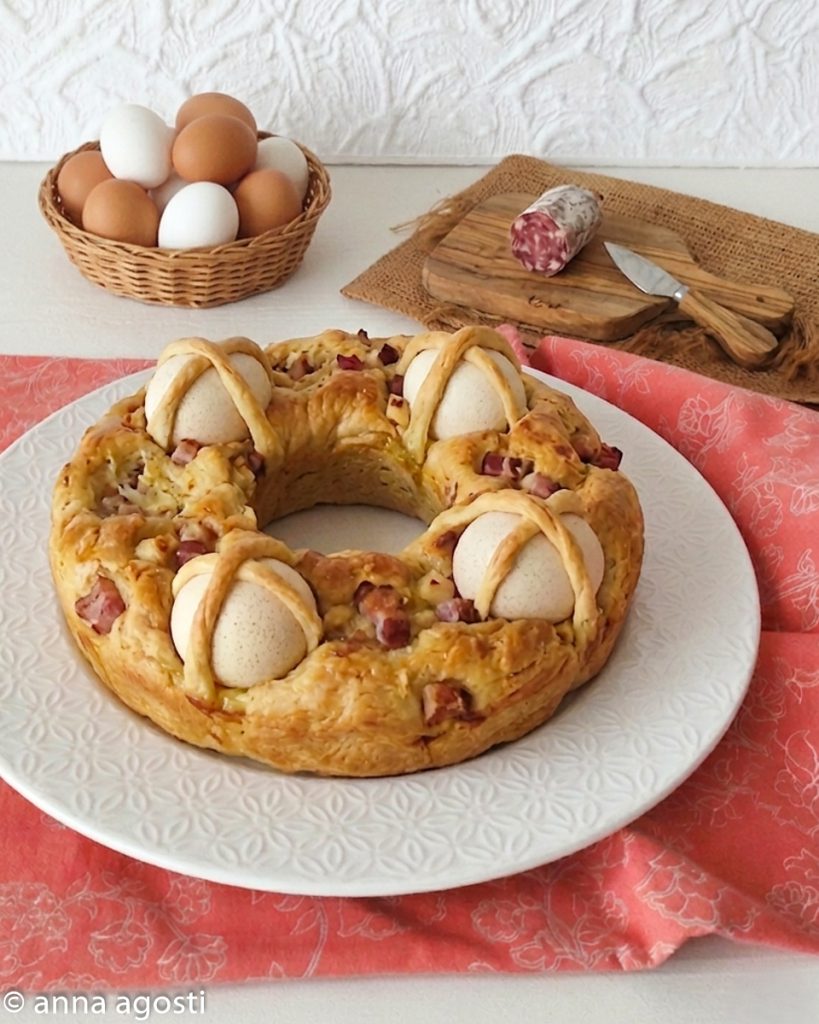
Casatiello is rich in symbolism: its ring shape recalls the crown of thorns, while the strips of dough placed in a cross over the eggs represent the Cross of the Passion. Once, it was the dish that celebrated the end of Lenten fasting, a triumph of rich ingredients to celebrate rebirth.
So let’s go—right below the photo as always—to discover how to prepare the Neapolitan Casatiello Grandma’s Recipe 👩🍳
See you soon with the next recipe, Ana Amalia!

- Difficulty: Medium
- Cost: Medium
- Rest time: 5 Hours
- Preparation time: 54 Minutes
- Cooking time: 1 Hour
- Portions: 12 people
- Cooking methods: Oven
- Cuisine: Italian Regional
- Region: Campania
- Seasonality: Easter
Ingredients — Neapolitan Casatiello (Grandma’s Recipe)
- 4 3/4 cups type 0 flour
- 1 3/8 cups water (warm)
- 2/3 cup lard
- 4 tsp fresh yeast (or about 1 1/4 tsp active dry yeast)
- 1 2/3 tsp salt
- 1 1/2 tbsp black pepper (freshly ground)
- 5 1/4 oz Neapolitan salami (cut into cubes)
- 5 1/4 oz pancetta (streaky) (diced)
- 3 1/2 oz ciccioli (pork cracklings) (optional but recommended)
- 1 1/2 cups pecorino romano (cubed)
- 1 1/2 cups spicy provolone (cubed)
- 5 eggs
- as needed lard (to grease the pan)
Tools
- 1 Tube cake pan (ring) 10–11 in diameter
- 1 Bowl large
- 1 Kitchen scale
- 1 Pastry board
How to prepare Neapolitan Casatiello — Grandma’s Recipe
1. Prepare the starter (biga): Dissolve the yeast in the warm water with a pinch of sugar. In a large bowl, pour the flour and add the water with the yeast. Begin to mix until the liquid is absorbed.
2. Work the dough: Add the lard little by little, letting it be fully absorbed, then add the salt and a generous amount of pepper.
Continue to work the dough on a pastry board for at least 10–15 minutes, until it becomes smooth, elastic and slightly oily.
3. First rise: Shape into a ball, place it in a bowl greased with lard, cover with a clean towel and let it rise in a sheltered place (a turned-off oven with the light on works well) for about 2–3 hours, or until doubled in size.
4. Roll out and fill: Once risen, set aside a small piece of dough (about a small ball) that will be used to secure the eggs.
Roll out the remaining dough on a floured board forming a rectangle about 3/8 in thick.
Evenly distribute the cured meats, cheeses and the grated pecorino over the whole surface. Roll the dough up from the long side, tightening well, until you have a long cylinder.
5. Shaping and second rise: Grease a tube/ring pan generously with lard (the classic pan with a hole in the center).
Place the roll inside, sealing the two ends well. Take the whole eggs and press them lightly onto the surface of the roll at regular intervals.
With the reserved dough, form thin strips and place them in a cross over each egg to secure it.
6. Second rise and baking: Cover again and let rise for another couple of hours in a warm place.
When the casatiello has puffed up nicely, brush the surface with a thin layer of melted lard or a little beaten egg.
Bake in a preheated conventional oven at 338°F (170°C) for about 50–60 minutes. If the surface browns too quickly, cover it with a sheet of parchment paper halfway through baking.
7. Once out of the oven, let it cool slightly in the pan. Casatiello is even better if eaten a few hours after baking, or even better the next day, when the flavors have had time to blend perfectly.
– Patience is the main ingredient: Don’t rush the rises. If the house is cool, let it rise an extra hour. A well-risen casatiello will be digestible and soft, not a “brick.”
– Choosing the cured meats: Neapolitan-type salami is a must for its slightly smoky, peppery flavor. If you can, have the deli slice thicker slices so you get substantial cubes that won’t “disappear” in the dough.
– Don’t skimp on the pepper: Casatiello must have character. Coarsely ground black pepper gives that typical aroma that is released the moment you cut it.
– Lard: It is what gives the typical fragrance and softness. If you want a shinier crust, brush the surface with a thin layer of melted lard before baking.
How to store Casatiello
Casatiello is famous for tasting even better the next day, which is why it’s the ideal companion for Easter Monday outings.
At room temperature: It keeps well for 2–3 days wrapped in a clean cotton cloth or placed under a glass dome. Avoid plastic, which can make it gummy.
In the refrigerator: If the kitchen is very hot, you can keep it in the fridge for 4–5 days, but remember to warm a slice before eating to revive the lard and cheeses.
In the freezer: You can freeze it already sliced, sealed in food bags. It keeps for about one month. When needed, put the slice directly in the oven or toaster.
📸 Now it’s your turn!
I can’t wait to see your masterpieces on the table! The beauty of Casatiello is that each family has its secret touch: some go heavy on the pepper, others add a few extra cubes of cheese…
Have you tried my grandma’s recipe? Tell me in the comments if you liked it and if it brought that magical aroma into your home.
Take a photo: If you post your Casatiello on Instagram or Facebook, tag me! I’ll be happy to reshared your creations in my stories.
Questions or curiosities? If you have questions about rising or ingredients, write them below: I’ll answer with pleasure!
💻If you want to see more recipes you can RETURN TO HOME
📲If you don’t want to miss any recipe you can follow me on my Facebook Page, just turn on notifications and you’ll see how many new recipes every day.
FAQ — Neapolitan Casatiello
My Casatiello stayed a bit low and heavy — what could have happened?
The most common mistake is rushing. If the dough doesn’t double properly during both rising stages, the result will be compact. Make sure the environment is warm and free of drafts. Another little grandma trick: don’t put salt directly on the yeast because it slows down its action.
Can I use butter or oil instead of lard?
Technically yes, but the flavor and texture will change radically. Lard is what makes the dough flaky, soft and gives that typical aroma of Neapolitan tradition. If you want the real Grandma’s Casatiello, lard is irreplaceable!
Why did the eggs on the surface crack during baking?
This happens if the eggs are very cold from the fridge when you put them in the oven. The advice is to use them at room temperature. Also make sure to wash them well but dry them thoroughly before securing them with the dough crosses so they will adhere better without slipping.