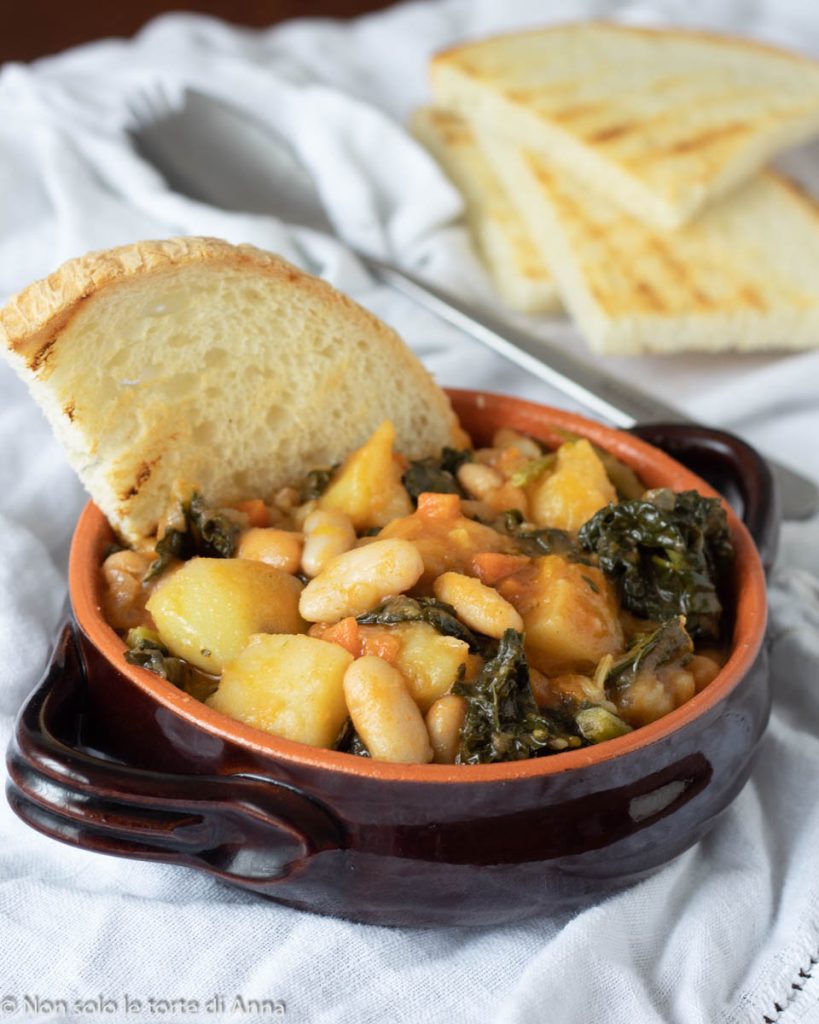
The Tuscan kale soup is indeed a typical Tuscan recipe that I made a few days ago for the first time after discovering how good Tuscan kale is. I had never tried it before and I fell in love with it. It’s a pity it’s rarely found where I live, but anyway this winter I’ll make up for it.
It’s really worth cooking this Tuscan kale soup and enjoying it steaming hot with some freshly toasted bread on a winter evening, perhaps with family or friends. It’s a convivial comfort food that makes you feel immediately good, but enough chatter — let’s discover the recipe right after the photo as always.
Below, as always, I leave you other recipes to try with Tuscan kale, then, as usual, right under the photo we will see how to prepare the Tuscan kale soup 😉
See you soon with the next recipe, Ana Amalia!
- Difficulty: Very easy
- Cost: Very inexpensive
- Preparation time: 15 Minutes
- Cooking time: 2 Hours
- Portions: 4 Servings
- Cooking methods: Stovetop
- Cuisine: Italian regional
- Region: Tuscany
- Seasonality: Autumn, Winter
Ingredients for the Tuscan kale soup
- 1.1 lb Tuscan kale (cavolo nero)
- 1 cup peeled tomatoes (or tomato passata)
- 11 oz potatoes (about 2 medium)
- 3/4 cup dried cannellini beans
- 1 carrot
- 1 onion
- 1 stalk celery
- 1 tsp thyme
- 2 leaves bay leaves
- 1 clove garlic
- 4 tbsp extra virgin olive oil
- 4 slices Tuscan bread
- 4.25 cups vegetable broth
- 2 pinches salt
- to taste black pepper
Preparation of Tuscan kale soup
To prepare the Tuscan kale soup, start the night before by soaking the beans in plenty of cold water.
The next morning, drain them, rinse them and cook them with the bay leaves for at least 1 hour; they should become tender but still hold their shape.
Chop the onion, carrot and celery after cleaning them well and put half of the chopped mix into a high-sided skillet with some extra virgin olive oil and the whole crushed garlic clove.
Sauté for 2 to 3 minutes and add the crushed peeled tomatoes or tomato passata, the thyme, salt and pepper; after 4 minutes add 1 ladle of hot broth and let the sauce cook for 12 minutes.
Turn off the heat and set aside.
Now clean the Tuscan kale by removing the central rib which is too tough and roughly tear the leaves with your hands.
In a large pot, preferably a clay pot, sauté the remaining chopped onion, carrot and celery with more extra virgin olive oil, then add the potatoes peeled and cut into not-too-small pieces, the Tuscan kale and the beans drained and cooked earlier.
Let everything cook for a few minutes, stirring gently to combine flavors, then add the reserved tomato sauce and the hot broth.
Cook the Tuscan kale soup for 1 hour over medium-low heat, checking that it doesn’t dry out — if necessary add a few more ladles of broth.
When the Tuscan kale soup is ready, toast the slices of bread on a cast-iron plate, serve the soup in bowls placing a slice of bread in each, and drizzle with extra virgin olive oil.
Storage and tips for Tuscan kale soup
You can prepare the Tuscan kale soup in the morning and reheat it in the evening, adding a ladle of broth — it will be even better.
If you like, you can add some hot chili pepper at the end of cooking.
Other recipes
💻If you want to see other types of recipes you can return to HOME
📲If you don’t want to miss any recipe you can follow me on my Facebook Page, just turn on notifications and you’ll see how many new recipes every day.
Frequently Asked Questions
What is the difference between Tuscan kale soup and ribollita?
The soup is the freshly cooked dish, with toasted slices of bread placed at the bottom of the bowl and soaked with the broth. Ribollita is the same leftover soup that, the next day, is boiled again in a pot with a drizzle of oil until it becomes thick and almost creamy.
Should the central rib of Tuscan kale be removed?
Yes, it is recommended. The central white/light part is very fibrous and tough; it requires long cooking times and often remains hard. To remove it quickly, hold the base of the rib with one hand and strip the green leaf away with the other.
Which beans are best?
Tuscan tradition calls for cannellini or borlotti (scritti) beans. A trick for creaminess is to puree about half of them and add them to the broth, leaving the rest whole to give texture to each bite.